
I saw a meme recently that said, “Fight the war profiteers, not their wars.” It hit me like a ton of bricks. Not because it was shocking, but because it was SO obvious, and yet, I never thought about it. We talk about war, poverty, climate disasters, medical bankruptcies, and call them “systemic problems.” We blame capitalism, the economy, or the military-industrial complex. But we almost never stop to look behind the curtain to see who is actually pulling the levers.
The truth is, war profiteers (or profiteers in general) aren’t faceless. They’re people – real human beings with salaries, families, summer homes and holiday bonuses.
What Is War Profiteering?
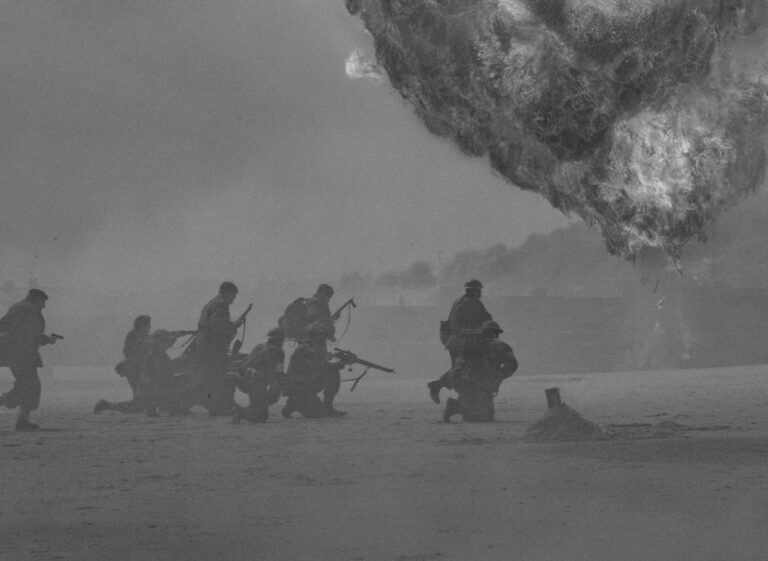
War profiteers are individuals and companies that make enormous profits from armed conflict. It’s when weapons manufacturers see their stock price jump every time a new war breaks out or a bigger defence budget is passed. It’s when construction conglomerates get contracts to rebuild cities that were flattened by bombs made by their own investors.
It’s a global business plan built on destruction, death and misery.
It’s also not a new concept. During America’s Civil War, contractors sold spoiled meat to Union troops. In World War I, the Senate formed the Nye Committee precisely to investigate how companies like DuPont and Bethlehem Steel lobbied for U.S. entry so they could fill munitions orders. The same forces kept humming through Vietnam, Iraq, Afghanistan, and right into today’s conflicts in Ukraine and Gaza. Different faces, same business model.
Who Are Today’s War Profiteers?
When we refer to war profiteers as Lockheed Martin, RTX, Boeing, or General Dynamics, we tend to portray them as towering monoliths. Immovable, untouchable. Too big and complex for any of us to hold accountable. It’s overwhelming by design. But these companies aren’t ancient stone pillars. They’re made up of very well-paid people in corner offices making decisions that keep wars going and profits flowing. Lockheed’s CEO, James Taiclet, made about $24 million dollars last year. RTX, formerly Raytheon, is led by Gregory Hayes and Christopher Calio, who pull in roughly $14 to $18 million each. Kathy Warden, who runs Northrop Grumman, walked away with more than $24 million.
They make these fortunes because their companies’ share prices are tied to contracts for fighter jets, missile systems, and drone fleets. When wars start, when tensions rise, investors like Vanguard and BlackRock celebrate with dividend checks. The top institutional holders of these companies aren’t mysterious either. They’re staffed by teams of analysts, portfolio managers, and executives who watch for any opportunity to turn global fear and suffering into returns for their clients.
In Canada, Marc Parent of CAE in Montreal took home more than $10 million last year. His company trains NATO pilots and builds simulation systems so that when they fly real combat missions, they’re ready to kill with precision. In London, Ontario, General Dynamics Land Systems, run by Danny Deep, builds armoured vehicles that ended up with Saudi forces in Yemen, with Canadian tax dollars quietly supporting the deals.
The Wizard of Oz of War Profiteers
This all reminds me of that old scene from The Wizard of Oz. Dorothy and her friends are terrified by the wizard’s booming voice and giant face, and the fierce plumes of fire spewing from his mouth. They’re overwhelmed by what seems like unstoppable power. But when Toto pulls back the curtain, there’s just an old man with levers and microphones. That’s exactly how war profiteers and their cousins in big oil, big pharma, and global finance operate.
We are bombarded with stories that frame these forces as too big to tackle. Economists talk about “market forces” and “systemic risks” like they’re weather patterns. Politicians warn that regulating these industries too harshly might crash the entire economy. Think tanks and lobbyists swarm cable news to assure us that high defense budgets keep us safe, that energy giants are indispensable, that pharma companies simply reflect research costs.
It’s all smoke and mirrors designed to make us feel small and powerless. If we think we’re up against a giant faceless machine, we’re more likely to stay quiet. That’s the genius of it. It’s psychological warfare on ordinary people. It’s far more overwhelming to believe we’re battling some colossal system than just other human beings. Because without named human beings, who do you hold accountable? Who do you shame, regulate, tax, vote out or protest? Nobody and then nothing changes.
Meanwhile, the actual people behind these companies keep making choices. They approve lobbying budgets to kill regulations. They sign contracts for new missile systems. They direct their legal teams to sue activists or journalists who dig too deep. They schedule gala dinners to thank the politicians who voted for bigger budgets. And they cash their bonus checks.
Why It’s Important to Name War Profiteers
When we stop using vague terms like “the system” and start naming the people profiting from war, climate destruction, and mass inequality, everything changes. It shifts the dialogue from an unsolvable tragedy to a direct confrontation with human greed. It also reminds us that since these people made the world this way, other people, meaning us, can choose to differently.
This racket has been running for centuries. There have always been merchants who grew rich off famine, traders who armed both sides of a conflict, and financiers who bankrolled empires. What’s different now is the scale. Trillions of dollars flow through these channels while children go hungry, refugees drown at sea, veterans sleep on sidewalks, and whole nations buckle under floods or heat.
We have a duty to act. Not just to shake our heads or retweet something angry, but to expose these war profiteers by name, to push for laws that tax them, to close the loopholes, to ban the lobbying that keeps this carousel spinning. To vote for leaders who promise to break up monopolies and strip away corporate welfare. And if need be, to protest.
Because the comforting lie we have all been sold, that it is too big, too tangled, too systemic to ever change, also conveniently excuses our inaction. If the villain is some faceless, unstoppable machine, then of course, there is nothing for us to do but sigh and move on.
But once we see the truth, that these are people, not gods or immutable forces, it strips away that excuse. It means we are not off the hook. It means we have a responsibility to demand better, to confront them, to dismantle the systems they hide behind, and to stop pretending these tragedies are inevitable.
It also means that we can.
More reading:
Who’s Really Pulling the Levers: People, Not Systems
| Name | Title & Company | 2024–25 Total Compensation | Residence / Base | Contact Info | Major Shareholders |
|---|---|---|---|---|---|
| James D. Taiclet | CEO, Lockheed Martin | $23.75M (base $1.75M; stock/bonus ~$15.4M) | Bethesda, MD (HQ: North Bethesda) | 6801 Rockledge Dr, Bethesda MD 20817; +1‑301‑897‑6000 | Vanguard (~8.5%), BlackRock (~7.3%), State Street (~4.9%) |
| Gregory J. Hayes | Exec. Chair, RTX | $14.6M (incl. ~$10.1M equity) | Waltham, MA | 870 Winter St, Waltham MA; +1‑781‑522‑3000 | Vanguard (~7.0%), BlackRock (~6.2%), State Street (~4.5%) |
| Christopher T. Calio | CEO, RTX | ~$18M (incl. stock awards) | Waltham, MA | Same as RTX above | Same as RTX above |
| Kathy J. Warden | CEO & President, Northrop Grumman | $24.36M | Smithsburg, MD area | Northrop HQ: Falls Church, VA; +1‑703‑280‑2900 | Vanguard, BlackRock, State Street (each roughly 6–8%) |
| Phebe N. Novakovic | Chair & CEO, General Dynamics | $23.79M | Reston, VA | 2941 Fairview Park Dr, Falls Church VA 22042; +1‑703‑876‑3000 | Vanguard, BlackRock, State Street |
| Danny Deep | EVP, Combat Systems, General Dynamics | $6.06M | Arlington, VA? (company based in Reston) | Same as GD above | Same as GD above |
| David Paddock | President, GDLS Canada | Estimated C$1–3M | London, ON | 1050 Dufferin Ave, London ON N5Y 2J8; +1‑519‑433‑0810 | Same GD shareholders |
| Marc Parent, C.M. | CEO, CAE Inc. | CA$14.15M (~US$10.7M) | Montreal, QC | 8585 Côte‑de‑Liesse Rd, Saint‑Laurent QC H4T 1G6; +1‑514‑734‑5765 | Caisse de dépôt Québec, RBC Global, TD Asset, Vanguard & BlackRock (~5% each) |
| Darren W. Woods | CEO, ExxonMobil | $44.1M | Irving, TX | 5959 Las Colinas Blvd, Irving TX 75039; +1‑972‑444‑1000 | Vanguard (~8%), BlackRock (~6%), State Street (~4%) |
| Wael Sawan | CEO, Shell plc | £8.6M (~US$11.1M) | London, UK | Shell International, London; +44 (0)20 7934 3000 | BlackRock, Vanguard (UK) |
| Albert Bourla | CEO, Pfizer | $24.6M | New York, NY | 235 E 42nd St, New York NY 10017; +1‑212‑733‑2323 | Vanguard (~8%), BlackRock (~6%), State Street (~4%) |
About The Author