

So, you’re thinking about a renovation. Whether it’s finishing the basement or building a new deck, the excitement of a home project can quickly get tangled in questions about city rules. The most significant one is the building permit. It’s far more than a piece of paper; it’s the foundation for any serious construction project in Ottawa, ensuring your work is safe, legal, and built to last.
Why a Building Permit Is More Than Just Paperwork
It’s easy to view the permit process as another bureaucratic hurdle. But its real purpose is safety and quality control. When you get a building permit, you’re getting confirmation that your plans meet the standards of the Ontario Building Code. This is the official rulebook for everything from structural integrity to fire safety.
Think of it as consumer protection for your biggest asset. A permitted project is reviewed and inspected by qualified city officials. This second set of eyes ensures the work is sound, protecting not just your family but also your home’s value. Down the road, it saves you from major legal and financial issues, especially when it’s time to sell.
The Value of an Official Stamp of Approval
An open or missing building permit can cause serious problems later. Real estate deals are often delayed or fall apart entirely because a previous owner did unpermitted work. Potential buyers get nervous, and for good reason. A properly closed permit file is your proof that the renovation was done correctly and to code.
This official oversight brings a few key benefits:
- Safety Assurance: It verifies your project meets crucial provincial standards for structure, fire, and health.
- Zoning Compliance: It confirms your plans follow local land use rules, like how far your structure must be from the property line.
- Insurance Validity: If something goes wrong, like a fire or collapse, your homeowner’s insurance might not cover damage from unpermitted work.
- Property Value: Properly permitted renovations add legitimate value to your home and give future buyers peace of mind.
A Snapshot of Ottawa’s Growth
The permits issued across the city also tell a story about how Ottawa is growing. Historical data shows how our urban landscape changes with population shifts and economic trends. For instance, detailed records from Statistics Canada on construction, demolition, and even pool enclosure permits show a steady stream of development. This data helps city planners map out growth patterns, aligning with the long-term vision in the City of Ottawa Official Plan.
Securing a building permit is the first step in a successful and stress-free renovation. It aligns your project with city-wide standards for safety and planning, ensuring your investment is protected for the long term.
Ultimately, the permit process is there to help you, not hold you back. It provides a clear framework for getting your project done safely and legally, making it a non-negotiable part of any renovation in Ottawa.
Figuring Out If Your Ottawa Project Needs a Permit
Before you swing a hammer, the first question to ask is, “Do I need a building permit?” This is the most crucial step in any Ottawa renovation, and the answer isn’t always obvious.
It all comes down to one core principle: safety and structural change. The City of Ottawa, following the rules in the Ontario Building Code, requires a permit for any work that affects a building’s structure, fire safety systems, or plumbing.
Many homeowners think permits are only for huge jobs, like a new addition. But many smaller projects fall under the same rules. From finishing your basement to building a deck, the permit process ensures the work is done right and won’t become a hazard later.
When a Permit is Definitely Required
As a rule of thumb, if your project involves constructing, renovating, demolishing, or changing a building’s use, you’re in permit territory. Adding square footage, removing a load-bearing wall, or running new pipes means you will need to apply for a building permit in Ottawa.
Here are some common projects that always require a permit:
- Finishing a Basement: Turning concrete into livable space, especially with bedrooms or a bathroom, is a big one. A permit is mandatory to ensure everything is up to code, from proper egress windows to insulation and fire separation.
- Building an Addition: Any work that increases your home’s total floor area requires a permit, no matter the size.
- Structural Alterations: This is a broad category. It includes removing or changing interior walls that support the floor or roof above. It also applies to enlarging windows or doors if you must alter the structural header above the opening.
- Decks and Porches: You’ll need a permit for any deck attached to your house. You’ll also need one for any deck, attached or not, that stands more than 600 mm (about 24 inches) above the ground at any point.
- New Plumbing: Installing a new bathroom or moving a kitchen sink requires a permit. Anytime you install new fixtures or extend existing plumbing lines, the City needs to sign off.
Understanding the Grey Areas and Exemptions
The good news is that not every home improvement project needs a permit. Cosmetic updates and most minor repairs are generally exempt because they don’t touch the building’s structure or safety systems.
You typically do not need a permit for things like:
- Replacing shingles on your roof, as long as you aren’t touching the underlying structure.
- Cosmetic jobs like painting, laying new flooring, or installing kitchen cabinets.
- Replacing windows or doors, but only if the new ones fit into existing openings without structural modifications.
- Building a small, detached shed, provided it’s less than 10 square metres (about 108 square feet).
Even if you don’t need a building permit, your project still has to follow the City of Ottawa’s Zoning By-law. This covers things like how far your shed needs to be from the property line (setbacks). It’s always smart to double-check these rules.
The simplest way to think about it is to separate cosmetic upgrades from structural changes. Swapping out your kitchen countertop? That’s cosmetic. Moving the wall it’s attached to? That’s structural, and you’ll almost certainly need a permit.
To help you get a quick read on your project, here’s a handy reference table. It’s a great starting point, but if you have any doubt, your best bet is to confirm directly with the City of Ottawa Building Code Services.
Common Ottawa Home Projects and Permit Requirements
This quick-reference guide is designed to give you a clearer idea of whether your upcoming renovation project will require a building permit from the City of Ottawa.
| Project Type | Permit Required? | Key Considerations & Bylaws |
|---|---|---|
| Finishing a Basement | Yes | Required for creating new living space, adding bedrooms, or installing a bathroom. Governed by Ontario Building Code Part 9 for fire separation, egress, and insulation. |
| Building a Deck | Usually | Yes, if attached to the house OR if the walking surface is over 600 mm (24 in) above grade at any point. Must comply with Zoning By-law for setbacks. |
| New Plumbing | Yes | Required for adding or relocating fixtures like sinks, toilets, or showers. Not required for simple fixture replacement in the same location. |
| Kitchen Remodel | It Depends | No, for replacing cabinets, countertops, or flooring. Yes, if you are moving walls, changing plumbing locations, or altering the structure. |
| Replacing Windows | No | Exempt if the replacement fits in the existing opening. A permit is needed if you are creating a new opening or enlarging an existing one, as this alters the structure. |
| Building a Shed | It Depends | No, if the shed is a single storey, under 10 m² (108 sq ft), and not attached to another structure. It must still respect zoning setbacks. |
| Re-shingling a Roof | No | Considered maintenance and does not require a permit, unless you are altering the underlying roof structure (e.g., changing trusses or rafters). |
Ultimately, this first step is about doing your homework. Taking time to confirm whether you need a building permit in Ottawa will protect your investment, keep your family safe, and save you from the stress of a stop-work order or legal problems when it comes time to sell your home. When in doubt, a quick call to the City will give you the clear answer you need.
How to Prepare and Submit Your Permit Application
So, you’ve confirmed your project needs a building permit. What’s next? This is where the real work begins: preparing and submitting your application. Getting this part right is your best bet for a smooth review process.
Think of your application as the complete story of your project. It needs to give city reviewers a clear picture of your plans, assuring them everything is safe and compliant with the Ontario Building Code and Ottawa’s local bylaws. Rushing this stage is a classic mistake that almost always leads to rejection.
This workflow gives you a sense of the initial steps, from figuring out what your project entails to checking it against local bylaws, which is a critical part of getting your application ready.
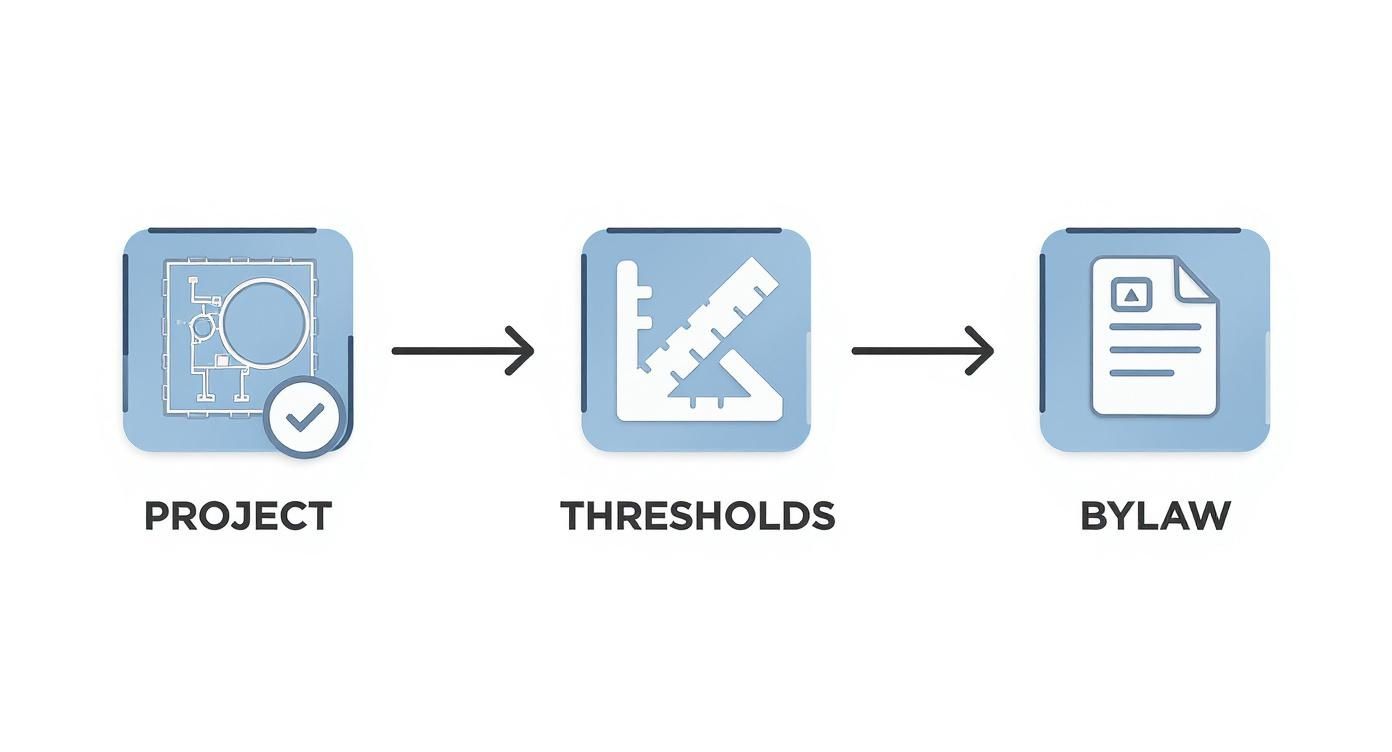
As you can see, before you even think about submitting, your design has to be squared away with established building thresholds and bylaw rules.
Assembling Your Complete Application Package
Your application is much more than a single form. It’s a full package of documents that lays out the technical details of your proposed work. Incomplete or vague submissions are the number one reason for delays.
Generally, you’ll need to pull together a few key items:
- Completed Application Form: This is the administrative core. It asks for details about the property, owner, contractor, and the scope of work. Make sure every field is filled out, including your property’s civic number. If you’re fuzzy on those details, our guide on what is a civic number can help.
- Detailed Architectural Drawings: These are the heart of your application. They must be drawn to scale and show everything: floor plans, elevations, cross-sections, and specific construction details. The goal is to leave no questions unanswered.
- Site Plan: This drawing shows your entire property. It needs to map out where the existing house is and where the new work will go, complete with distances to property lines (known as setbacks), driveways, and any other structures on the lot.
- Supporting Documents: Depending on the project, you might need extra reports. For major structural changes, you’ll likely need a report from a professional engineer. For a new furnace, you may need HVAC design documents.
A common mistake is submitting drawings that are not detailed enough. For example, drawing a line and calling it a wall won’t cut it. The plans must specify materials, stud spacing, insulation type, and vapour barrier details. The more precise you are, the faster your application moves.
Navigating the Submission Process
The City of Ottawa provides two ways to submit your application. The fastest and most convenient route is the online portal, but you can still go in person.
The Online eServices Portal
The City’s eServices portal is built to handle the entire permit journey online. You can upload documents, pay your fees, and track your application’s status from your computer.
A few tips for a clean online submission:
- Get Your Files Ready: Scan all documents and drawings into clear, high-quality PDF files. Give them descriptive names like “Site_Plan_123_Main_St.pdf.” It helps everyone stay organized.
- Follow the Steps Carefully: The portal is user-friendly and will guide you. Before you hit submit, do one last check to make sure every required document is uploaded.
- Keep an Eye on It: After you submit, you can log in to see what’s happening. If a reviewer has a question or needs more information, they will contact you through the portal.
This digital-first approach isn’t just about efficiency. It also feeds a public resource. The City of Ottawa has an open data portal with monthly summaries of all issued permits, offering a real-time look at construction trends.
In-Person Submission at Client Service Centres
If you’re more comfortable with a hands-on approach, you can submit your application at a City of Ottawa Client Service Centre. You’ll need to bring multiple printed copies of your application form and all your drawings and documents.
The staff there can give your package a once-over to make sure it’s complete before they accept it, which is a nice perk. However, this method can be slower than submitting online. It’s a solid option, just be prepared for potential lineups and have your papers organized before you go.
Whether you go digital or in-person, the mission is the same: submit a clear, complete, and compliant application. Taking the time to get it right from the start will dramatically boost your chances of getting a timely approval for your Ottawa building permit.
What to Expect for Permit Fees, Timelines, and Inspections

You’ve submitted your application for a building permit in Ottawa. Now what? This is where the waiting game starts, but it’s also where practical details begin to unfold.
Getting a handle on costs, timelines, and the all-important inspection schedule is essential for keeping your project on track and on budget. This part of the process takes patience and organization, but we’ll walk you through it.
Calculating Your Building Permit Fees
The cost of a building permit isn’t a simple flat rate. The City of Ottawa bases the fees on the total value of your construction project. This makes sense, as a permit for a small deck will cost less than one for a major home addition. The fee reflects the scale of the work and the review and inspection required.
This “construction value” includes all materials, labour, and professional services. You can find the most current rates in the City’s official Building By-law fee schedule.
Here’s a general idea of how it’s calculated:
- Base Fee: Most projects come with a minimum base fee.
- Variable Fee: This part scales, calculated per thousand dollars of your total construction value.
- Additional Fees: Some jobs might have extra fees for things like HVAC systems or complex plumbing.
It is best to budget for these costs honestly and upfront. Underestimating your construction value to save on the permit fee can cause major headaches if your numbers don’t line up with the scope of work in your drawings.
How Long Does It Take to Get a Permit?
This is the question every homeowner asks. In Ontario, the review timelines are set out by the Building Code Act, so the city must follow specific rules. The clock starts once your application is deemed complete.
For smaller residential projects, like finishing a basement, the City of Ottawa generally aims to complete its review within 10 business days. For more complex jobs, like a new house or a large addition, they have a 15 to 20-day review period.
Keep in mind these are ideal timelines. The speed of your approval is tied directly to the quality and completeness of your submission. If the reviewer finds missing information or needs clarification, the clock stops.
A complete, detailed, and accurate application is your best tool for getting a permit issued quickly. Any ambiguity in your drawings or missing information will trigger a request for revision, pausing the process and adding weeks to your timeline.
The Inspection Schedule: Your Blueprint for Compliance
Getting your permit is not the finish line; it’s the start. The permit is your green light to begin construction, but it comes with a mandatory inspection schedule. Think of these inspections as critical checkpoints. At each stage, a city inspector visits your site to verify that the work matches your approved plans and meets the Ontario Building Code.
Failing to call for a required inspection can have serious consequences, including being forced to undo finished work. For instance, if you don’t get the framing inspected before you hang drywall, an inspector can legally order you to tear it down so they can see the structure.
The specific inspections you’ll need are listed on your permit, but a typical residential project follows this sequence:
- Excavation and Footings: This happens before you pour any concrete to ensure the foundation is properly placed.
- Foundation and Drains: The inspector checks the foundation walls and drainage systems before you backfill.
- Framing: All structural framing is inspected before any insulation or vapour barrier goes up.
- HVAC and Plumbing Rough-in: Mechanical systems are checked before they are hidden behind walls.
- Insulation and Vapour Barrier: This confirms the building envelope is properly sealed before drywall is installed.
- Final Inspection: This is the last step before you can officially use your new space. The inspector does a final check on safety features like smoke detectors and handrails.
You’ll book inspections through the City’s online portal or by phone. Always give them at least 48 hours’ notice. The safety of your project also extends to fire prevention, and a properly inspected structure is a key part of that. Understanding the resources of the Ottawa Fire Department can provide context for why these building codes are so important.
Passing each inspection moves your project forward. It’s this rigorous, stage-by-stage verification that gives a permitted project its ultimate value and ensures your renovation is a safe, lasting addition to your home.
Sidestepping Common Pitfalls and Dealing with Rejections
Even the most well-prepared building permit application can hit a snag. The key to getting it right the first time is understanding why applications get sent back. It’s rarely because the design is bad; more often, it’s small, overlooked details or conflicts with local bylaws that cause problems.
Think of it from the city reviewer’s perspective. Their job is to check your plans against the Ontario Building Code and Ottawa’s zoning rules. It’s a detailed checklist, and if one piece of information is missing, they must return the application for revisions.
Top Reasons Your Permit Might Get Bounced Back
Most rejections boil down to a few common mistakes. Getting ahead of these can save you weeks of frustrating delays. The goal is to hand in a package so complete and clear that it leaves the reviewer with no questions.
Here are the issues seen time and time again:
- Incomplete Drawings: Your plans need to tell the whole story. Simply labelling a wall as “wall” will not work. Reviewers need specifics: stud size and spacing, finishing materials, structural connection details, and insulation types.
- Zoning Bylaw Conflicts: This is a big one. Your project might be perfectly safe, but if that new deck is six inches too close to the property line, it’s an automatic violation of the zoning bylaw. Always double-check your setbacks, lot coverage, and height limits before your design is finalized.
- Missing Engineering Details: Any project that touches your home’s structure, like removing a load-bearing wall, requires drawings stamped by a licensed professional engineer. Submitting plans for this kind of work without that stamp is a guaranteed rejection.
So, Your Application Was Returned. Now What?
First, don’t panic. A notice for revisions isn’t a final “no.” It is a request for more information. The key is to treat the feedback as a constructive to-do list. The reviewer will provide specific comments explaining exactly what needs to be fixed.
Read every comment carefully. If you’re working with a designer or contractor, get that feedback to them immediately. They’ll know how to interpret the technical requests and make the right adjustments. Once everything is updated, you’ll resubmit the package.
A common frustration is getting stuck in a back-and-forth revision cycle. The best way to break out of it is to address every point from the reviewer. If a comment is unclear, call or email the city for clarification. It’s better than guessing and getting it wrong.
The Real Risks of Building Without a Permit
Thinking about skipping the permit process? It’s a high-stakes gamble with serious consequences. The City can issue a stop-work order, legally shutting down your construction site. After that, you could be looking at hefty fines.
But the bigger headache comes later. Unpermitted work creates a permanent mark on your property’s title. When it’s time to sell, the lack of a closed permit can scare buyers away or even kill a deal. This isn’t just a minor inconvenience; it’s a legitimate legal issue. Ontario courts have sided with buyers who backed out of a home purchase because of an open building permit.
The construction scene in Ottawa is always active, a clear sign of the city’s growth. Ottawa’s building permit activity is a major contributor to Ontario’s overall real estate market. For example, the province saw its single-family building permit component alone jump by $114.0 million in just one month in 2025. This data, which you can explore in the full report from Statistics Canada, shows how central the formal permit process is to our region’s economy.
Your Ottawa Building Permit Questions Answered
Even with the best-laid plans, the building permit process can be confusing. It can feel like navigating a maze. I’ve pulled together some of the most common questions Ottawa homeowners have to help keep your project moving.
How Long Is a Building Permit Valid in Ottawa?
Once you have a permit, the clock starts ticking. In Ottawa, your permit stays active as long as you begin construction within six months of the issue date.
After work begins, you can’t stop for more than a year. If your project hits a long delay, contact the City of Ottawa Building Code Services to discuss an extension. Don’t let it lapse. Re-applying means new fees and a new review under the latest code requirements.
Can I Apply for a Permit Myself or Do I Need a Contractor?
You absolutely can. As a homeowner in Ontario, you have the right to apply for your own building permit if you’re doing the construction yourself. But be warned: this isn’t a shortcut. The drawings and application documents still have to meet the technical standards of the Ontario Building Code.
For anything more involved, like an addition or major structural changes, I strongly recommend bringing in a qualified professional. A designer, architect, or seasoned contractor has the expertise to produce compliant drawings and navigate the application process. This often saves time and helps you avoid expensive mistakes.
The real value in hiring a professional is their familiarity with the system. They know exactly what city reviewers are looking for and can spot potential zoning or code issues before they become major roadblocks.
What Is the Difference Between a Zoning and Building Code Review?
This is a classic point of confusion. These are two separate hurdles your application must clear, one after the other. Each one checks for different things.
- Zoning Review: This is the first gate. The reviewer only looks at whether your project follows the City of Ottawa’s Zoning By-laws. This is about land use: rules covering how far your new structure must be from property lines (setbacks), maximum building height, and total lot coverage.
- Building Code Review: Once you pass zoning, your plans move to this stage. This review ensures your plans meet the technical construction and safety standards of the Ontario Building Code. It’s the details of structural integrity, fire safety, insulation, and ventilation.
The easiest way to think about it is this: zoning decides if and where you can build on your lot, while the building code dictates how you must build it safely.
Where Can I Find My Property’s Zoning Information?
Thankfully, the City of Ottawa makes this part simple with its excellent online mapping tool, geoOttawa. This resource should be your best friend in the pre-planning stage.
Just head to the geoOttawa website, type in your address, and you’ll get instant access to a wealth of information. The map will show your official zoning code (like R1, for a residential first density zone) and give you a direct link to the specific section of the Zoning By-law that applies to your home. That’s where you’ll find all the critical rules you need to follow.
At NCR Now, we are committed to providing practical guides that help you navigate life in the National Capital Region. For more local news, community stories, and helpful resources, visit us at https://ncrnow.ca.
About The Author