
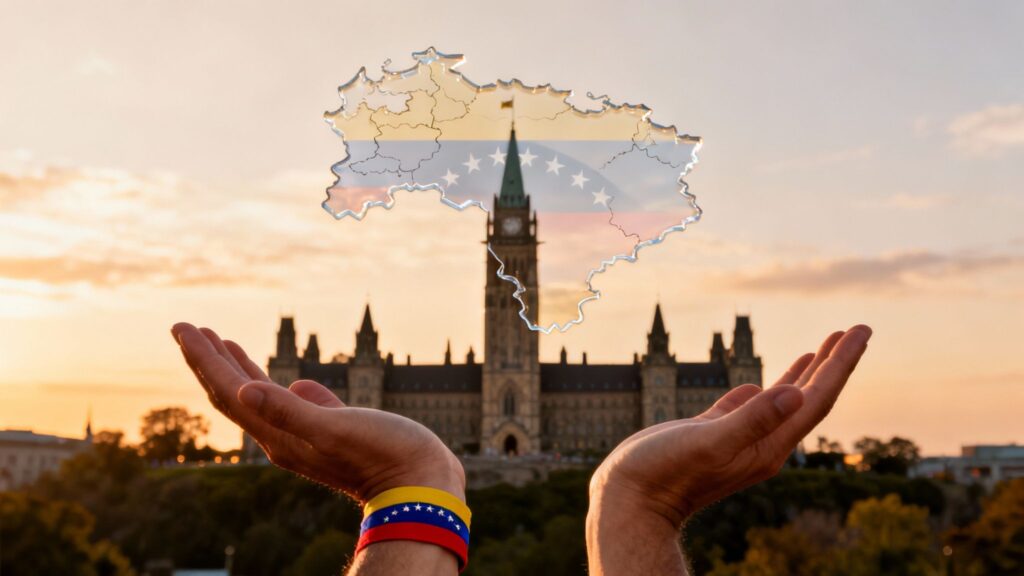
Ottawa’s streets are filling with anger and alarm after U.S. President Donald Trump ordered strikes on Venezuela and a commando raid that captured President Nicolás Maduro, flying him out of the country and openly tying the operation to U.S. control over Venezuelan oil. For many in the capital, this is not just another foreign‑policy crisis; it feels like a live test of whether raw power has now fully displaced any serious commitment to international law and democratic norms.
A capital city on edge
Protests have quickly appeared outside Parliament Hill, the U.S. Embassy and Global Affairs Canada as residents demand a clear Canadian response to what many are calling an outright invasion and de facto regime change. Demonstrators argue that if Ottawa meets this with silence, hedging or vague “concern,” it will effectively bless the idea that a powerful state can kidnap another country’s leader and announce it will “run” that country for its own strategic and economic benefit.
The emerging coalition is broader than older Venezuela‑solidarity circles. Anti‑war organizations, Venezuelan and Latin American diaspora groups, civil‑liberties lawyers, faith communities and student organizers are converging around a few core demands: that Canada condemn the attack as a breach of the UN Charter, oppose any long‑term U.S. “administration” of Venezuela, and support a genuinely international, civilian‑led path to accountability and elections rather than a Washington‑managed transition.
Why this moment is so dangerous
What makes this episode uniquely alarming is not only the violence but the precedent. If a sitting U.S. president can remove a foreign head of state with force, justify it after the fact and then invite corporations to help “rebuild” in exchange for access to oil, it normalizes a model where sovereignty is conditional on great‑power interests. That undercuts decades of hard‑won norms against aggression and sends a message to every medium or small power: security depends less on law than on whether it is useful to those with the biggest military.
Crucially, rejecting this invasion does not mean defending Maduro’s record. Maduro’s power grab, hollowing‑out of democratic institutions and documented authoritarian abuses are real and serious concerns. But there are legal avenues to confront even a deeply flawed leader: coordinated sanctions that respect humanitarian exemptions, international investigations, regional diplomatic pressure, support for genuinely independent elections and negotiated transitions, all anchored in international law rather than unilateral force. Overthrowing a government at gunpoint from abroad crosses a very different line, one that makes future abuses more likely, not less. It doesn’t fix things, it just changes the oppressor.
The Poilievre factor: when power replaces truth
Complicating matters further is the reaction from Canadian political leadership. Conservative Leader Pierre Poilievre has already framed Trump’s move as a “decisive step” and offered congratulations that gloss over the legality and human cost of the operation, a response explored in NCR Now’s analysis, When Power Replaces Truth. This framing shifts the conversation away from “Is this lawful or just?” toward “Is this strong?” or “Does this hurt our enemies?”, recasting legal and ethical objections as weakness.
For protesters in Ottawa, that is precisely the danger: a political culture where any dramatic show of force is automatically counted as success, and where international law becomes an inconvenience rather than a guardrail. When that mindset seeps into Canadian politics, it becomes far harder to build cross‑party support for restraint, diplomacy or genuine multilateral action.
Why Ottawa’s response matters
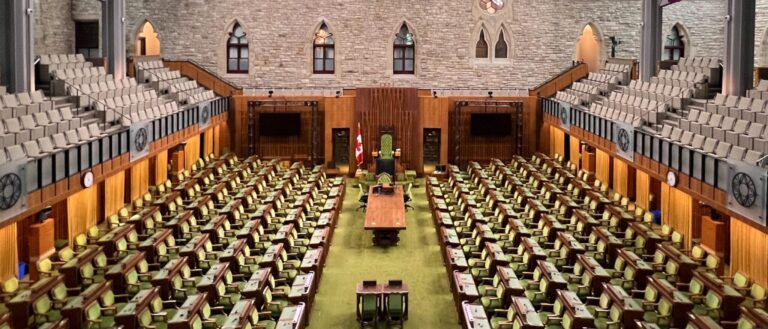
Ottawa is not just a symbolic backdrop; it is where Canada’s position will be written. The language chosen in cabinet briefings, the posture struck in Parliament and the tone set by party leaders will help decide whether this invasion becomes a disturbing exception—or an early chapter in a new normal where might openly makes right.
That is why the protests matter. By taking over Wellington Street and the spaces around federal institutions, residents are forcing a public reckoning with a basic question: Can Canada claim to defend a rules‑based international order while looking away as an ally topples a government by force, or will it insist—clearly and publicly—that even the worst leaders must be confronted through lawful, accountable means, not through the logic of “winner takes all”?
About The Author