
A Gatineau couple, Christine Sauvé and Alain Noël, were found deceased in their Dominican Republic vacation home on Boxing Day, a discovery that has left their family and the Ottawa-Gatineau community searching for answers. The tragic event unfolded during a holiday trip, prompting an official investigation by Dominican authorities with support from Canadian consular services. Here is a summary of what is currently known.
Holiday Trip Ends in Tragedy

News of the couple’s passing sent a shockwave through the National Capital Region. Christine Sauvé, 55, and Alain Noël, 56, were discovered in their Caribbean residence on December 26, 2025.
According to relatives, the couple’s son found them after they failed to wake up that morning. The family is understandably shattered by the sudden loss of two people who were healthy and full of life.
Timeline and Initial Reports
In the days before their deaths, there were some worrying signs. Family members reported that Sauvé had been experiencing dizziness and fainted on Christmas Day, which led to a brief hospital visit. Though she was released, follow-up tests were planned. Noël had also told family he was not feeling well.
Despite this, nothing seemed immediately alarming. The couple had a cheerful FaceTime call with their family back in Canada on Christmas Day, appearing in good spirits. This detail has only added to the family’s profound confusion and grief.
“It’s unimaginable, two people who die at the same time,” their niece, Patricia Sauvé, told The Canadian Press. “We absolutely don’t understand what’s happening, hence the family’s incomprehension, hence the numerous questions.”
Deep Roots in the Community
Christine and Alain were fixtures in Gatineau. Married for over 30 years, they were known as a loving and dynamic pair active in their family’s construction business. They were deeply embedded in the community, not just in Gatineau but also in the Dominican Republic, where they had hoped to one day retire.
Their loss is a heavy blow felt far beyond their immediate family. This tragic event is a sad reminder of how fragile life can be, especially during a time of year meant for joy. For those in the community needing a moment of quiet reflection, our guide to Gatineau Park trail conditions may offer some solace. As everyone waits for more information, many are left mourning two people who were truly part of the region’s fabric.
The Official Investigation and Canada's Role

While the community grieves the sudden loss of Christine Sauvé and Alain Noël, the formal investigation is being handled by authorities in the Dominican Republic. The initial response from local police has been to rule out certain scenarios while they await concrete evidence.
According to information shared with the family, Dominican officials do not currently suspect violence or suicide. This initial assessment is a crucial piece of the puzzle, but it only deepens the mystery surrounding the couple’s sudden passing. An autopsy has been completed, but pinning down an exact cause of death is a meticulous process that takes time.
The family has been told it could be several weeks before they receive the official report with the findings. This waiting period is an agonizing but necessary part of any thorough investigation, especially in a case as unusual as this one.
Global Affairs Canada's Consular Support
Back home, the Canadian government is playing an active role through Global Affairs Canada. When a Canadian citizen dies abroad, the department’s primary function is to provide consular assistance to the family, a process now underway for the loved ones of the Gatineau couple.
This support acts as a vital bridge between the family in Canada and the officials in a foreign country. Typically, consular services include:
- Liaising with local authorities: Canadian officials communicate with Dominican police and other agencies to help gather information on the family's behalf.
- Providing guidance on local procedures: They help the family navigate the legal and administrative systems in the Dominican Republic.
- Offering a list of local service providers: This might include contacts for local lawyers or funeral homes who can assist with arrangements.
- Issuing necessary travel documents: Should family members need to travel to the country, consular services can help facilitate that.
It is important to understand that Global Affairs Canada cannot interfere in a foreign investigation. Their mandate is to support the family and keep communication lines open, not to conduct their own inquiry.
Distinguishing Fact from Speculation
In the absence of clear answers, it's natural for speculation to fill the void. However, both the family and officials have stressed the importance of patience. The investigation is a methodical process, and jumping to conclusions can cause unnecessary distress.
The focus right now is on toxicology and autopsy results, which will provide the scientific basis for determining what happened. Until Dominican authorities release those official findings, the precise cause of death remains unknown. This careful, evidence-based approach is standard practice and the surest way to provide the family with the answers they deserve.
How the News Is Impacting Our Community

The tragic story of the Gatineau couple has struck a deep chord across the Ottawa-Gatineau region. For many, this is not just a distant headline; it’s a story that feels uncomfortably close to home, tapping into a shared local tradition of escaping Canadian winters for sunnier skies.
For countless families in the National Capital Region, a winter trip to a place like the Dominican Republic is a cherished ritual. This familiarity is why the news about Christine Sauvé and Alain Noël has created such a palpable sense of unease. It turns a foreign tragedy into a relatable fear, sparking conversations in coffee shops and living rooms across the area.
A Shared Sense of Vulnerability
The news hits a nerve because it involves an experience so common here. This isn't just a feeling; travel patterns back it up. The story was particularly jarring in a region where international travel has sharply rebounded.
According to Statistics Canada, Canadians made roughly 27.6 million trips abroad in 2023, a significant increase from the year before. Quebec residents often make up a large portion of visitors to sun destinations, which highlights just how many local families can see themselves in this story. You can explore more insights on these trends in this Statistics Canada overview.
This incident forces a difficult but necessary reflection. It is a stark reminder that even in paradise, the unthinkable can happen. The story has fostered a collective sense of vulnerability among residents who frequently travel to similar spots.
The Community's Quiet Response
The community's response has been one of quiet sympathy and shared grief. There is an unspoken understanding that this could have been anyone’s parents, neighbours, or friends. Online forums and local discussions show a community grappling not just with the loss of two of its own, but with the unsettling nature of their passing.
Ultimately, the impact of this story is about human connection. It reminds us of the bonds we share as a community, bonds forged in common experiences like the simple desire to escape the cold. It is a painful reminder to cherish our loved ones and to approach our travels with both joy and caution.
Practical Advice for Staying Safe While Travelling Abroad
While the full story behind the Gatineau couple is still unfolding, their tragic situation is a sobering reminder for anyone planning a trip outside of Canada. For many of us in the National Capital Region, international travel feels routine, but a few smart steps beforehand can make all the difference.
The Government of Canada offers straightforward guidance for citizens heading overseas. Before booking a flight, your first click should be the official travel advice and advisories page. This is your go-to source for real-time, country-specific details on everything from local safety conditions to health risks and entry rules.
Knowing the environment you’re entering is essential. A country’s advisory level can shift due to political turmoil, a natural disaster, or a sudden health crisis. Checking these advisories is about being informed and making smart decisions.
Your Pre-Travel Safety Checklist
Once you have done your homework on the destination, it is time to get your own affairs in order. A bit of organization can prevent major headaches later.
Global Affairs Canada strongly recommends a few key actions:
- Register Your Trip: The Registration of Canadians Abroad service is free and confidential. It lets the government know where you will be, so they can contact you in case of an emergency.
- Get Comprehensive Travel Insurance: This is critical. Your provincial health plan provides very little coverage outside of Canada. Good travel insurance should cover medical emergencies, hospital stays, and medical evacuation, which can be very expensive.
- Back Up Your Documents: Make both paper and digital copies of your passport, driver’s licence, birth certificate, and itinerary. Leave one set of copies with a trusted person at home and keep another with you, stored separately from the originals.
It is a common myth that the Canadian government will pay your medical bills if you get sick or injured on vacation. That is not true. You are responsible for your own medical costs, which is why solid insurance is a must-have.
Essential Travel Safety Checklist for Canadians
This table outlines key steps to take before and during your international travels to ensure a safer trip.
| Action Item | Description | Official Resource |
|---|---|---|
| Check Travel Advisories | Review the latest safety, health, and entry requirements for your destination. | Travel.gc.ca Advisories |
| Register Your Trip | Sign up with the Registration of Canadians Abroad service for emergency notifications. | Registration of Canadians Abroad |
| Purchase Travel Insurance | Secure a comprehensive plan covering medical emergencies, evacuation, and trip cancellation. | Travel Insurance Info |
| Copy Important Documents | Make digital and physical copies of your passport, visa, and other key IDs. | Passport Canada |
| Know Embassy Location | Locate the nearest Canadian Embassy or Consulate and save their contact info. | Canadian Embassies Abroad |
| Share Your Itinerary | Leave a detailed copy of your travel plans with a trusted friend or family member at home. | N/A |
| Secure Your Valuables | Use a hotel safe and avoid displaying expensive items like jewelry or electronics in public. | N/A |
Taking these precautions gives you peace of mind to truly enjoy your travels.
Staying Aware While You Are Away
Your safety checklist does not end once your plane lands. Simply staying alert and aware of your surroundings is one of the most powerful tools you have. Be mindful of your belongings in crowded spots, avoid flashing expensive items, and trust your gut if a situation does not feel right.
It is also a good idea to have the contact details for the nearest Canadian embassy or consulate saved in your phone. They are your lifeline if you run into a serious issue, like a lost passport or a medical emergency.
Ultimately, planning for safety lets you focus on what matters, enjoying your trip, whether it is a global adventure or one of the many fantastic weekend getaways from Ottawa. By taking these simple steps, you are not planning for the worst; you are being a smart, prepared traveller.
What Happens When a Canadian Dies Abroad
When a tragedy like the one involving the Gatineau couple occurs overseas, families are thrown into a deeply challenging process. The death of a Canadian citizen far from home initiates a series of steps that are often unfamiliar, emotionally draining, and complicated by international borders.
For most families, the first call is to Global Affairs Canada. The government’s consular services become a crucial guide, but their role has clear limits. Consular officials can offer guidance, connect families with local resources like funeral homes or lawyers, and act as a communications channel to foreign authorities.
However, they cannot interfere in a foreign police investigation, cover any costs, or give legal advice. That distinction is critical. Their role is to support, not to investigate or fund. This reality forces families to place their trust in a foreign legal system while grieving from thousands of kilometres away.
Navigating Foreign Systems and Repatriation
One of the first and most painful tasks is arranging for the repatriation of remains. This is not straightforward. It means navigating the specific laws and regulations of the country where the death occurred.
Families have to coordinate with local funeral service providers to prepare the remains for transport. This step requires official paperwork, including a local death certificate and clearance from authorities, all of which takes time to secure.
The infographic below outlines a proactive approach to travel safety, showing how preparation can help manage risks.
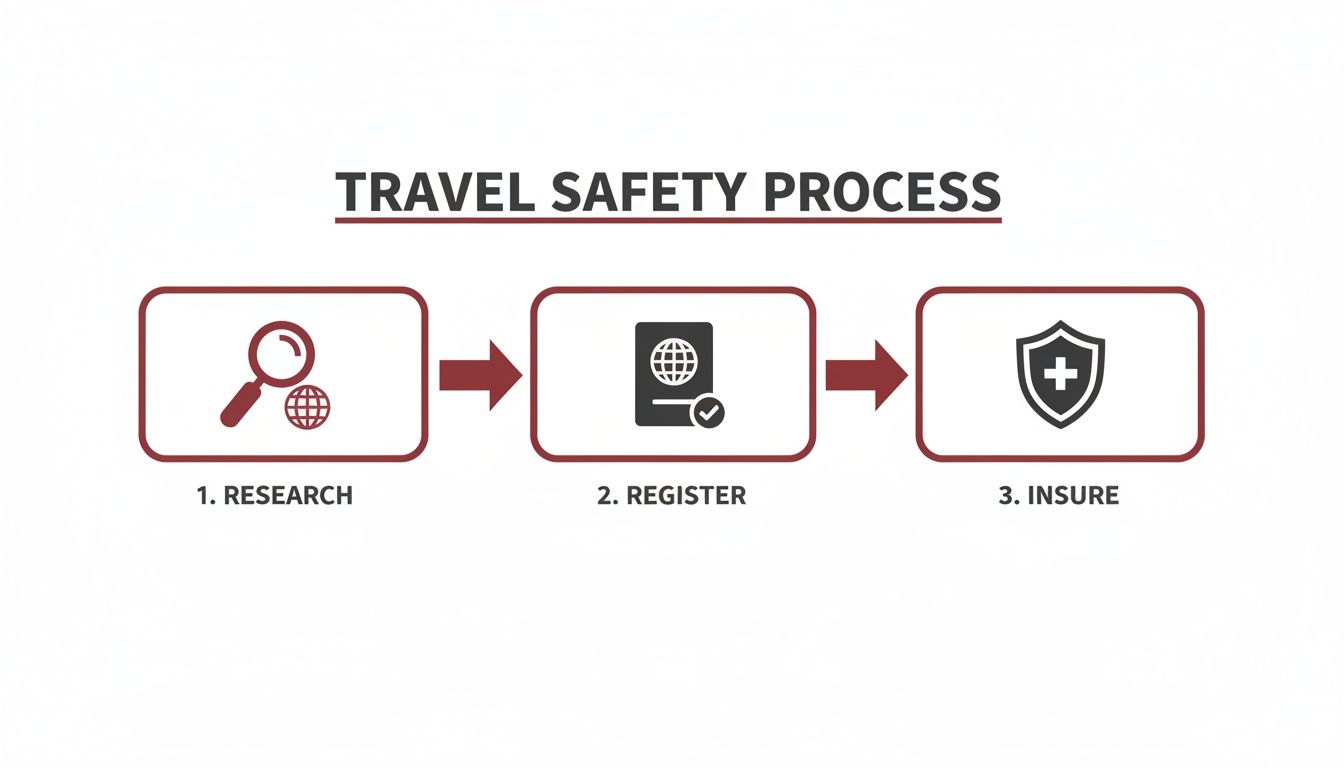
This visual is a reminder that researching a destination, registering your trip, and getting proper insurance are essential safeguards for when things go wrong.
The Financial and Emotional Costs
The financial burden can be crushing. Bringing a loved one home from another country can easily cost thousands of dollars. This expense almost always falls directly on the family, unless there is a solid travel insurance policy in place.
Beyond the logistical and financial hurdles is the immense emotional toll. Waiting for information from a foreign investigation, dealing with language barriers, and processing grief from a distance add layers of hardship to an already devastating situation.
The experience of the Gatineau couple's family shines a light on why these international incidents are so profoundly difficult. Every step becomes a test of patience and resilience. Understanding this process gives us a deeper empathy for what they, and other families in similar situations, are forced to endure.
Finding Reliable Updates and Community Support
As the investigation into the deaths of the Gatineau couple unfolds, it is normal to want answers. But in situations like this, misinformation can spread quickly online. It is crucial to stick to official and verified sources to get the real story.
For the most accurate information, follow statements from two key organizations: Global Affairs Canada will handle updates concerning Canadian citizens, and the Dominican Republic's national police are the lead on the investigation. Reputable local news outlets are also working to provide factual reports. For tips on how to tell good journalism from noise, our guide on finding reliable news sources in Canada is a helpful resource.
Support for Our Community
News this tragic hits close to home, and it is okay to feel overwhelmed. If you are struggling with the emotional weight of this story, please know that help is available right here in our community.
- Distress Centre of Ottawa and Region: Offers confidential support and a safe place to talk if you're in crisis.
- Bereaved Families of Ontario – Ottawa Region: Provides compassionate support for individuals and families navigating grief.
Reaching out for support is a sign of strength. These organizations provide a safe space to talk and find compassionate guidance during difficult times.
Finally, talking about this tragedy can help us heal as a community. We encourage you to share your thoughts and condolences by submitting a Letter to the Editor, helping us all process this loss together.
As the community tries to make sense of the tragic deaths of the Gatineau couple, questions are naturally surfacing. We have gathered some of the most common inquiries to provide clear answers.
What does Global Affairs Canada do when a citizen dies abroad?
When a Canadian dies outside the country, Global Affairs Canada provides crucial consular services to the family. Their team offers guidance on local laws, helps with the process of bringing the remains back to Canada, and can provide a list of local lawyers.
It is important to understand what their role is not. Consular officials are there to support and communicate. They cannot interfere in a foreign police investigation or overrule the decisions made by local officials. Their job is to assist, not to investigate.
Is the Dominican Republic still a safe place to travel?
Millions of Canadians visit the Dominican Republic every year without incident, and it remains one of our most popular travel spots. That said, like any international trip, it is not without risk.
The Government of Canada currently advises anyone travelling to the country to “exercise a high degree of caution.” This is standard advice for many destinations. The best approach is to be prepared: research the area you're visiting, stay aware of your surroundings, avoid situations that feel unsafe, and never leave home without comprehensive travel insurance.
How can we best support the family?
In a moment of such profound loss, the most valuable support the community can offer is respect for the family's privacy. Resisting the urge to share rumours or unconfirmed reports online is essential, as this can cause immense pain to those already grieving.
If the family decides to set up an official fundraising effort or asks for public support, trusted local news outlets will share that verified information. For now, the best way to show collective support is through quiet compassion and sincere condolences.
At NCR Now, our mission is to provide clear, responsible reporting that serves the Ottawa-Gatineau community. For ongoing local news and practical city guides, visit us at https://ncrnow.ca.
About The Author