
Calls are growing across Canada for the federal government to increase humanitarian and diplomatic support for Cuba, as the island nation faces one of the most severe economic and social crises in its modern history.
Community groups, solidarity organizations, academics, and members of Canada’s Cuban diaspora say the situation in Cuba has reached a breaking point. They are urging Ottawa to expand humanitarian aid, ease financial restrictions that affect remittances, and advocate more forcefully for an end to the decades-long U.S. embargo.
At the centre of the discussion is a simple question: what role should Canada play as conditions in Cuba deteriorate?
Who Is Calling for Action?
Several Canadian organizations have been vocal in recent months, including the Canadian Network on Cuba and the Canadian-Cuban Friendship Association. These groups argue that Canada, which has maintained diplomatic relations with Cuba since 1945, is uniquely positioned to help.
Labour unions and faith-based groups have also issued statements calling for increased humanitarian shipments of food and medical supplies. Some MPs have raised concerns in Parliament about access to medicine and the impact of U.S. sanctions, urging Canada to expand targeted assistance.
At the same time, Cuban Canadians are divided. While many support humanitarian aid, others argue that assistance should be tied to political reform and greater freedoms on the island. That debate mirrors broader international tensions over how best to engage with Cuba’s government.
Why Is Cuba in Crisis?
Cuba’s current crisis is the result of several overlapping pressures.
First, the U.S. embargo, in place since 1962, continues to restrict trade, financing, and access to international banking systems. Although there have been periods of limited easing, sanctions were tightened significantly in recent years. Cuban officials argue the embargo severely limits the country’s ability to import food, fuel, and medical supplies.
Second, the COVID-19 pandemic devastated Cuba’s tourism industry, which is one of its primary sources of foreign currency. With fewer visitors and declining remittances, government revenues dropped sharply.
Third, domestic economic reforms have struggled to stabilize the situation. A controversial currency unification process triggered inflation, and shortages of basic goods have worsened. Rolling blackouts have become common due to fuel shortages and aging infrastructure. In some provinces, power outages have lasted for hours at a time, disrupting daily life and business operations.
Food insecurity has increased. Pharmacies frequently lack basic medications. Long lines for essentials have become a daily reality for many Cubans.
Rising Tensions on the Island
The strain has led to sporadic protests in recent years, most notably the large-scale demonstrations of July 2021, when thousands took to the streets in multiple cities across Cuba. Smaller protests and localized demonstrations have occurred since then, often triggered by extended blackouts, fuel shortages, or lack of food. Demonstrators have called for better living conditions, improved access to goods, and in some cases broader political change.
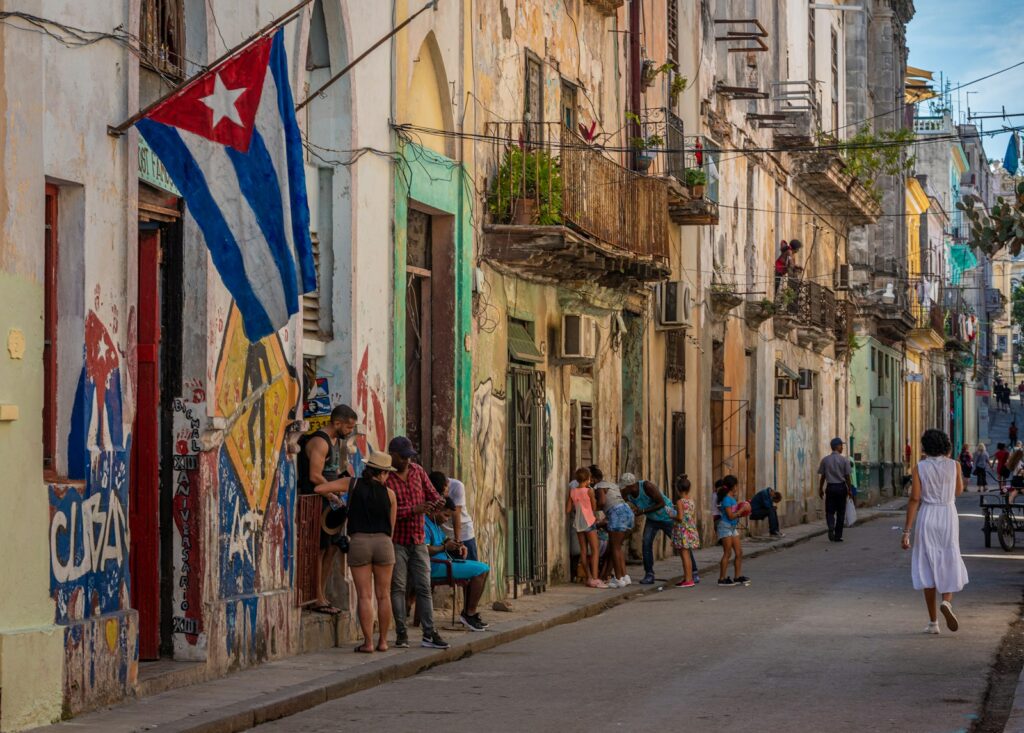
Today, the pressures facing people in Cuba are concrete and immediate. The country is grappling with severe fuel shortages that have led to daily power outages lasting several hours in many regions. Aging thermoelectric plants frequently break down, and without sufficient imported fuel, the electrical grid struggles to meet demand. For families, that means spoiled food, disrupted work, and sleepless nights in tropical heat without fans or air conditioning.
Food scarcity remains a persistent problem. While Cuba maintains a rationing system, the subsidized basket covers only a portion of monthly needs. Many basic items such as cooking oil, rice, chicken, and milk are often unavailable in state stores. When products do appear, they are frequently sold in foreign-currency-linked shops that require access to dollars or electronic cards, putting them out of reach for many households earning salaries in Cuban pesos.
Inflation has sharply reduced purchasing power. Following currency reforms implemented in 2021, prices for goods and services rose significantly, while state salaries have not kept pace. Pensioners and low-income workers are especially vulnerable, often relying on remittances from relatives abroad to bridge the gap.
The health-care system, long considered a point of national pride, is also under strain. Hospitals and pharmacies report shortages of essential medicines, antibiotics, and even basic supplies such as syringes and gloves. Patients sometimes must ask family members to locate medications through informal networks or from private sellers.
Migration has intensified as a result of these compounded hardships. In the past few years, hundreds of thousands of Cubans have left the island, seeking economic opportunity elsewhere in Latin America, the United States, and beyond. The departure of working-age adults has further strained families and reduced the domestic labour force.
The Cuban government maintains that it is managing an external economic siege and working to stabilize the system through limited private-sector expansion and foreign investment. Critics argue that internal inefficiencies, bureaucratic constraints, and restrictions on broader economic reform are compounding the crisis.
For ordinary people in Cuba, however, the debate over ideology is secondary to immediate concerns: finding food, keeping the lights on, accessing medicine, and supporting their families in an environment of prolonged uncertainty.
What Could Canada Do?
Canada is one of the few Western countries that has consistently maintained diplomatic and commercial ties with Cuba. Canadian tourists remain a major source of revenue for the island, and Canadian mining companies have longstanding operations there.
Advocates calling for action suggest several possible steps:
- Expanding humanitarian aid shipments, particularly medical supplies and food.
- Facilitating financial channels to allow remittances to flow more easily.
- Using diplomatic channels to press for both economic relief and human rights protections.
- Supporting multilateral efforts at the United Nations to address the impact of sanctions.
Critics of increased engagement caution that assistance should not entrench existing power structures. Supporters counter that withholding aid ultimately harms ordinary Cubans more than political leaders.
Why This Matters to NCR Readers
For readers in the National Capital Region, the issue is not abstract. Canada’s foreign policy is shaped in Ottawa. Decisions about aid, trade, and diplomatic pressure are made here.
There are also personal ties. Many Canadians travel to Cuba each year. Some have family connections. Others are involved in academic, medical, or solidarity exchanges.
As Cuba navigates blackouts, inflation, and shortages, the conversation in Canada is shifting from observation to responsibility. Whether Ottawa chooses a stronger humanitarian role, a more assertive diplomatic stance, or a cautious middle path, the coming months could shape Canada’s relationship with Cuba for years to come.
The keyword at the centre of this discussion is Cuba. The human reality behind it is more complex than geopolitics. For millions on the island, the crisis is not theoretical. It is daily life.
Travel Warning: The Government of Canada has upgraded its travel advice to “Avoid non-essential travel” as of February 2026.
Sources and additional reading:
- https://www.cbc.ca/lite/story/9.7091594
- https://dailyhive.com/canada/canada-cuba-travel-advisory-february-12-2026
- https://canadiannetworkoncuba.ca
- https://www.nationalobserver.com/2026/02/17/news/ottawa-faces-calls-send-essential-fuel-cuba-us-widens-its-oil-blockade
- https://www.aljazeera.com/economy/2026/2/8/from-blackouts-to-food-shortages-how-us-blockade-is-crippling-life-in-cuba
- https://www.codev.org/news/cuba-hurricanes-and-earthquakes-2024
About The Author