
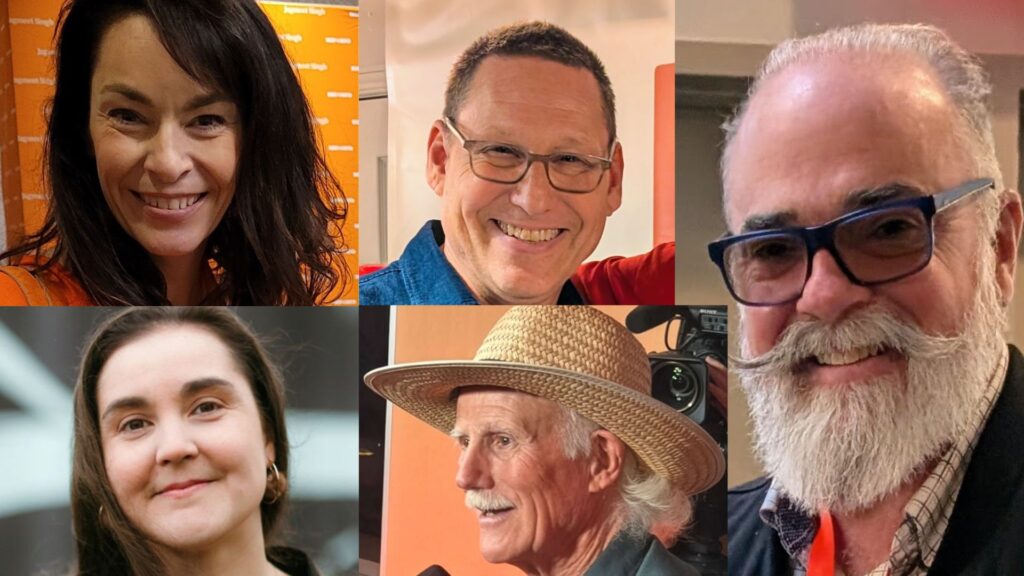
With under a month until the NDP leadership election, many supporters of the party still feel as though they are not familiar with the candidates running. Largely due to this election coming at a particularly transitional time for the NDP, the perennial, familiar candidates of yesteryear are nowhere to be found in this election cycle.
With this said, and with respect to the fact that the contenders in this race share views on a great many things, this article will serve as your official guide to the 2026 NDP leadership election. Looking at official platforms, statements made by candidates, and endorsements, we will attempt to paint a full picture of the candidates you will be voting for on March 29th.
NDP Leadership Election: Meet the Candidates
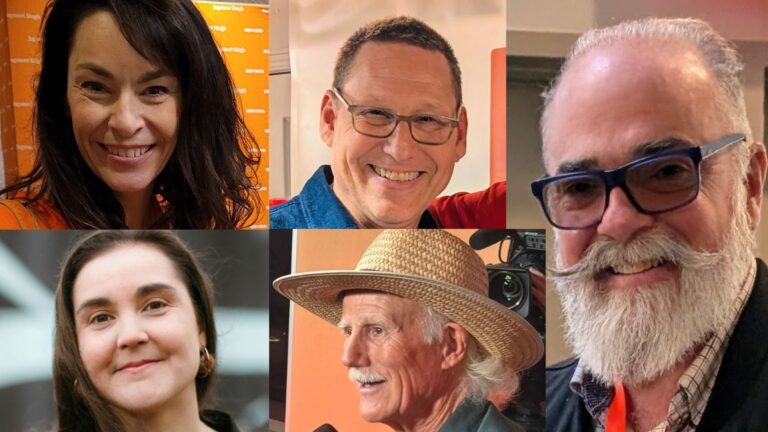
Rob Ashton is a 49 year old longshoreman of over 30 years who has been the president of the International Longshore and Warehouse Union’s Canadian chapter since 2016. As a candidate from a working-class background, Ashton has emphasized returning the NDP to its working-class roots, rebuilding Canada’s working-class, and strengthening domestic industry.
Tanille Johnston is a 38 year old woman of the We Wai Kai First Nation. Johnston currently serves as Director of Community Programs with the First Nations Health Authority, as well as sitting on Campbell River, B.C’s City Council. Johnston’s campaign is largely focused around rebuilding the NDP as a grassroots party, Indigenous advocacy, and social justice. Johnston has also made a guaranteed basic living income a focal point of her campaign.
Avi Lewis is a 58 year old journalist, filmmaker, and politician. A candidate in two Vancouver ridings in 2021 and 2025, Lewis has built his campaign around worker’s rights, rebuilding the NDP as a grassroots party, and his experience in working-class activism projects such as The Leap.
Heather McPherson is a 53 year old Member of Parliament for Edmonton Strathcona. As the only candidate in the NDP leadership election that has experience in the House of Commons, McPherson has centred her campaign around her position as the most experienced candidate. Prior to her time in Parliament, McPherson worked with non-profits.
Tony McQuail is a 74 year old farmer and educator originally from Pennsylvania. As a farmer, McQuail’s campaign has focused primarily on ecologically-minded agriculture and his “Green Progressive Movement.” McQuail has run on his vision of “four R’s” (representation, regeneration, redistribution, redesign) as a guiding principle.
NDP Leadership Election: Trump & Foreign Policy
Ashton stated in February 19th’s debate that his job policy is the best way to combat Trump; creating jobs that will strengthen domestic industry. Ashton also suggested that Canada should find other trade partners around the world, making him the only candidate to say such a thing in this debate.
Johnston stated that Trump would “get the answering machine” if he called her as Prime Minister, and that her approach to dealing with Trump would be reinvesting in Canada’s production industries. She mentioned Canada selling raw logs and buying them back at a more expensive price as an example of this.
Lewis believes that Canada should be ideologically independent of the USA on an international stage. He thinks Canada should return to being a moral role model of sorts for the rest of the world, and that this means being willing to criticize Trump’s America. Lewis believes that Canada should rebuild its domestic industry to attain financial independence from the USA, specifically advocating for a Canadian Green New Deal.
McPherson believes that to alleviate the stress caused by Trump onto Canada, the Canadian government must invest in rebuilding Canadian industry, raising wages for Canadian jobs, and investing in Canadian infrastructure.
McQuail argues that Trump’s tariffs have given Canada an opportunity to rebuild its economy as one that can serve Canadians first rather than billionaires. He believes that sovereignty from the United States will not come from war, but rather re-investment into Canada’s working-class and improving quality of life.
NDP Leadership Election: Housing
Ashton‘s housing policy emphasizes several key points. He believes that the current housing crisis was manufactured by the ruling class. Ashton plans to triple the number of public, non-profit, and co-op homes. He believes that new houses should be built using Canadian-manufactured products. He plans to crack down on corporate landlords and strengthen protections for renters. Ashton also plans to re-structure the housing market to enable first-time homebuyers.
Johnston’s platform does not have a dedicated housing section. It highlights her promise for a guaranteed basic living income as a way to ensure housing for all. Furthermore, Johnston’s platform emphasizes investing in Indigenous housing communities.
Lewis’ housing policy advocates for a national rent cap and tenant protections. Lewis believes that corporate landlords should be taxed, and that house-building should further be conducted by the government. Lewis’ platform advocates for building 1 million public homes in 5 years. On Indigenous housing, Lewis states that the government will work with Indigenous communities to enable “For Indigenous, By Indigenous” housing.
McPherson’s housing policy advocates for corporate control of housing to be ended, namely by banning corporate ownership of single-family homes and giving non-corporate buyers first-right-of-purchase for rental properties. McPherson wants to strengthen public housing, and plans to build 1.2 million social housing units by 2035. McPherson advocates for national data to be the basis of allowed rent increases, and plans to introduce a National Renters’ Bill of Rights. McPherson also emphasizes increasing funding for Indigenous housing and giving Indigenous governments the final say in housing projects on their land.
McQuail’s fourth ‘R’ in his ‘Four R’s‘ is redesign. As it relates to housing, McQuail believes that housing should be redesigned to be more affordable, communal, and sustainable. He thinks housing projects are best done locally and community-focused.
NDP Leadership Election: Electoral Reform & Democracy
Ashton’s platform on electoral reform calls for proportional representation. Ashton does not advocate for any specific form of proportional representation. Rather, he believes that a citizen’s assembly should determine what form of proportional representation is used.
Johnston’s platform calls for numerous changes to Canada’s democracy. Johnston advocates for proportional representation. She calls to bring back the per-vote subsidy. Johnston believes that Canada should strengthen civic education for a better public understanding of Canadian politics. Johnston has called to lower the voting age to 16.
Lewis’ platform calls to end the first-past-the-post system in place of a system that will not encourage strategic voting.
Mcpherson‘s platform does not mention electoral reform, though she has argued in favour of it (and against first-past-the-post) at multiple debates and forums.
McQuail‘s first R in his ‘four R’s‘ is representation. In this section, McQuail advocates for ending the first-past-the-post system in favour of proportional representation as away to end strategic voting, which he claims has prevented workers and women from getting effective representation for hundreds of years. In the meantime, McQuail supports the idea of working with the GPC and the BQ on case-by-case bases.
NDP Leadership Election: Environment
Ashton‘s environmental policy focuses on creating green jobs by using Canadian materials and manufacturing, developing an east-west clean energy grid (which he argues will lower electricity costs while creating jobs), and building a public east-west high-speed rail corridor to lower vehicle emissions.
Johnston’s policy mentions climate action as a way to foremost protect underserved communities. To fight against currently occurring climate change, Johnston calls for modern infrastructure. Johnston also emphasizes ending fossil fuel subsidies and eventually ending fossil fuel reliance all-together.
Lewis’ environmental policy, at its core, focuses on the establishment of a Canadian Green New Deal. Lewis plans to create 1 million green union jobs, establishing free and fast public transit including electric buses and trains, and ensuring heat pumps for all. In terms of preventative measures, Lewis advocates for ending federal approvals for pipelines and making oil and gas companies pay more.
McPherson’s environmental policy argues that fossil fuel subsidies should end, and that oil companies should pay more to the government. McPherson advocates for having 30% of Canada’s land and water to be climate-protected by 2030, working with Indigenous communities to get this done. McPherson also plans to support green jobs, namely by backing industry hit by tariffs. McPherson also advocates for making green public transit a national priority, doubling federal funding for electric transit by 2030.
McQuail’s entire policy is largely focused on putting Canada’s environment on the right track. McQuail advocates for rebuilding what has been lost due to climate change, including inactive industrial sites and roadsides. McQuail also supports new projects being community-driven and sustainable.
NDP Leadership Election: Economics & Taxes
Ashton has advocated for a Worker Power Plan based on five key measures: ensuring worker representation on corporate boards, making it easier to join a union, protecting the right to strike, delivering bigger paycheques, and repealing & replacing Canada’s Temporary Foreign Worker program. Ashton plans to end the overpaying of CEOs by putting in place a fine for companies that pay their CEOs over 50x more than a typical worker.
Johnston’s economic policy supports a Guaranteed Livable Basic Income. Citing UBI Works Canada, Johnston would put 3% of current government spending towards her GLBI program which would lift 1.2 million Canadians out of poverty. Johnston would establish a wealth tax on households with annual incomes over $10m or additional wealth over $20m. Johnston also pledges to increase the corporate tax rate by 7%. She also supports signing on to the G20’s global wealth tax and further raising Canadian capital gains taxes.
Lewis’ tax policy advocates for a 1% wealth tax on the top 1% (which increases up to 3% for the very richest Canadians), something his team estimates could generate $40 billion per year. Lewis also believes capital gains should be treated the same as employment income. Lewis plans on cracking down on corporate tax havens. With this extra revenue, Lewis promises to give major increases to income supports for the disabled, elderly, families with children, and low-income adults. Lewis also supports establishing a framework for a universal basic income. Finally, Lewis has advocated for a public option for groceries.
McPherson’s platform does not go into detail about tax increases or economic policy. Primarily, McPherson plans to strengthen the Canadian economy by creating green jobs and publicly investing in early-stage green technology projects. McPherson also supports decreasing corporate power in the housing sector.
McQuail advocates for a redistribution of wealth contrary to Canada’s current tax system, which he claims is built to concentrate wealth into the hands of the very rich. In the ‘redistribution’ section of his ‘Four R’s‘, McQuail advocates for a progressive wealth tax on the ultra-wealthy. He also supports cracking down on tax loopholes. McQuail supports a universal basic income program.
NDP Leadership Election: Rebuilding the Party
Ashton‘s platform does not have a comprehensive party rebuilding plan, but he has advocated for re-framing the NDP as a worker-first party. He has criticized other candidates in the race as divisive and leading in a way that is not pro-worker.
Johnston’s plan to rebuild the NDP is expansive. She has pledged to make the party free to join. She supports keeping campaign rebates with riding associations. She believes that NDP conventions should be free to attend. She also advocates for a Leader’s Advisory forum that would consist of the NDP federal council, NDP MPs, provincial and territorial NDP leaders, and other key party figures. Johnston supports further communication between all levels of the party. She has mentioned an NDP app as a vehicle for this.
Lewis’ platform does not feature plans for rebuilding the NDP. In statements made by Lewis, he has supported re-calibrating the party as a party for Canada’s working-class. Furthermore, in February 19th’s debate, Lewis advocated for the NDP rebuilding itself by continuing to distinguish itself from the LPC and by putting focus on its members.
McPherson‘s platform advocates for the ‘Edmonton Strathcona Model’ to be used by the party nationwide. This model, based on her team in her riding of Edmonton Strathcona, focuses on supporting other riding associations, canvassing across her province, and helping ridings across the country. McPherson supports strengthening riding associations. McPherson’s platform also places emphasis on local candidate selections, suggesting that riding associations should nominate candidates earlier, vetting should happen faster. Finally, she supports national training for candidates and their teams.
McQuail has stated that he would focus on electoral reform as a vehicle to strengthen the NDP’s ranks at a federal level. He believes that establishing proportional representation would be an effective way to make the party stronger. Furthermore, McQuail’s platform advocates for collaborating with other progressive third parties like the Green Party to have a larger impact in government.
NDP Leadership Election: Endorsements
Ashton has been endorsed by: CUPE BC, ILWU Canada, USW Canada, UFCW Canada, CUPE SK, SEIU 2, Bea Bruske, Bonita Zarillo, Laurin Liu and many others.
Johnston has been endorsed by: Eric Robinson, Brent Niganobe, Dr. Lisa Lachance, Nicole Minions, and many others.
Lewis has been endorsed by: CUPE ON, Leah Gazan, Libby Davies, Bill Siksay, Jessica Bell, Joel Harden, Cory Doctorow, and many others.
McPherson has been endorsed by: Gord Johns, Charlie Angus, Lisa Marie Barron, Chandra Pasma, Rachel Notley, Mike Harcourt, and many others.
McQuail has been endorsed by Noam Gold-Utting, Cristina Cervantes, fellow candidate Tanille Johnston (as 2nd option), and many others.
To Conclude…
While these candidates largely agree on most major points, they’ve all brought something unique to the race. Ashton comes from an experienced working class background, Johnston has a valued Indigenous perspective, Lewis is a grassroots progressive with years of experience in activism, McPherson is the only candidate with time in parliament, and McQuail has brought the perspective of rural Canadians to the forefront.
Whatever happens in the upcoming election, the candidates have made it clear that they all admire one another. From a certain point of view, that means that you cannot go wrong when you cast your ballot on March 29th!
Image Credits
Keith de Silvia-Legault, CC BY-SA 4.0, via Wikimedia Commons
DrOwl19, CC BY-SA 4.0, via Wikimedia Commons
About The Author