
I was just browsing.
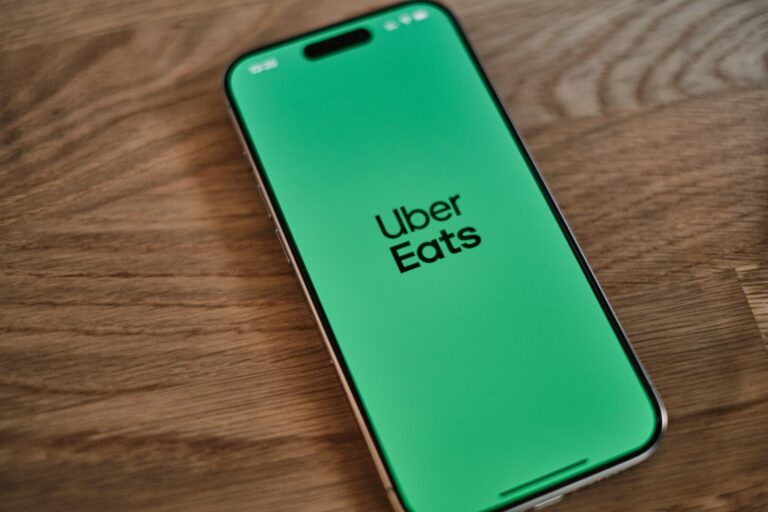
That’s how it started. I was visiting Montreal last weekend, and out of curiousity I opened Uber Eats to see what was around. Found one of my favourite spots, La Carreta, listed on delivery. I started adding a few things to the cart, just poking around, seeing what the total might look like.
And here’s where it gets interesting. I could not find a price anywhere on that screen. Not the total, not a breakdown of what the fees would be, nothing. So I did what the app was basically forcing me to do. I clicked next.
What I saw when I got to the next screen wasn’t exactly obvious. I had to scroll down to even find the total, and when I did, sitting right there at the bottom almost like it didn’t want to be seen, was a countdown. Already going. Five, four, three… by the time my brain connected the dots and my finger found the screen, it was done. Order placed. Have a nice day.
“That was sneaky,” I thought. “But I can probably fix it.”
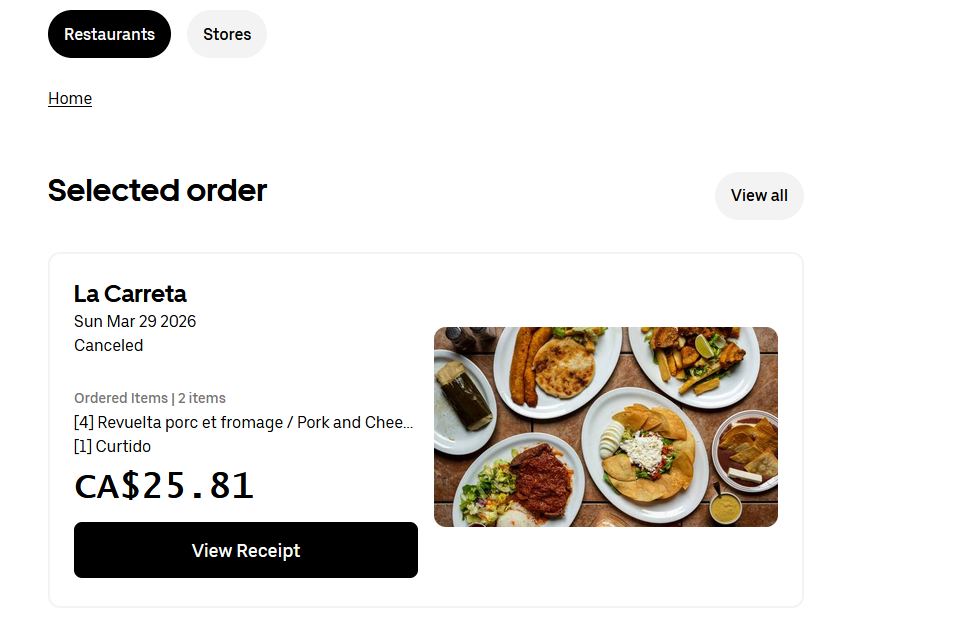
Now I’m scrambling. I look for a way to contact support because I’m thinking, OK, this was clearly a mistake, maybe they can stop it. But there’s nothing. No obvious support button, no chat, no phone number front and center. I finally find the option to cancel the order, which I did, and the app warned me I “might” get charged a fee. Sure, fair enough. I figured a couple of dollars. Maybe five bucks for the inconvenience. It had been literally less than a few minutes since the order went through.
They charged me the full amount. Every penny. The stated reason: the restaurant had already started on the order.
That’s complete and utter BS. Anyone who’s ever worked in a restaurant kitchen knows orders don’t get pulled and prepared in under a minute. But more importantly, even if that were true, shouldn’t there be a grace period? Shouldn’t there be a human being you can reach? Shouldn’t the app not fire off orders with a surprise countdown timer in the first place?
And here’s the real kicker. Once I cancelled and saw I was being charged the full order anyway, I thought fine, at least let me get the food. Maybe I can un-cancel or put it back in motion somehow. Not a chance. There was no way to reinstate the order. No path forward. I was paying for food I couldn’t even receive, let alone eat.
I checked my bank account that night, saw the pending charge and talked myself off the ledge. It’s pending. It’ll drop. These things sort themselves out. I mean, surely Uber Eats isn’t just going to keep my money for food nobody made and nobody delivered. That would be insane.
Well guess what, readers? They kept the money.
The next day I went back on the app, determined to find support. And I did eventually, sort of. The only way I could get to an actual human was by clicking something like “Report a serious incident with a delivery person.” That was it. That was the secret door. Never mind that I had no delivery person, no delivery, nothing. That was the only way in.And the person waiting on the other side? Not a drop of sympathy. No apology, no “I understand your frustration,” no attempt whatsoever to make a unhappy customer feel heard. Just refusal. Cold, flat, immediate refusal. Which at that point honestly felt like the most Uber Eats thing that could have happened.
So let me ask the obvious question. Who designed this experience, and why does it work this way?
Because it’s not an accident.
Hiding the total price until the final screen forces you to click through. The countdown timer creates instant pressure. The lack of easy support means most people just give up and absorb the charge. At every single friction point, the design benefits Uber and costs you. That’s not a flaw in the system. That IS the system.
And I’m not the only person who noticed.
A Toronto law firm called Koskie Minsky filed a proposed class action lawsuit against Uber Eats Canada in May 2025. The claim alleges that Uber misrepresented the true cost of delivery by only fully disclosing fees at the final stage of the transaction, often hiding them under a “Taxes and Other Fees” line item, a practice known as drip pricing. The lawsuit is open to any Canadian who placed a delivery order on Uber Eats on or after May 16, 2023. That could be millions of people.
According to the filing, the Service Fee, which runs between $2 and $4, gives customers a false impression of how much their food will actually cost by burying it under a vague label rather than displaying it upfront like the Delivery Fee. So if you thought you knew how much you were spending before you hit that final screen, you didn’t.
This isn’t even unique to Canada. The U.S. Federal Trade Commission filed a lawsuit against Uber in April 2025, alleging the company charged consumers for its Uber One subscription without their consent, failed to deliver on promised savings, and made cancellation so difficult that users could be forced to navigate as many as 23 screens and complete as many as 32 separate actions just to cancel. Some users were told they had to contact customer support to cancel, but were given no way to actually reach anyone.
Read that last part again. Told to contact support. No way to contact anyone. That’s exactly what happened to me, except I wasn’t trying to cancel a subscription, I was trying to undo a $25 mistake that happened because their app has a surprise countdown button.
U.S. Senators Elizabeth Warren, Bob Casey, and Ben Ray Lujan went after DoorDash and Uber Eats in 2024, accusing them of taking advantage of consumers through fees that can inflate the total cost of an order by as much as 95 percent. Ninety-five percent. You think you’re ordering $30 worth of food and you’re paying almost $60. And the design of the app is specifically built to make sure you don’t fully understand that until its too late.
Uber’s public response to all of this has basically amounted to: we’re taking the allegations seriously and we’re committed to transparency. That’s the kind of statement you issue when you have no intention of changing anything.
The thing that gets me isn’t really the money. I’ve spent more than that on worse decisions. What bothers me is the contempt embedded in the design. Every dark pattern in that app, the hidden totals, the autofire countdown, the invisible support, the full-charge cancellation policy, every one of those choices was made by a room full of engineers and product managers and lawyers who knew exactly what they were building. They built a trap and they labeled it an app.
If you’ve had a similar experience with Uber Eats, its worth knowing the Canadian class action is still open to new participants. And it might be worth filing a complaint with your provincial consumer protection office, or the Competition Bureau of Canada, which has been increasingly vocal about exactly these kinds of drip pricing tactics.
Because the only thing that changes any of this is making sure it costs them more to keep doing it than to stop.
Oh, and delete the app. Seriously.
Have a story about Uber Eats or another delivery app? Send it to us at [email protected].
About The Author