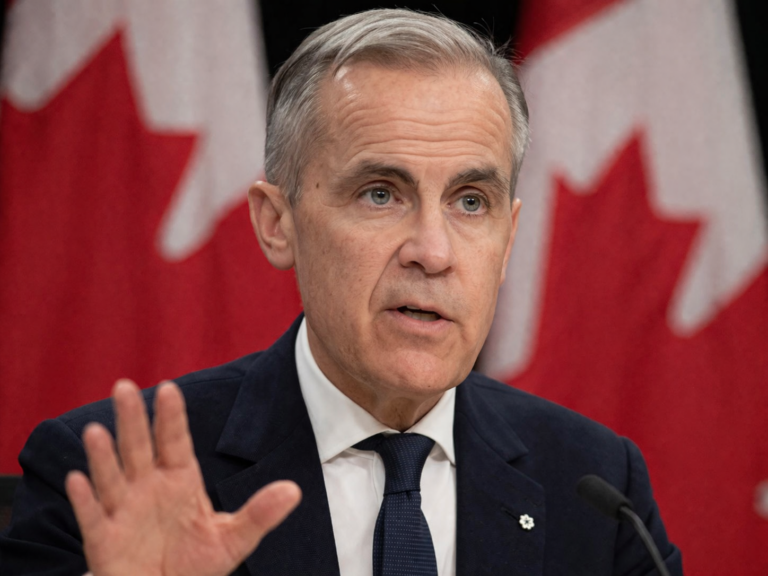

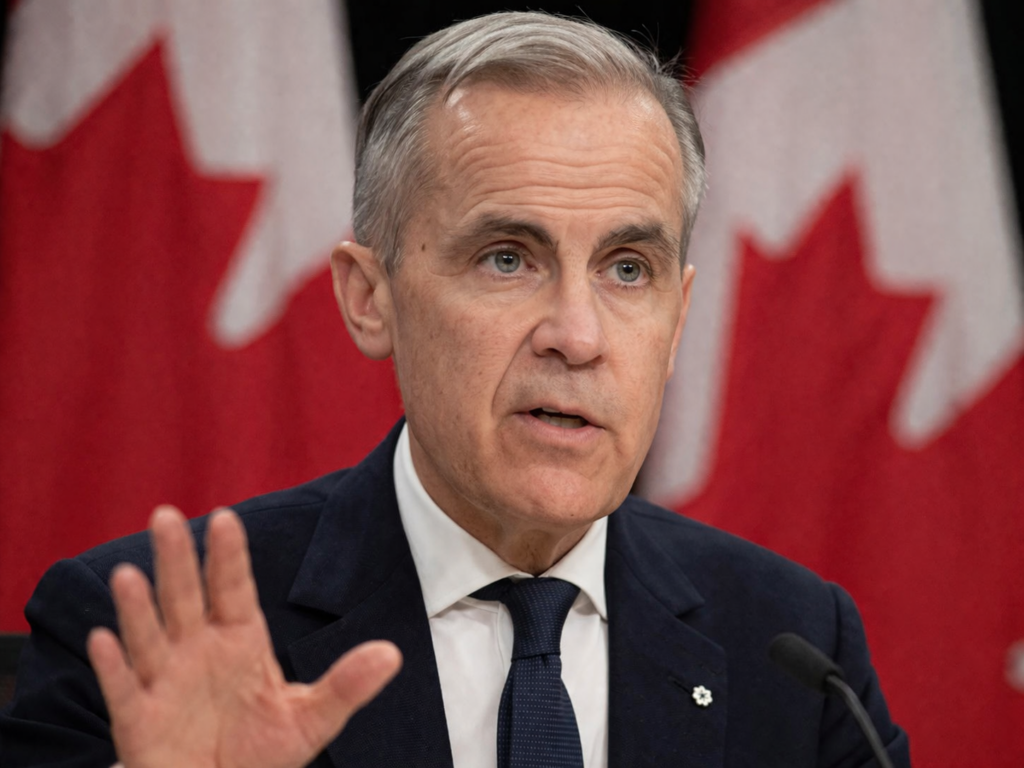
Mark Carney stood in Brampton on Tuesday and did what newly elected prime ministers do. Big crowd. Cameras rolling. Groundbreaking ceremony. The whole thing.
The announcement was the official launch of the Build Communities Strong Fund, a $51 billion infrastructure program spread across ten years. Hospitals. Community centres. Transit. Water systems. Roads. The full patriotic wishlist.
On the surface it sounds significant, and some of it genuinely is. The fund runs through three streams: $17.2 billion for provinces and territories, $6 billion for direct delivery, and $27.8 billion through something called the community stream — which, if you read the fine print, is mostly just a rebranding of the Canada Community-Building Fund that already existed. So some of this is new money. Some of it is old money in a new shirt.
Build Communities Strong Fund: worth knowing before the ticker-tape parade.
The first project out of the gate is the Embleton Community Centre in Brampton. A 175,000-square-foot facility with a pool, gym, fitness centre, childcare space. $64 million in federal funding. Mayor Patrick Brown was thrilled, which makes sense. When $64 million shows up in your city you smile for the cameras. Nobody’s arguing with a community centre.
But a community centre in Brampton is not the story here.
The government says the fund will support 42,000 jobs a year and add $95 billion to Canada’s GDP over the decade. That works out to roughly $12 billion in infrastructure investment annually, nearly double the pace of the last eight years. If that’s actually delivered, it matters. Canada has been running a serious infrastructure deficit for a long time and everybody in municipal government knows it.
Mayors from the Federation of Canadian Municipalities have been warning that delays getting federal dollars to municipalities risk slowing construction, driving up costs, and undermining housing efforts at exactly the wrong moment. These weren’t opposition politicians scoring points. These were mayors sitting across from the prime minister saying the money needs to actually move.
That’s the thing with federal infrastructure programs. The announcement is easy. The part where bilateral agreements get signed, provincial cost-matching gets negotiated, and bureaucratic sign-offs multiply like rabbits — that part takes years. Doesn’t happen at a groundbreaking.
So what are the actual conditions attached to this money?
To access the provincial stream, provinces have to do more than ask. They need to match funding and substantially reduce development charges without layering on other taxes that slow housing supply. Development charges are the fees municipalities collect from developers when new homes get built, meant to fund the roads, sewers, and parks that new neighbourhoods need. Growth pays for growth, in theory. In practice, those charges have climbed 700 per cent over the last two decades and can add over $100,000 to the price of a new home. In Toronto, the average condo already carries more than $130,000 in development charge costs before a single wall goes up.
The federal offer is: cut those charges and we’ll give you infrastructure money to cover what municipalities lose. Not unreasonable.
But Alberta Municipalities pushed back, saying the approach ignores how different municipalities actually fund growth infrastructure. Edmonton uses servicing agreements where developers directly fund sewers and roads in new neighbourhoods. The federal framework wasn’t built with that in mind. Same blunt instrument, swung at Fort McMurray and Brampton like they’re the same place.
They’re not.
Then there’s the accountability question. Canada’s Parliamentary Budget Officer put out a report last year pointing out that there’s still no single consolidated source showing where federal infrastructure money actually goes or what it delivers. The interim PBO said it plainly: no clear view of where the money goes or what impact it has. That was about the old programs. We’re now stacking $51 billion more on top.
One piece getting lost is the Buy Canadian requirement baked into the fund. All infrastructure spending must direct public dollars into the Canadian economy, using Canadian labour and Canadian resources. Given what’s happening with US trade right now, keeping $51 billion circulating inside the country isn’t a crazy idea. Whether it survives contact with actual procurement is worth watching.
For Ottawa and the broader National Capital Region, the question is the same as everywhere else — does any of this actually land here. Eligible project proponents can submit proposals for the Direct Delivery stream right now. That’s $6 billion aimed at community and regional projects. There’s some irony in the fact that this city hosts the federal government, watches these announcements get made from down the street, and still has to line up and apply like everyone else. Ontario’s allocation through the provincial stream is $6 billion over ten years. How much of that reaches communities outside the GTA depends entirely on who applies and how hard local governments push for it.
Same as it ever was.
The Build Communities Strong Fund is real money going toward real needs. The housing crisis has an infrastructure problem underneath it and that problem is legitimate. Carney’s government gets some credit for tying the money to actual housing conditions rather than just writing cheques. That’s at least structurally different from some of what came before.
But $51 billion announced on a Tuesday in Brampton is not $51 billion delivered. The provincial negotiations are real. The accountability gaps are real. And the history of these programs moving slower than promised is also real.
The community centre in Brampton will get built.
The rest of us will see.
About The Author