


With the possibility of a postal disruption on the horizon, the question on many minds is simple: are we heading for a Canada Post strike? As of now, the situation is tense. Federal mediators are involved in the negotiations between Canada Post and the Canadian Union of Postal Workers (CUPW), but with a strike mandate from its members, the union is in a legal position to initiate job action if a new collective agreement is not reached.
Where Things Stand with Canada Post Labour Talks
To understand the latest news on a potential Canada Post strike, we need to look at how we arrived at this point. The journey to this critical juncture has been paved with months of negotiations, offers, and counter-offers between Canada Post and the union representing over 50,000 of its employees.
At the heart of the dispute are core labour issues: wages, job security, health and safety, and working conditions in a rapidly evolving delivery industry.
This infographic lays out the key moments in the negotiation process, showing how we went from initial talks to the involvement of federal mediators.
As you can see, the situation has escalated from internal bargaining to third-party intervention. This is a standard process for major labour disputes in Canada, but it also signals that the two sides are facing significant challenges in finding common ground on their own.
Key Timelines and Negotiation Milestones
To keep everything straight, here’s a factual rundown of the critical dates and events that have defined the Canada Post and CUPW negotiations so far, based on publicly available information.
| Event | Date | Significance |
|---|---|---|
| Negotiations Begin | Late 2023 | Canada Post and CUPW exchange initial proposals and begin formal contract negotiations. |
| Strike Mandate Vote | Spring 2024 | CUPW members vote overwhelmingly in favour of a strike mandate, giving the union's leadership the authority to call for job action if necessary. |
| Mediation Requested | Mid-2024 | With talks stalling, both parties agree to bring in federal mediators to help facilitate a new agreement. |
| Strike Deadline Looms | Ongoing | No official strike date has been set, but the union is in a legal strike position. Negotiations continue under the watch of federal mediators. |
This timeline shows the progression of the negotiations, but it's important to remember that a deal can still be reached at any point, averting a work stoppage.
What's Happening Right Now?
Talks intensified when CUPW secured a strong strike mandate from its members for both its urban and Rural and Suburban Mail Carriers (RSMC) units. While this doesn't guarantee a strike, it is a critical step that gives the union leverage at the bargaining table. For an official overview of the timeline, you can review the official negotiation timeline on the Canada Post website.
It's crucial to understand what a strike mandate means in this context.
A strike mandate is a tool used in collective bargaining. It does not automatically trigger a work stoppage. It legally empowers the union to call for job action, such as a strike or rotating walkouts, if last-ditch negotiation efforts, including mediation, fail to produce an agreement.
Both Canada Post and CUPW have publicly stated their goal is to reach a negotiated settlement without disrupting mail service. However, with significant issues still unresolved, the ongoing mediated talks are critical. If you're looking for more background, you might want to read our earlier piece asking if Canada Post is on strike.
Ultimately, the outcome depends on whether federal mediators can help bridge the gap between Canada Post's operational needs and CUPW's demands for its members.
Understanding the Core Issues at Stake
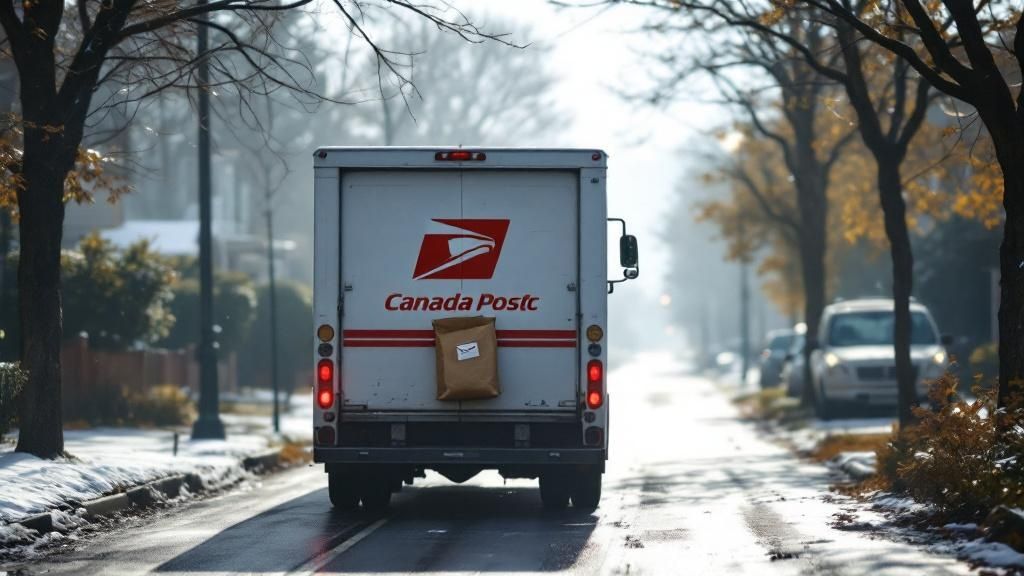
To accurately report on a potential Canada Post strike, one must look beyond the headlines. This is not a single disagreement but a collection of complex issues where both parties have well-defined positions.
At its core, this is a negotiation between a Crown corporation mandated to be financially self-sufficient and a union representing the thousands of workers who deliver the mail.
The conflict stems from differing priorities. Canada Post is focused on long-term sustainability and competitiveness in a challenging market. The union is focused on the immediate economic and workplace realities facing its members, such as the rising cost of living and on-the-job safety. Both parties aim for a successful postal service, but their approaches to achieving it differ significantly.
That is why finding a middle ground has proven difficult.
Wages Versus Inflation
Compensation is a major point of contention. The Canadian Union of Postal Workers (CUPW) argues that wage offers from Canada Post have not kept pace with recent inflation. The union is seeking wage increases that protect the real-world purchasing power of its members' incomes.
Canada Post, meanwhile, must manage its financial obligations while operating in a competitive delivery market. The corporation aims to provide fair compensation while ensuring its shipping rates remain viable for Canadian consumers and businesses. For a closer look at the economic context, it’s worth understanding the Canada Post strike of 2025 and the financial pressures involved.
Job Security and Working Conditions
The negotiations extend far beyond pay. CUPW has consistently raised concerns about difficult working conditions, including workplace safety and overburdening. The union is seeking improvements for all its members, including the Rural and Suburban Mail Carriers (RSMCs), who have historically faced different pay structures and working conditions than their urban counterparts.
Job security is another key issue. As letter mail volumes decline and parcel delivery grows, the nature of postal work is changing. The union is advocating for the protection of stable, full-time employment and resisting what it sees as a move towards more precarious, temporary staffing models.
The core of the negotiations revolves around finding a sustainable path forward that honours the work of postal employees while ensuring Canada Post can effectively compete and serve Canadians for years to come.
Who's Actually at the Negotiating Table?

To report accurately on a potential Canada Post strike, it is essential to identify the key parties involved in the negotiations. This is a formal bargaining process between two large organizations with distinct mandates and priorities.
First, there is Canada Post, a Crown corporation. This means it is owned by the Government of Canada but operates with a mandate to be financially self-sufficient. It must balance its public service obligation—delivering mail to all Canadian addresses—with the need to compete commercially against private parcel delivery companies like UPS, FedEx, and Purolator.
On the other side is the Canadian Union of Postal Workers (CUPW). This national union represents over 50,000 postal employees, including mail carriers, postal clerks, and other staff. Its primary responsibility is to negotiate collective agreements that determine the wages, benefits, and working conditions for its members.
A Clash of Priorities
The conflict at the bargaining table stems from their fundamentally different objectives.
- For Canada Post, the focus is on viability. The corporation must control costs to remain financially sustainable. This often leads to proposals aimed at increasing operational flexibility and managing expenses, such as wages and benefits, particularly as it seeks to grow its share of the competitive parcel delivery market.
- For CUPW, the focus is on its members. The union's mandate is to protect and improve the livelihoods of its workers. It pushes for wage increases that reflect the cost of living, enhanced job security, and safer working conditions, resisting measures it believes could negatively impact its members.
This fundamental difference in priorities is why reaching a mutually acceptable agreement is so challenging. You can read more about recent negotiation developments and how Canada Post tabled new offers in an attempt to move the process forward.
How a Strike Impacts the Canadian Economy
If Canada Post operations were to cease, the economic impact would extend far beyond delayed mail. A potential strike represents a significant disruption to one of the nation's key commercial and logistical networks, with consequences for nearly every sector of the Canadian economy.
The disruption would affect individuals awaiting essential documents and large retailers alike. However, small and medium-sized businesses (SMBs), which are crucial to local economies, often experience the most significant impact. For these enterprises, a postal stoppage is not just an inconvenience—it can be a direct threat to their operations and financial stability.
The Small Business Squeeze
Consider a small e-commerce business that relies on Canada Post's affordable and extensive shipping network to reach customers across the country. A strike severs this vital connection. Inventory can accumulate, new orders cannot be shipped, and revenue streams can be severely curtailed.
This forces business owners to seek alternative couriers, which are often more expensive and may not offer the same universal reach, particularly to rural and remote areas. These higher shipping costs must either be absorbed, reducing profit margins, or passed on to consumers, potentially making the business less competitive.
A postal strike fundamentally disrupts the trust between a business and its customers. When you can't keep your delivery promises, it chips away at loyalty and can do long-term damage to a small company's hard-earned reputation.
The financial strain on Canada Post itself is also significant. As customers shift to competitors due to service uncertainty, parcel volumes decline. In the lead-up to previous potential disruptions, Canada Post has reported substantial drops in parcel volumes as customers sought more reliable alternatives. This loss of revenue impacts the Crown corporation’s financial stability and has broader economic repercussions. You can get more insight into the financial impact of all this strike uncertainty on hcamag.com.
How to Navigate a Postal Disruption

If a Canada Post strike occurs, understanding its practical implications is key to mitigating its impact on your personal and business affairs. A full work stoppage does not necessarily mean every service ceases, but having a contingency plan for essential mail and parcels is crucial.
During a strike, most standard mail and parcel services are suspended. This means Canada Post typically stops accepting and processing new items, and mail already within the system is held until the dispute is resolved.
However, certain exceptions have been made in the past.
One crucial thing to remember: In past disputes, Canada Post and CUPW have reached agreements to continue the delivery of essential government benefit cheques. This is to ensure that socio-economic payments, like pensions and child benefits, reach the Canadians who depend on them.
What You Should Do—For Yourself and Your Business
For anyone who relies on postal services, proactive planning is the best strategy. As soon as a strike appears possible, it is wise to begin exploring alternatives.
- For individuals: If you are expecting important documents or need to send a time-sensitive package, research private courier options immediately. For bill payments, transitioning to online or telephone banking can prevent late fees.
- For businesses: Communication is paramount. Proactively update the shipping information on your website, inform customers of potential delays at checkout, and use email notifications. Managing customer expectations helps maintain trust.
Finding Other Ways to Ship
Fortunately, Canada has a competitive courier market with several alternatives. Securing these options in advance can prevent significant delays and operational bottlenecks.
A few of the key private carriers to consider are:
- Purolator: Possesses an extensive domestic network and a strong Canadian presence.
- UPS: A reliable option for both national and international shipments with robust tracking.
- FedEx: Often utilized for time-sensitive and express deliveries.
Researching these alternatives before a strike is officially called allows for a swift and seamless transition, ensuring your personal and professional shipments continue to move with minimal disruption.
Your Questions About the Canada Post Strike Answered
With a potential mail disruption on the horizon, it is natural to have questions. To provide clarity, we have compiled factual answers to some of the most common inquiries regarding a potential Canada Post strike.
Here is a summary of what people are asking.
Will I Still Get My Government Cheques if There’s a Strike?
This is a significant concern for many Canadians. Based on historical precedent, the answer is typically yes. During past labour disputes, Canada Post and the union have negotiated agreements to ensure the continued delivery of essential mail, such as pension cheques, child tax benefits, and other critical government payments.
The federal government and both parties generally make special arrangements to prevent the interruption of these socio-economic payments. As a potential strike date approaches, it is always advisable to confirm contingency plans with the specific government agency responsible for your payments.
What Are the Postal Workers Asking For?
The Canadian Union of Postal Workers (CUPW) has several key demands at the negotiating table. A primary issue is wage increases that keep pace with the cost of living.
Beyond compensation, the union is seeking enhanced job security in an industry undergoing significant transformation. CUPW is also advocating for improved health and safety measures and solutions to long-standing workload issues, particularly with the growth of weekend parcel deliveries. Achieving a better balance between full-time and part-time positions is another stated goal.
How Can My Small Business Get Ready for a Postal Strike?
For any small business, proactive preparation is the most effective strategy. The first step should be to communicate with your customers. Be transparent about the potential for shipping delays.
If you run an e-commerce shop, transparency is everything. A simple banner on your website and a heads-up at checkout can manage expectations, build trust, and prevent a flood of customer service emails down the road.
Next, establish a backup plan. Begin researching and setting up accounts with alternative couriers now. Companies like Purolator, FedEx, or UPS are established national carriers. For international shipping, investigate services specializing in cross-border logistics. Having these options ready allows you to pivot quickly if a strike is called.
Where Can I Get Reliable Updates on the Strike?
To obtain factual and timely information, it is best to consult primary sources. The official news sections of the Canada Post website and the Canadian Union of Postal Workers (CUPW) website are the most reliable sources. Both organizations issue regular updates and press releases as negotiations unfold. Reputable national news outlets will also provide ongoing, verified coverage of developments.
For the latest news and developments in Ottawa and the National Capital Region, trust ncrnow to keep you informed. Visit us at https://ncrnow.ca.
About The Author