
META DESCRIPTION: Get the latest Gatineau Park trail conditions for hiking, biking, skiing, and snowshoeing. Your guide to NCC updates, closures, and real-time reports.
Planning a trip to Gatineau Park? Knowing the latest Gatineau Park trail conditions is the key to a safe and enjoyable day. This guide offers a clear, season-by-season look at what to expect on the ground, whether you're hiking, biking, skiing, or snowshoeing in this massive natural space right next to Ottawa and Gatineau.
Checking Park Conditions: Where to Look
Trail conditions in Gatineau Park can change quickly due to weather, seasonal maintenance, or other unexpected events. Before you leave home, a quick check of the latest information is essential.
This page will help you find reliable updates from both official and community sources. We will cover everything from spring mud and summer bugs to winter ice and grooming schedules. The goal is to give you the confidence to explore the park’s vast network safely.
Here is what this guide covers:
- Official vs. Community Sources: Learn where to find reliable information, from National Capital Commission (NCC) advisories to user reports on apps like Trailforks.
- Seasonal Challenges: We break down specific conditions you will face year-round, like the spring thaw, summer storms, and winter grooming.
- Activity-Specific Details: Whether you hike, mountain bike, cross-country ski, or snowshoe, we have advice tailored to your activity.
By the end, you will know exactly where to look when checking Gatineau Park trail conditions.
The most important step in any Gatineau Park plan is checking the latest trail information. Conditions can change in a moment, and being prepared makes the difference between a great day and a frustrating one.
The official source for all trail information in Gatineau Park is the National Capital Commission (NCC). They manage the park, so their updates are the final word. Always start there.
Official NCC Resources
The NCC’s website is your first and most important stop. Its interactive maps and advisories are updated by the people maintaining the trails, so the information is accurate.
Look for these key items on the NCC site:
- Official Closures: This is non-negotiable. It includes seasonal closures for the spring thaw and temporary shutdowns for trail maintenance, severe weather, or wildlife activity.
- Grooming Reports: In winter, this is essential. You will find detailed grooming updates for cross-country skiing, snowshoeing, and fat biking. The NCC often uses platforms like Nordic Pulse for real-time grooming status.
- Safety Advisories: Urgent notices, like a washed-out bridge or a particularly icy section, will be posted here first.
The NCC balances public access with protecting the park’s ecosystem. When a trail is closed, it is for a good reason, either to protect you or to prevent trail damage. Ignoring a closure puts you at risk and can damage trails for everyone.
Crowdsourced Trail Reports
While the NCC provides the official status, crowdsourced platforms offer real-time information from people who were just on the trails. It is like getting a tip from a fellow hiker who just finished their route.
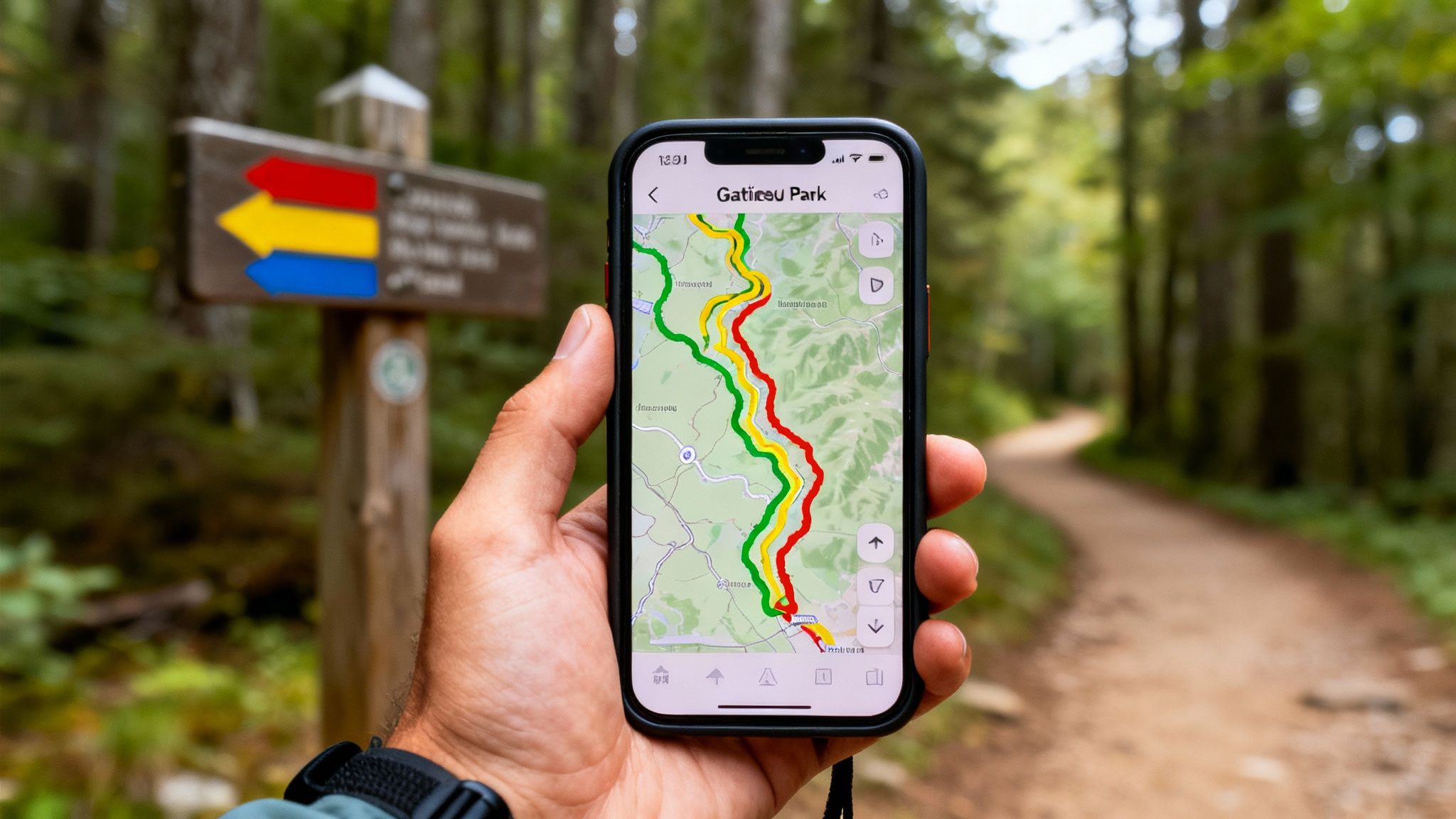
Apps like Trailforks and AllTrails are popular in the region for this reason. You can find recent photos and comments on conditions that official reports might miss, like a muddy section on the Wolf Trail after rain or an icy patch on a shaded slope.
The most important rule for these reports is to always check the date of the post. A report from two weeks ago is not useful. By combining recent user insights with the NCC's official advisories, you will have the most complete picture of what to expect.
Trail Condition Resources At-a-Glance
Deciding where to look first depends on what you need to know. The official NCC site is essential for closures and grooming, while crowdsourced apps provide real-time feedback from the ground.
Here is a quick breakdown to help you choose the right tool.
| Resource | Best For | Update Frequency | Key Feature |
|---|---|---|---|
| NCC Website | Official closures, safety advisories, winter grooming status, and park-wide alerts. | Daily or as needed | The authoritative source for what is officially open, closed, or hazardous. |
| Trailforks | Real-time user reports on specific trail segments, especially for mud, ice, or fallen trees. | Constantly (user-dependent) | Highly detailed trail maps with colour-coded condition statuses reported by users. |
| AllTrails | Recent user reviews and photos that give a general sense of a trail's current state. | Constantly (user-dependent) | User comments and photos offer a snapshot of the trail experience within the last few days. |
| Local Facebook Groups | Community tips, last-minute warnings, and answers to specific questions. | Constantly (user-dependent) | Direct access to a community of local hikers, skiers, and bikers who are on the trails daily. |
The smartest approach is to cross-reference. A quick look at the NCC site tells you if a trail is open, and a five-minute scroll through recent Trailforks or AllTrails comments will tell you if you need waterproof boots or microspikes.
Navigating Summer and Autumn Hiking and Biking Conditions
The green seasons in Gatineau Park, from late spring through fall, offer some of the best hiking and biking in the region. But even on a sunny day, conditions can be unpredictable. Understanding the seasons is key to a successful outing.
A critical period each year is the spring thaw. As snow melts, trails become saturated and fragile. This is why the NCC enforces a mandatory spring closure, usually until mid-May, to prevent deep ruts and serious erosion. Respecting these closures is essential to keeping the trail network healthy.
Even after trails officially open, expect mud in the early season. Routes with poor drainage or in low-lying areas will stay wet longer. This is the time for waterproof boots and extra patience.
Summer Storms and Trail Surfaces
Summer generally brings drier conditions. However, residents of the National Capital Region know how quickly a thunderstorm can arrive. A heavy downpour can turn a dry trail into a slick, muddy hazard in minutes.
On trails with exposed rock and roots, like the popular Wolf Trail, this moisture can make footing treacherous. After a big storm, it is wise to give the trails at least 24 hours to dry out, especially for mountain biking. Riding on wet trails increases the risk of falling and carves up the trail surface, creating ruts that are dangerous for hikers. For routes suited to current weather, explore our breakdown of the best Gatineau Park hiking trails.
Autumn Leaves and Increased Moisture
Fall in the park is beautiful but brings its own challenges. A thick blanket of fallen leaves can hide rocks, roots, and holes, creating tripping hazards. It is best to slow down and consider using hiking poles for extra stability.
Autumn also means more rain and cooler temperatures, so trails take longer to dry. Mud becomes common again, especially in October. This is when crowdsourced information is valuable. For instance, user reports on platforms like Trailforks show a 30% spike in trail condition updates during the fall compared to summer, with almost a third of those reports flagging wet or muddy sections. It is always worth checking recent user data to see how others are rating specific trails.
This checklist helps you decide where to look first, whether you need official closure information from the NCC or real-time feedback from other trail users.
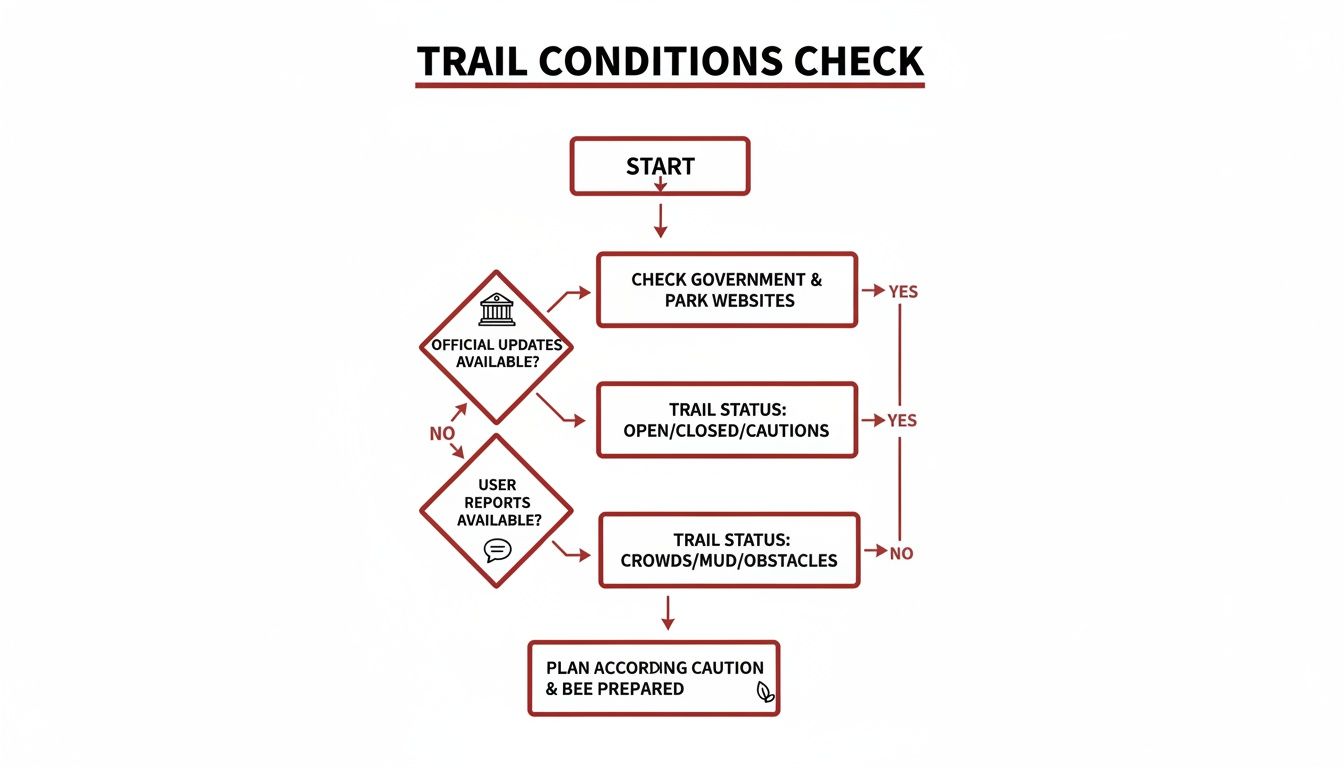
The best approach is almost always a combination of the two. Check the official NCC alerts for any closures, then cross-reference with recent user reports to get the most accurate picture of what you will find on the trail.
Mastering Winter Cross-Country Ski Trail Conditions
When snow arrives, Gatineau Park becomes a hub for cross-country skiing in the National Capital Region. For both classic and skate skiers, understanding grooming reports is the difference between effortless gliding and a difficult day.
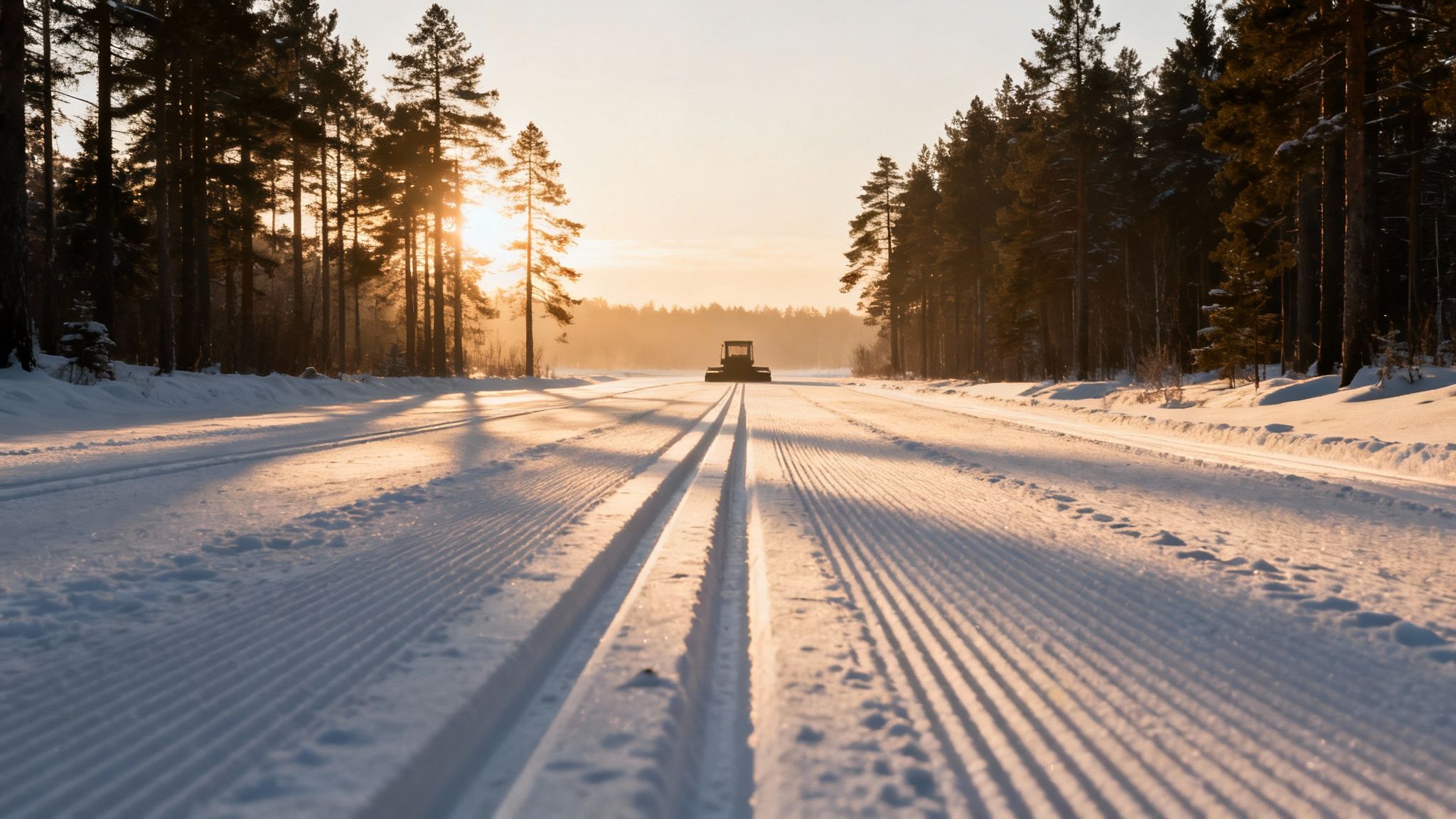
The National Capital Commission uses tools like Nordic Pulse to give skiers real-time updates. Familiarizing yourself with the terminology is crucial for setting expectations before you hit the Gatineau Park trails.
Decoding Grooming Reports
Grooming terms might sound technical, but each one describes what you will find on the snow. A freshly groomed trail provides skate skiers with a perfect "corduroy" surface and sets sharp, clean tracks for classic skiers.
Here is a quick rundown of what common grooming terms mean for your ski day:
- Freshly Groomed: The gold standard. This means the groomer just passed through overnight or in the early morning. Expect firm, fast surfaces and excellent control.
- Skier-Tracked: The trail has been used since the last grooming. The classic tracks might be washed out, and the skate lane will be softer.
- Icy or Hardpacked: This often happens after a thaw-freeze cycle or on a busy weekend. These conditions are fast and require sharp edges and caution, especially on downhills.
- Powder: New snow has fallen on a groomed base. This means slower, more strenuous skiing until the groomers pass again.
The cross-country ski trails in Gatineau Park, meticulously tracked by Nordic Pulse grooming reports, offer a statistical goldmine for NCR skiers. The 165 km network was groomed on 85% of operable days in the 2024-2025 season so far. You can discover more insights about grooming frequency and trail popularity on Nordic Pulse's Gatineau Park page.
Grooming Schedules and Priorities
When a big storm hits, the NCC's grooming team has a clear plan. The main parkway trails, which see the most traffic, are almost always groomed first. This opens the most popular routes as quickly as possible.
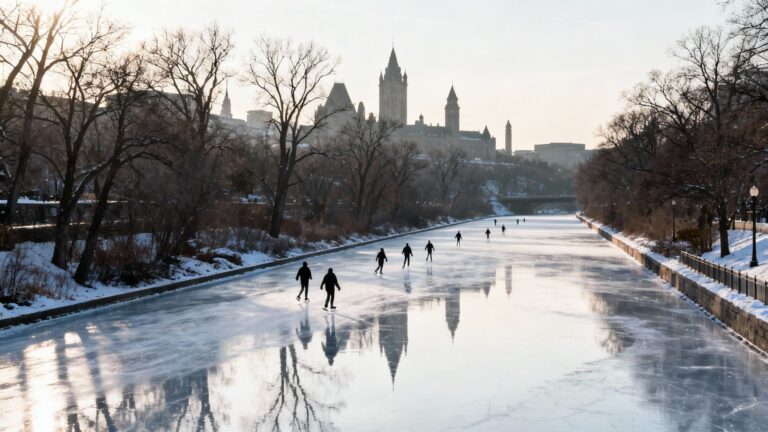
Backcountry loops and less-travelled connector trails usually follow, sometimes a day or two after a big snowfall. Temperature and traffic also impact how long a trail stays in perfect condition. A trail groomed on a cold Friday morning can become packed and icy by Saturday afternoon if it is busy. This local knowledge is key to planning your trips for the best conditions. For other winter activities, see our guide on the best times for Ottawa Canal ice skating.
Understanding Snowshoeing and Fat Biking Trail Updates
Beyond the cross-country ski network, Gatineau Park is a winter playground for snowshoers and fat bikers. Each sport has its own trail system and unique conditions to be aware of.
For snowshoers, the park offers a variety of marked routes, separate from the ski tracks to preserve the grooming. Conditions on these trails can change quickly. After a fresh snowfall, you might be breaking trail through deep powder. A few days later, after heavy foot traffic, the same path can become a hard-packed, icy track requiring good grips.
Interpreting Fat Biking Conditions
Fat biking has grown in popularity, and Gatineau Park now has a purpose-built trail network for wide tires. The most critical factor for fat bikers is temperature, especially during the region's common freeze-thaw cycles. When temperatures are near freezing, trails can become soft.
Riding in these slushy conditions creates deep, damaging ruts. When the temperature drops, these ruts freeze solid, making the trail hazardous for everyone. Watch official reports for terms like "soft," "rutted," or "icy." It is crucial to respect trail closures and turn back if conditions are not firm. This protects the trail base for the entire season.
Snow biking's popularity in the park is clear, with over 60 kilometres of dedicated trails now available. Trail usage increased by 40% between 2019 and 2024, and the NCC now issues around 12,000 annual passes for winter fat biking. That said, early 2024 thaws led to 35% of trail reports citing 'rutted' or 'icy' hazards on expert sections, forcing several temporary closures. You can check a map of the winter biking network and its current conditions here.
Protecting the fat bike trails is a community effort. If your tires are leaving a rut deeper than a couple of centimetres, the trail is too soft to ride. Turning around helps keep the network in great shape for everyone.
Finding the Best Snowshoeing Spots
While fat biking requires firm, frozen ground, snowshoeing is more forgiving. The "best" conditions often depend on personal preference.
- For solitude and fresh powder, try the less-travelled trails right after a fresh snowfall for a pristine experience.
- For an easier, faster trek, stick to popular routes a day or two after a storm. The snow will be packed down, allowing for a quicker pace.
Before you go, always consult the NCC’s winter map for the latest on which trails are open for each activity. A quick check ensures a better, safer day out and helps maintain the trail system for everyone.
Decoding Trail Closures and Safety Advisories
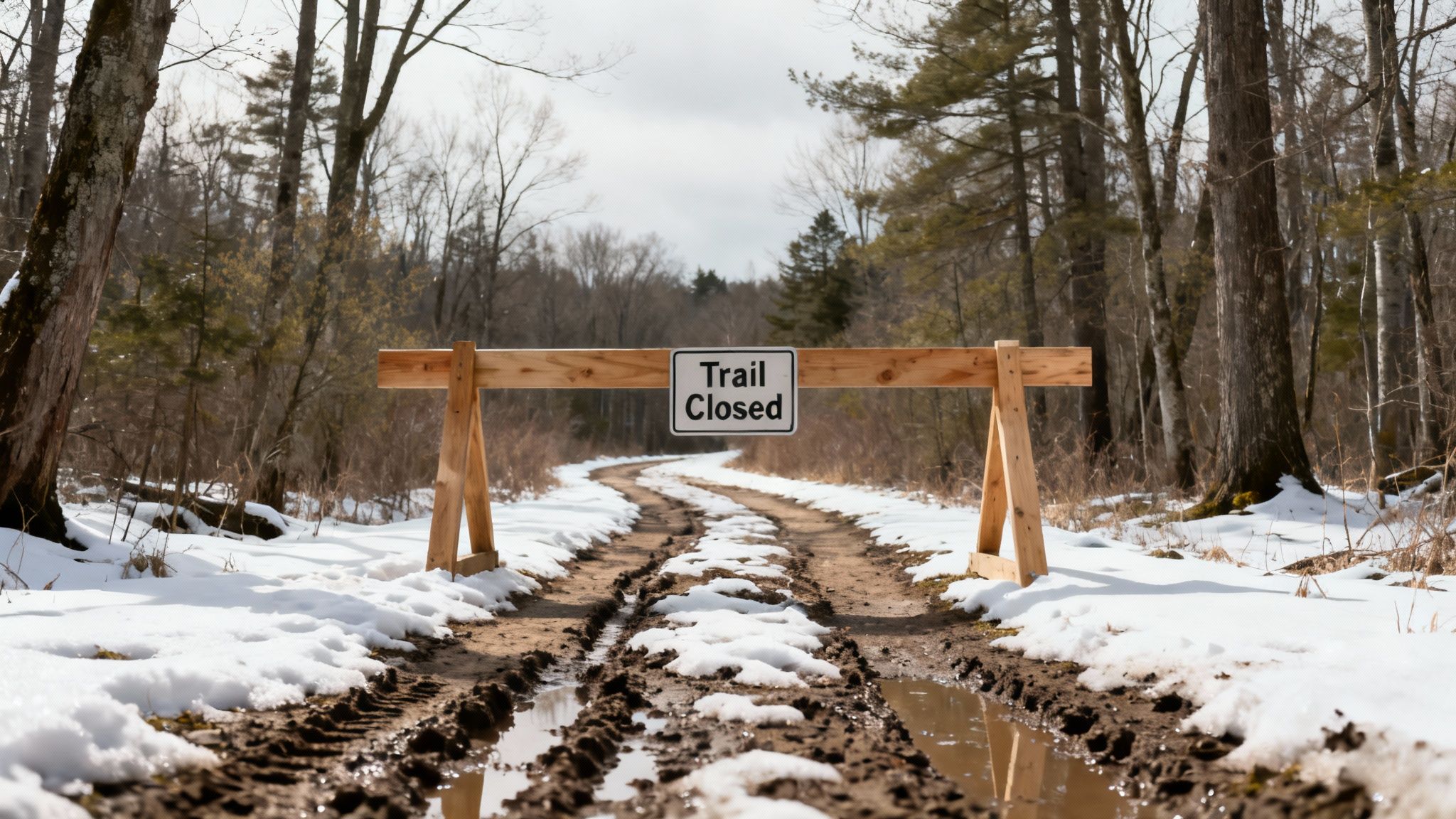
Encountering a "Trail Closed" sign in Gatineau Park can be disappointing, but these closures are essential for maintaining the park. They are in place for two main reasons: to protect the park’s fragile ecosystem and to keep visitors safe. Understanding why a trail is closed helps everyone do their part.
The most predictable closure is the annual spring thaw, usually from late March through mid-May. As snow melts, the ground becomes saturated, turning trails into soft, muddy paths that are easily damaged. Hiking or biking on them during this time creates deep ruts and erosion that can take months to repair.
Common Reasons for Temporary Closures
Outside of the spring melt, the National Capital Commission (NCC) may close trails for other reasons throughout the year. These closures are typically temporary and specific to certain areas, which is why checking the latest advisories is always a good idea.
Here are a few common reasons a trail might be temporarily off-limits:
- Extreme Weather Events: After heavy rain, trails might be closed to prevent erosion or due to flooding. High winds can also bring down branches, making trails unsafe.
- Trail Maintenance and Construction: Trail crews are always working to improve the network. This can include repairing a bridge, clearing fallen trees, or resurfacing a section of trail.
- Wildlife Advisories: The park is home to black bears. If a bear is frequently spotted in an area, the NCC might close nearby trails to avoid encounters between people and wildlife.
"Respecting a trail closure is one of the most direct ways visitors can contribute to the park's sustainability. It's a small sacrifice that protects the trails for everyone to enjoy for the rest of the season."
When you see a closure, the best thing to do is respect it and find another route. This simple act supports the work of countless volunteers who are crucial for trail maintenance. You can learn more about supporting local trail systems through programs like the Ontario trail grants for volunteers. Your cooperation keeps Gatineau Park in great shape for all of us.
Answering Your Gatineau Park Trail Questions
Exploring Gatineau Park's vast trail network often brings up questions, especially since conditions can change so quickly. Here are straightforward answers to some of the most common queries.
What Is the Best Way to Get Daily Trail Updates?
For the most reliable daily information, it is best to combine two key sources. Start with the National Capital Commission (NCC). Its official website, particularly the Gatineau Park section and the winter conditions map, provides official updates on closures and grooming.
For real-time on-the-ground conditions, nothing beats crowdsourced information. Apps like Trailforks are excellent for reports from fellow hikers and bikers. Using both the official NCC site and a community app gives you the complete picture.
Can I Use Hiking Trails for Snowshoeing in Winter?
No, you should not take snowshoes onto summer hiking trails unless they are specifically marked as official winter snowshoeing routes. The NCC maintains a separate network for snowshoers to prevent damage to the groomed cross-country ski tracks.
Walking or snowshoeing on groomed ski trails damages the surface, creating hazards for skiers. Before heading out, always check the official NCC winter map to find designated snowshoe trails.
Why Are Trails Closed in Spring Without Snow?
Every spring, usually from late March to mid-May, the trails are closed for the thaw. This is not about snow, but about mud. As the ground thaws and the snowpack melts, the trails become saturated with water, making them incredibly soft and vulnerable.
Hiking or biking on them during this period causes deep ruts and serious erosion that is difficult to repair. The NCC closes the trails to allow them to dry out and harden. This short-term closure preserves their condition for the entire summer season.
At NCR Now, we are committed to providing practical guides that help you explore and enjoy the National Capital Region. For more local insights, visit https://ncrnow.ca.
About The Author