
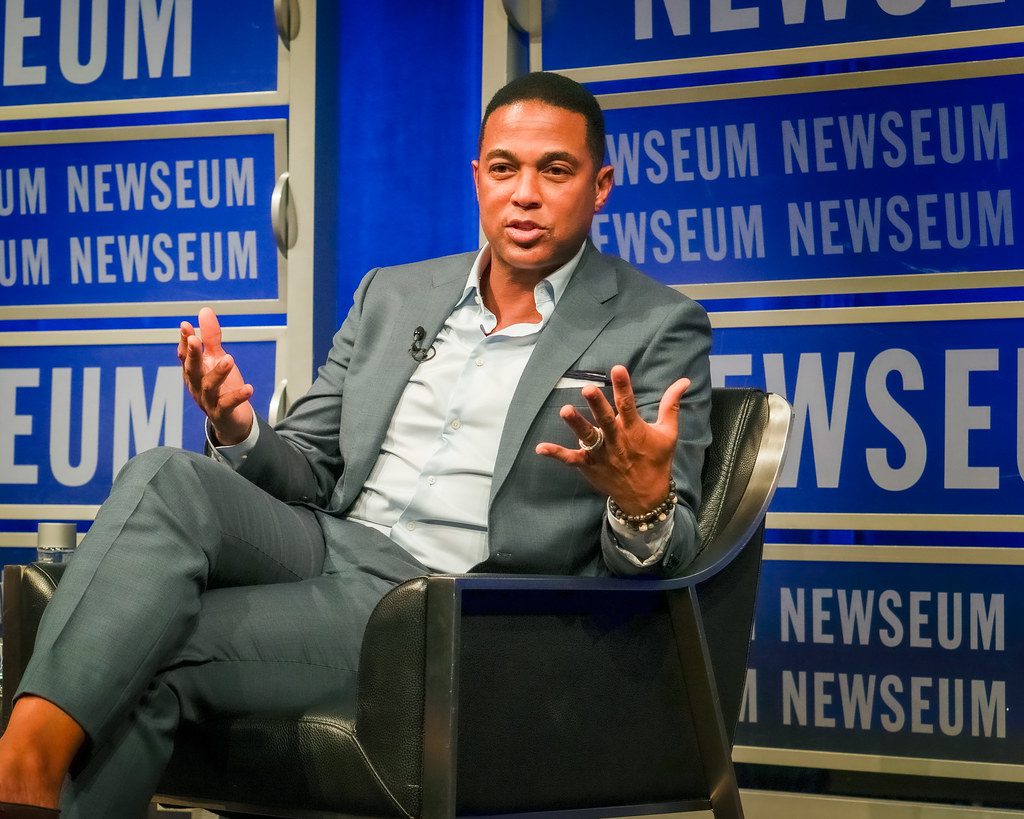
"2019.09.12 Rise Up A Conversation with Don Lemon, Washington, DC USA 255 72043" by tedeytan is licensed under CC BY-SA 2.0. To view a copy of this license, visit https://creativecommons.org/licenses/by-sa/2.0/?
An Objective Analysis of the Unprecedented Case
U.S. Federal authorities arrested Don Lemon on January 30, 2026, alleging that he participated in a coordinated protest that interfered with access to a church in St. Paul, Minnesota. Prosecutors claim Lemon was not merely reporting on the demonstration, but knowingly took part in an effort that blocked congregants from entering a place of worship, a violation of federal civil rights law.
Don Lemon Arrest: The Basic Facts
According to NBC News, federal agents arrested Don Lemon in Beverly Hills around midnight on January 30, where he had been covering preparations for the Grammy Awards. Lemon faces charges of conspiracy against the rights of religious freedom and interfering with religious freedom at a place of worship, alongside eight co-defendants.
The charges stem from Don Lemon’s coverage of a January 18, 2026 protest at Cities Church in St. Paul, Minnesota. Protesters targeted the church because they claim its pastor, David Easterwood, serves as acting director of an Immigration and Customs Enforcement (ICE) field office in Minneapolis.
Don Lemon was released on personal recognizance the same day and stated outside the courthouse: “I have spent my entire career covering the news. I will not stop now.”
The Legal Framework: Don Lemon and the FACE Act
The federal government charged Don Lemon and his co-defendants under the Freedom of Access to Clinic Entrances (FACE) Act. While this statute is commonly associated with protecting abortion clinic access, it also contains provisions covering houses of worship.
Harmeet Dhillon, the Trump administration’s Assistant Attorney General for Civil Rights, acknowledged the unprecedented nature of applying the FACE Act in this context. She stated that prior to her tenure, the statute’s houses of worship provision had never been used to prosecute protesters blocking church access.
This makes Don Lemon’s case legally groundbreaking. The application of a federal civil rights statute primarily designed for one context—abortion clinic protection—to journalists covering protest activity at a church represents uncharted legal territory.
Don Lemon’s Coverage: Journalism or Participation?
The central question in Don Lemon’s case is where to draw the line between journalistic coverage and active participation in civil disobedience. Federal prosecutors allege that Don Lemon attended a briefing by protesters before the event and characterized the upcoming protest as involving civil disobedience. The indictment also states he kept the church location secret until his live coverage began.
In video footage Don Lemon posted to his YouTube channel, he described being at “an operation that is a secret” while standing outside the church with protesters. Once inside, Don Lemon stated: “We’re not part of the activists, but we’re here just reporting on them.”
Don Lemon’s defense attorney, Abbe Lowell, characterized the arrest as “an unprecedented attack on the First Amendment and transparent attempt to distract attention from the many crises facing this administration.”
Previous Judicial Skepticism of Don Lemon’s Arrest
Before Don Lemon’s arrest under the federal indictment, a federal magistrate judge had rejected an earlier criminal complaint against him. The judge found that the Trump administration lacked probable cause to arrest Don Lemon under the FACE Act statute.
According to sources familiar with the matter, Attorney General Pam Bondi was reportedly “enraged” by this initial rejection. The administration subsequently pursued charges through a grand jury indictment, which resulted in Don Lemon’s arrest on January 30.
Context: The Minneapolis Immigration Enforcement Crackdown
Don Lemon’s arrest occurs against the backdrop of an intensive federal immigration enforcement operation in Minneapolis. According to the Department of Homeland Security, 3,000 federal immigration agents have been deployed to the Twin Cities over the past two months, resulting in over 3,000 arrests of undocumented immigrants.
The operation has generated controversy after federal agents fatally shot two U.S. citizens: Renee Good, 37, and Alex Pretti, 37, in separate confrontations. These deaths sparked protests, including the January 18 demonstration at Cities Church that Don Lemon covered.
Don Lemon referenced this context before his arrest, stating: “If this much time and energy is going to be spent manufacturing outrage, it would be far better used investigating the tragic death of Renee Nicole Good.”
Political Dimensions of Don Lemon’s Prosecution
Don Lemon’s case has clear political overtones. The Trump administration previously pardoned numerous anti-abortion protesters who were prosecuted under the same FACE Act. Additionally, the Justice Department issued a memo creating new bureaucratic hurdles for abortion-related FACE Act cases while imposing no similar requirements for cases involving houses of worship.
The White House drew criticism for appearing to mock Don Lemon on social media following his arrest. The official White House account posted “When life gives you lemons…” alongside a chain emoji and an image of Don Lemon from inside the church.
Los Angeles Mayor Karen Bass condemned Don Lemon’s arrest, stating: “President Trump is not deescalating anything after the fatal shootings of U.S. citizens by federal agents. In fact, the arrest of Don Lemon and Georgia Fort demonstrates quite the opposite—he is escalating.”
Press Freedom Concerns About Don Lemon’s Case
The Committee to Protect Journalists condemned Don Lemon’s arrest as alarming for all Americans. Katherine Jacobsen from the organization stated that instead of prioritizing accountability for the deaths of two citizens, “the Trump administration is devoting its resources to arresting journalists.”
CNN, Don Lemon’s former employer, said the arrest “raises profoundly concerning questions about press freedom and the First Amendment.” The network emphasized these concerns even though Don Lemon departed CNN under contentious circumstances in 2023.
Georgia Fort, an independent journalist and one of Don Lemon’s co-defendants, was arrested at her home as her three daughters watched. Fort stated: “I am a journalist who was arrested for doing my job, despite the constitutional protections afforded to the press.”
What Don Lemon’s Case Means for Journalists
Don Lemon’s arrest raises fundamental questions that extend far beyond his individual case:
When does journalistic coverage become participation? Don Lemon attended a planning meeting and livestreamed the protest, but he explicitly stated he was reporting, not participating. If attending planning sessions or having advance knowledge of protest activities makes journalists legally complicit, it could fundamentally alter investigative journalism and embedded reporting.
Can prior knowledge create criminal liability? The indictment against Don Lemon emphasizes that he knew in advance that the protest would involve civil disobedience. Journalists frequently have advance knowledge of planned protests, demonstrations, or other newsworthy events. Making such knowledge a basis for prosecution could have chilling effects on news coverage.
What standard should apply to protest coverage? Don Lemon’s case tests whether different standards should apply to covering protests compared to other news events. Traditionally, journalists covering protests have been afforded broad protections, even when present during illegal activity, provided they remain observers rather than participants.
Is selective prosecution occurring? The unprecedented use of the FACE Act against journalists, combined with the administration’s pardons of anti-abortion protesters and the dismissal of pending abortion clinic cases, raises questions about whether Don Lemon’s prosecution represents selective enforcement based on the political nature of the protest he covered.
Broader Implications Beyond Don Lemon
While Don Lemon’s case has garnered significant attention due to his profile as a former major network anchor, the implications extend to all journalists. Independent journalist Georgia Fort, who was arrested alongside Don Lemon, represents the broader category of reporters who could face similar prosecution.
The case also raises questions about the appropriate scope of federal criminal law. The FACE Act was passed in 1994 primarily to protect abortion clinic access during a period of escalating violence against abortion providers. Using it against journalists covering a church protest represents a significant expansion of the statute’s application.
Legal experts will be closely watching how courts handle the First Amendment issues in Don Lemon’s case. The outcome could establish precedents affecting how journalists can cover protests, civil disobedience, and other forms of political expression.
Don Lemon’s Next Steps and Timeline
Don Lemon’s next court appearance is scheduled for February 9, 2026 in Minneapolis. His attorney Marilyn Bednarski indicated in court that Don Lemon plans to plead not guilty to all charges.
Don Lemon was released on personal recognizance, meaning he was not required to post bail. This suggests that despite the serious nature of the federal charges, the court did not view Don Lemon as a flight risk or danger to the community.
The legal proceedings in Don Lemon’s case will likely take months or potentially years to resolve. Given the novel legal questions involved and the high profile of the defendant, appeals are probable regardless of the trial court outcome.
Conclusion: Don Lemon and the Future of Press Freedom
The arrest and prosecution of Don Lemon represents a pivotal moment for press freedom in the United States. Whether viewed as a legitimate application of civil rights law to protect houses of worship or as an unprecedented attack on journalism, Don Lemon’s case will have lasting implications.
For Don Lemon personally, the case represents a dramatic turn in a career that has included both mainstream media prominence and independent journalism. For the broader journalism community, Don Lemon’s prosecution raises urgent questions about the safety and legal protection of reporters covering protests and civil unrest.
As Don Lemon stated after his release: “There is no more important time than right now, this very moment, for a free and independent media that shines a light on the truth and holds those in power accountable.” Whether his case ultimately strengthens or weakens that principle remains to be seen.
The outcome of Don Lemon’s case will likely define the boundaries between journalistic observation and participation for years to come, making it one of the most significant press freedom cases of this generation.
About The Author