
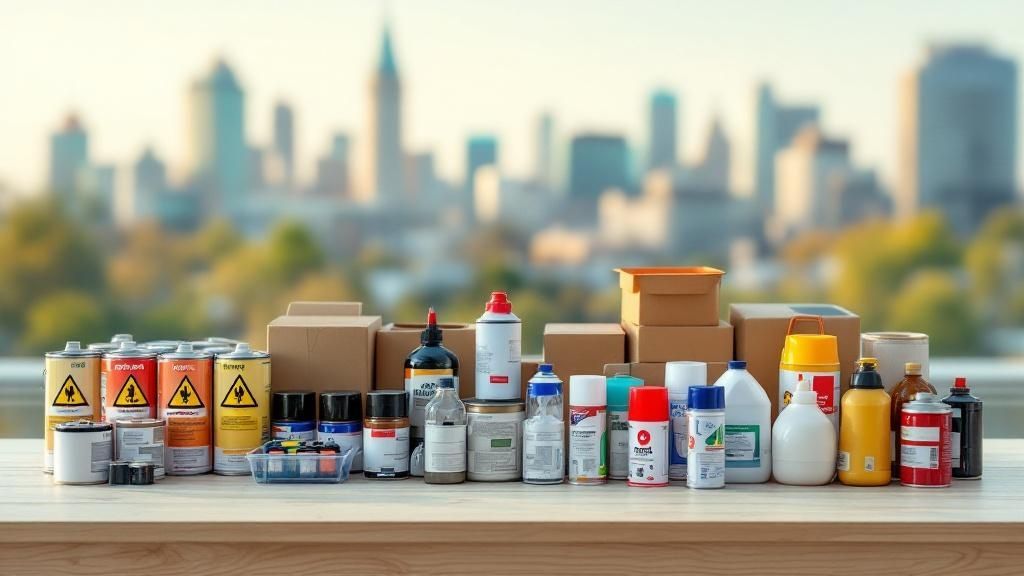
Old paint cans, expired batteries, and half-empty bottles of chemicals are more than just clutter; they're household hazardous waste (HHW) that requires special disposal to protect our local environment, especially the Ottawa River watershed. Tossing them in the regular bin can lead to serious soil and water contamination, posing a significant risk to public health and ecosystems. As reported by local news outlets, proper HHW management is a key newsworthy topic for maintaining our region's environmental integrity in 2025.
Fortunately, Ottawa and the National Capital Region (NCR) offer a robust network of services designed for safe disposal. This guide provides a comprehensive, fact-checked roundup of your options. We will cover everything from permanent municipal sites to mobile collection events and even retail take-back programs.
This listicle will serve as your go-to resource, detailing where to find a household hazardous waste depot, what items are accepted, and how to prepare your materials for drop-off. We'll provide specific, actionable details for each disposal method, ensuring you can manage your HHW responsibly and efficiently. By following these guidelines, residents and businesses can play a crucial part in keeping the National Capital Region clean and safe.
1. City of Ottawa Permanent Household Hazardous Waste Depot
For Ottawa residents seeking a consistent and reliable solution for hazardous waste, the City of Ottawa’s permanent Household Hazardous Waste (HHW) Depot is the primary destination. This year-round facility represents the city's direct commitment to environmental safety and responsible waste management, providing a professionally staffed and purpose-built site to handle materials that cannot go into regular curbside collection.
Located at the Trail Road Waste Facility (1110 Trail Road), this permanent depot is designed to accept a comprehensive range of hazardous products, ensuring they are sorted and processed according to strict provincial environmental regulations. Unlike seasonal pop-up events, its permanent nature offers residents flexibility and peace of mind, knowing there is always a safe place to take their hazardous items. Access to the depot is free for Ottawa residents, although you will be required to present proof of residency, such as a driver's licence or a recent utility bill.
Why Use the Permanent Depot?
The main advantage of using the permanent household hazardous waste depot is reliability. It operates during set hours throughout the year, removing the guesswork and the need to wait for a temporary event in your neighbourhood. It is the ideal choice for residents who have accumulated various types of hazardous waste over time, from old paint cans and used motor oil to expired batteries and fluorescent light bulbs.
This facility is professionally managed, meaning your waste is handled by trained staff who ensure everything is sorted correctly for safe disposal or recycling. This minimizes environmental contamination and supports a circular economy where possible.
Practical Tips for Your Visit
To ensure a smooth and efficient drop-off experience, a little preparation goes a long way.
- Confirm Accepted Items: Before you head out, use the City of Ottawa’s online Waste Explorer tool. This database provides up-to-date information on what is and isn't accepted, preventing a wasted trip.
- Safe Transportation: Keep all materials in their original, clearly labelled containers. If a container is leaking, place it inside a larger, leak-proof container for transport. Always keep hazardous items in the trunk or rear of your vehicle, securely away from passengers and pets.
- Proof of Residency: Have your proof of residency ready to show the attendant upon arrival. This helps staff verify eligibility and keeps the service free for Ottawa taxpayers.
- Be Mindful of Limits: While the service is free, there is a limit of 100 litres per residential vehicle. For larger quantities, you may need to make multiple trips or consult with the city about commercial hazardous waste disposal options.
This quick reference box summarizes the core benefits of using a municipally-operated permanent depot.
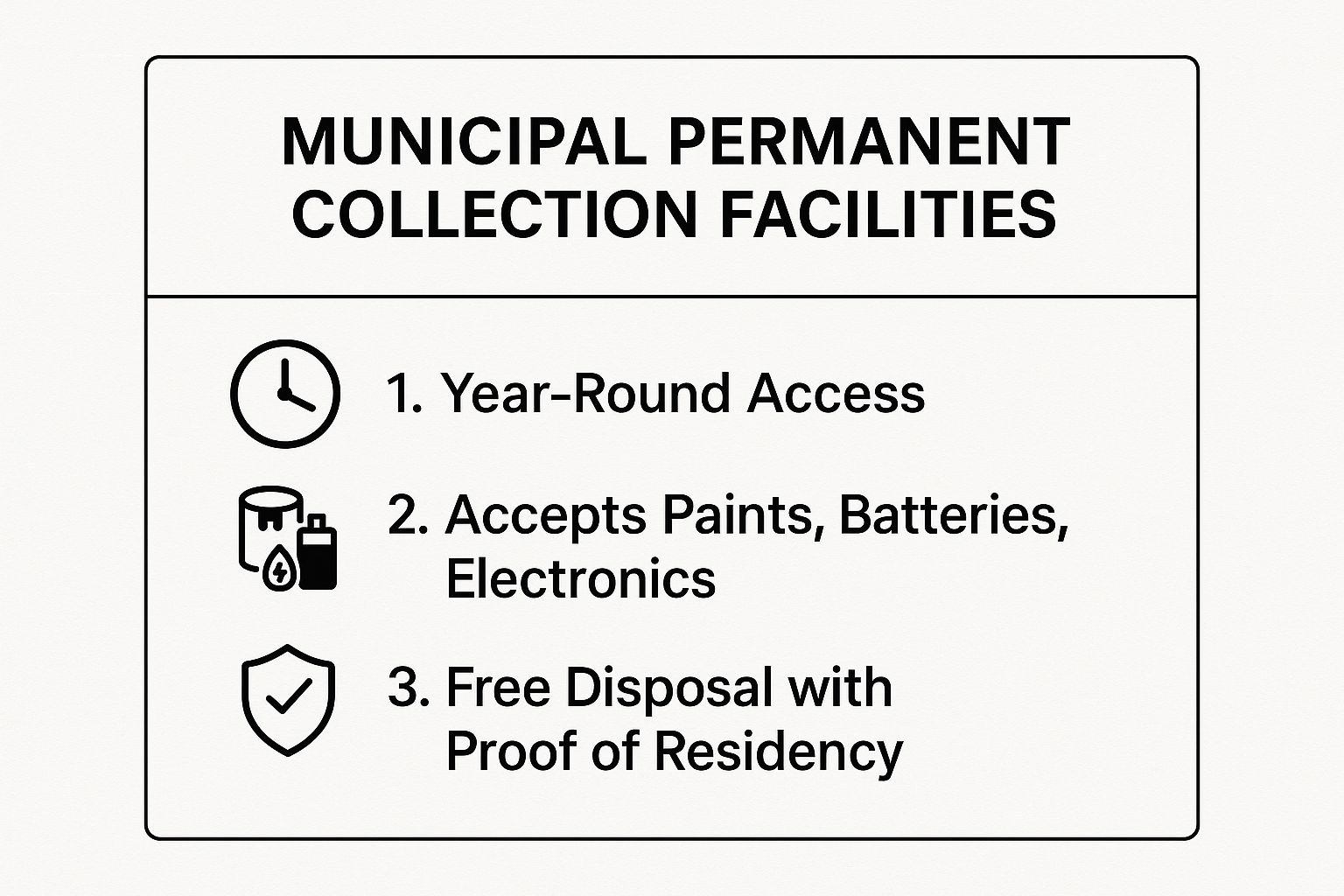
These key features highlight the convenience and comprehensive nature of the permanent depot, making it an essential service for responsible waste disposal in the city.
2. Mobile Collection Events and Routes
For residents who find it difficult to travel to a permanent facility, mobile collection events bring the household hazardous waste depot directly into their neighbourhoods. These one-day events, held from spring to fall, set up temporary collection points at locations like City facilities or large parking lots. This approach dramatically increases accessibility, ensuring that more people can dispose of their hazardous materials responsibly without needing to travel long distances.
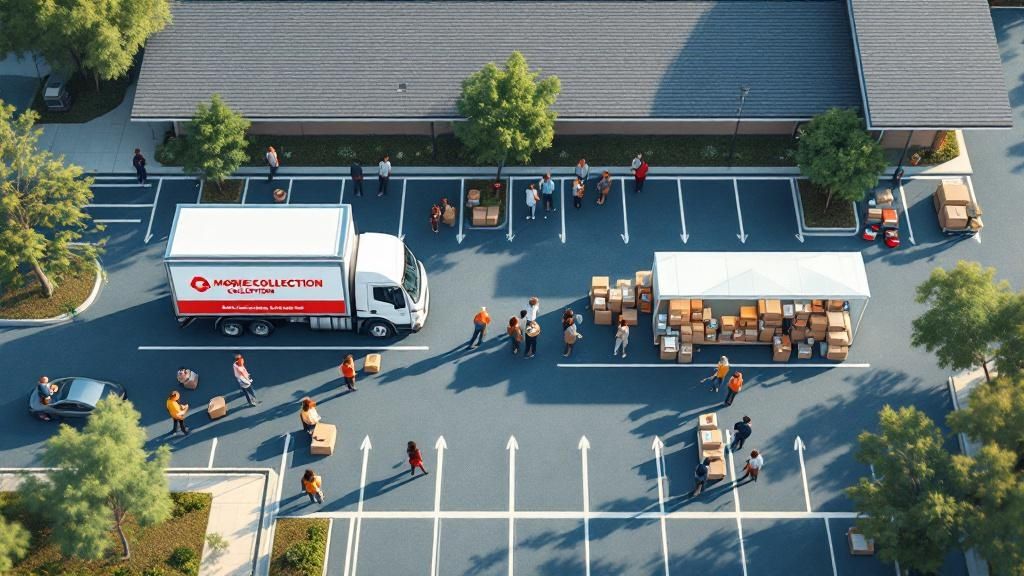
This model has been successfully implemented in major cities across North America. For example, Toronto's Community Environment Days and Edmonton's Eco Stations demonstrate how bringing services to the people boosts participation and environmental protection. These events are specifically designed for convenience, targeting different areas on a rotating schedule throughout the year. For newsworthy updates on mobile events and other community initiatives, you can find more information about happenings in the National Capital Region.
Why Use a Mobile Collection Event?
The primary benefit of mobile collection events is convenience. They remove the barrier of distance, making it easier for individuals without easy access to a vehicle or those with busy schedules to participate. By bringing the service to various local communities, municipalities encourage higher rates of proper hazardous waste disposal, preventing these harmful substances from ending up in landfills or water systems.
These events also foster a sense of community responsibility. Seeing neighbours participate can motivate others to take action, creating a collective effort toward a safer environment. They are an excellent option for disposing of a small to moderate amount of accumulated waste without planning a dedicated trip to a larger, more distant facility.
Practical Tips for Your Visit
To make the most of a mobile collection event, a little planning can help ensure a quick and hassle-free experience.
- Check the Schedule: The City of Ottawa publishes a schedule of mobile HHW events on its website each spring. Check the dates and locations to find the one most convenient for you.
- Arrive Early: Mobile events can be very popular and often attract long lines, especially during peak hours. Arriving early can help you avoid the biggest crowds and shorten your wait time.
- Pre-Sort Your Materials: Sort your hazardous items by type before you leave home. This speeds up the drop-off process for you and the staff, making the entire operation more efficient for everyone.
- Check Event-Specific Rules: While they accept most common household hazardous waste, mobile events may have different restrictions or volume limits than permanent depots. Always check the event details on your city’s website beforehand.
- Carpool with Neighbours: Coordinate with your neighbours to take everyone's hazardous materials in a single trip. This reduces traffic congestion at the event site and minimizes the environmental impact of your visit.
3. Retail Take-Back Programs
Beyond municipal facilities, many retailers across the National Capital Region offer convenient take-back programs for specific types of household hazardous waste. These initiatives are often part of broader Extended Producer Responsibility (EPR) programs, where manufacturers and sellers are responsible for the end-of-life management of their products. This provides an incredibly accessible alternative to a traditional household hazardous waste depot, allowing you to dispose of certain items during your regular shopping trips.
These programs are typically free for consumers and focus on specific product categories, such as paint, batteries, electronics, and light bulbs. For example, major home improvement stores like RONA and Lowe's partner with organizations like Product Care Recycling to accept leftover paint, while electronics retailers like Best Buy have robust systems for taking back old gadgets and used batteries. This decentralized network of drop-off points makes responsible disposal easier than ever.
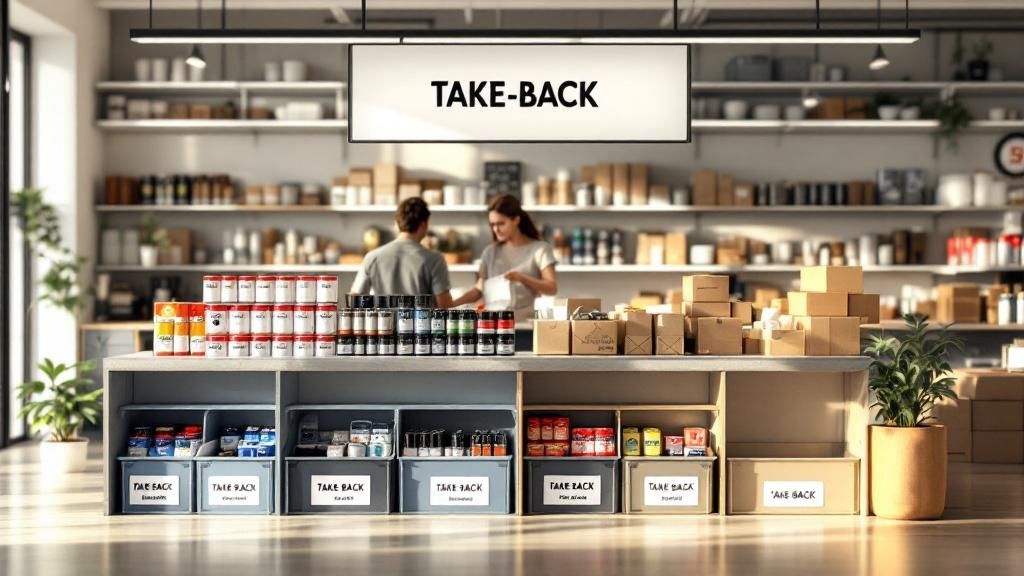
Why Use Retail Take-Back Programs?
The primary benefit of retail take-back programs is convenience. Instead of planning a dedicated trip to a municipal depot, you can simply drop off your used batteries or old paint cans while running errands. These programs are ideal for managing single-category waste as it accumulates, preventing hazardous materials from piling up in your home.
Furthermore, these initiatives are highly effective at targeting specific, high-volume waste streams. Programs like Call2Recycle, found in many retail stores, have significantly increased battery recycling rates. By returning items directly to the retail ecosystem, you are participating in a circular economy model that is supported directly by the product's producer, ensuring it is handled correctly.
Practical Tips for Your Visit
To make your retail drop-off successful, a few simple steps can ensure a hassle-free experience.
- Call Ahead to Confirm: Policies can vary by location. Always call the specific store beforehand to confirm they participate in the program and to verify which items they currently accept and if there are quantity limits.
- Check Store Websites: Many retailers, like Best Buy and Staples, have dedicated recycling pages on their websites. These resources list participating locations and provide detailed information on what can and cannot be returned.
- Prepare Items Safely: For batteries, prevent short-circuiting by taping the terminals with clear packing, electrical, or duct tape, or by placing them in individual plastic bags. Ensure paint cans are sealed tightly and not leaking.
- Combine with Shopping: Integrate your drop-off with a planned shopping trip to save time and fuel. This is the most efficient way to use these convenient programs.
- Ask About Bulk Quantities: If you have a large amount of a single item, such as many cans of old paint from a renovation, inquire about the store's procedure for bulk drop-offs, as they may have specific requirements or limits.
4. Special Waste Collection Districts and Authorities
For residents in areas where hazardous waste management extends beyond a single city's jurisdiction, Special Waste Collection Districts and Authorities offer a coordinated, regional solution. These specialized government agencies are established to manage waste services, including household hazardous waste, across multiple municipalities. This model pools resources, expertise, and funding to provide comprehensive and consistent programs that individual towns or smaller cities might struggle to support on their own.
These authorities operate with a dedicated focus on environmental stewardship and public safety, creating centralized systems for collecting and processing dangerous materials. Examples like Metro Vancouver's robust hazardous waste management system or the Regional District of Central Okanagan's programs demonstrate how a regional approach can lead to more efficient and effective services. By consolidating operations, these entities can invest in advanced disposal technologies and extensive public education campaigns, ensuring a higher standard of waste management for the entire region.
Why Use a Regional Authority?
The primary benefit of a household hazardous waste depot managed by a regional authority is its integrated and large-scale approach. These organizations often provide a network of collection options, including permanent depots, mobile collection events, and partnerships with local businesses, offering greater convenience to a wider population. Their specialized focus means they are well-equipped to handle a broad spectrum of hazardous materials according to strict environmental standards.
Furthermore, these authorities are often at the forefront of waste reduction and recycling initiatives. Their scale allows them to develop specialized recycling programs for items like paint, solvents, and pesticides, diverting significant tonnage from landfills. This commitment is often supported by strong educational outreach, helping residents understand their role in responsible waste disposal. For more information on regional environmental programs, you can learn more about environment and climate action in the National Capital Region.
Practical Tips for Your Visit
Engaging with a regional authority’s services is straightforward, but a few tips can help you make the most of what they offer.
- Check Your Coverage: First, confirm that your municipality is part of a regional waste authority. Visit your local government's website or the authority's main site to verify your eligibility for their services and find the nearest depot or collection event.
- Use Their Websites: Regional authorities typically have detailed websites with disposal guidelines, accepted materials lists, and interactive maps. These are invaluable resources for planning your trip and ensuring you comply with their specific rules.
- Take Advantage of Education: These organizations invest heavily in public education. Look for workshops, downloadable guides, and online resources that can help you reduce hazardous waste at home and handle it more safely.
- Attend Public Meetings: As public entities, these authorities often hold public meetings to discuss services and budgets. Attending is a great way to provide feedback and stay informed about future changes or new programs in your area.
5. University and Institution Collection Programs
An innovative and often overlooked resource for hazardous waste disposal comes from large local institutions like universities and colleges. These organizations manage significant quantities of chemical and hazardous materials for their research and operational needs, and as such, have sophisticated environmental health and safety departments. Some extend their expertise and infrastructure to serve the public, offering a valuable community-based alternative for HHW disposal.
These programs leverage existing, professionally managed facilities to provide another safe and reliable disposal route for residents. While not as common as municipal depots, they represent a powerful partnership between academia and the community, promoting environmental stewardship and education. These initiatives can take the form of one-day collection events or limited public access to their permanent facilities, often aligning with the academic calendar. They provide an excellent opportunity to safely dispose of items at a household hazardous waste depot that is backed by scientific expertise.
Why Use an Institutional Program?
The primary advantage of these programs is their foundation in expert knowledge. University environmental health and safety teams are highly trained in chemical handling and disposal, ensuring your waste is managed with the utmost care and compliance. These events can also be more conveniently located for those living near a campus, saving a trip to a more distant municipal facility.
Furthermore, these programs often have an educational component, providing residents with information on why certain materials are hazardous and how to reduce their use. Participating in such a program not only solves your disposal problem but also supports the institution's community outreach and educational mission. You can find more information about local academic institutions and their community involvement by exploring education resources in the National Capital Region.
Practical Tips for Your Visit
To make the most of an institutional collection program, it's important to do your research beforehand.
- Confirm Community Access: Not all university waste facilities are open to the public. Always check the institution’s website or contact their Environmental Health and Safety department directly to confirm they are holding a community collection day and what the specific eligibility rules are.
- Check the Academic Calendar: These events are often tied to the school year, occurring at the beginning or end of a semester. Look for announcements in the spring or fall and mark your calendar accordingly.
- Inquire About Accepted Items: A university's list of accepted materials may differ from the city's. Research labs, for instance, might be equipped to handle more obscure chemical compounds, but they may not accept common items like used motor oil. Always verify what they will take.
- Follow Campus Directions: University campuses can be large and complex. Look for specific instructions, maps, and signage for the event to ensure you arrive at the correct drop-off location without disrupting campus activities.
6. Non-Profit Environmental Organization Programs
Beyond municipal and retail options, environmental non-profit organizations offer specialized programs that provide another vital avenue for responsible hazardous waste disposal. These groups often step in to fill gaps in existing services, focusing on specific waste streams, community education, or servicing areas that might be underserved by traditional depots. Their programs are driven by a commitment to sustainability and community well-being, providing unique and often targeted disposal solutions.
These initiatives can range from single-day collection events organized by groups like local Earth Day committees to ongoing programs managed by larger organizations. For instance, Habitat for Humanity’s ReStore program often accepts leftover paint, which is then recycled or resold, diverting it from the waste stream while supporting their housing initiatives. Similarly, other non-profits may specialize in recycling specific items like light bulbs or electronics, combining disposal services with public awareness campaigns.
Why Use Non-Profit Programs?
The primary advantage of engaging with a non-profit’s household hazardous waste depot program is its community-focused and mission-driven nature. When you participate, you are often directly supporting the environmental work of that organization, whether it's local conservation efforts, educational outreach, or advocacy for better waste management policies. These programs can also be more accessible, sometimes setting up collection points in convenient neighbourhood locations.
Furthermore, these organizations often provide a deeper level of engagement. They might offer educational resources on reducing hazardous waste at its source or provide opportunities for volunteering, allowing residents to take a more active role in local environmental stewardship. This approach turns a simple act of disposal into a meaningful contribution to the community’s sustainability goals.
Practical Tips for Your Participation
To make the most of these specialized programs, a bit of focused research is key.
- Research Local Organizations: Start by searching for environmental non-profits or community sustainability groups in the Ottawa area. Check their websites or social media channels for announcements about collection events or ongoing programs.
- Check for Specialized Services: Many non-profits focus on specific types of waste. For example, some may only accept paint, while others might specialize in e-waste or batteries. Confirm what they accept beforehand to ensure your items are eligible.
- Inquire About Educational Programs: Ask if the organization offers workshops or resources on how to reduce household hazardous waste. This is a great way to learn proactive strategies and lessen your environmental impact over the long term.
- Ask About Volunteer Opportunities: If you are passionate about the cause, find out if you can volunteer. Helping at a collection event is a powerful way to support their mission and learn more about responsible waste handling firsthand.
Household Hazardous Waste Depot: 6-Option Comparison
| Program Type | Implementation Complexity 🔄 | Resource Requirements ⚡ | Expected Outcomes 📊 | Ideal Use Cases 💡 | Key Advantages ⭐ |
|---|---|---|---|---|---|
| Municipal Permanent Collection Facilities | Moderate: Requires trained staff, fixed site | High: Facility operation, storage, transportation | Comprehensive proper disposal of wide hazardous waste | Year-round household hazardous waste disposal for residents | Reliable, professional handling; often free; broad acceptance |
| Mobile Collection Events and Routes | Medium-High: Scheduling and logistics for mobile units | Medium: Specialized vehicles and temporary setups | Convenient collection outreach with community awareness | Temporary, accessible disposal in neighborhoods and events | Brings service to residents; weekend availability; large volumes |
| Retail Take-Back Programs | Low: Integration into existing retail operations | Low-Medium: Staff oversight, drop-off points | Proper disposal of specific product categories | Convenient disposal of batteries, paint, electronics at retail | Convenient locations; extended hours; manufacturer responsibility |
| Special Waste Collection Districts and Authorities | High: Regional coordination, bureaucratic management | High: Specialized staff, equipment, dedicated funding | Consistent, large-scale hazardous waste management | Regional multi-municipality service with stable funding | Economies of scale; consistent standards; dedicated funding |
| University and Institution Collection Programs | Medium: Leveraging institutional systems and expertise | Medium: Staffed by students/faculty, research support | Innovative and educational hazardous waste disposal | Community-serving programs tied to academic institutions | High technical expertise; educational components; innovation |
| Non-Profit Environmental Organization Programs | Low-Medium: Volunteer-based, mission-driven | Low: Grant and donation dependent | Targeted disposal and outreach with environmental focus | Serving underserved communities and specific waste streams | Strong mission focus; community-centered; flexible approaches |
Your Action Plan for a Safer,Cleaner National Capital Region
Navigating the landscape of waste management in Ottawa and the wider National Capital Region can seem complex, but this guide has illuminated the diverse and accessible options available for safely disposing of your household hazardous waste. The key takeaway is that a dedicated solution exists for nearly every type of hazardous material, from old paint and batteries to expired medications and electronic waste. The power to protect our local environment, including the precious Ottawa and Rideau river systems, lies in our collective commitment to using these services correctly.
We've explored the primary pillars of responsible disposal, from the steadfast reliability of municipal permanent collection facilities to the convenience of mobile collection events that bring services directly to your neighbourhood. The proactive participation of local businesses through retail take-back programs demonstrates a shared community responsibility, offering yet another simple avenue for residents. By understanding these distinct channels, you can move beyond uncertainty and take decisive action.
Mastering Your Disposal Strategy
Your journey towards responsible waste management begins with a simple inventory of what you have. Before you load up your vehicle, take a moment to categorize your items. Are they paints and solvents? Electronics? Batteries? This initial step will dictate the most efficient disposal route. Remember these crucial best practices to ensure a smooth and safe experience at any household hazardous waste depot:
- Check First, Drive Later: Always verify the accepted materials list online or by phone before you go. A facility that takes oil may not accept propane tanks.
- Keep It Original: Whenever possible, keep products in their original, clearly labelled containers. This is critical for safety and helps staff process items quickly. If a container is damaged, place it inside a larger, secure, and transparent container.
- Transport Safely: Secure all items in the trunk or rear of your vehicle, away from passengers and pets. Ensure lids are tight and containers are upright to prevent spills during transit.
- Prove Your Residency: Most municipal services are funded by local taxpayers, so be prepared to show proof of residency, like a driver's licence or a recent utility bill.
The Broader Impact of Your Small Effort
Choosing to use a designated household hazardous waste depot is more than just decluttering your home; it's an act of environmental stewardship with profound local impact. When hazardous materials are sent to the landfill or poured down the drain, they can leach into our soil and contaminate our groundwater, threatening wildlife and public health. By making the conscious choice to dispose of these items correctly, you are directly contributing to a cleaner, safer, and more sustainable National Capital Region for current and future generations. This simple, actionable step, when multiplied across thousands of households, creates a powerful positive change, preserving the natural beauty and health of our shared home.
For the latest updates on mobile collection event schedules, changes to depot hours, and other essential environmental news across the region, stay informed with ncrnow. We deliver timely, curated news that impacts your life in the National Capital Region. Visit ncrnow to see what's happening now.
About The Author