


In Canada's capital, with a population now topping one million, the Ottawa Fire Department—officially known as Ottawa Fire Services (OFS)—is the city's first line of defence. They're the ones responsible for fire suppression, emergency medical calls, and highly specialized rescue operations across a massive and incredibly varied landscape.
From the dense downtown core to sprawling suburbs and vast rural communities, OFS provides a critical safety net for everyone who calls Ottawa home.
Protecting Canada's Capital City

The Ottawa Fire Department is a cornerstone of public safety in the city, but its mission goes way beyond just putting out fires. The service is tasked with protecting a truly unique geographical area that spans more than 2,790 square kilometres, making Ottawa one of the largest municipalities by land area in the country.
This sheer size presents some serious challenges, demanding a response model that's both flexible and incredibly robust. Whether it's a high-rise emergency downtown or a crisis on a remote farm, OFS has to be ready for anything.
More Than Just Fires
While the classic image of a firefighter battling a blaze is what comes to mind for most, the day-to-day reality of their job is far broader. Today's Ottawa Fire Department is an all-hazards agency, which is just a way of saying their crews are trained and equipped to handle almost any emergency you can think of.
- Emergency Medical Response: In many cases, firefighters are the first to arrive at a medical emergency, providing critical, life-saving care before paramedics get to the scene.
- Technical Rescue Operations: Specialized teams are on standby for complex situations, like pulling people from wrecked cars, performing high-angle rope rescues, or responding to water and ice emergencies on Ottawa’s many rivers and canals.
- Hazardous Materials Incidents: OFS has dedicated hazmat teams trained to manage chemical spills and other dangerous situations, protecting both the public and the environment from harm.
At its heart, the Ottawa Fire Department is a multi-faceted service provider. Its job isn't just to react to disasters, but to actively protect the community through prevention, education, and being in a constant state of readiness.
This all-encompassing approach ensures that no matter what kind of crisis hits, Ottawa residents have a skilled and dedicated team ready to answer the call at a moment’s notice. In this guide, we'll dive into every aspect of this essential organization.
A History Forged in Fire
The story of today’s Ottawa Fire Department isn't just one of steady growth; it’s a tale of resilience, born from devastating fires that forced a young city to get serious about public safety. Long before the professional service we know now, Bytown and early Ottawa depended on the sheer courage of volunteer brigades. Armed with little more than bucket lines and basic hand-pumpers, these spirited crews battled blazes in a city built largely of wood.
While their bravery was unquestionable, the system often fell short against major fires.
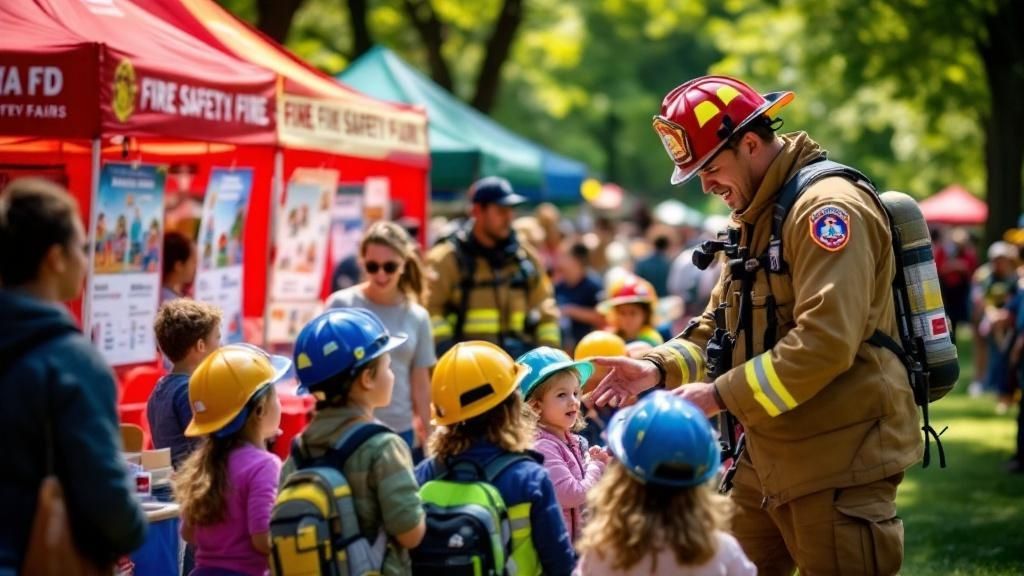
This became painfully clear during several massive urban fires that exposed just how vulnerable a volunteer-only model was. These events weren't just tragedies; they were harsh lessons that proved a growing capital needed a coordinated, professional defence against the constant threat of flames.
From Volunteer Brigades to a Unified Force
The real turning point came with the Great Fire of the Ottawa Valley in 1870. This massive blaze tore through the region, threatening the city itself and demanding a desperate, all-hands response from officials and citizens alike. It was a terrifying wake-up call.
That experience led directly to the official creation of the Ottawa Fire Department in 1874—exactly 150 years ago. This was a monumental shift. The city purchased its first steam-powered pumper, a technological leap that transformed firefighting from pure manual labour into a mechanized force. You can dive deeper into these early days on the Historical Society of Ottawa's website.
Moving from scattered volunteer groups to a single, professional department laid the critical groundwork for the organization that protects Ottawa today. It was a clear signal: as the city grew, its emergency services had to evolve right alongside it.
Evolving with the City
Throughout the 20th century, the department never stopped adapting. New technologies and strategies were constantly integrated to meet the challenges of an ever-expanding urban landscape. A few key milestones stand out:
- Motorized Apparatus: Horse-drawn engines were gradually replaced with motorized trucks. This dramatically slashed response times across the city—a critical factor when every second counts. You can see how modern crews navigate the streets by checking our live traffic camera feeds.
- Advanced Communication: The first alarm boxes eventually gave way to sophisticated radio and dispatch systems. This meant clearer communication and far better coordination between fire stations during an emergency.
- Specialized Training: A firefighter's job grew to be about much more than just putting out fires. New training programs were rolled out to handle everything from medical calls to highly complex rescue operations.
The history of the Ottawa Fire Department is a story of continuous improvement, driven by both tragedy and progress. Each major incident served as a catalyst, forcing changes that ultimately made the department stronger and its citizens safer.
This long legacy of adaptation and professionalization is the bedrock upon which the modern, multi-faceted Ottawa Fire Services was built.
How Ottawa Fire Services Is Structured Today
The modern Ottawa Fire Services is a far cry from the patchwork of separate, town-based brigades that once served the region. Today’s department was forged from a landmark decision to create a single, unified force capable of protecting a large and diverse capital city.
That big shift happened in 2001 with the amalgamation of nine different fire departments into one cohesive organization. The original Ottawa Fire Department merged with services from Gloucester, Cumberland, Kanata, Nepean, and several surrounding townships. This move created the Ottawa Fire Services (OFS) we know today—an organization built to serve a growing population that now tops 1.06 million residents. For a deeper dive into this historic merger, the Ottawa Fire Services Wikipedia page is a great resource.
The image below captures the readiness and advanced capability that defines the department’s day-to-day operations, showing a modern ladder truck ready to roll at a moment's notice.
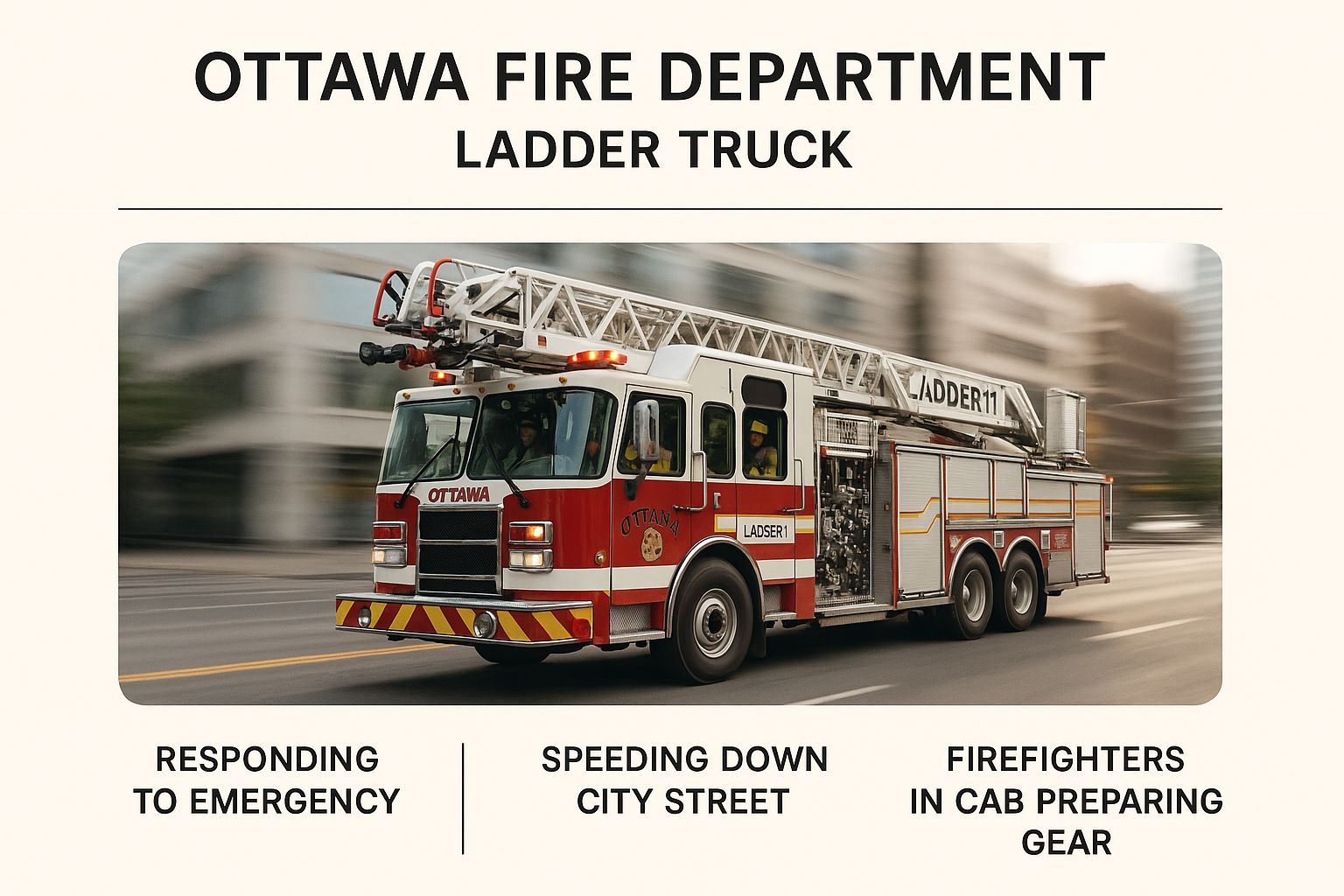
To give you a clearer picture of the OFS today, here's a quick summary of its key details.
Ottawa Fire Services at a Glance
This table provides a snapshot of the modern Ottawa Fire Services, highlighting its size, scope, and the communities it protects.
| Metric | Details |
|---|---|
| Year Established | 2001 (through amalgamation) |
| Population Served | Over 1.06 million |
| Total Fire Stations | 45 |
| Total Personnel | Approximately 1,500 |
| Leadership | Fire Chief Paul Hutt |
| Station Types | Career, Paid On-Call, and Composite |
| Service Area | Urban, suburban, and rural zones across the City of Ottawa |
This structure ensures that every corner of the city, from dense urban cores to sprawling rural farmlands, receives the protection it needs.
The Command Structure
To manage emergencies without a hitch, OFS operates on a paramilitary command structure. Think of it like a military chain of command—every role is clearly defined so orders are followed instantly and without confusion during a crisis. It has to be this way when seconds count.
This hierarchy ensures decision-making is swift and coordinated, which is absolutely critical when lives are on the line. From the newest recruit to the top brass, everyone knows their role and who they report to.
At the top sits the Fire Chief, who oversees the entire department. Reporting to the Chief are Deputy Chiefs, Platoon Chiefs, and District Chiefs, each responsible for specific operational divisions, shifts, or geographic areas. This layered system guarantees clear supervision and direction at every level of an emergency response.
This organizational model is the backbone that allows the department to handle even the most complex incidents smoothly.
Strategic Deployment Across Ottawa
Protecting a city as geographically vast as Ottawa requires more than just a strong command structure; it demands smart placement of resources. OFS strategically operates 45 fire stations spread across the city’s urban, suburban, and rural landscapes.
This network isn’t random—it’s designed to slash response times no matter where an emergency happens. The department knows that a high-rise fire downtown requires a completely different response than a barn fire on the city's rural outskirts.
To cover its massive territory, the Ottawa Fire Department uses a mix of station models:
- Urban and Suburban Stations: These are staffed 24/7 by career firefighters, ready for immediate dispatch to high-density areas.
- Paid On-Call Stations: Primarily serving rural communities, these 16 stations are staffed by firefighters who respond from their homes or regular jobs when alerted by a pager.
- Composite Stations: These 5 stations blend both models, housing career firefighters alongside paid on-call members to provide versatile coverage in those transitional zones between suburb and countryside.
This hybrid approach ensures that every part of Ottawa receives timely and appropriate emergency services, tailored to the specific needs of its community. The entire force of roughly 1,500 personnel works within this framework, providing a constant shield of protection for the capital.
Responding to More Than Just Fires
When you hear “Ottawa Fire Department,” you probably picture a big red truck racing to a burning building. While putting out fires is still a huge part of the job, it’s really just the tip of the iceberg these days.
The truth is, a modern firefighter's role has exploded in scope. OFS crews are now all-hazards responders, trained to handle pretty much any emergency you can think of. They've become the city's go-to problem solvers for all sorts of life-threatening situations.
First on Scene for Medical Emergencies
It might surprise you, but when a serious medical call comes in, it’s often a fire truck that shows up first. Fire stations are strategically dotted across the city, which means firefighters can frequently get to a scene faster than an ambulance, especially when traffic is snarled. You can get a feel for what responders are up against by checking our regularly updated Ottawa traffic map.
Those first few moments in an emergency are everything. OFS crews are trained to provide critical medical care—like CPR, defibrillation, and trauma support—that can stabilize a patient until paramedics arrive. This rapid response saves lives in Ottawa every single day.
The Elite Special Operations Teams
For the most dangerous and complex calls, the Ottawa Fire Department unleashes its highly trained Special Operations Teams. These are the specialists, the crews armed with advanced gear and skills for situations where standard approaches just won't cut it.
These are the experts called in when the situation is at its worst. From dangling off a high-rise building to navigating a collapsed trench, their job is to succeed where failure is not an option.
Their expertise covers a wide range of high-stakes disciplines:
- Vehicle Extrication: Using powerful hydraulic tools like the "Jaws of Life," these specialists meticulously cut apart twisted metal to free people trapped in serious car crashes.
- High-Angle Rope Rescue: This team is trained to save people from bridges, construction cranes, cliffs, and skyscrapers. They use complex rope and pulley systems to safely reach and retrieve individuals from dangerous heights.
- Confined Space Rescue: When someone is trapped in a sewer, tunnel, or industrial tank, this is the team that goes in. They work in tight, hazardous environments where the air can be toxic and oxygen is scarce.
- Water and Ice Rescue: With the city's rivers and the Rideau Canal, this team is indispensable. They’re skilled in swift water, surface, and ice rescues, often battling treacherous conditions to save people from drowning or hypothermia.
- Hazardous Materials (HazMat) Response: When there's a chemical spill or toxic leak, the HazMat team suits up. Wearing fully enclosed gear, they identify, contain, and neutralize dangerous substances to protect the public and the environment.
Each of these specialties requires hundreds of hours of tough, continuous training. It’s this dedication that ensures no matter how strange or challenging the emergency, the Ottawa Fire Department has a team ready to answer the call.
Keeping the Community Safe Through Prevention
When you picture an Ottawa firefighter, it’s probably someone battling a blaze, hose in hand. While that’s a huge part of the job, some of the Ottawa Fire Department’s most important work happens long before the first hint of smoke. At its core, the OFS is deeply committed to preventing fires from ever starting.
It’s a simple but powerful idea: the safest fire is the one that never happens. Through a whole range of community programs, OFS crews work tirelessly to give residents the tools and knowledge they need to keep their families safe.
The Wake Up, Ottawa! Program
One of the department's most critical initiatives grew from an unthinkable tragedy. In April 2005, a devastating fire tore through the Mekong Grocery store and the apartment above it on Somerset Street West, claiming the lives of five members of the Thach family. The loss rocked the Chinatown neighbourhood and sent a shockwave through the city, underscoring the urgent need for working smoke alarms in every single home. This CityNews Ottawa article shares more on this pivotal moment and its lasting impact.
In direct response, the OFS launched the 'Wake Up, Ottawa!' program. For nearly 20 years now, this program has sent firefighters door-to-door across the city twice a year.
Their mission is simple and direct:
- Free Alarm Checks: Crews inspect smoke and carbon monoxide alarms to make sure they’re in good working order.
- Battery Replacements: If a battery is dead, they’ll swap it out with a new one, completely free of charge.
- Safety Education: Firefighters take the time to offer personalized fire safety tips, helping people spot potential hazards in their own homes.
This hands-on approach has made thousands of homes safer over the years, proving that a working alarm is one of the best defenses against a fire-related tragedy.
The 'Wake Up, Ottawa!' program transforms firefighters from emergency responders into community safety partners. It’s a proactive strategy designed to stop tragedies before they can unfold, making every resident an active participant in their own safety.
Broader Public Education Initiatives
Beyond this flagship program, the Ottawa Fire Department is constantly out in the community, teaching safety to people of all ages. The goal is to build a culture of fire safety that starts in childhood and sticks with you for life.
You’ll find OFS public educators and firefighters visiting local schools, teaching kids crucial lessons like "stop, drop, and roll" and the importance of having a family escape plan. They also partner with businesses to run fire safety training for employees, covering everything from how to use a fire extinguisher to what to do during an evacuation. By reaching every corner of the community, OFS is building a more resilient and prepared Ottawa for everyone.
How to Become an Ottawa Firefighter
Thinking about joining the ranks of the Ottawa Fire Department? It’s a rewarding career, but getting there is no small feat. Becoming a firefighter in the nation’s capital demands a rare mix of physical strength, mental grit, and a genuine drive to serve the community. The path is competitive, and the multi-stage recruitment process is designed to find only the most capable and dedicated candidates.
First things first, you need to meet some basic requirements. Aspiring firefighters must be at least 18 years old, hold a valid driver’s licence, and have a high school diploma or equivalent. To get a leg up, many successful applicants come to the table with post-secondary education in fields like fire science or paramedicine.
Navigating the Recruitment Gauntlet
Once you’ve checked off the basics, the real test begins. The recruitment process is a demanding gauntlet designed to assess every ounce of your suitability for the job. Think of each stage as a filter, ensuring only the most qualified individuals make it to the next round.
The journey involves several key steps:
- Written Aptitude Test: This is the first hurdle. It’s designed to evaluate essential skills like reading comprehension, problem-solving, and mechanical reasoning.
- Candidate Physical Ability Test (CPAT): A nationally recognized standard, the CPAT is a beast. It’s a grueling, timed test that simulates the real-world physical demands of firefighting—from climbing stairs in full gear to dragging heavy hoses and carrying equipment.
- Interviews and Background Checks: Here, you’ll go through multiple interviews to assess your character, communication skills, and how you make decisions under pressure. A thorough background check is also conducted to ensure you have a clean record.
The recruitment process is intentionally tough. It’s not just about being physically strong; it’s about proving you have the resilience, integrity, and calm head needed to perform when everything is on the line. These are the hallmarks of a successful Ottawa firefighter.
Forging a Firefighter in the Academy
For those who make it through the recruitment stages, the prize is a spot in the OFS Training Academy. This is where a recruit is transformed into a skilled, professional firefighter. The academy curriculum is intense, covering everything from fire suppression tactics and emergency medical response to highly specialized rescue disciplines.
Recruits don't just master the tools of the trade; they learn to work together as a seamless, effective team. This intense training period builds the foundation for a long and successful career protecting and serving the Ottawa community. After a long week of training, you might even find time to explore some of the top events to check out in Ottawa this summer.
Your Questions About Ottawa Fire Services, Answered
Ever wondered how the Ottawa Fire Department operates day-to-day, or what goes on behind the scenes at your local station? You’re not alone. Here are some straightforward answers to the questions we hear most often.
How Do I Get a Home Fire Safety Check?
If you're looking for a voluntary safety inspection for your home, the Ottawa Fire Services Public Education office is your first point of contact. Through community programs like 'Wake Up, Ottawa!', firefighters can stop by to check your smoke and carbon monoxide alarms and give you personalized tips to keep your family safe.
For mandatory inspections, like those required for businesses or multi-unit apartment buildings, you'll need to go through the city's official channels and contact the Fire Prevention Division directly.
What’s the Difference Between Career and Paid On-Call Firefighters?
It's a common question, and the main distinction comes down to their employment status and where they serve.
- Career Firefighters: These are full-time employees who work scheduled shifts—often 24 hours at a time—out of stations in Ottawa's urban and suburban areas.
- Paid On-Call Firefighters: These are community members who hold part-time roles. They respond to emergencies from their homes or other jobs when their pager goes off, primarily covering Ottawa’s large rural areas. They're compensated for their training hours and for every call they answer.
Both roles are absolutely vital for keeping the city safe. This hybrid model ensures every corner of Ottawa—from downtown high-rises to sprawling rural farms—gets a fast, effective response when it matters most.
Can I Tour a Fire Station?
Yes, absolutely! The Ottawa Fire Services loves connecting with the community and often accommodates public tour requests at local stations.
Just keep in mind that availability depends on the station's training schedule and, of course, emergency calls. Your best bet is to reach out to your nearest station or the OFS Public Information office ahead of time to see about scheduling a visit.
For the latest news and updates on what's happening in Ottawa and the National Capital Region, trust ncrnow. Stay informed by visiting us at https://ncrnow.ca.
About The Author