


Living in a city like Ottawa means embracing the vibrant hum of daily life, but it also means respecting every resident’s right to a little peace and quiet. Striking that balance is exactly what the city’s noise bylaw, officially known as Bylaw No. 2017-255, is all about.
Think of it as a community agreement—a set of shared rules to make sure everything from construction work to backyard parties doesn't unreasonably disrupt your neighbours. The bylaw lays out a clear framework for what’s considered acceptable noise and when, especially during those crucial late-night quiet hours.
This guide will break down the essentials in simple, practical terms so you can understand your rights and responsibilities as an Ottawa resident.
What Every Resident Should Know About Noise
At its core, the noise bylaw is designed to keep our communities peaceful. It’s not about eliminating all sound, but about managing noise that’s excessive, persistent, or happens at unreasonable hours. The rules apply to common, everyday situations that can sometimes cause friction between neighbours.
These regulations are also a key part of how the City of Ottawa maintains a high standard of urban living, tying directly into larger city-wide goals outlined in the City of Ottawa Official Plan.
Key Aspects of the Bylaw
The bylaw covers a wide range of sound-related issues you might run into. Here’s a quick look at the main areas it addresses:
- Defining Unreasonable Noise: It provides clarity on what kind of noise crosses the line, like a dog that won’t stop barking or music that’s shaking the walls next door.
- Establishing Quiet Hours: Specific times, typically overnight, are designated as quiet hours when noise restrictions become much stricter.
- Regulating Construction and Power Tools: The bylaw sets specific hours for loud activities like construction projects and the use of noisy equipment like leaf blowers.
To make things even clearer, here's a quick reference table summarizing some of the most common noise rules.
Ottawa Noise Bylaw At a Glance
This table gives you a snapshot of common noise complaints and the hours when restrictions are generally in effect. Keep in mind that specific exemptions and conditions can apply.
| Type of Noise | Generally Restricted Hours | Key Considerations |
|---|---|---|
| Loud Music/Parties | 11:00 p.m. to 7:00 a.m. (9:00 a.m. on Sundays/Holidays) | Noise shouldn't be easily audible from a neighbour's property. |
| Construction Noise | 8:00 p.m. to 7:00 a.m. (9:00 a.m. on Saturdays, Sundays, and Holidays) | Some major projects may have exemptions. |
| Power Tools (Lawnmowers, etc.) | 9:00 p.m. to 7:00 a.m. | Includes leaf blowers, chainsaws, and similar equipment. |
| Persistent Dog Barking | Any time | Considered a violation if it's continuous and disturbs the peace. |
| Garbage Collection | 11:00 p.m. to 6:00 a.m. | Prohibits collection in or near residential areas during these hours. |
This table is a great starting point, but the bylaw has more detailed rules for specific situations, which we'll explore next.
Decoding Quiet Hours and Daytime Noise Rules
Knowing the specific time restrictions in the Ottawa noise bylaw is the single best way to sidestep fines and keep the peace with your neighbours. The bylaw sets out official “quiet hours,” which are absolutely key to making sure everyone in the community gets a good night's sleep.
During these hours, some activities are completely off-limits. This includes the obvious stuff like shouting, yelling, or blasting music loud enough for your neighbours to hear. Think of it as a city-wide pact to keep things down after dark.
At its heart, the idea of quiet hours is all about protecting every resident's right to enjoy their home in peace. It’s a guarantee that after a certain hour, the city's hustle and bustle can finally fade into the background.
Understanding the Schedule
The schedule for quiet hours is pretty simple, but it does shift slightly on weekends and holidays to match how people live. Sticking to this schedule is your ticket to staying on the right side of the Ottawa noise bylaw.
- Monday to Saturday: Quiet hours run from 11:00 PM to 7:00 AM.
- Sundays and Holidays: The quiet period gets an extension, starting at 11:00 PM the night before and going until 9:00 AM.
That extra quiet time on Sunday and holiday mornings gives everyone a bit more time to rest and recharge. It’s also something to keep in mind for parties or get-togethers, which need to wrap up by 11:00 PM. If you're planning an outing, you can find plenty of great, family-friendly events in Ottawa that are designed to respect these local rules.
Daytime Rules for Specific Noises
But the rules don't just kick in at night. The bylaw also has clear daytime limits for specific noisy activities that can easily disrupt a neighbourhood, even when it’s not officially quiet hours.
Construction noise, for example, is generally not permitted between 8:00 PM and 7:00 AM on weekdays, with even stricter rules on weekends (starting at 9:00 AM).
The same goes for using residential power tools. Firing up a lawnmower, leaf blower, or chainsaw is typically not allowed before 7:00 AM or after 9:00 PM. Knowing these timeframes helps you plan your yard work and home projects without causing a headache for the whole street.
Is That Sound a Bylaw Violation?
So, your neighbour’s noise is driving you up the wall. But is it just annoying, or is it actually breaking the law? It’s a tough line to draw, and that’s exactly what the Ottawa noise bylaw is for—to sort out persistent, excessive sounds from the everyday hum of city life.
Figuring out the difference is key before you file a formal complaint.
Think of it this way: a baby crying next door or a quick burst of laughter from a backyard BBQ is just part of living in a community. The bylaw isn't there to police normal life. But when a sound crosses the line from a temporary nuisance into something that genuinely wrecks your peace and quiet, that's when you have a potential violation. A dog barking at the mail carrier is one thing; a dog howling for hours on end is something else entirely.
The same logic applies to mechanical sounds. Every house has an air conditioner, and that’s expected. But if your neighbour’s unit is so ancient and clunky that it rattles your windows all summer long, that could be grounds for a complaint. It really boils down to the type of sound, how loud it is, and how long it goes on.
Common Examples of Noise Violations
To give you a better idea of what might qualify as an infraction, here are a few real-world scenarios that often fall afoul of the Ottawa noise bylaw:
- Non-Stop Animal Noise: Think of a dog left in a backyard, barking or howling for hours on end, disturbing the whole street day and night.
- Loud, Late-Night Parties: Music or shouting from a party that you can clearly hear inside your own home during quiet hours is a classic complaint.
- Excessive Vehicle Idling: A truck or car left running in a driveway for ages, filling the air with engine noise and fumes.
- Poorly Maintained Equipment: That super loud, malfunctioning pool pump or air conditioning unit that drones on endlessly.
Loud music is an especially big one. In fact, between April and September 2020, Ottawa's 311 service was flooded with 7,397 noise complaints. An incredible 54% of those were specifically about nuisance music, which just goes to show how much amplified sound can disrupt a neighbourhood. You can read more about Ottawa's noise complaint trends to get the full story.
Ultimately, if a sound is making it impossible for you to reasonably enjoy your own home, it's probably worth looking into whether it violates the city's rules.
Understanding Bylaw Exemptions and Special Permits
Not every loud noise you hear in Ottawa is an automatic bylaw violation. The city’s noise rules include specific exemptions for essential services and important community activities. Think of them as pre-approved exceptions that serve the greater public good.
For instance, the wail of sirens from ambulances, fire trucks, and police cars is always exempt. The same goes for essential city work like road repairs, garbage collection, and snow clearing, even when it happens during otherwise quiet hours. These activities are simply too crucial for keeping Ottawa safe and running smoothly.
Sanctioned Events and Construction Permits
Public celebrations are another key area where the rules are different. The booming sounds from municipally approved events, like the spectacular fireworks on Canada Day or major festivals at Lansdowne, are perfectly legal. These events are a vital part of the city’s cultural fabric.
These exemptions ensure that while residents' peace is protected, the city can still operate efficiently and celebrate together. The bylaw aims for balance, not absolute silence.
On top of these standard exemptions, individuals or companies can apply for a noise exemption permit. This is a common route for construction projects that need to operate outside of standard hours to meet a deadline or for safety reasons. Anyone planning this kind of work should also look into the requirements for a building permit in Ottawa to make sure all their bases are covered.
Getting a permit isn’t automatic; it involves a formal process where the city weighs the request against its potential impact on the community. Understanding these exceptions helps residents know which noises are a legitimate part of city life and which ones might be worth a call to 3-1-1.
How to File a Noise Complaint in Ottawa
When the noise from next door goes from a minor annoyance to a major disruption, you have options. While the best first step is often a friendly chat with your neighbour—assuming you feel safe and comfortable doing so—sometimes that just doesn't cut it. That's when you need a more formal approach to get your peace and quiet back.
If talking it out doesn’t solve the problem, your next move is to get the City of Ottawa involved. The official channel for this is the city's 311 service, which is set up to handle all reports related to the Ottawa noise bylaw. You can either pick up the phone and call 311 or submit a request online through the city's website.
The Complaint Process
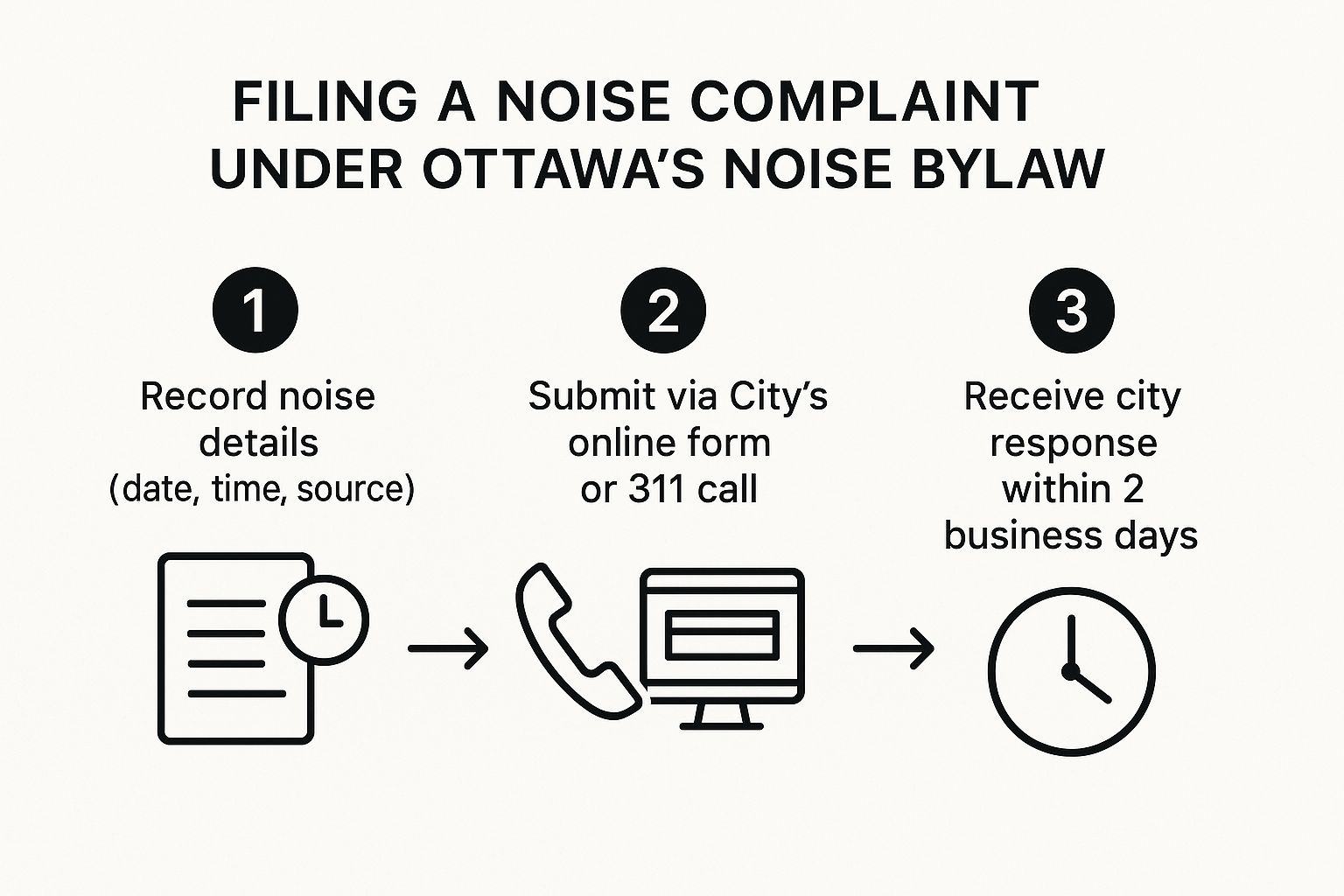
For Bylaw Services to take effective action, they need good information. The more specific and detailed you can be, the better equipped the officers will be to investigate the situation properly.
When you file your complaint, make sure you have these details ready:
- The exact address where the noise is coming from.
- The specific dates and times you’ve heard the noise.
- A clear description of the sound itself (e.g., loud party music, a dog barking for hours, power tools after hours).
This simple three-step process is designed to be straightforward, getting you from documentation to a city response as efficiently as possible.
This system became especially vital during the pandemic. With more people working from home, noise complaints in Ottawa hit a seven-year high in 2020. The city received 12,311 reports that year, a whopping 15% increase from 2019. You can discover more about how noise trends changed in Ottawa to see the full picture.
Once you’ve submitted your complaint, a Bylaw Services officer will review the information and launch an investigation. Depending on what they find, the outcome could be anything from a simple verbal warning to a formal fine, making sure the rules of the Ottawa noise bylaw are upheld.
Fines, Penalties, and How to Be a Good Neighbour

Let's talk about what happens when things go wrong. Ignoring the Ottawa noise bylaw isn't just a minor slip-up—it can hit you in the wallet. The set fine for most noise violations is $405, which increases to $490 once victim surcharges are added.
Of course, that number can climb for repeat offenders. And for corporations, the penalties get much steeper, sometimes reaching into the thousands.
If you get a ticket, you can pay it or fight it in court. But honestly, the best strategy is to avoid getting a complaint in the first place. A little bit of proactive communication can stop nearly all noise-related disputes before they even start.
Simple Tips for Keeping the Peace
Fostering a respectful community vibe really just comes down to a bit of thoughtfulness. Before a situation gets tense enough for a bylaw call, think about these simple moves:
- Give a Heads-Up: Planning a party? Just pop over and let your neighbours know the date and when you plan to wrap things up. It makes a world of difference.
- Mind the Clock: Save the loud chores, like mowing the lawn or firing up the power tools, for reasonable daytime hours. Your neighbours will thank you.
- Remember the Walls: If you're in a condo or semi-detached, sound travels. Be mindful of your TV and music volume, especially in the evenings.
Proactive communication is your best tool for preventing noise complaints. A friendly chat builds goodwill and makes sure everyone feels respected in their own home.
It also helps to understand where complaints happen most. Densely populated areas like Rideau-Vanier tend to have the highest number of noise reports, which isn't surprising given the vibrant nightlife and large student population. If you're curious about the patterns in your community, you can explore detailed data on Ottawa's noise complaints.
Ottawa Noise Rules: Your Questions Answered
Even with the bylaw spelled out, real-life noise issues can be tricky. Here are some of the most common questions we hear from Ottawa residents, with practical answers to help you navigate those unique situations.
What Can I Do About a Neighbour's Dog That Barks Constantly?
That endless barking? It's more than just an annoyance—it's a direct violation of the bylaw if it unreasonably disturbs your peace.
The best first move is always a friendly chat with your neighbour. They might genuinely have no idea it's happening, especially if they're out of the house. If talking it out doesn’t solve the problem, you can file a formal complaint by calling 311 or using the City of Ottawa’s online portal. Just be sure to provide the address and a log of when the barking happens so bylaw officers have the details they need to investigate properly.
Are Noise Rules Different for Holidays Like Canada Day?
Yes, the city definitely makes exceptions for major celebrations. The bylaw carves out exemptions for events of municipal, provincial, or national significance.
This means the sounds from official public events and fireworks displays on statutory holidays like Canada Day are generally permitted, even during quiet hours. It’s the city’s way of ensuring everyone can celebrate important occasions together.
Can I Submit a Noise Complaint Anonymously?
You can certainly ask questions about the Ottawa noise bylaw without giving your name, but filing a formal complaint is a different story. It usually requires your contact information.
Why? Bylaw Services needs to be able to follow up with you for more details or to have a witness if the issue escalates. Don't worry, though—your personal information is kept confidential throughout the investigation.
For the latest updates and news affecting your neighbourhood and the city, stay informed with ncrnow. Visit us at https://ncrnow.ca.
About The Author