

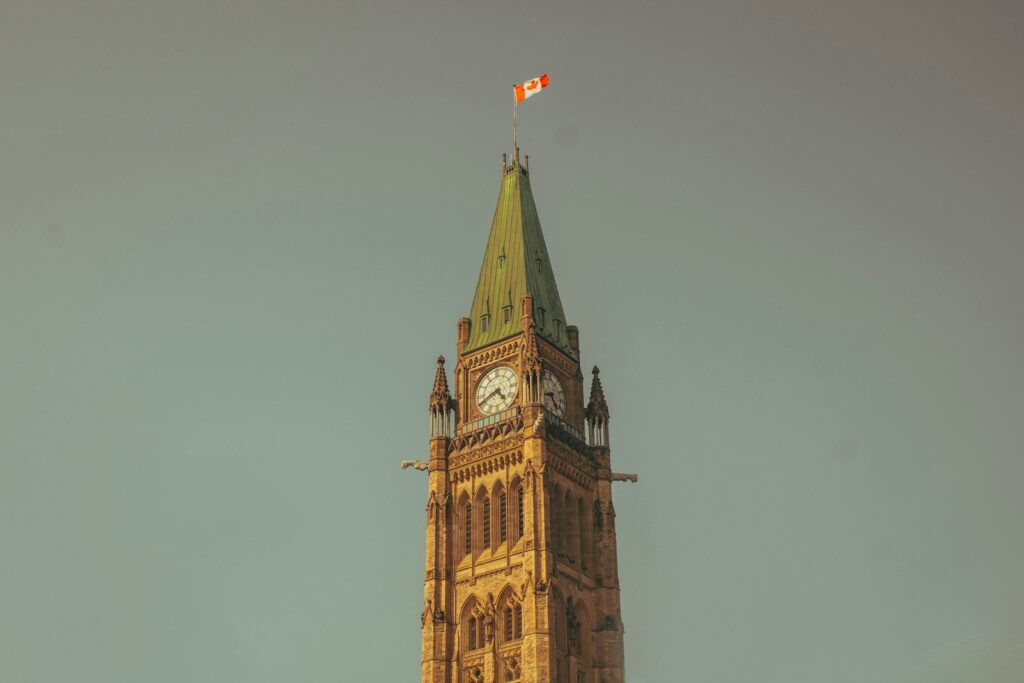
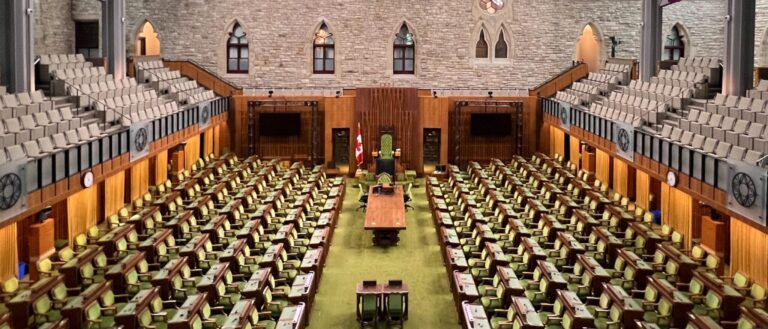
When I first saw Canadian Members of Parliament rise to their feet in applause after MP Rachel Thomas’s statement about Charlie Kirk and political violence, I was outraged. Kirk had been murdered, and Thomas used the moment to speak about freedom of speech and the dangers of political violence. It should have been solemn, a call for compassion for all victims of gun violence. But as I watched MPs clapping, what I heard was praise for a man whose public record was steeped in hate.
In the hours and days that followed, I found myself talking it through with friends, debating, dissecting, questioning what we had all just witnessed, and my outrage began to blur into doubt.

The Problem with Praising Charlie Kirk
Let’s be clear about who Charlie Kirk was. He built a career pushing racist, homophobic, and misogynistic rhetoric while cloaking it in the language of patriotism and “traditional values.” His platform normalized hate and emboldened extremism.
So when Thomas described him as “an outspoken advocate for Faith, Family, and Freedom,” I recoiled. That description sanitizes his legacy. It reframes him as someone simply holding a different opinion, rather than someone who actively worked to undermine the dignity and rights of others. It made him sound mainstream, respectable even, and he was not.
Words matter, especially in Parliament.
Why the Ovation Happened Anyway
My conversations with friends stayed with me. People I respect pointed out that the applause might not have been about Kirk at all, just about rejecting political violence.
In the hours that followed, I replayed the clip several times. At first, I was furious. But as I listened again, I started to see what Thomas might have intended: a condemnation of political violence, framed around the idea that differences of opinion shouldn’t cost someone their life.
I think many MPs were applauding that message, not Charlie Kirk himself. It should be possible to stand against political violence without endorsing the ideology of the person who was killed.
The Missing Context – Violence Beyond One Death
And yet, something vital was missing from Thomas’s speech.
She didn’t mention the enormous toll of gun violence that has killed thousands, each life just as precious as Kirk’s. There were no words for the children, women, and men who die quietly, without headlines or parliamentary speeches.
What makes this worse is that Kirk himself dismissed those deaths as an acceptable cost of protecting the so-called “freedom” to own and use guns. He defended systems that fuel mass shootings, even as he railed against imaginary threats to freedom of speech.
So why do we grieve only when the victim has power or fame? Why does the death of someone who promoted violence or at least accepted it spark outrage, while the daily deaths of innocent people barely register?
The Danger of Blurred Messages
Symbolic acts like applause carry meaning, even when unintended. MPs may have been applauding a principle, but what the public saw was applause for Charlie Kirk.
That matters. As my friend Mel said, it would have been entirely possible to condemn political violence without mentioning Kirk at all, or at the very least, without praising him. Instead, Parliament unthinkingly created a moment that risked rehabilitating his toxic legacy.
Unity, when misdirected, can whitewash hate.
Freedom of Speech vs. Harmful Speech
Thomas framed her remarks around the idea of free speech, and that raises another hard truth that we should all be thinking about: freedom of speech has limits, and pretending it doesn’t is dangerous.
We seem unable to distinguish between honest opinion and verbal violence. Between debate and dehumanization. Kirk’s words were not simply “different views”, they were attacks on whole communities.
This is where the paradox of intolerance comes in: if we tolerate intolerant ideologies, they will eventually destroy the freedom we are trying to protect. Protecting hateful speech under the banner of “free speech” doesn’t defend democracy; it corrodes it.
What Our Leaders Should Have Done
Parliament could have done better.
They could have condemned political violence, which absolutely must be done, while clearly disavowing Charlie Kirk’s views. They could have condemned the loss of life without romanticizing his message. Parliament could have made it clear that hate-based ideologies are not legitimate political viewpoints; they are beyond the bounds of acceptable discourse.
Instead, the silence about what Kirk stood for made it look like Parliament accepted his ideology as just another viewpoint.
Clapping Isn’t Neutral
I’ve gone from disgust to doubt to clarity. I believe the applause likely wasn’t meant to honour Kirk’s beliefs, but that’s what it looked like. And that’s a big problem.
We must oppose political violence, yes. But not at the cost of normalizing the kind of extremism that breeds it.
Standing ovations should be reserved for courage, compassion, and truth – not for whitewashing hate.
About The Author














Well well, as I sit not feeling well, this instantly helped make me feel better! I see things clearer now, thank you!