
Ever wondered about the number on your front door? It’s not just a decoration—it’s your civic number, and it’s one of the most important identifiers your property has.
Think of it as your home’s first name. Just like your name makes you unique in a crowd, your civic number makes your house or business instantly recognizable on its street. It’s a specific code that pinpoints your exact location, forming the critical first piece of your complete address.
Your Home’s Unique Identifier Explained
Without a civic number, finding a specific building would be like trying to find a friend in a massive stadium without knowing where they’re sitting. It’s the starting point for everything.
This simple system is the backbone of how our communities function. It’s what allows for:
- Emergency Response: Helping paramedics, firefighters, and police find you without a second’s delay when it matters most.
- Mail and Deliveries: Ensuring your packages and letters actually arrive at your doorstep, not your neighbour’s.
- Utility Services: Allowing hydro and water companies to connect, maintain, and bill the correct property.
- Municipal Administration: Keeping things like property taxes and voter registration organized and accurate.
Civic numbers are assigned by municipal governments all across Canada. This standardized approach is especially critical in rural areas, where clear addressing can literally be a lifesaver. According to industry experts like Kalitec, modern civic numbering systems were implemented to replace confusing rural route numbers, which in some cases caused emergency call delays.
In short, your civic number is more than just a house number; it’s a vital link connecting your property to the wider community and all its essential services.
To see how it all fits together, let's break down a typical civic address. Each component has a specific job, but the civic number is what kicks things off.
Breaking Down Your Full Civic Address
| Component | What It Is | Example |
|---|---|---|
| Civic Number | The unique number of your building on the street. | 123 |
| Street Name | The name of the road your property is on. | Main Street |
| Municipality | The city or town where your property is located. | Ottawa |
| Province | The province your municipality is in. | Ontario |
| Postal Code | A six-character code for mail sorting and delivery. | K1A 0B1 |
As you can see, while every piece of the address is important for getting the full picture, the civic number is the key that unlocks your specific location.
The Method Behind Municipal Numbering
Ever wonder why one side of your street has even numbers and the other has odd? It’s not random—it’s actually a pretty clever system municipalities use to assign every single civic number. Far from being arbitrary, the process follows a standardized method designed to create order and make sure every property is easy to find.
At its heart, most municipal numbering systems start from a central point, like a major river or a key intersection. Think of it as ground zero for the entire city. From there, numbers typically get higher the farther you move away, creating a predictable grid that makes navigation a whole lot easier.
The Logic of Odd and Even
The odd-even rule is the most common convention. As you head down a street from its starting point, one side gets the odd numbers (1, 3, 5) and the other gets the even ones (2, 4, 6). This simple system instantly tells first responders, couriers, or even your pizza delivery driver which side of the street to check, saving precious time and cutting down on confusion.
Out in more rural areas, things work a bit differently. A distance-based method is often used, where a civic number is assigned based on how many metres a property’s driveway is from the start of the road. For instance, a sign that reads 1550 could mean the entrance is exactly 1,550 metres down the road.
This diagram breaks down how national standards guide municipal policies, which in turn dictate the numbers you see on the street.
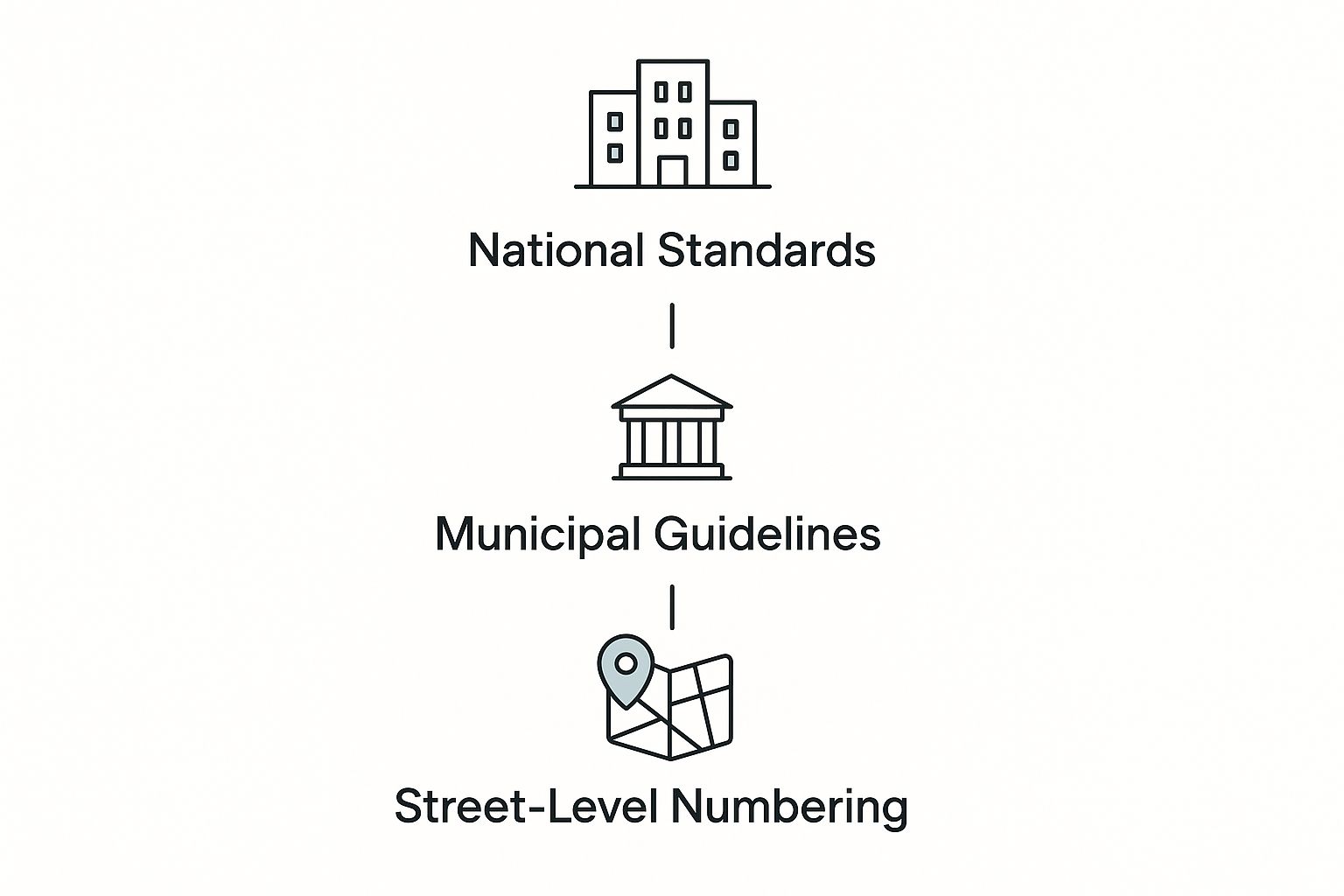
This top-down approach ensures that while local towns and cities handle the specifics, the system stays consistent and logical everywhere.
A civic number isn't just assigned; it's calculated. It represents a property's unique, logical place within a larger municipal grid, making it a predictable and reliable identifier.
Whether you're in a packed downtown neighbourhood or a sprawling country township, this hidden logic ensures your address is more than just a number—it’s a precise coordinate on the map. For anyone building a new home, getting a civic number is a key step that usually happens during the permitting process. To learn more about what that involves, check out our guide to getting a building permit in Ottawa.
Why Your Civic Number Is a Lifeline in an Emergency
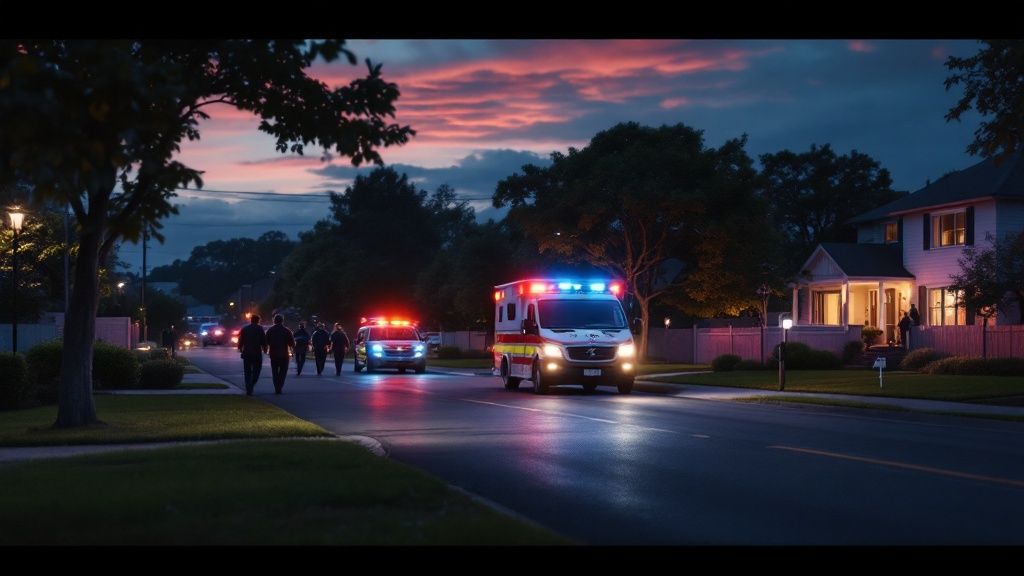
When you dial 911, every single second feels like an eternity. In those critical moments, the one thing that can make all the difference is something incredibly simple: your civic number. It’s the beacon that guides paramedics, firefighters, and police straight to your door when time is everything.
Imagine the chaos of a delayed response. First responders circle the block, squinting through a snowstorm or the dark of night, trying to guess which house is yours. This isn't just a frustrating scenario; a hidden, faded, or unlit civic number can turn precious minutes into a prolonged crisis.
Now, picture this instead: a clear, visible number that acts like a bright, flashing arrow pointing right at you. It lets emergency crews pinpoint your location instantly, shaving critical time off their arrival. This isn't just about convenience; it’s about survival.
Making Sure Help Can Find You
Having a visible civic number is one of the easiest and most important things you can do to protect your family. It’s peace of mind, knowing that if you ever need help, it can get to you without a single wasted moment. Local services, including the Ottawa Fire Department, rely on this simple marker to do their jobs effectively.
This principle is universal. For instance, the National Emergency Number Association (NENA) has found that improving address data accuracy is critical for reducing response times. In some cases, clearly visible numbers and accurate geolocations can shave minutes off an emergency response—a window that can be the difference between life and death.
In an emergency, your civic number isn't just an address—it's a lifeline. Its visibility directly impacts how quickly help can reach you.
Actionable Steps for Visibility
Making your civic number easy to spot is straightforward. Follow these simple guidelines to ensure you're always visible to first responders:
- Contrasting Colours: Choose numbers that pop against their background. Think black on white, or white on a dark wall.
- Clear Line of Sight: Make sure your number isn't hidden by overgrown bushes, holiday decorations, or a buildup of snow.
- Good Lighting: A small, dedicated light can make your number perfectly visible at night.
- Both Sides of the Mailbox: If your number is on a curbside mailbox, put it on both sides so it can be seen from either direction.
How Your Civic Number Powers Everyday Life
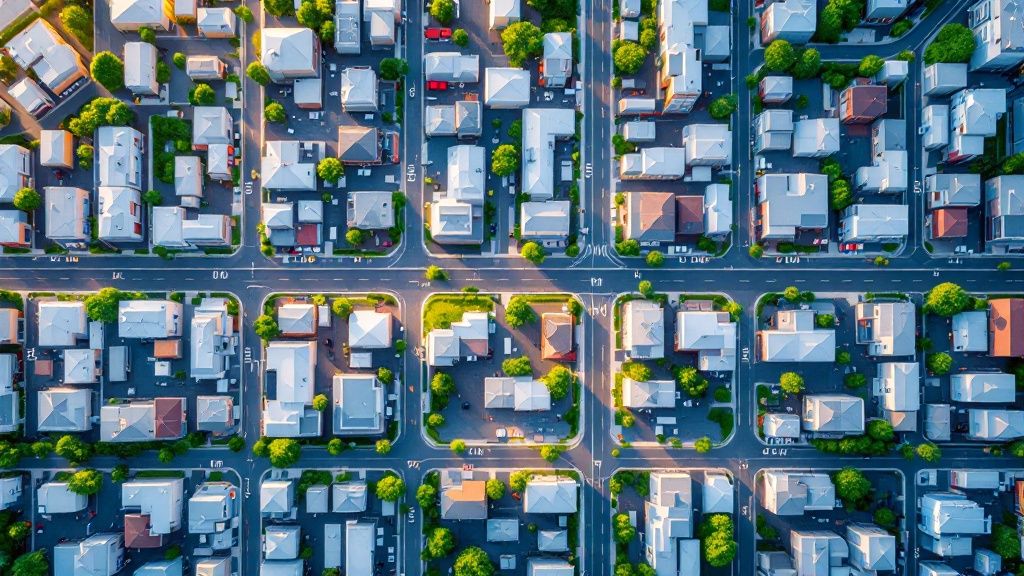
While its job in an emergency is life-saving, your civic number is also the quiet workhorse of your daily routine. It’s the invisible thread connecting your property to just about everything that makes modern life tick, from your morning mail to that package you’ve been tracking all week.
Think about the last time you ordered something online. That entire journey, from a warehouse shelf to the delivery driver’s GPS, hinges on your civic number as the final, crucial coordinate. A single wrong digit is all it takes to send your package on a frustrating detour or straight back to the sender.
It's the same story for essential services. When you move into a new place, how do utility companies know exactly where to flip the switch for your electricity, internet, or water? Your civic number is the definitive marker they rely on to get you connected at the right spot.
The Administrative Backbone
Beyond packages and power, your civic number is a key identifier for almost all municipal and provincial paperwork. It’s what keeps the official records straight and ensures your property is correctly logged for all sorts of things.
- Property Taxes: Municipalities use your civic address to accurately assess and bill property taxes, which in turn fund local services like road repairs and community parks.
- Voter Registration: Your address confirms you’re in the correct electoral riding, making sure you can cast your vote in municipal, provincial, and federal elections.
- Service Connections: It’s fundamental for setting up accounts for everything from waste collection to your water supply. Knowing your responsibilities for these is key, and you can learn more about the City of Ottawa water and sewer systems in our guide.
A correct civic number prevents a world of administrative chaos. It makes sure the services you pay for are delivered to you and that your civic duties and rights are tied to the right location.
How to Find or Confirm Your Official Civic Number
Knowing your official civic number seems like it should be easy—just look at the front of your house, right? But sometimes, it’s not that straightforward. Whether you’re filling out a permit application or just want to be certain, confirming the official number assigned to your property is a simple but crucial step.
The best place to start is with the paperwork you already have. These records show the legal address registered with the city and your service providers, making them the most reliable sources you can find.
Check Your Official Documents
Before you go digging online, take a look at any of these papers you might have on hand:
- Property Tax Bill: This is the gold standard. It comes directly from the municipality and is tied to your specific property, making it the most official document for confirming your address.
- Property Deed or Title: The legal documents for your property will always list the official civic address. No guesswork here.
- Utility Bills: Statements from Hydro Ottawa, Enbridge, or your water provider are addressed to the official civic number they use for service. If they can find you, it's the right number.
These documents are your fastest and most accurate bet. If you can’t find them, or if you’re dealing with a trickier situation like a new build, your local government’s online tools are the next place to turn.
Use Municipal Online Resources
Most municipalities, including the City of Ottawa, have powerful online resources that can help you verify your civic number in just a few clicks. The city's interactive mapping tools, for instance, let you search for and view property details from your computer.
Using your municipality's official online map is like having a digital property registry at your fingertips. It gives you a clear visual confirmation of your property’s location and its assigned civic number.
Just look for a searchable database or interactive property map on your local government's website. By typing in your street name, you can usually zoom in on your lot and see the officially assigned number right there on the screen.
For more complex cases—like a newly built home that hasn't been registered yet or a rural property without a clear number—you’ll need to contact your local government directly. The planning, public works, or building department is usually in charge of assigning and confirming civic addresses. A quick call or email will get you the official answer straight from the source.
Your Civic Number Questions Answered
Even after getting the basics down, a few common questions about civic numbers always seem to pop up, especially for people dealing with new builds or unique properties. Let's tackle some of the most frequent points of confusion head-on.
Is a Civic Number the Same as a House Number?
Yes, for all practical purposes, they're the same thing. “House number” is what we all say in everyday conversation, while “civic number” is the official term the city uses for that unique identifier on a property.
The official term is simply more inclusive. It covers every type of property—not just residential homes, but also commercial buildings, industrial lots, and even empty parcels of land. This ensures every single piece of property has a formal, recognized spot in the municipal system.
What if My New Property Doesn't Have One?
If you're building a brand-new home or have just subdivided a lot, your property won’t magically have a civic number assigned to it. You need to formally apply for one through your local municipality.
Getting a new civic number is a mandatory step in the development process. It's a key requirement for pulling building permits, setting up utilities like water and hydro, and officially getting your property on the map.
To kick things off, you’ll need to get in touch with your municipality’s planning, building, or public works department. They'll walk you through the application and assign a number that fits logically into the existing street grid, making your new property an official part of the community.
Can I Choose or Change My Own Civic Number?
In almost all cases, the answer is no. You can't pick your own civic number or ask for a change because you prefer a different one, like a lucky number. Civic numbers are assigned based on a strict, logical system built for one main reason: clarity.
This system ensures everything is in sequence, which is critical for emergency services, mail delivery, and general navigation. The integrity of the system relies on this rigid structure. Municipalities will only step in to make a change in very rare situations, like fixing a major mapping error or clearing up widespread confusion that’s hurting services on an entire street. These decisions are always about improving public safety and efficiency, not accommodating personal requests.
At ncrnow, we bring you the essential news and information that matters to residents of Ottawa and the National Capital Region. Stay connected with your community by visiting us at https://ncrnow.ca.
About The Author