

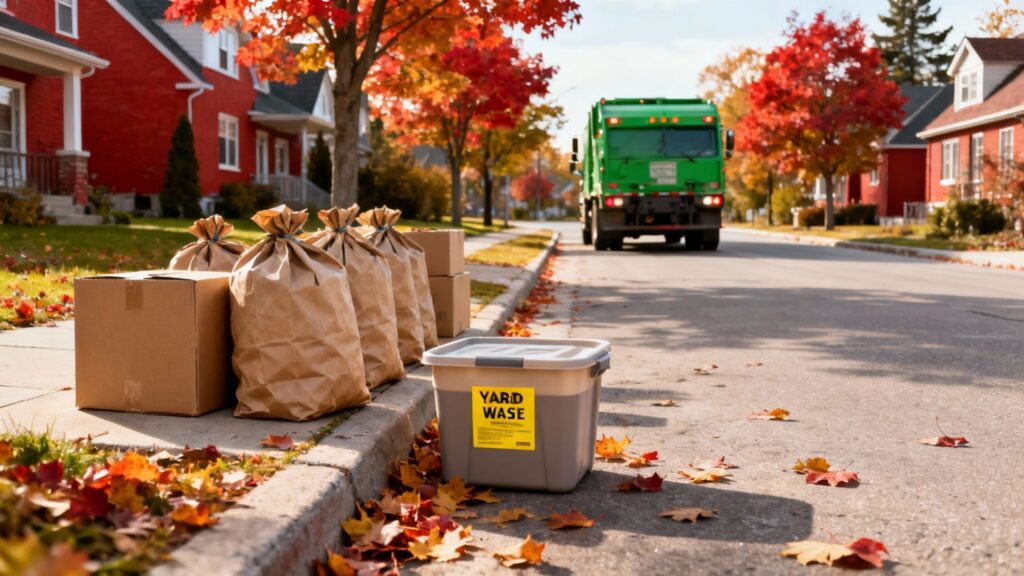
When paper bags and bundled branches line Ottawa’s curbs, it marks the season for yard waste pickup. This city service collects organic materials like leaves, grass clippings, and twigs from residential properties. The program is more than a simple cleanup effort; it is a key part of the city’s strategy to divert compostable material from landfills, where it would otherwise release harmful greenhouse gases.
This guide explains how Ottawa's yard waste program works, from collection schedules to proper preparation, helping residents participate effectively in this important local environmental initiative.
Understanding Ottawa's Yard Waste Program
The yard waste program is essentially a city-wide composting initiative, designed to manage the large volume of organic waste generated during spring and fall cleanups. When residents bag their leaves or bundle branches, they are participating in a significant local environmental effort.
By keeping organic material out of the Trail Road landfill, the community helps reduce methane emissions. Methane is a potent greenhouse gas produced when organic matter decomposes without oxygen, a common process in landfills.
The Purpose of the Program
The core goal is to transform potential waste into a valuable resource. All leaves, branches, and garden trimmings collected from curbside are transported to a municipal facility. There, they undergo a composting process that turns them into nutrient-rich soil.
This finished compost is used to enrich the soil in public spaces like parks and community gardens across Ottawa. It is a circular system with clear benefits.
- Environmental Protection: The program helps combat climate change by preventing methane production and extends the lifespan of the municipal landfill.
- Resource Creation: It generates a high-quality soil amendment that improves the health of soil in shared green spaces.
- Community Engagement: It provides every resident with a straightforward way to contribute to Ottawa’s environmental goals.
What to Expect from This Guide
This guide is a comprehensive resource for the yard waste program. We will break down everything you need to know, from finding your neighbourhood's collection schedule to preparing your materials for the curb.
Following the city’s guidelines ensures your waste is picked up without issue and helps the collection process run smoothly for everyone.
By participating correctly, you are not just a resident following rules. You become an active partner in Ottawa's green initiatives. Your efforts at the curb have a real, positive impact on our local environment.
We will walk you through seasonal timelines, clarify what is accepted, and show you exactly how to set everything out. This is your reference for handling yard waste correctly in the National Capital Region.
Finding Your Yard Waste Pickup Schedule
Figuring out Ottawa’s yard waste pickup schedule is straightforward. Unlike regular weekly garbage and recycling, yard waste collection occurs on an alternating schedule throughout the spring, summer, and fall.
The most important detail is that yard waste is collected on the same day as your green bin, but only every other week. This system helps manage the seasonal influx of leaves and branches without overwhelming city services. Missing your collection day means waiting another two weeks, so timing is important.
Your Go-To Tool for Collection Dates
The most reliable way to find your specific pickup dates is by using the City of Ottawa's online Collection Calendar. This tool eliminates guesswork. Simply enter your street name and number, and it generates a personalized calendar showing every collection day for garbage, recycling, your green bin, and yard waste.
It is particularly useful because it automatically adjusts for statutory holidays, which often push collection back by one day. For a complete overview of all waste schedules, you can also check our detailed Ottawa garbage calendar guide, which breaks everything down for the year.
Think of your personalized collection calendar as more than just a schedule. It is your direct link to the city’s waste management system and the best way to ensure you never miss a yard waste pickup.
It is a good idea to bookmark the page or download the schedule. It will help you stay organized all season and provides useful reminders and tips for your neighbourhood.
To help you plan, here is a general look at how the yard waste collection seasons typically unfold in Ottawa.
Typical Yard Waste Collection Seasons in Ottawa
| Season | Collection Period | Common Materials Accepted |
|---|---|---|
| Spring | April – June | Leaves, twigs, plant trimmings, brush |
| Summer | July – August | Grass clippings, garden waste, small branches |
| Fall | September – November | Fallen leaves, end-of-season plants, pumpkins |
| Winter | January (Special) | Christmas trees (decorations removed) |
These timelines offer a solid guide, but you should always confirm your specific dates with the city's official calendar.
Special Collection Periods to Note
Beyond the regular spring-to-fall schedule, the city runs a couple of special collection periods worth noting on your calendar.
The best-known is the Christmas tree pickup in January. For a couple of weeks after the holidays, dedicated crews collect real Christmas trees left at the curb. Just make sure you have removed all decorations, lights, and the tree stand.
The city also often extends the yard waste season in late fall to help residents manage the final leaf cleanup before snow arrives. These extensions are usually announced based on weather conditions. The best way to catch these final pickup days is to check the city’s website or the Collection Calendar tool in November.
How to Prepare Your Yard Waste Correctly
Getting your yard waste picked up is all about proper preparation. Following the city’s guidelines is a crucial step that makes the process safer and more efficient for collection crews. When you get it right, your materials get collected on schedule.
The city provides a few straightforward options for setting out your waste, each designed for easy handling and processing.
Choosing the Right Container
For leaves, grass clippings, and other small garden materials, you have three main choices. The golden rule for all of them is the weight limit. Each bag, box, or bin must weigh no more than 15 kg (33 lbs).
Here are your approved options:
- Paper Yard Waste Bags: These are the most common choice. You can find them at most hardware stores and garden centres. They are designed to break down with your waste during the composting process.
- Cardboard Boxes: A spare cardboard box works well. Like paper bags, the box will be composted along with its contents.
- Reusable Containers: A rigid, open-topped container like a garbage can is acceptable. However, it must be clearly marked. You can get a yellow “Yard Waste” sticker for free from the City of Ottawa to make sure it is easily identifiable.
A common mistake is using plastic bags. Even those labelled "compostable" or "biodegradable" are not accepted, as they do not break down properly in Ottawa’s composting system and are considered contaminants. Stick to paper, cardboard, or a clearly marked reusable bin.
How to Bundle Branches and Brush
For larger items like tree branches, twigs, and brush, you need to bundle them. Crews will not collect loose piles of branches because they are awkward and unsafe to handle.
Follow these simple steps:
- Cut to Size: Cut all branches and brush so they are no longer than 1.2 metres (4 feet) in length. Ensure no single branch has a diameter thicker than 10 centimetres (4 inches).
- Bundle Securely: Group the trimmed branches together and tie them tightly with twine or another natural fibre. The finished bundle cannot be wider than 60 centimetres (2 feet).
- Check the Weight: Like your containers, each bundle must weigh less than 15 kg (33 lbs).
Each bundle should be manageable for one person to lift easily. If it requires two people, it is too big.
What Not to Include in Yard Waste
Knowing what to leave out of your yard waste is just as important as knowing what to put in. Some materials can damage collection equipment, contaminate the compost, or pose a safety risk.
Here is a clear list of what is not accepted in Ottawa's yard waste program:
- Soil, Sod, and Sand: These materials are too heavy and dense for the system.
- Rocks, Stones, and Gravel: These can cause serious damage to grinding machinery.
- Lumber and Treated Wood: Any construction wood, whether painted, stained, or pressure-treated, is prohibited.
- Stumps and Large Roots: These are too large for the standard composting process.
- Plastic of Any Kind: This includes plastic bags, plant pots, trays, and plastic twine.
- Pet Waste and Animal Bedding: These materials belong in your green bin or regular garbage.
Taking a few extra minutes to prepare your materials correctly makes a significant difference. You help keep the city's yard waste program running smoothly, turning organic material into a valuable resource for our community.
The Journey from Your Curb to Compost
Have you ever wondered what happens to your bags of leaves and bundles of branches after they are collected from the curb? It is the beginning of a process that transforms your yard waste into a valuable resource for our community.
This is an excellent example of a sustainable, closed-loop system in action here in Ottawa. You are starting a cycle that directly benefits the city's parks and gardens.
Once collected, the organic material is taken to one of the city’s specialized processing facilities. It enters a carefully managed, large-scale composting operation where nature’s recycling process is assisted by science.
From Piles to Product
The first step is preparation. The incoming yard waste is shredded and mixed to create a uniform blend of materials. This allows for better airflow and moisture distribution, which are two crucial elements for efficient decomposition.
Next, the material is arranged into long, massive piles known as windrows. These are professionally managed compost heaps. Here, microorganisms work to break down the leaves, grass clippings, and wood fibres.
This process is more active than simply letting a pile rot. Facility operators constantly monitor the temperature, oxygen levels, and moisture content of the windrows. They use specialized machinery to turn them regularly, ensuring the composting process gets hot enough to kill weed seeds and pathogens without harming the beneficial microbes.
Over several months, this controlled decomposition turns your yard trimmings into a dark, crumbly, and nutrient-rich soil amendment called compost.
Getting your yard waste ready for collection is the critical first step in this journey. This illustration shows the key rules for containers, weight, and bundling.

Following these simple rules ensures your materials are ready to start their trip to the composting facility without any issues.
Closing the Loop in Our Community
This transformation is a significant environmental win. Composting programs have grown over the decades, turning what was once landfill-bound waste into a valuable resource. While yearly rates can fluctuate, the expansion of municipal composting represents a major success in waste diversion. You can find more insights into these kinds of programs on the U.S. Environmental Protection Agency's website.
The finished compost created at Ottawa’s facilities is not sold for profit. Instead, it is used to directly benefit our local community, completing the cycle that began at your curb. This high-quality compost is applied to:
- City Parks and Green Spaces: It enriches the soil, helping trees, flowerbeds, and sports fields remain healthy.
- Community Gardens: Local gardeners receive a boost from this nutrient-rich material, helping them grow healthier food.
- Municipal Landscaping Projects: From beautifying traffic medians to restoring soil at construction sites, the city’s compost is used throughout Ottawa.
By participating in the yard waste pickup program, you are a key player in a system that reduces landfill pressure, cuts greenhouse gas emissions, and directly enhances the public spaces that make Ottawa a greener place to live.
Exploring Alternatives to Curbside Pickup
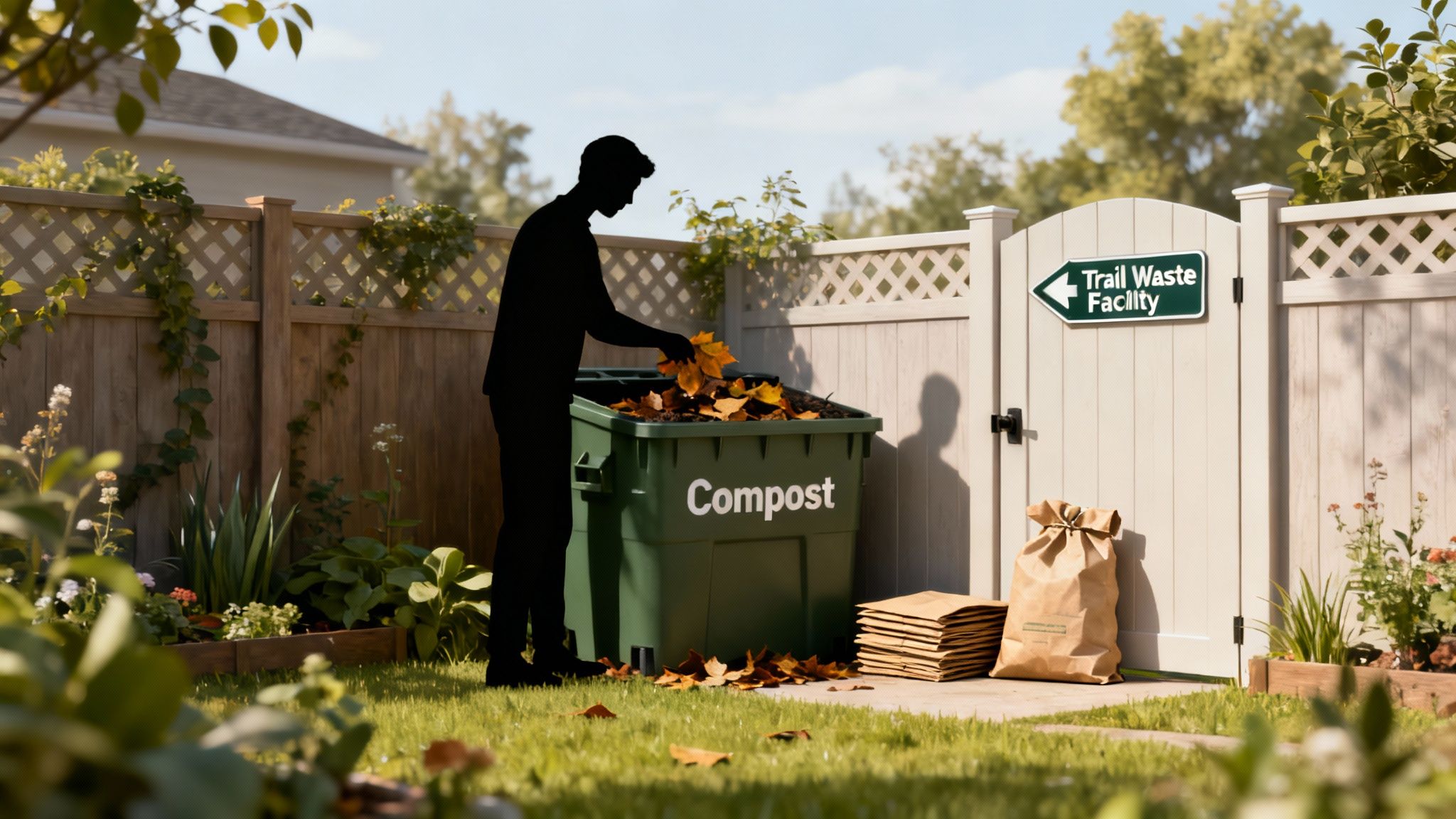
While Ottawa’s bi-weekly curbside pickup is a convenient service, it is not your only option for dealing with leaves and branches. Sometimes you might miss collection day, or a weekend gardening project leaves you with more waste than the city’s limits allow.
Fortunately, there are several other excellent choices. Knowing your alternatives provides a complete toolkit for managing yard waste, whether it is a small bag of weeds or a large pile of branches.
Using the Trail Waste Facility
For times when you have a large amount of yard waste or cannot wait for the next pickup day, you can take it directly to the City of Ottawa's Trail Waste Facility. This is the city's main destination for most waste and is equipped for public drop-offs.
Located at 4475 Trail Road, the facility accepts the same yard waste you would put at the curb: leaves, grass clippings, branches, and other plant matter. Be aware that there are fees for dropping off materials. The cost is calculated by weight, making it a practical choice for large loads. It is always a good idea to check the city’s website for current hours and tipping fees before you go.
This facility also handles more than just green waste. If you are in the middle of a larger cleanup, our guide on the local household hazardous waste depot can be helpful for items that cannot go in your regular trash.
The Benefits of Backyard Composting
Another excellent alternative is starting your own compost pile or bin in your backyard. This is the most eco-friendly option, as it eliminates transportation emissions and creates a valuable resource for your garden.
Composting is nature's recycling system. By layering "greens" (like grass clippings and kitchen scraps) with "browns" (like dry leaves and small twigs), you create the perfect environment for microorganisms to break everything down. The result is a rich, dark compost often called "black gold" by gardeners. It is a superb, all-natural fertilizer that improves soil, helps it retain moisture, and feeds your plants.
Composting at home puts you in direct control of the process. It is a year-round solution that manages your yard and kitchen waste and rewards you with a free, high-quality soil amendment for your garden.
Hiring a Private Junk Removal Service
When tackling major landscaping projects, tree removals, or a full property cleanup, the volume of yard waste can be overwhelming. In these cases, hiring a private junk removal service is often the best solution. While it is the most expensive option, the convenience is significant.
These companies bring large trucks and do all the heavy lifting, handling massive quantities of branches, logs, and other debris that exceed municipal limits. They will clear your property quickly and efficiently. This is a good choice when a project is too large for self-hauling or curbside bins. Just be sure to choose a service that disposes of organic material responsibly, ideally at a proper composting or wood recycling facility.
Yard Waste Management Options Compared
To help you decide, here is a quick comparison of your main options for managing yard waste in Ottawa.
| Method | Best For | Cost | Convenience |
|---|---|---|---|
| Curbside Pickup | Regular, seasonal cleanups within city limits. | Free | High, but schedule is fixed. |
| Trail Waste Facility | Large volumes or missed collection days. | Fee-based (by weight) | Moderate, requires self-transport. |
| Backyard Composting | Ongoing management of yard and food scraps. | Low (initial setup) | High, provides free fertilizer. |
| Private Service | Major projects with very large debris. | Highest | Very high, includes all labour. |
Choosing the right method comes down to balancing the volume of your waste with your budget and time. Knowing all your options ensures you can keep your yard looking great without the stress.
Why Diverting Yard Waste Matters for Ottawa
Putting your leaves into a paper bag or bundling branches may seem like just another chore, but it is a powerful part of Ottawa’s larger environmental strategy. Every time you set yard waste at the curb, you are taking a direct step to protect our local environment and help build a more sustainable city.
When organic materials like grass clippings and leaves are sent to a landfill, they are buried under other garbage. Cut off from oxygen, they decompose anaerobically, releasing methane. Methane is a greenhouse gas far more potent than carbon dioxide at trapping heat in our atmosphere.
Reducing Landfill Pressure
By composting our yard waste, we avoid these harmful emissions. We also address another urgent issue: our landfills are filling up. Every bag of leaves we compost is one less bag taking up space at the Trail Waste Facility. This simple act extends the life of our landfill, a critical piece of city infrastructure that is expensive and complex to replace.
This is not just an Ottawa issue. In 2022, California generated 76 million tons of waste, with 53 percent ending up in landfills. Smart management of organic waste is a key strategy for cities everywhere. You can see how other regions are tackling this by checking the latest California state of recycling report.
Building a More Resilient City
When you participate in the yard waste program, you help create a valuable resource. The compost made from your leaves and branches is used to enrich the soil in city parks, community gardens, and other municipal green spaces. This process improves soil health, helps plants thrive, and reduces the need for chemical fertilizers.
Think of it as a closed-loop system for our community. The nutrients from your yard are returned to public green spaces, creating a healthier city for everyone. It connects your personal effort at the curb to our collective environmental goals.
This program also supports the city’s broader infrastructure planning. Effective waste diversion is connected to other municipal services, as it reduces the long-term strain on our public works systems. For more on how these city services connect, you can read our guide on the City of Ottawa's water and sewer systems.
Ultimately, your participation matters. It transforms the simple act of cleaning your yard into a meaningful contribution toward a greener, more resilient Ottawa.
Your Yard Waste Questions Answered
We receive many of the same questions about yard waste pickup in Ottawa, so we have compiled some direct answers to help clear up any confusion.
Can I Put Yard Waste in My Green Bin?
Yes, you can. For small cleanups, like pulling a few weeds or light raking, tossing them in your green bin is acceptable any time of year. It is a convenient option for daily garden tidying.
However, when dealing with a large volume of fall leaves or a big spring cleanup, it is best to use paper yard waste bags or a properly labelled bin. This keeps your green bin free for daily kitchen scraps.
What Should I Do if My Yard Waste Was Missed?
First, check your setup. Was it out by 7 a.m.? Were the bags or bins under the 15 kg weight limit? A quick double-check can often solve the issue.
If everything seems correct, you can report a missed collection to the City of Ottawa by calling 3-1-1 or using the city's online service request tool. It is best to leave your yard waste at the curb until the crew can return to your street.
It is worth remembering that municipal programs like this are balanced against city budgets. In some places, small rate increases may be used to fund better green waste services. You can see an example of how waste collection services are funded in other regions to get a sense of the costs involved.
Where Can I Get the Yellow Yard Waste Stickers?
These bright yellow stickers allow you to use a reusable container, like an old garbage can, for yard waste. They are free and signal to the collection crew what is inside.
You can pick them up in person at any City of Ottawa Client Service Centre. You can also order them from the city's website, and they will be mailed to your home for free.
Are Plastic or Compostable Bags Allowed?
No, neither type is accepted in Ottawa's program. Standard plastic bags are not allowed for yard waste.
Even bags marked as "compostable" or "biodegradable" are not permitted. They do not break down properly in the city’s large-scale composting facility and can contaminate the finished compost. To ensure your materials are collected, always use paper yard waste bags, cardboard boxes, or a reusable bin with a yellow sticker.
At NCR Now, we aim to provide clear, practical guides to help you navigate life in the National Capital Region. For more local news, events, and community stories, visit us at https://ncrnow.ca.
About The Author