

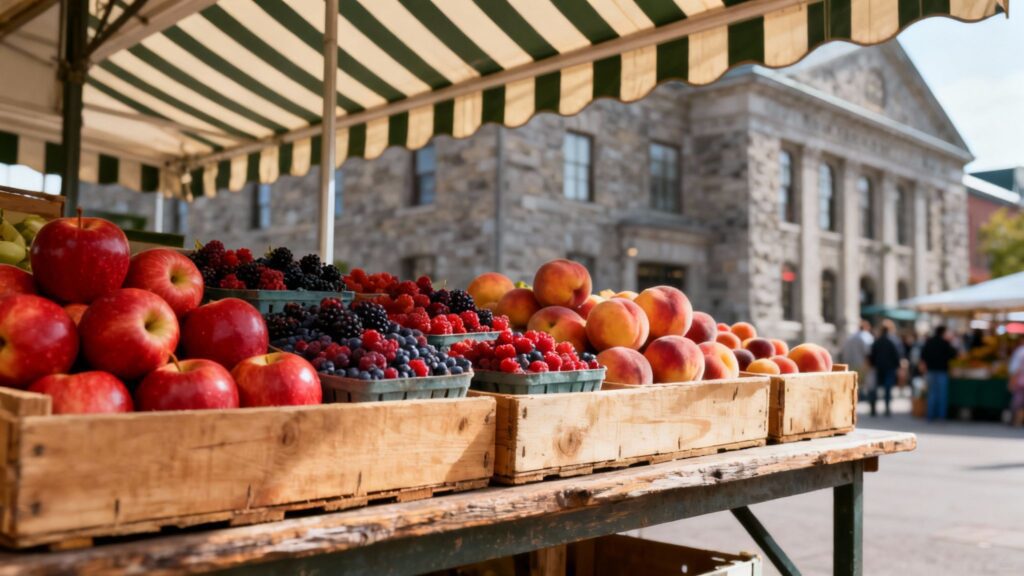
The Byward Market is the heart of Ottawa. It is a unique place where history, community, and fresh food come together, whether you are visiting for the first time or have lived here your whole life. This guide will walk you through the market, from its storied past to the vibrant stalls you’ll find today.
A Landmark Woven into Ottawa's Identity
Stepping into the Byward Market is like stepping into nearly 200 years of Ottawa’s history. For many of us, it is much more than a collection of shops and stalls; it is the city's lively, bustling core.
Whether you are looking for local produce, unique crafts, or just a place to feel the city's pulse, the market delivers. It’s an experience that genuinely connects you to Ottawa's past and present.
Think of this guide as your roadmap to seeing the market not just as a tourist spot, but as a vital piece of Ottawa’s character. We’ll look into its story, introduce you to the dedicated vendors who are its soul, and share practical tips for navigating its lively streets.
What This Guide Covers
Our goal here is to give you the complete picture of the market experience, helping you understand its significance while making your next visit easier and more enjoyable.
- Its Storied Past: We will look at how a humble timber town market grew into a national landmark.
- The Best Local Goods: We will show you where to find the freshest produce, artisanal cheeses, and incredible baked goods.
- Planning Your Visit: You will get all the practical information on hours, parking, and the best times to go.
The market is a cornerstone of this city, a place where memories are made. As one longtime vendor put it, the market was once a "living, breathing cornucopia." That feeling still rings true for those who know it best. Its continued importance is a testament to its ability to adapt while holding onto its essential character. For more ideas on what to do in the area, check out our guide on things to do in Ottawa today.
This journey through the Byward Market will show you exactly why this landmark continues to capture the spirit of Ottawa. We will highlight its challenges, celebrate its enduring traditions, and explain why its vitality matters so deeply to the community. Consider this your invitation to explore one of Canada's oldest and most dynamic public markets with new eyes.
How a Timber Town Market Became a City Icon
To understand the Byward Market, you have to picture Ottawa when it was still Bytown, a rugged, ambitious timber town. The market we know today was not born a polished tourist hub. Its roots are buried deep in the mud and sawdust of the 1820s.
It all started with Lieutenant Colonel John By, the Royal Engineer tasked with building the Rideau Canal. He was a planner, and in 1827, he set aside a plot of land for a public market. It began as a simple affair where local farmers, loggers, and artisans could gather to sell their goods. More than just a place to shop, it was the lifeblood of Bytown, the essential spot to get everything from potatoes to livestock.
From Bytown Hub to City Centre
As the settlement grew, so did the market. It quickly became the commercial and social heart of the community. A major milestone came in the 1840s with the construction of the first permanent building, which opened in 1848. This cemented its role as a core city institution. It was no longer just a rustic gathering place; it was here to stay.
The market has always been tough. It burned down twice in the 19th century. Each time, the community rallied to rebuild it, refusing to let their central pillar disappear. With every reconstruction, it came back bigger and better, a reflection of the growing city itself. The famous bell, installed to call vendors and shoppers, became a symbol of that stubborn endurance.
The Market Through the Decades
Nearly two centuries later, the market has made an incredible journey. It went from being a critical supply depot for a frontier town to becoming Ottawa’s premier tourist destination. Today, the district is home to over 600 independent businesses and can draw as many as 50,000 people on a single summer weekend.
This evolution mirrors Ottawa's own story, from a rough-and-tumble town to a confident, polished national capital. To dig deeper into its origins, check out the official history of the Byward Market on their site.
This journey, from understanding the history to picking out a vendor and planning your visit, is what makes a trip to the market so rich.
"The market was once a living, breathing cornucopia. It was jammed with actual farmers’ stalls from George to York streets."
That connection to local agriculture is the soul of the place. It is a legacy that defines its character even as it adapts to the demands of a modern city.
Ultimately, the story of the Byward Fruit Market is about the people who have kept its spirit alive. It is about the generations of farmers hauling their harvests to the city, the butchers and bakers who built their lives here, and the countless Ottawans who have woven it into their family traditions.
Knowing this history is key. The market was not designed to be a tourist attraction; it became one organically because of its authenticity and its deep, unwavering bond with the community. Tracing its path from a simple necessity to a beloved icon is the best way to appreciate the vibrant, complex, and utterly essential landmark it is today.
Finding the Best Local Goods and Produce
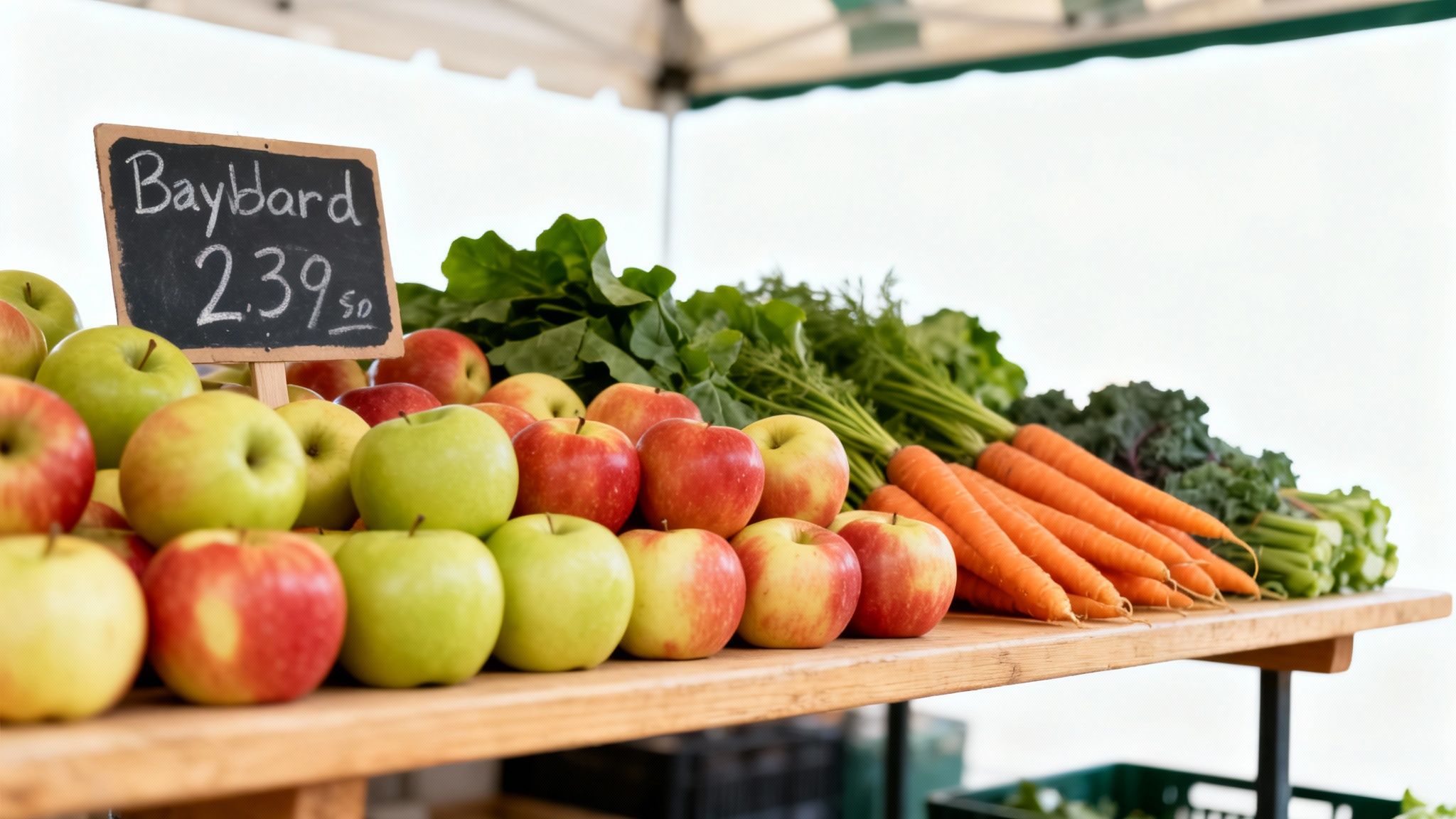
Walking into the Byward Market is a feast for the senses. To make the most of it and find the best local gems, it helps to know the layout. The market is not just a single building; it is a living district of outdoor stalls, indoor shops, and hidden specialty stores.
Think of it as three distinct zones that flow together. You have the historic ByWard Market Building at the heart of it all. Spilling out from there are the outdoor vendors, whose colourful stands bring the streets to life from spring through fall. Finally, tucked into the surrounding streets, are the specialty food shops that have become Ottawa institutions. Knowing how these pieces fit together is your key to exploring like a local.
The Outdoor Farmer Stalls
When most people picture the Byward Fruit Market, they are thinking of the outdoor stalls. From about May to October, these vendors are the heart and soul of the market, creating that vibrant, bustling atmosphere. This is ground zero for finding the freshest seasonal produce from the Ottawa Valley and beyond.
You get to talk directly to the people who grow your food. Do not be shy. Ask them what's best right now or how they like to cook with a certain vegetable. Many of these families have been selling their goods here for generations, so they have stories to tell and wisdom to share.
A few tips for navigating the stalls:
- Spot the Real Local Growers: While everyone has great products, some vendors source from larger distributors. If you're after straight-from-the-earth freshness, look for the stalls that proudly display their farm's name and location.
- Follow the Seasons: The best flavours come from what's in season. Think asparagus and rhubarb in the spring, sweet corn and berries in the summer, and a universe of apples and squash in the fall.
- Be an Early Bird: The market is great all day, but the best stuff goes fast. Head down early, especially on a Saturday morning, to get the best selection before the crowds hit.
Inside the ByWard Market Building
The main stone building offers a fantastic year-round market experience, saving you from Ottawa's unpredictable weather while connecting you with a diverse lineup of artisans and food specialists. The ground floor is a foodie's paradise, perfect for grabbing everything you need for a gourmet meal.
Inside, you will find a curated mix of vendors selling everything from fine cheese and meats to unique local crafts. It is a culinary crossroads where local traditions meet international flavours. For decades, this building has been a cornerstone of the community, evolving over time but always staying true to its roots.
"The ByWard Market building was filled with crafts and crafters. There was an escalator to the second floor ringed with artisans on weekends and a great antique store in the north end."
This memory from a longtime market-goer paints a great picture of the building’s history as a hub for local creators. While the layout has changed, that spirit of quality and craftsmanship is still very much alive today.
Surrounding Specialty Shops
Do not just stick to the main square. The streets surrounding the market are home to some of Ottawa's most beloved food shops. We are talking about the butchers, cheese mongers, bakers, and delis that have been serving locals for decades. They are a huge part of what makes the Byward Market a true food destination.
Exploring these shops is a must for the full experience. You might stumble upon a legendary butcher that has been in the same family for a century or a bakery whose sourdough is the talk of the town. These places offer an expertise you just can't find anywhere else.
Here are a few types of shops to keep an eye out for:
- Butchers: Find shops that source their meat from local farms and can give you expert advice on the perfect cut.
- Cheese Mongers: Get lost in a world of artisanal cheeses from Quebec, Ontario, and even farther afield.
- Bakeries: The smell of fresh bread and pastries is irresistible.
- Gourmet Grocers: Shops like La Bottega Nicastro are famous for their incredible selection of imported Italian goods, olive oils, and amazing deli counters.
The market's vibe shifts with the seasons. As winter sets in, the outdoor stalls pack up, but the indoor building and specialty shops stay lively. The area also hosts plenty of seasonal events, including charming holiday markets. To see how the market transforms for the holidays, check out our guide to the Christkindlmarkt in Ottawa.
How Food and Farming Have Changed at the Market
The Byward Market has never been a static place. For generations, it was, quite simply, Ottawa's grocery store, a bustling heart where local farms met city life. Its journey over the decades is not just a story about food, but about how our city, and our way of life, has shifted.
To get a feel for what the market is today, you have to picture it at its peak. The 1960s were a golden age. This was a time before the market became a major tourist hub, when it was still a sprawling, functional pantry for the entire city.
That era was all about specialization. In its heyday, you would find a dozen different butcher shops, multiple dedicated fruit and vegetable stands, and several fish markets all vying for your business. But as the 20th century rolled on, the rise of the supermarket and changing shopping habits began a slow, steady erosion of that traditional model. You can get a deeper look into this transformation and its effects on the historic Byward Market here.
Supermarkets and Shifting Tastes Arrive
The back half of the 20th century brought a seismic shift. The convenience of one-stop shopping at massive grocery stores started luring customers away from the daily, specialized trips the market demanded. Suddenly, with modern refrigeration and global supply chains, what was in season locally was not the only thing on the dinner table.
This created huge problems for the small, family-run businesses that were the market's backbone. As people's habits changed, the very economic model that had supported these vendors for generations started to crumble. The vibrant tapestry of local producers began to fade, slowly replaced by other kinds of shops better suited to the new economy.
A Market in Transition
Today, the Byward Market is at a crossroads, trying to figure out how to honour its agricultural roots while serving as one of the city's main commercial and tourist centres. You can see the change just by walking around. While you can still find fantastic produce, the number of farmers and food-focused stalls is undeniably smaller than it once was.
This has sparked a big debate about the market's very soul. Is it a farmers' market? A tourist attraction? A nightlife district? The truth is, it’s all three, and balancing those identities is a constant challenge for the city and the community.
Longtime vendors and residents often talk about a sense of loss for the food-first market they remember. Some worry the area is becoming 'a market only in name and history,' pointing to the dwindling number of fresh food stalls as proof.
That feeling gets to the heart of the conflict. The market still draws thousands of visitors, but many are coming for the restaurants, bars, and souvenir shops, not to do their weekly grocery run. By 2018, only a handful of outdoor fruit and vegetable vendors were left, a stark contrast to the dozens that once lined these streets.
Keeping the Agricultural Heart Beating
Despite all this, the spirit of fresh, local food has not vanished. It has just adapted. A dedicated group of vendors carries on the tradition, offering high-quality produce and artisanal goods to a fiercely loyal customer base. These remaining stalls are a critical, living link to the market’s past.
The conversation now is about how to protect and grow that agricultural core. There are new initiatives and public discussions focused on supporting local farmers and encouraging new food businesses to set up shop. The goal is to make sure the byward fruit market stays a place where Ottawans can look the person who grew their food in the eye.
This is a story playing out in cities across Canada. Public markets everywhere are wrestling with how to stay relevant while holding on to what makes them special. For the Byward Market, the future depends on finding that delicate balance. Honouring its past as a food hub while meeting the diverse needs of a modern capital city is a tricky act, but it is essential to preserving the soul of this beloved Ottawa landmark.
Planning Your Visit with Practical Tips
A little preparation can make all the difference between a good trip to the Byward Market and a great one. Whether you are a local doing your weekly grocery haul or a first-time visitor soaking it all in, knowing the layout makes for a smoother day. The market's pulse changes with the seasons, the day of the week, and even the hour.
The outdoor Byward Fruit Market truly comes alive from May to October, with vendors typically open daily from around 10 a.m. to 6 p.m. In the peak summer months, like July and August, you will often find stalls staying open a bit later to catch the evening dinner crowd. The permanent indoor shops in the main market building and along the surrounding streets generally keep standard retail hours, but it never hurts to check with specific businesses.
Best Days and Times to Visit
Figuring out the "best" time to visit boils down to what you are looking for. Want the absolute best selection of farm-fresh produce? Nothing beats a Saturday morning. If you can get there between 8 a.m. and 10 a.m., you will beat the biggest crowds and get first dibs on the day's harvest.
If a more relaxed pace is your style, weekday mornings are your ticket. A Tuesday or Wednesday around 10 a.m. offers a much calmer atmosphere, giving you plenty of space to browse and explore without feeling rushed. The market is also a hub for special events, especially on weekends, so keep an eye out for festivals that crank up the energy. You can get a feel for what is happening around the city by checking out some of the top events in Ottawa this summer.
A visit to the ByWard Market is a quintessential Ottawa experience. It is one of the oldest and largest public markets in Canada, offering a unique blend of fresh food, artisan goods, and local culture.
To help you decide, here is a quick guide to timing your visit.
Best Times to Visit the Byward Fruit Market
| Day of the Week | Best Time | What to Expect |
|---|---|---|
| Saturday | 8 a.m. – 11 a.m. | The best selection of fresh produce and baked goods. High energy and big crowds. |
| Sunday | 11 a.m. – 2 p.m. | A lively, festive atmosphere. Great for brunch and browsing. Still quite busy. |
| Tuesday-Thursday | 10 a.m. – 1 p.m. | A calm, relaxed experience. Perfect for leisurely shopping and chatting with vendors. |
| Friday | 2 p.m. – 5 p.m. | A nice balance, busier than midweek but not as packed as Saturday morning. |
| Any Day (Evening) | After 5 p.m. | Fewer produce stalls, but great for grabbing a bite and enjoying the nightlife. |
Ultimately, there is no bad time to experience the market, just different vibes.
Getting Here and Parking
Getting to the market is easy, thanks to its central location. You have options.
- Public Transit: OC Transpo has many bus routes that stop right in the market or just a few steps away. The Rideau O-Train station is also very close, making it a painless and green way to travel.
- Parking: If you are driving, there are several City of Ottawa parking garages nearby, including a large one on Clarence Street and another on Murray Street. You will also find street parking, but getting a spot can be a challenge, especially on weekends. Expect to pay typical downtown rates.
- Accessibility: The market is a mix of indoor and outdoor spaces with pedestrian-friendly streets. While the main building is accessible and the area is mostly flat, the old cobblestone courtyards and weekend crowds can sometimes be tricky for those with mobility aids.
By thinking ahead about your timing and transport, you can spend less time stressing and more time soaking in the vibrant atmosphere, discovering delicious local food, and enjoying one of Ottawa’s most beloved landmarks.
Why the Byward Market Still Matters to Ottawa

After looking into its long history and seeing the challenges it faces today, one simple question remains: why does the Byward Market still mean so much to Ottawa? The answer goes beyond fresh vegetables or old buildings. The market is a living piece of our city’s soul.
It is so much more than a place to grab groceries. The market is our central meeting spot, a cultural anchor, and a real, physical connection to our shared past. It is the spot where Ottawa's farming roots meet its modern, cosmopolitan vibe, creating a unique energy you cannot find anywhere else.
A Hub for Community and Culture
The market is still the backdrop for countless local events, from lively weekend festivals to seasonal celebrations that bring in Ottawans from every corner of the city. It is our shared public square where we connect, celebrate, and make memories. This role has become even more vital as our city keeps growing and changing.
For many families, a trip to the byward fruit market is a tradition passed down through generations. It’s one of the few places left where you can talk directly to the person who grew your food, a simple but powerful act in our world of faceless transactions.
The ByWard Market is one of the oldest farmers’ markets in Canada, a place where you can browse for fresh produce, flowers, and more, all surrounded by historic buildings. It's a cornerstone of the local food scene, connecting the city to the over 1,000 farms in the surrounding region.
This connection to local agriculture is what keeps the market grounded. It is a constant reminder of the region’s deep farming heritage and directly supports the small producers who are the backbone of our local economy.
Looking Toward a Sustainable Future
The market’s future hinges on striking a delicate balance. It needs to honour its historic purpose while navigating its modern reality as a major tourist magnet. Conversations about its revitalization are always happening, focusing on how to better support farmers and food artisans while making the public space better for everyone. Its vitality is a good barometer for the health of our city's core.
Ultimately, the Byward Market matters because it’s a mirror reflecting us. It tells the story of our city’s journey, our resilience, and our deep-rooted connection to the land. It is where Ottawa’s past and present shake hands every single day. Making sure it thrives is a job for all of us. This landmark is not just a piece of our history; it is essential to our future.
Your Questions Answered: A Quick Guide to the Market
SEO Meta Description: Planning a trip to the Byward Fruit Market? Get answers to common questions about hours, parking, public transit, and the best times to visit Ottawa's iconic market.
Heading to a spot as historic and bustling as the Byward Market often brings up a few practical questions. Whether you are a local popping by for groceries or a first-time visitor soaking it all in, a little planning makes the whole experience go smoothly.
Here are some quick answers to the questions we hear most often.
What Are the Market Hours?
The market's hours shift with the seasons. The outdoor stalls, which are the true heart of the Byward Fruit Market, are typically open daily from May through October. You can usually expect them to be running from about 10 a.m. to 6 p.m.
The shops inside the main ByWard Market Building and the specialty stores in the surrounding streets generally keep standard retail hours all year. Still, it is always smart to check with a specific business if you plan on visiting one in particular.
Is the Byward Market Open in Winter?
Absolutely. While most of the outdoor fruit and vegetable vendors pack up their stalls after Thanksgiving, the market district itself is still buzzing with activity.
The indoor ByWard Market Building stays open, giving you access to fantastic butchers, cheese shops, and local artisans. The surrounding streets are also full of cozy cafes, unique shops, and restaurants that thrive all year, making it a great place to visit even when there's snow on the ground.
Where Should I Park?
Parking can be tricky, especially on a sunny weekend. Your best bet is to aim for one of the city-run parking garages nearby.
- The two biggest ones are located on Clarence Street (70 Clarence St.) and Murray Street (141 Murray St.).
- You will also find metered street parking, but those spots get snapped up fast.
If you can, taking public transit is often the easiest and most stress-free option.
What Is the Best Way to Get There on Public Transit?
The market is incredibly well-connected by public transit. Dozens of OC Transpo bus routes have stops just a stone's throw from the action.
The most convenient option for many is the O-Train’s Confederation Line. Just get off at Rideau Station, and you will emerge right at the edge of the market. It could not be easier.
At NCR Now, we believe in connecting you with the heart of your community. For more local guides, news, and events that matter to you, visit us at https://ncrnow.ca.
About The Author