

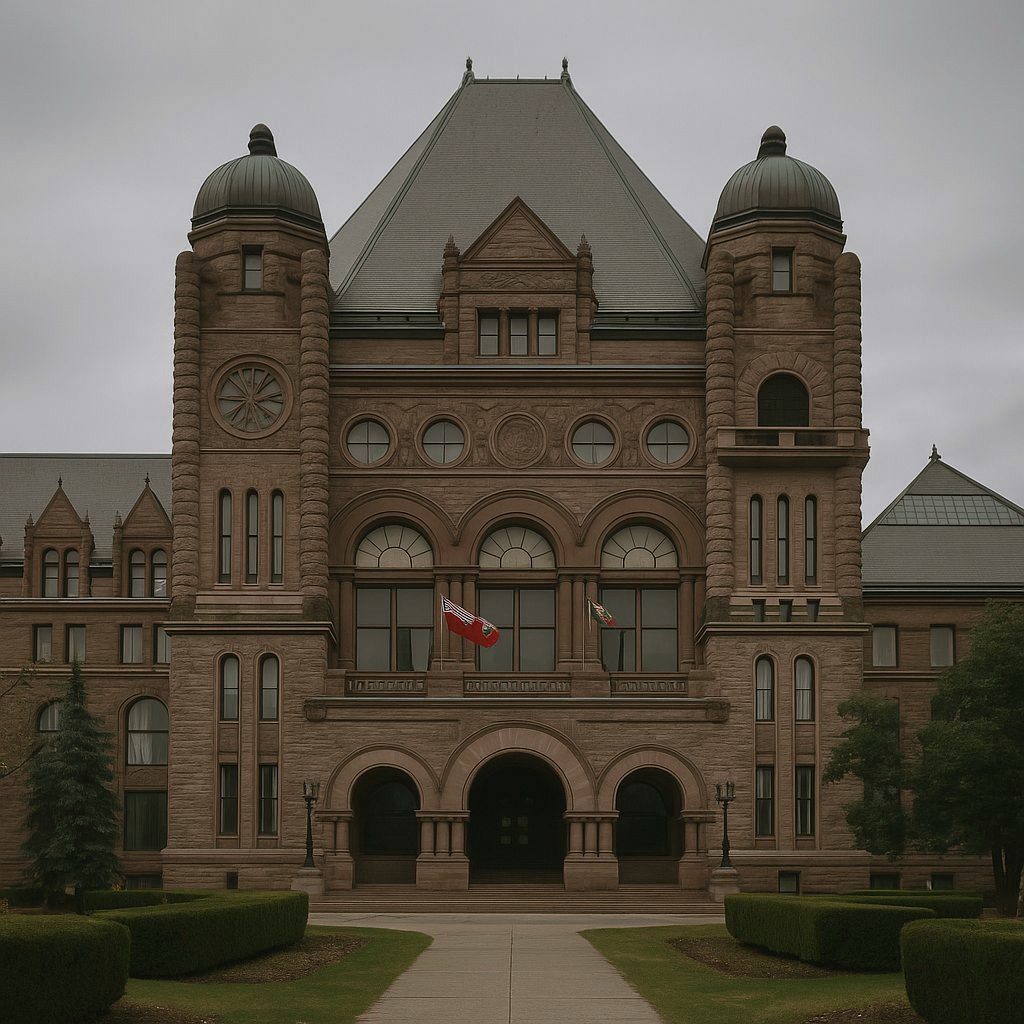
Doug Ford’s government is now under two active criminal investigations, and the term “Doug Ford corruption” has become a direct reflection of public concern rather than partisan rhetoric. Many Ontarians sense a pattern: major provincial decisions keep drawing scrutiny from law-enforcement bodies, watchdogs, and journalists — a pattern that continues to fuel public concern about Doug Ford corruption and weakened oversight. This analysis examines what these probes signal, how criminal and political corruption differ, and what real accountability in Ontario would require.
The Scope of the Doug Ford Corruption Probes
The RCMP’s 2023 Greenbelt investigation examines how a small group of well‑connected developers gained early access to land‑removal decisions that would have generated massive private profit. The Ontario Provincial Police more recently confirmed a new criminal investigation into the province’s $2.5‑billion Skills Development Fund, focusing on how grant money was awarded and under what criteria. These investigations sit at the centre of ongoing public discussion about Doug Ford corruption and how political decisions are made inside Ontario’s government.
Still, they did not emerge in isolation. Other controversies reached review or complaint‑assessment stages without evolving into full investigations.
A clearer example comes from the 2021 case involving the Vaughan Working Families (VWF) group, a developer-linked organization that ran full-page anti-teacher ads during the 2020 labour dispute. Elections Ontario ruled that the group was in “apparent contravention” of election-finance laws and referred the matter to the Ministry of the Attorney General. The Attorney General then forwarded the file to the RCMP for assessment and possible enforcement under provincial election law.
The RCMP confirmed it was reviewing the case, but it did not characterize the matter as a Criminal Code investigation, and no charges were laid. The episode nevertheless showed that political activity connected to Ford-era development interests was serious enough to reach federal law-enforcement review, even if it did not progress further.
Concerns about the Ontario Place redevelopment drew public calls for investigation, but no police agency initiated one. The Integrity Commissioner had already detailed procedural failures in the Greenbelt process before the RCMP intervened. These smaller touchpoints show how often the government’s decision‑making draws scrutiny.
Political Corruption vs Criminal Corruption
Criminal corruption requires clear evidence of offences such as breach of trust, bribery, or fraud. Prosecutors must prove intent, benefit, and misuse of office beyond a reasonable doubt. Political corruption operates differently. It includes favouritism, insider access, opaque decision‑making, and policies that benefit a connected minority. These actions may not violate the Criminal Code but still erode democratic integrity. This distinction explains why charges are rare and why political staffers, rather than cabinet ministers, are more likely to face legal consequences.
Why Ontarians Feel the System Isn’t Working
Two full criminal investigations into a sitting Ontario government is highly unusual. When combined with other reviews and watchdog findings, the overall pattern reinforces the public’s intuition that something is structurally wrong. Many Ontarians feel discouraged because they watched similar dynamics play out during the Liberal gas‑plant scandal. Years of audits, testimony, and investigations consumed millions of public dollars, ultimately resulting in charges against only staffers. The political decision‑makers avoided legal accountability despite actions the public widely viewed as improper.
That history shapes current expectations. Ontarians worry that even serious investigations into the Ford government will end the same way: extensive scrutiny, forceful language, limited consequences. Investigations are slow and opaque. Police release no updates unless charges are laid, and every new controversy competes with unresolved older ones. This is why “Doug Ford corruption” resonates. It captures public frustration with a pattern that feels entrenched.
Strengthening Accountability in Ontario
True accountability in Ontario does not depend on the RCMP or OPP. Criminal investigations cannot repair political corruption. Oversight depends on institutions whose role is to prevent this behaviour long before it crosses a criminal threshold. Ontario’s Auditor General, Integrity Commissioner, legislative committees, and independent media are central to that system.
These bodies have demonstrated their value. The Auditor General’s 2013 gas‑plant report revealed significant misrepresentations of cost. Auditor General Bonnie Lysyk’s 2023 Greenbelt report exposed preferential access and flawed processes. The Integrity Commissioner has sanctioned ministers from multiple parties.
In 2021, the Commissioner found Progressive Conservative MPP Kaleed Rasheed breached ethics rules around travel and access, prompting his resignation. Legislative committees, even under majority governments, have historically forced disclosure of politically uncomfortable information. Independent media organizations continue to uncover details no government is willing to volunteer.
These institutions function when governments accept oversight as a democratic obligation, but the strains seen under Ford have deepened public worries about Doug Ford corruption and the erosion of safeguards. Under Ford, however, several actions have weakened their effectiveness. The government publicly dismissed the Auditor General’s Greenbelt findings as “wrong” and “misleading,” rather than addressing the documented problems. It fought for years — all the way to the Supreme Court — to keep its mandate letters secret, blocking a basic mechanism for understanding government priorities.
Legislative committees reviewing key bills such as Bill 23 restricted public input and limited scrutiny. Environmental oversight was reduced when the standalone Environmental Commissioner’s Office was dissolved and when conservation authority powers were curtailed through legislative changes. When governments respond this way to independent oversight, they are not just resisting criticism; they are reshaping the accountability landscape itself.
This leads to the central question: not whether Doug Ford will ever face criminal charges, but whether Ontario’s oversight systems are strong enough to prevent the conditions that fuel recurring investigations. If they are not, new controversies will continue to arise without meaningful resolution. The term “Doug Ford corruption” will persist because the structures allowing political corruption to flourish remain unchanged.
Ontarians cannot pressure the RCMP, as police independence must remain intact. But democratic institutions can be influenced. MPPs can be pressed to strengthen watchdog budgets and mandates. The legislature can expand committee transparency. Auditor General recommendations can be adopted rather than minimized. Integrity Commissioner rulings can be treated as binding ethical standards. Independent journalism—one of the most effective accountability tools available—can be supported through readership, subscriptions, and public engagement.
Two active criminal investigations into one government should spark institutional reform. They reveal weaknesses not only in individual decisions but in the systems meant to protect the public interest. Ontarians are right to feel uneasy. Their instincts reflect emerging structural realities: without strong oversight, political corruption becomes predictable. Rebuilding the institutions that keep governments honest is the only path to preventing future scandals.
About The Author










Excellent analysis. The key takeaway isn’t whether criminal charges will ever stick, but how systemic the issue is. When the government actively fights oversight (AG, mandate letters), it signals that political corruption is the goal, not just an accident. Ontarians are frustrated because they see the pattern repeating. Accountability requires strengthening those watchdog institutions now.