
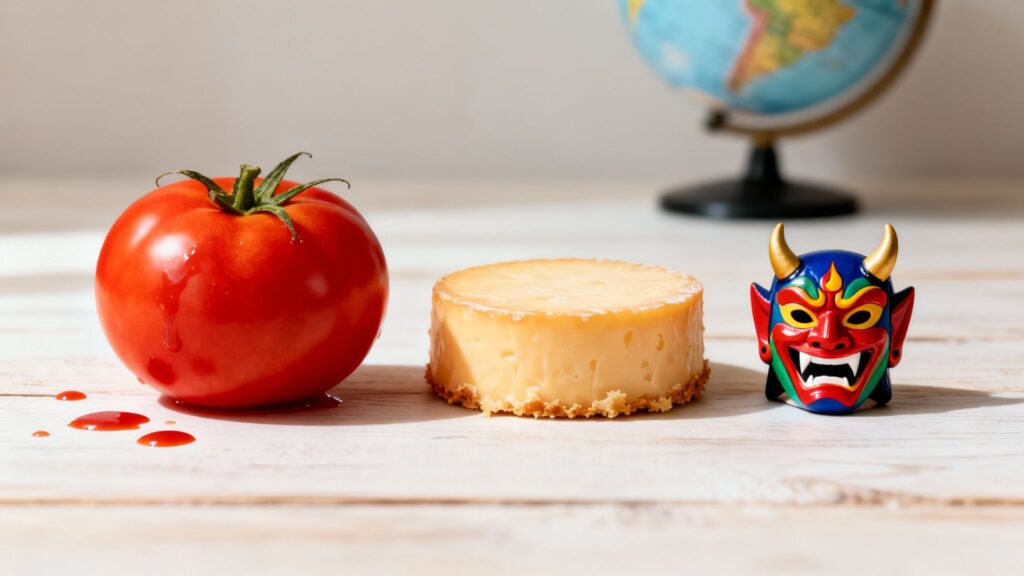
When the holidays roll around, many of us in Ottawa think of turkey dinners, skating on the Rideau Canal, or maybe a festive visit to the ByWard Market. While those traditions feel familiar, communities across the globe celebrate with rituals that are strange, surprising, and often hilarious. Forget exchanging gifts. Imagine gathering to watch devils jump over babies, hurl tomatoes at each other, or feast with a city full of monkeys.
This article explores some of the most wonderfully weird holiday traditions around the world. We’ll look at ten unique festivals, from Austria’s terrifying Krampus Night to Mexico’s Night of the Radishes, where vegetables become art. Each one has a strange origin story and continues to thrive, offering a fun alternative to the usual holiday fare.
Consider this your guide to the world's most peculiar parties. It's an amusing look at the diverse ways people mark special occasions. This list is perfect for a little distraction while you’re doom-scrolling on December 25, and a reminder that celebration comes in countless fascinating forms.
1. Krampusnacht (Krampus Night) — Austria & Bavaria, Germany
Forget cozy thoughts of Santa Claus. In parts of Austria and Bavaria, the night of December 5th belongs to Krampus, a horned, demonic figure who is Saint Nicholas's terrifying counterpart. While St. Nicholas rewards well-behaved children with gifts, Krampus is tasked with punishing the naughty ones. This tradition, known as Krampusnacht, sees young men wear elaborate, horrifying costumes of fur, horns, and fangs.
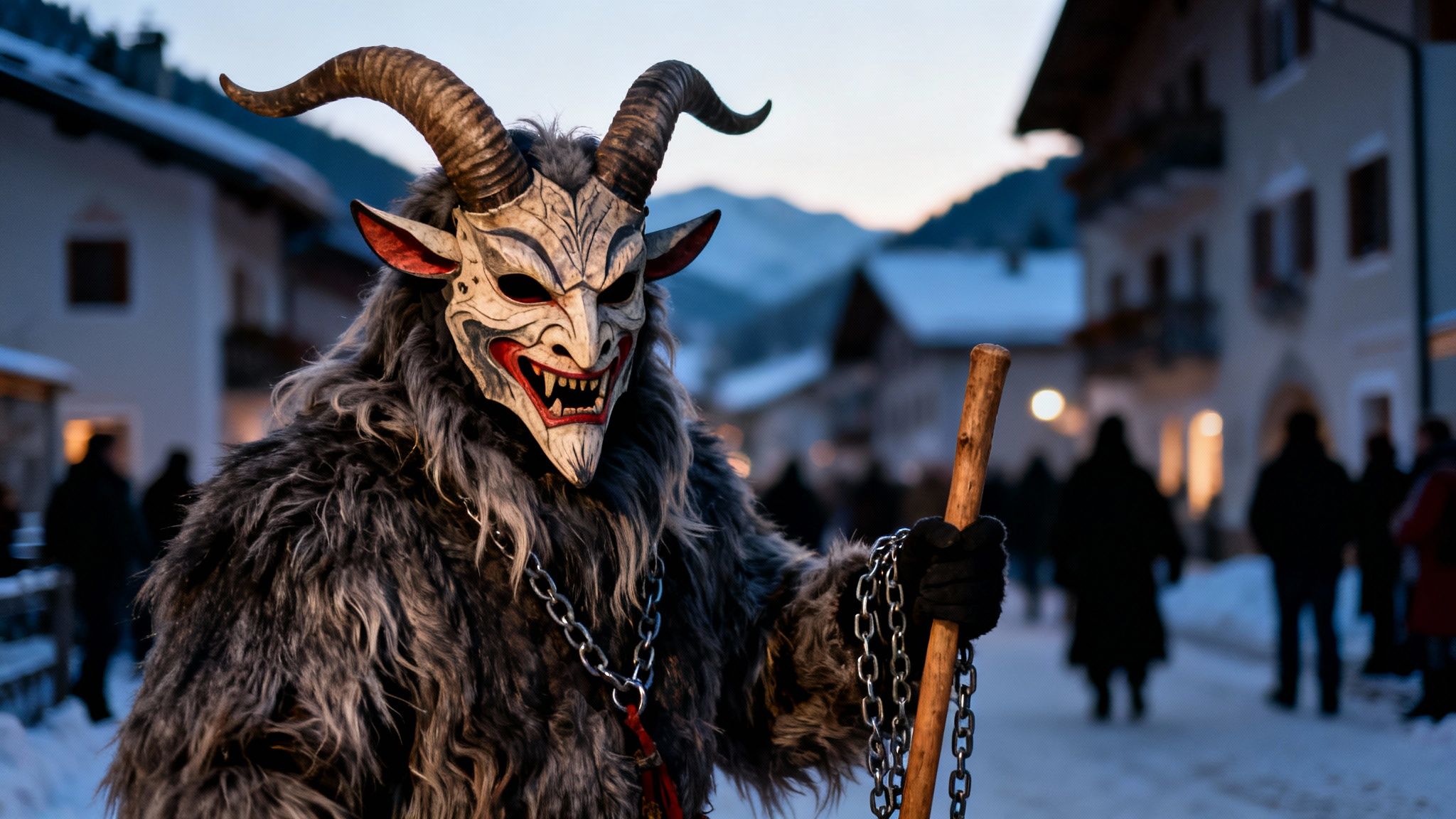
This event is one of the more startling weird holiday traditions around the world, dating back to pre-Christian pagan celebrations. During the Krampuslauf, or Krampus Run, these figures parade through town, rattling chains and carrying bundles of birch sticks to playfully swat passersby. Far from being a small event, major cities like Salzburg host massive parades that attract thousands of spectators eager for a festive fright. The tradition's mix of ancient folklore and holiday spirit has even found a home in North America, with Krampus events popping up in various Canadian cities.
Why do people still do this?
The enduring popularity of Krampus speaks to a fascination with the darker side of folklore. It’s a thrilling, theatrical way to acknowledge that the holiday season isn't just about sweetness and light. It provides a bit of a scare and connects communities to their pre-Christian roots. For many, it's just good, spooky fun.
2. La Tomatina — Valencia, Spain
While many holidays involve feasting, few end in a food fight of this scale. Held on the last Wednesday of August in Buñol, Valencia, La Tomatina is a festival famous for one thing: a massive, hour-long tomato fight. The streets run red as thousands of participants joyfully hurl over 120,000 kilograms of overripe tomatoes at one another in a chaotic, celebratory mess.
What began as a spontaneous street scuffle among youths in 1945 has evolved into one of the most iconic and weird holiday traditions around the world. The week-long festivities leading up to the main event include parades, fireworks, and even paella cooking contests. The event is so popular it now attracts over 20,000 people from more than 80 countries, turning a small town into a global centre of tomato-fuelled fun.
Why do people still do this?
La Tomatina's appeal lies in its pure, unadulterated fun. It’s a temporary release from everyday rules in a uniquely messy way. For one hour, everyone is equal, covered in tomato pulp, and just having a laugh. It’s a powerful form of communal stress relief and a major tourist draw that boosts the local economy.
3. Wife-Carrying (Eukonkanto) — Finland
In the small town of Sonkajärvi, Finland, a truly unique athletic event takes centre stage each July. Wife-Carrying, or Eukonkanto, is a competition where male participants race through a challenging obstacle course while carrying a female partner. The prize is as unusual as the sport itself: the winner receives their partner's weight in beer. The 'wife' can be a spouse, a friend, or any willing participant over 17 years of age.
This event is one of the more physically demanding weird holiday traditions around the world, with roots in 19th-century Finnish folklore about a bandit who stole women from villages. Today, the World Championships draw teams from more than 15 countries, turning a bizarre legend into an international spectacle. The event’s combination of athleticism, teamwork, and sheer absurdity has captured global attention.
Why do people still do this?
It’s a perfect mix of extreme sport and pure silliness. The tradition has been reclaimed from its questionable origins and is now a testament to teamwork, trust, and physical strength between partners. Plus, the prize of beer and global bragging rights makes the demanding obstacle course worth the effort for competitors.
4. Monkey Buffet Festival — Lopburi, Thailand
Forget leaving cookies out for Santa. In Lopburi, Thailand, an entire banquet is prepared for thousands of long-tailed macaques. Held annually on the last Sunday of November, the Monkey Buffet Festival is a massive feast where locals and tourists honour the city's primate population. Tables are laden with over two tonnes of fruits, vegetables, sticky rice, and even cans of pop, all for the monkeys to enjoy.
This event is one of the more unique weird holiday traditions around the world, rooted in the Hindu epic Ramayana. Legend says the monkey king Hanuman saved a god's bride, and the feast serves as a thank you to his descendants. The festival, which includes cultural performances and parades, is a major tourist draw. It’s a spectacular, if chaotic, sight that blends folklore with a modern celebration of the animals that define the city.
Why do people still do this?
The festival is believed to bring good luck and prosperity to the local community. It’s a way of honouring a local legend and showing respect for the monkeys, which are a central part of Lopburi's identity. For tourists, it's an unforgettable photo opportunity, and for the town, it's a significant economic boost.
5. Cheese Rolling — Cooper's Hill, Gloucestershire, England
For a taste of organized chaos, look no further than England's annual cheese-rolling race. Every Spring Bank Holiday, hundreds of daring competitors gather at the alarmingly steep Cooper's Hill in Gloucestershire. The objective is simple but dangerous: chase a four-kilogram wheel of Double Gloucester cheese as it tumbles down a 200-metre hill. The first person to cross the finish line at the bottom wins the cheese.
This event is one of the most physically risky weird holiday traditions around the world, with roots believed to stretch back to pagan fertility rites. Today, its main purpose is thrill-seeking and community fun. Despite the high risk of sprains, fractures, and concussions, the event draws international crowds. The tradition is so beloved that even when officially cancelled, an unofficial version is organized by loyal locals, ensuring the cheese always rolls.
Why do people still do this?
For the glory, of course. It’s a raw, adrenaline-fueled spectacle that pits humans against a hill and a wheel of cheese. It connects participants to a centuries-old tradition and offers the ultimate bragging rights. For spectators, it's a thrilling, and slightly terrifying, day out.
6. Boryeong Mud Festival — Boryeong, South Korea
Swapping snow for mineral-rich mud, the Boryeong Mud Festival in South Korea is a summertime celebration of skincare and fun. Held annually in July on Daecheon Beach, this 10-day event invites millions of visitors to get absolutely covered in therapeutic grey mud. The mud is sourced from the Boryeong mud flats and known for its cosmetic benefits. What began in 1998 as a clever marketing campaign for a local cosmetics line has since become a global phenomenon.
This event easily earns its spot among the most unique weird holiday traditions around the world by turning a wellness product into a massive party. The festival grounds feature giant mud pools, mud slides, mud wrestling pits, and even a "mud prison." Beyond the messy attractions, attendees enjoy live music, concerts, and cultural performances, making it a major driver for tourism.
Why do people still do this?
It's the perfect excuse to act like a kid again, guilt-free. The mud is said to be great for your skin, so you're technically participating in a giant, communal spa day. It combines the energy of a music festival with the simple joy of getting messy, attracting millions of people looking to let loose.
7. Night of the Radishes (Noche de Rábanos) — Oaxaca, Mexico
In the city of Oaxaca, the vegetable drawer becomes an art gallery on December 23rd. Noche de Rábanos, or Night of the Radishes, is an extraordinary competition where artisans carve massive, specially cultivated radishes into elaborate sculptures. The city’s central square transforms into an exhibition of temporary art, featuring everything from detailed nativity scenes to historical figures, all sculpted from the humble root vegetable.
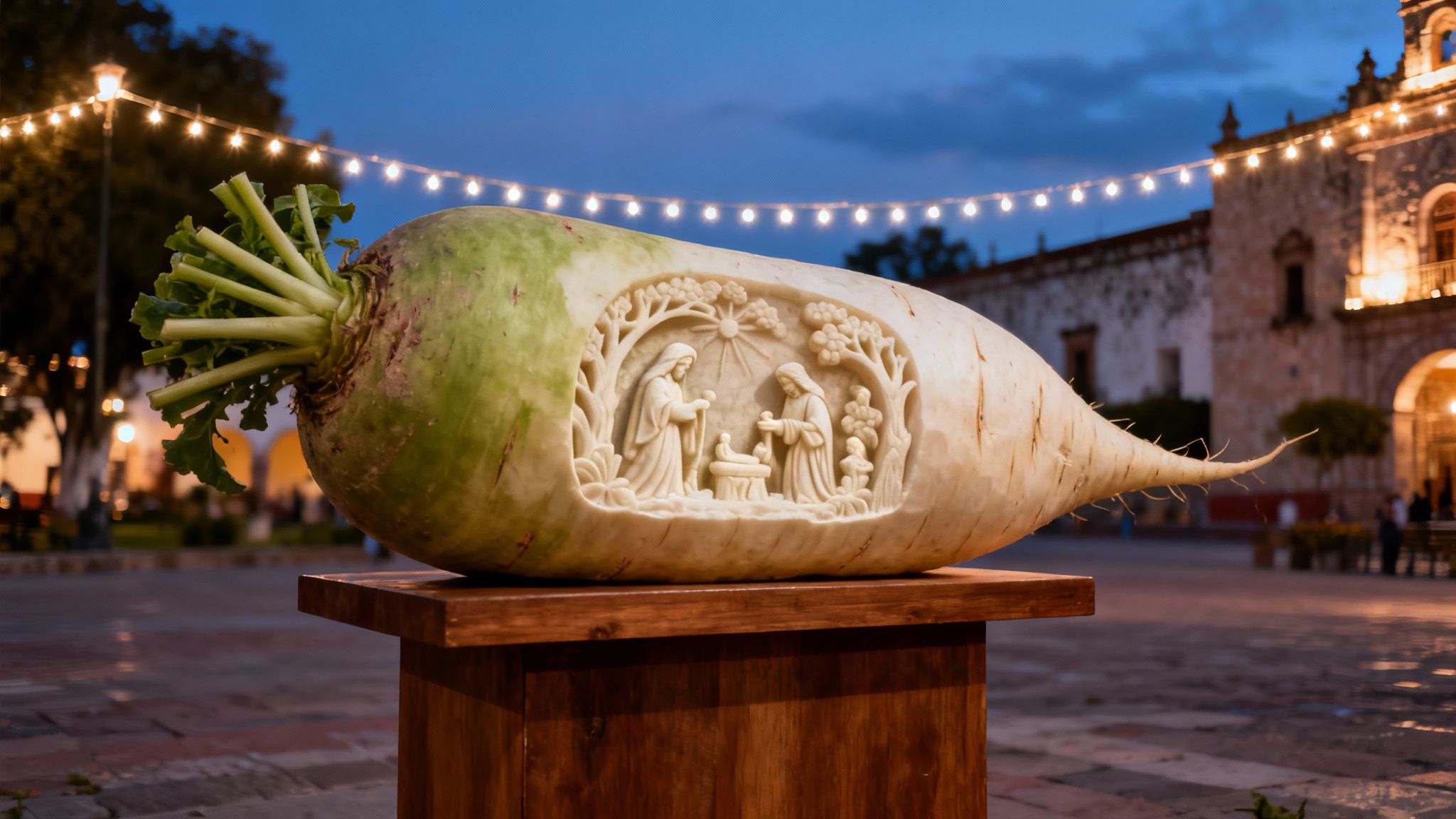
This event is one of the most unique weird holiday traditions around the world. Originating in the 19th century as a way for vendors to attract Christmas shoppers, it became an official city competition in 1897. Today, participants spend months growing oversized radishes before carving them into intricate designs. The sculptures are fleeting, wilting within hours, which only adds to the magic of the single-night display.
Why do people still do this?
It's a beautiful celebration of local agriculture, artistry, and history. The temporary nature of the radish sculptures makes the event special. It’s a reminder to appreciate beauty in the moment. The competition is a source of immense pride for Oaxacan artisans and a beloved kick-off to Christmas festivities.
8. Scarecrow Festival — Nagoro Village, Shikoku, Japan
In the remote mountain village of Nagoro, there's a unique and poignant ongoing festival where the residents are outnumbered by life-sized dolls. An artist named Ayano Tsukimi began creating scarecrows to honour former neighbours who moved away or passed on. Today, over 350 of these fabric dolls are posed throughout the village. They sit in classrooms, wait at bus stops, and work in fields, turning the village into a living art installation.
This unconventional project has unintentionally become one of the most touching weird holiday traditions around the world. While not tied to a specific holiday, the village hosts a Scarecrow Festival each autumn, celebrating the dolls and the memories they represent. The installation is a powerful commentary on rural depopulation in Japan. The village has been featured in international documentaries, transforming a story of loss into one of art and remembrance.
Why do people still do this?
What started as a personal project to combat loneliness has become a symbol of resilience. The scarecrows keep the memory of the village's former residents alive and have brought new life to the declining community by attracting tourists. It’s a touching, creative response to a serious social issue.
9. Baby Jumping Festival (El Salto del Colacho) — Castrillo de Murcia, Spain
In the small Spanish village of Castrillo de Murcia, a unique and startling ritual takes place during the annual Corpus Christi festival. Known as El Salto del Colacho, or the Devil's Jump, this tradition involves men dressed as devils leaping over newborn babies lying on mattresses in the street. The belief is that this daring act cleanses the infants of original sin, protects them from illness, and wards off evil spirits.
This event is one of the most visually shocking weird holiday traditions around the world, with roots tracing back to at least 1620. It represents a fascinating blend of Catholic beliefs and older pagan rites related to fertility and protection. While the Vatican has distanced itself from the practice, the local community staunchly defends El Colacho as a vital part of its cultural heritage.
Why do people still do this?
It's a deeply ingrained tradition passed down for over 400 years. For the residents, it's a powerful act of faith and a unique way to welcome new babies into the community and protect them from harm. Despite its strangeness to outsiders, it remains a cherished expression of local identity.
10. Festival of the Waters (Boun Suang Heua) — Vientiane, Laos
In Vientiane, the capital of Laos, the end of the rainy season is marked by a spectacular display of strength, spirituality, and community. Boun Suang Heua, or the Festival of the Waters, is a celebration held during the full moon of the 11th lunar month. The festival’s main event is a series of exhilarating boat races on the Mekong River.
This event is one of the more vibrant and lesser-known weird holiday traditions around the world, attracting over 100,000 spectators to the riverfront annually. Teams of more than 50 rowers pilot long, narrow boats decorated with intricate dragon heads and tails, paddling in perfect unison. The festival, which commemorates the end of Buddhist Lent, is not just about competition. The riverbanks come alive with food stalls, live music, religious ceremonies, and brilliant fireworks displays.
Why do people still do this?
The festival is a way to honour the river spirits and give thanks for the water that sustains life and agriculture. The boat races are a thrilling display of community spirit and teamwork. It marks an important religious moment, the end of Buddhist Lent, and brings the entire community together for a joyous celebration of culture.
Why Our Weird Traditions Matter, Even in Ottawa
From Austria's mischievous Krampus to Oaxaca's carved radishes, this journey reveals a vibrant tapestry of human culture. While tossing tomatoes or rolling cheese down a hill might seem strange from our perspective here in the National Capital Region, these rituals are living history, expressions of joy, and powerful symbols of community identity.
This exploration of weird holiday traditions around the world is a powerful reminder that there is no single, correct way to celebrate. Each custom holds deep meaning. Finland's Wife-Carrying championship, humorous on the surface, transformed a dark legend into a modern testament to partnership. These traditions are excuses to gather, to laugh, and to reaffirm the bonds that connect us.
As Ottawa continues to grow into a more diverse and multicultural city, these global traditions take on new relevance. They encourage us to look at our own neighbours with fresh curiosity. The family next door might have rituals just as unique as the ones we've explored. What seems peculiar at first is often a doorway to understanding a different culture.
This holiday season, think about the traditions you hold dear. Perhaps it’s a specific recipe, a quirky game, or a unique way of giving gifts. These personal rituals are the building blocks of our own cultural identity. They are the "weird" traditions that make our families special. They connect us to our past and create lasting memories for the future. Ultimately, these traditions challenge us to broaden our definition of "normal" and appreciate the wonderful diversity in how we all celebrate.
Did this article spark your curiosity about the vibrant local culture right here in Ottawa? Stay connected to the stories, events, and people that make our city unique. Subscribe to NCR Now for in-depth local news and community features delivered straight to your inbox. NCR Now
About The Author