
SEO Meta Description: A clear guide to Ottawa politics. Understand the municipal, provincial, and federal governments, key issues like housing, and how you can get involved.
Navigating Ottawa politics can feel like figuring out who is in charge of what at a large family gathering. You have different groups making decisions that affect your life, from the state of a local park to the cost of groceries. The key is understanding that three distinct levels of government are always at play, each with its own responsibilities. This system manages our city, province, and country all at once, even when those duties seem to overlap.
This guide breaks down who does what, what the big issues are, and how you can make your voice heard in the decisions that shape our community.
The Three Levels of Government Shaping Ottawa
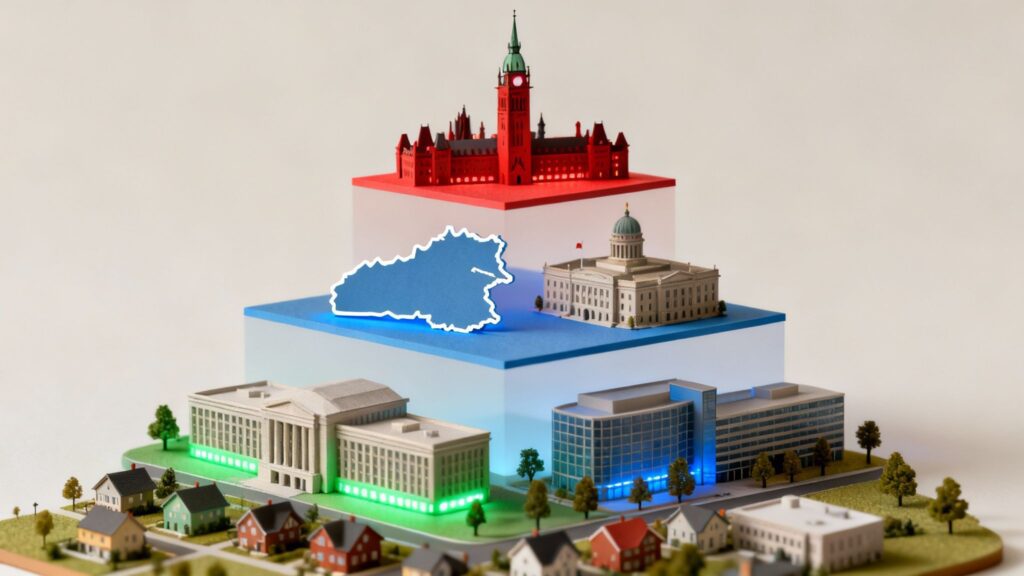
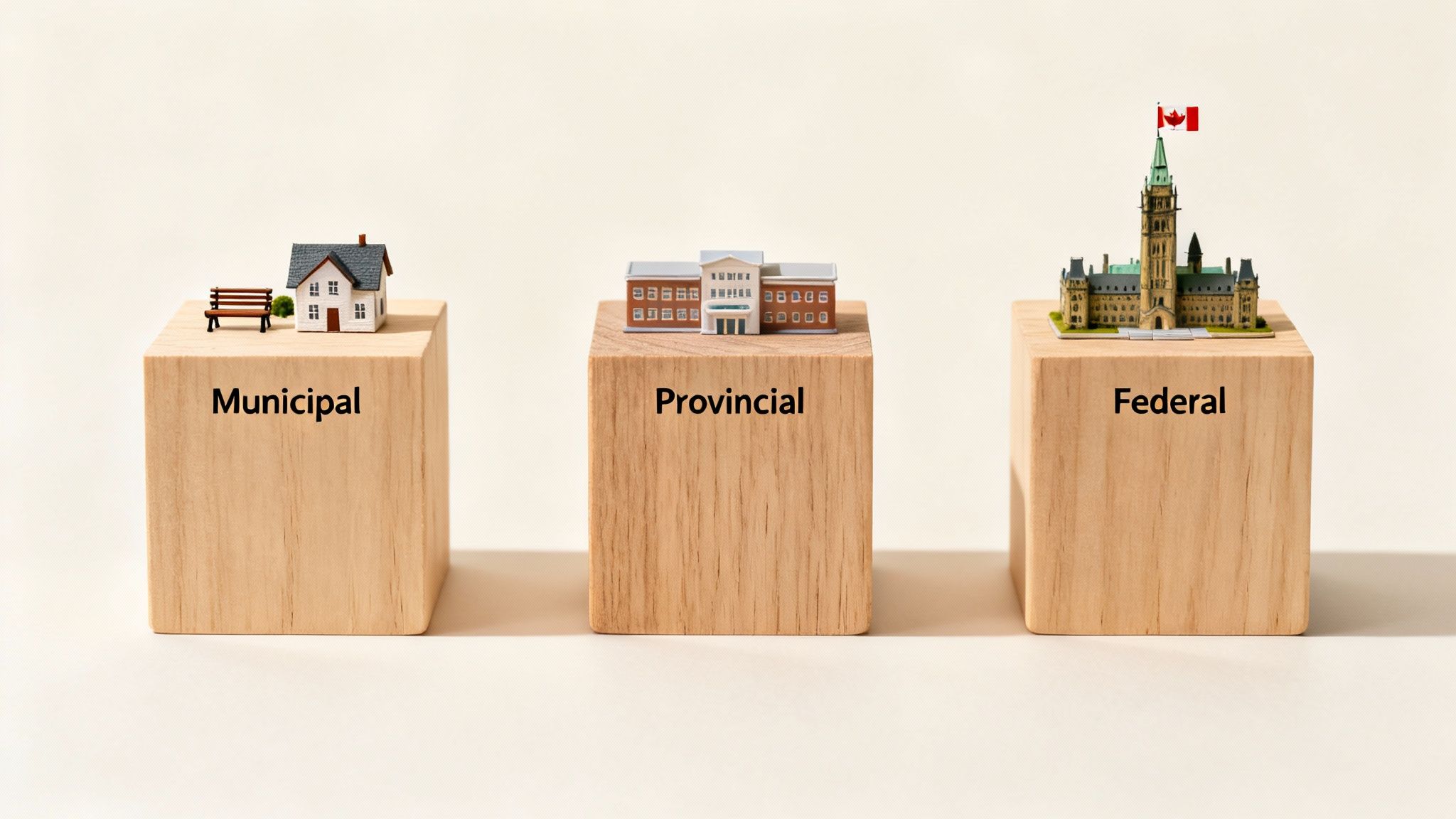
To get a grip on how Ottawa is run, it helps to think of it as managing a community at different scales. Each layer of government handles specific tasks. Knowing who does what is the first step to becoming an informed and effective resident.
Municipal: Your Neighbourhood's Keeper
This is government at its most local. The City of Ottawa, led by the Mayor and City Council, is focused on the day-to-day services that you see and use right outside your door. Think of them as the ones responsible for keeping your immediate community running smoothly.
Provincial: The Big Picture for Ontario
One step up is the provincial government of Ontario, which operates from Queen's Park in Toronto. This level sets broader rules and manages massive systems like healthcare and education that affect every city in the province, including ours.
Federal: The National Stage
Finally, you have the federal government, which sits at the top, running the country from Parliament Hill right here in Ottawa. They handle major national issues like defence, immigration, and laws that apply to every Canadian. For Ottawa, this level has a huge local impact, as it is the city's largest employer.
This diagram gives you a quick visual of how that hierarchy works.
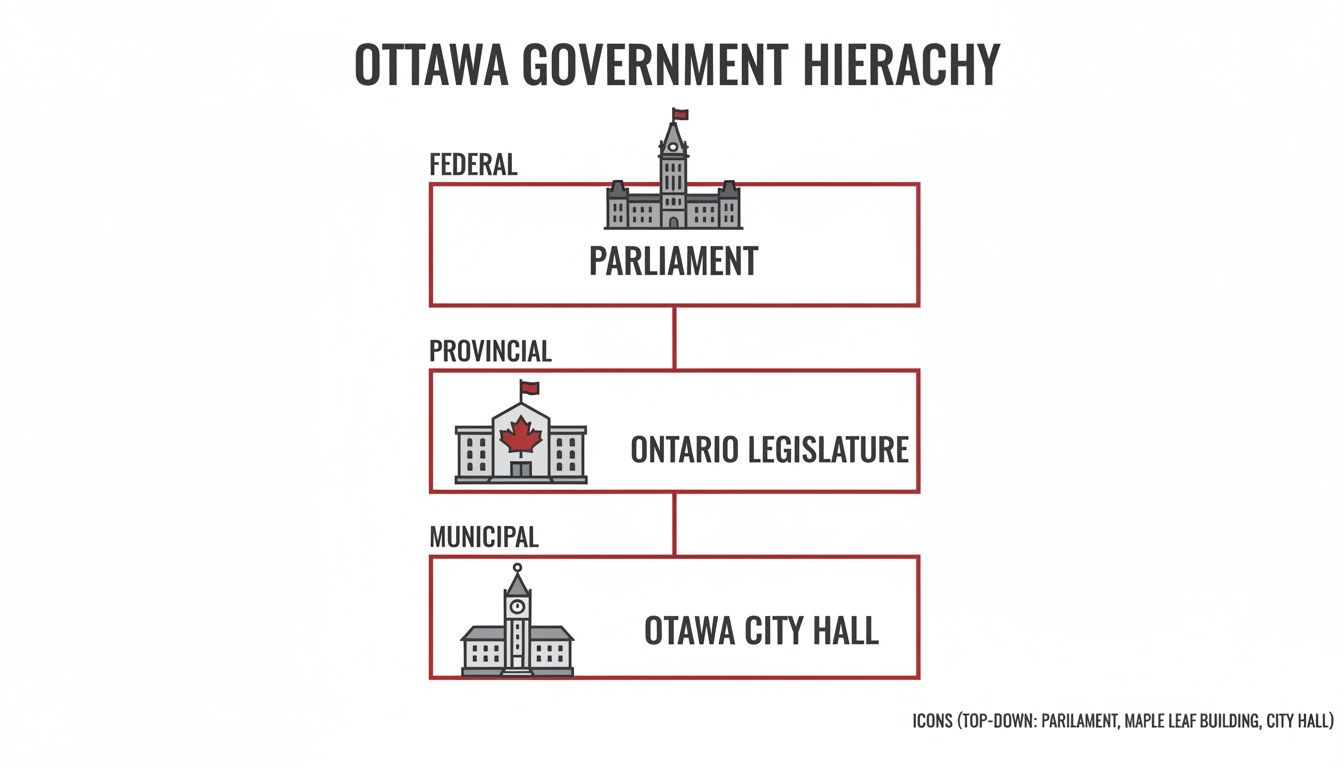
It is a straightforward breakdown of authority, showing how each level has its own distinct role while still being connected to the others.
Who Handles What in Ottawa
Knowing who is responsible for what is critical. You would not call your Member of Parliament about a pothole, just as you would not ask a City Councillor to weigh in on foreign policy. Getting your concern to the right person is half the battle.
To make it simple, here is a quick reference table breaking down some major responsibilities.
| Service or Responsibility | Municipal (City of Ottawa) | Provincial (Ontario) | Federal (Canada) |
|---|---|---|---|
| Garbage & Recycling | ✅ | ||
| Public Transit (OC Transpo) | ✅ | ||
| Hospitals & Healthcare | ✅ | ||
| Schools & Education | ✅ | ||
| National Defence | ✅ | ||
| Immigration & Passports | ✅ | ||
| Local Roads & Sidewalks | ✅ | ||
| Highways (like the 417) | ✅ | ||
| Libraries & Parks | ✅ | ||
| Employment Insurance (EI) | ✅ |
This division of labour is designed for efficiency, but it is not always so clear. Provincial funding decisions can have a huge impact on municipal budgets, and federal policies shape Ottawa's entire economy, especially given the size of the public service. Understanding this is key to figuring out who to hold accountable. If you want a deeper dive into how that massive federal workforce operates, you can learn more by reading about what is public administration.
Grasping this framework turns abstract political debates into real issues that matter here at home.
How City Hall Decisions Affect Your Neighbourhood
While Parliament Hill dominates the skyline, it is City Hall that shapes your day-to-day life in Ottawa. Municipal government is the closest you will get to the people making the calls, and their decisions dictate everything from your morning commute to whether your local park feels safe.
The Mayor acts as the chief executive officer for the city. Working with the Mayor are 24 City Councillors, each elected to represent a specific part of the city called a ward. Think of them as your direct line to City Hall. They are meant to champion the unique needs of your neighbourhood.
From Your Street to City Council
Your councillor is your community’s advocate in the ongoing conversation that is Ottawa politics. When a major issue is on the table, like a new bike lane, a change to a bus route, or zoning for a condo tower, your councillor’s job is to bring your ward’s perspective to the debate.
Major decisions do not just happen on the council floor. A lot of groundwork is laid first, and that is where city committees come in.
"Committees are the real workhorses of our municipal government," notes a recent analysis from CBC Ottawa on city governance. "They're smaller groups of councillors who dig deep into specific issues…and then make recommendations to the full council."
For instance, the Transportation Committee is where the details of LRT expansion get worked out. Meanwhile, the Planning and Housing Committee reviews proposals for new developments. This system ensures complex topics get a proper look before all 25 members of council make a final, binding decision.
Following the Money: The City Budget
Where does the money for all this come from? The short answer is the annual city budget, a massive financial plan funded mostly by your property taxes. This is where the world of Ottawa politics gets very real, as councillors decide how to divide billions of dollars for services we all depend on.
The budget process is always a tough balancing act. Councillors must juggle competing priorities, deciding how much to invest in the wide range of services residents use every day.
Here is a look at what your property taxes pay for:
- Public Works: This covers the basics, like snow clearing, patching potholes, and collecting your garbage and recycling.
- Emergency Services: A large portion of the budget goes to the Ottawa Police Service, Ottawa Paramedic Service, and Ottawa Fire Services to keep the city safe.
- Community and Social Services: This broad category includes everything from public health programs and long-term care homes to our local libraries and recreation centres.
- Transit: A huge portion of the budget keeps OC Transpo running, funding both the LRT and the city’s extensive bus network.
Every debate about a property tax hike or a service cut is really a debate about the future of these essential services.
Big Plans for a Growing City
Beyond the annual budget, City Council is also tasked with making long-term decisions that will shape Ottawa for generations. One of the most critical documents they manage is the Official Plan, which is the city's blueprint for growth. It sets the rules for almost everything, from protecting our green spaces to encouraging more density around transit hubs.
The debates around this plan are central to Ottawa politics because they touch on core issues like housing affordability, traffic congestion, and the character of our neighbourhoods. This is not a static document; it is constantly being updated. Understanding its direction is key to understanding where our city is headed.
Related reading: To get a better sense of this foundational policy, you can learn more about the City of Ottawa Official Plan and see how it is guiding development across the region. The decisions made at 110 Laurier Avenue West have a real impact on your life, which makes getting involved in municipal politics one of the most powerful ways to shape your own community.
The Provincial Influence on Ottawa's Core Services
While debates at City Hall tend to grab local headlines, many of the most critical decisions shaping our daily lives in Ottawa are made hundreds of kilometres away at Queen's Park in Toronto. The provincial government holds a surprising amount of power over the core services we rely on, from the quality of care at our hospitals to the curriculum taught in our schools.
This reality means that to truly understand Ottawa politics, you must look beyond our municipal borders.
Every Ottawa resident is represented by a Member of Provincial Parliament, or MPP. These elected officials are our direct voice in the Ontario legislature, and it is their job to fight for our city's unique needs on a bigger stage. When the province sets a new policy or adjusts its budget, our MPPs are supposed to ensure Ottawa’s interests are not overlooked.
Where Queen's Park Calls the Shots
The province’s authority becomes most obvious when you look at the systems that define our quality of life. Provincial laws and funding models dictate how many services run, services that most people might assume are managed locally.
Here are some of the biggest areas under provincial control:
- Healthcare: The province funds and regulates every hospital in Ontario, including Ottawa's major institutions like The Ottawa Hospital and CHEO. Decisions on everything from surgical wait times to the number of available beds are ultimately tied to provincial budgets.
- Education: Queen's Park sets the curriculum for all publicly funded schools, decides on standardized testing, and handles major negotiations with teachers' unions. While our local school boards manage daily operations, the entire educational framework comes from the province.
- Major Infrastructure: The city takes care of local roads, but the province is responsible for the major arteries we all use, like Highway 417 (the Queensway). Any major expansion or repair project on these vital corridors needs provincial approval and funding.
- Social Services: Programs that form our social safety net, like the Ontario Disability Support Program (ODSP) and Ontario Works, are run provincially. The rules and funding levels are decided in Toronto, not at City Hall.
When Provincial Policy Overrides Local Plans
The influence from Queen's Park is not just about funding. Provincial laws can directly override decisions made by our own City Council, creating friction and forcing the city to align with a top-down agenda. We have seen this happen frequently in recent years, especially around housing and development.
A clear example is the provincial government’s push to build more housing faster. Through legislation like the More Homes Built Faster Act, the province introduced rules that limit the city’s ability to collect development charges and can even bypass local zoning rules to get new projects approved.
This type of legislation highlights a fundamental tension in how Canada is governed. While municipalities are in charge of planning their communities, they are legally "creatures of the province" and must operate within the framework Queen's Park sets.
What does this mean for you? Even when Ottawa's City Council spends years creating a detailed Official Plan for how the city should grow, the province can introduce a new law that changes the entire game. For residents, this can mean new developments appearing in their neighbourhoods that do not match the community's vision, all because of a decision made at the provincial level. This is why provincial elections are so critical for our city.
How Parliament Hill Shapes the Capital's Economy
In Ottawa, federal politics is not just something you see on the news; it is the city's economic engine. It is the reason for our stable job market and the quiet force shaping everything from downtown condos to suburban parks. The decisions made on Parliament Hill have a direct impact here in a way that is unique among Canadian cities.
That connection is felt most directly through our economy. The federal government is, by a large margin, the largest employer in the National Capital Region. This creates a powerful economic buffer that often shields Ottawa from the boom-and-bust cycles that affect other places.
When the federal government is hiring, Ottawa thrives. But when it announces budget cuts or hiring freezes, the whole region feels it, from the real estate market to downtown restaurants. Policies around public service remote work or collective bargaining are not just internal HR decisions; they are major economic events in this city.
More Than Just an Employer
Beyond being a major employer, the federal government is also the custodian for many of the capital’s most important assets. Its influence is woven into the city's fabric through key institutions that manage land, culture, and our national symbols.
Two major federal players you should know are:
- The National Capital Commission (NCC): The NCC is the federal government’s chief urban planner for the capital. It is responsible for large areas of federal land, including Gatineau Park, the Rideau Canal Skateway, and the Greenbelt. The NCC’s choices on development, conservation, and public access directly shape how we experience Ottawa's public and natural spaces.
- National Institutions: Many of the city’s major attractions, from the National Gallery of Canada to the Canadian Museum of History, are federally funded and operated. These are not just tourist destinations; they are major local employers and vital parts of our cultural landscape, all kept running by federal dollars.
This federal presence guarantees a steady stream of investment in infrastructure and culture that we all benefit from. It also adds another layer of complexity to local politics, as major city projects often require careful collaboration with these powerful federal bodies.
Ottawa's Voice in Parliament
On the national stage, our city's interests are represented by our Members of Parliament, or MPs. Each MP is elected to represent a specific geographic area called a riding, and their job is to bring Ottawa’s concerns to the House of Commons. They vote on national laws, fight for federal funding for local projects, and act as a bridge between their constituents and the federal government.
Historically, Ottawa’s federal ridings have shown clear voting patterns. For over half a century, the city has been a stronghold for the Liberal Party, especially in the urban core. The 2015 federal election was a perfect example, when the Liberals won all eight core Ottawa ridings. This trend has largely continued. You can explore historical election results in Ottawa to see the patterns for yourself.
This political map matters. When a city's MPs belong to the governing party, it can sometimes smooth the path for securing federal support for key local priorities. The relationship is symbiotic: the government needs the city to function as a capital, and our city’s economy depends on the stability the government provides. Understanding this dynamic is key to getting the full picture of Ottawa politics.
The Big Issues Shaping Ottawa's Future
Politics can feel like a distant, abstract thing, but in Ottawa, the biggest debates are happening right in our communities. How we get around, where we can afford to live, and whether our downtown has a future are not just talking points for politicians. They are real-world challenges defining our city's next chapter.
Getting a handle on these issues is key to understanding what is at stake in Ottawa politics. These problems are complex, and a real solution almost always needs the city, the province, and the federal government to work together.
The Housing Affordability Crisis
For a generation of Ottawans, the dream of owning a home feels increasingly out of reach. At the same time, renters are squeezed by high costs and intense competition for available units. The housing crisis is the number one issue dominating city politics, affecting everyone from students to seniors.
At its core, the problem is supply and demand. We do not have enough homes. The solutions are anything but simple.
At City Hall, the focus is on updating Ottawa's Official Plan to allow for more "gentle density," such as duplexes, triplexes, and townhouses in existing neighbourhoods. But these zoning changes often trigger community debates about preserving neighbourhood character and whether our infrastructure can handle more people.
The city is not acting alone. Queen's Park has set aggressive housing targets for Ottawa and passed laws to fast-track development. Meanwhile, the federal government offers funding like the Housing Accelerator Fund to cities that promise to reduce red tape and build more densely. It is a constant balancing act between local vision, provincial mandates, and federal money.
Public Transit: Getting It Back on Track
A functional city needs a functional transit system. In Ottawa, the state of OC Transpo is a never-ending source of frustration and a major political issue. After years of LRT delays and breakdowns, rebuilding public trust in the system is a monumental task.
The debate is happening on two fronts: fixing what we have and figuring out what comes next.
- Restoring Reliability: City Council is under pressure to ensure the LRT runs as it should. This involves contract negotiations, public inquiries into past failures, and ongoing arguments over OC Transpo's budget.
- Planning for the Future: The dream of Stage 3 LRT, extending the train to Kanata, Barrhaven, and Stittsville, remains a political battlefield. Supporters say it is essential for a growing city. Critics point to the high cost and wonder if we can manage the system we already have.
A good transit system makes housing more affordable by expanding where people can live, eases traffic, and is central to hitting our climate targets. Major transit projects do not happen without funding from the federal and provincial governments, meaning City Hall is in a constant state of lobbying to secure the billions needed to make these plans a reality.
Revitalizing a Post-Pandemic Downtown
Ottawa’s downtown core, once bustling with federal public servants, was hollowed out by the shift to remote work. The empty office towers and quiet streets have created an economic and cultural crisis for the heart of our capital city.
Potential solutions include financial incentives, public safety plans, and creative urban design. The city is looking at converting empty office buildings into apartments, which is both expensive and complicated. There are also growing calls to invest in parks, festivals, and cultural events to give people a reason to come downtown that is not just for work.
This is a problem that requires a "Team Ottawa" approach. The city can handle beautification projects and the province can offer tax breaks for office-to-residential conversions. But the federal government holds the most powerful cards. As the downtown's largest landlord and employer, its long-term decisions about office space will have the single greatest impact on our core's future.
Practical Steps for Getting Involved in Local Politics

Understanding the issues is a great start, but turning that knowledge into action is what makes a difference. Getting involved in local politics can seem intimidating, but making your voice heard in Ottawa is more straightforward than you might think. Beyond voting, there are practical ways to engage with the democratic process.
The most direct route is contacting your elected officials. The trick is knowing who to call for what. A pothole on your street or a question about a local park? That is a job for your City Councillor. Concerned about healthcare funding or highway maintenance? Your MPP is the person to talk to. For big national topics like federal taxes or immigration, you will want to get in touch with your MP.
A clear, well-written email or a quick phone call can be very effective. Be concise, respectful, and state your concern clearly. Explain how it impacts you or your neighbours and, if you have one, suggest a solution.
Attending and Participating in Meetings
You do not need a special invitation to see democracy in action. Many of the city's meetings are open to the public, giving you a front-row seat to the debates that shape Ottawa's future.
- City Council Meetings: This is where final decisions are made. You can watch the action in person at City Hall or stream the meetings live from home.
- Committee Meetings: This is where the detailed work gets done. Committees focused on planning, transit, or finance hash out details and listen to residents before sending recommendations to the full council.
- Public Consultations: When the city is planning a major project, like a new transit line or park design, they hold these sessions to get your feedback.
You can register to speak at most committee meetings as a public delegate. It is a powerful way to get your perspective on the official record and influence councillors right before they take a key vote.
Joining a Community Association
If you are looking for a more collective approach, consider joining your local community association. These volunteer groups are the grassroots advocates for your neighbourhood. They monitor development proposals, organize community events, and speak with a unified voice when dealing with the city.
Staying informed is the fuel for any meaningful participation. Following credible local news from sources like the Ottawa Citizen, CBC Ottawa, or community papers gives you the context needed to engage effectively.
See also: A healthy democracy is built on active participation. You can learn more about what is civic engagement and why it is so vital for our community. Every voice adds value to the conversation and helps keep our leaders accountable.
Still Have Questions About Ottawa Politics?
Getting your head around Ottawa politics can be a lot at first. To help clear things up, here are a few straightforward answers to some of the most common questions.
Who Is My City Councillor?
Your City Councillor is your representative for anything happening at the municipal level. They represent your specific neighbourhood, which is officially called a ward.
The quickest way to find who represents you is to use the interactive ward map on the City of Ottawa's official website. Just enter your address, and it will provide their name and contact information.
What's the Difference Between an MPP and an MP?
This one confuses many people, but it is simple once you break it down. An MPP is your Member of Provincial Parliament. They go to Queen's Park in Toronto to represent you on provincial issues like healthcare and education funding.
An MP is your Member of Parliament. They work on Parliament Hill right here in Ottawa, dealing with federal matters like immigration, national defence, and federal taxes.
The 2025 federal election highlighted how Ottawa's political landscape works on a national scale. Official results showed that all four core Ottawa ridings were won by Liberal candidates, cementing the city's reputation as a stronghold for the governing party. You can dig into the local numbers and see how Canada's 2025 election played out in Ottawa.
For more local insights and practical guides to navigating life in the National Capital Region, explore NCR Now. We are committed to providing clear, relevant journalism that keeps you connected to your community. Visit us at https://ncrnow.ca.
About The Author