
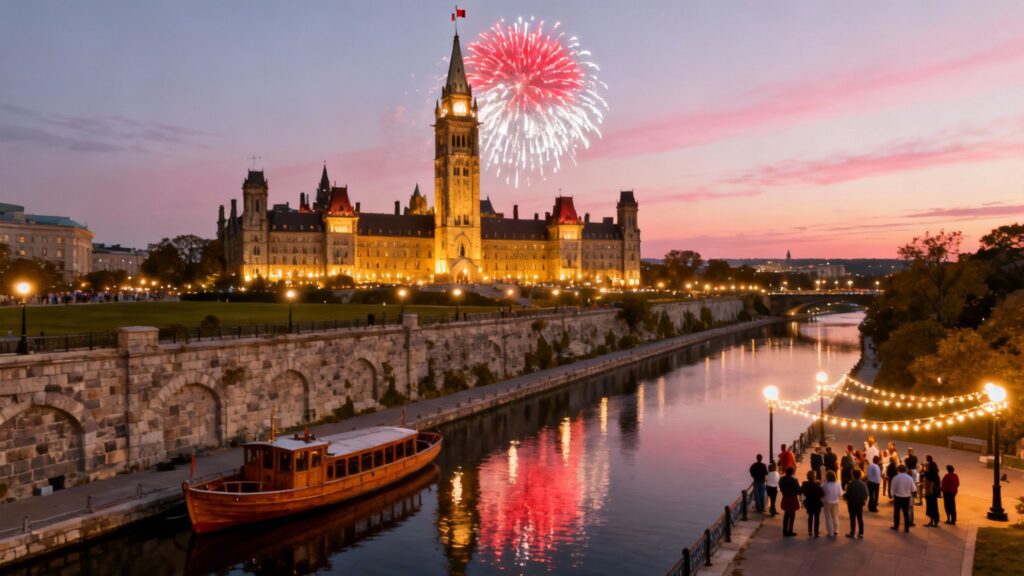
Headline: Your Guide to the Ottawa Bicentennial 2026 Celebration
SEO Meta Description: Get ready for the Ottawa Bicentennial. Your complete guide to the 2026 celebration marking 200 years since Bytown’s founding. Find out what this milestone means for the city.
In 2026, Ottawa is marking a milestone 200 years in the making. The Ottawa Bicentennial is a year-long celebration of the city’s 200th anniversary, commemorating the founding of Bytown in 1826. This guide explains what the celebration is about, key historical moments, and how residents can participate in this significant civic event.
The anniversary recognizes the moment Lieutenant-Colonel John By began construction on the Rideau Canal, laying the groundwork for the community that would become Canada’s capital.
Understanding Ottawa’s 200th Anniversary
In 2026, Ottawa will pause to reflect on two centuries of history, growth, and community. The Bicentennial is more than a historical nod. It’s a city-wide initiative to honour our past, celebrate our present, and envision a shared future for everyone who calls this place home.
At its core, the celebration recognizes the founding of Bytown in 1826. What began as a construction camp for the ambitious Rideau Canal project, named for Lieutenant-Colonel John By of the Royal Engineers, was the seed of something much larger. From those early beginnings, a city took root, eventually being named Canada’s capital in 1857.
To understand how far the city has come, it helps to review the key moments that shaped its identity.
Ottawa’s Journey From Bytown to Bicentennial
This timeline captures the major milestones that transformed a construction camp into the nation’s capital, setting the stage for our 200th anniversary.
| Milestone Year | Key Event | Significance for Ottawa |
|---|---|---|
| 1826 | Founding of Bytown | Construction begins on the Rideau Canal under Lt. Col. John By, establishing the settlement. |
| 1832 | Rideau Canal Opens | The monumental engineering feat is completed, connecting the Ottawa River to Lake Ontario. |
| 1855 | Bytown Renamed Ottawa | The growing town is incorporated as a city and adopts its new, Indigenous-derived name. |
| 1857 | Named Capital of Canada | Queen Victoria chooses Ottawa as the permanent capital of the Province of Canada. |
| 1969 | Creation of the NCR | The National Capital Region is established, formally uniting Ottawa and Gatineau. |
| 2001 | City Amalgamation | The modern City of Ottawa is formed by merging with 11 surrounding municipalities. |
| 2026 | The Bicentennial | Ottawa celebrates 200 years of history, community, and its journey from Bytown to a G7 capital. |
These moments represent the resilience, innovation, and diverse communities that built the city we know today.
Core Themes Shaping the Celebration
The bicentennial is about more than looking back. The City of Ottawa and its community partners have woven several key themes into the year’s events to spark conversation and connection.
Here is what to expect:
- Reconciliation and Indigenous Heritage: A central pillar of the bicentennial is acknowledging that Ottawa stands on the unceded, unsurrendered territory of the Anishinaabe Algonquin people. Events will honour the Indigenous history, culture, and presence that predates Bytown by thousands of years.
- Community and Belonging: This is a celebration of everyone who has shaped Ottawa’s story. From the foundational Francophone communities and early Irish immigrants to the newcomers who continue to enrich our city’s cultural mosaic, the focus is on inclusion.
- Innovation and the Future: While honouring history, we are also looking ahead. The bicentennial will shine a light on Ottawa’s transformation into a hub for technology and governance, kicking off conversations about what is next for our city.
- Environmental Stewardship: With a modern sense of responsibility, sustainability will be a key part of the festivities. It is a nod to the natural landscape, especially the Ottawa and Rideau Rivers, that has always been at the core of our city’s identity.
Why This Anniversary Matters
The Ottawa Bicentennial is an opportunity to connect with our city on a deeper level. It is a chance to learn about the struggles and successes that defined Bytown, to appreciate the complex road to becoming a national capital, and to recognize all the voices that make up Ottawa’s identity today.
This is a moment for collective reflection. It is about understanding not only where we came from as a city but also deciding together where we want to go over the next 200 years.
Ultimately, the bicentennial is an open invitation for every resident to become an active part of Ottawa’s story. Whether it is by checking out a signature event, volunteering for a neighbourhood project, or just taking time to learn more about our local history, the celebration is a call to get involved. It is a reminder that the story of Ottawa belongs to all of us, and it is still being written.
From a Canal Town to a Nation’s Capital
To understand what the Ottawa bicentennial is all about, you have to look at how a rugged wilderness outpost became a G7 capital. Ottawa’s story did not start with political debates or grand buildings. It began with mud, swarms of black flies, and the grit it took to build a canal through the Canadian Shield.
Back in 1826, this area was a dense forest where three rivers meet, a place that had been significant to the Anishinaabe Algonquin people for thousands of years. The arrival of Lieutenant-Colonel John By and the Royal Engineers changed the landscape forever. Their mission was to build the Rideau Canal, a secure military supply route conceived after the War of 1812. Their construction camp, dubbed Bytown, quickly became a boomtown, drawing in Irish, Scottish, and French-Canadian labourers.
Life here was tough. Bytown was a true frontier settlement, defined by hard work and conflict. The Shiners’ War in the 1830s, a violent clash between rival lumber gangs, was an example of its chaotic early days. Still, out of that chaos, a community began to grow.
The Capital Decision
That strategic location and the success of the canal project put the town on the map. When Queen Victoria had to pick a permanent capital for the Province of Canada in 1857, Bytown was the unexpected candidate. It had just been incorporated and renamed Ottawa only two years earlier.
It was a smart compromise. Ottawa was positioned between the political centres of Toronto and Montreal, and just far enough from the American border to be defendable. That single decision steered Ottawa away from being just a lumber town and toward becoming the political heart of a new country.
This timeline shows how quickly that transformation happened.
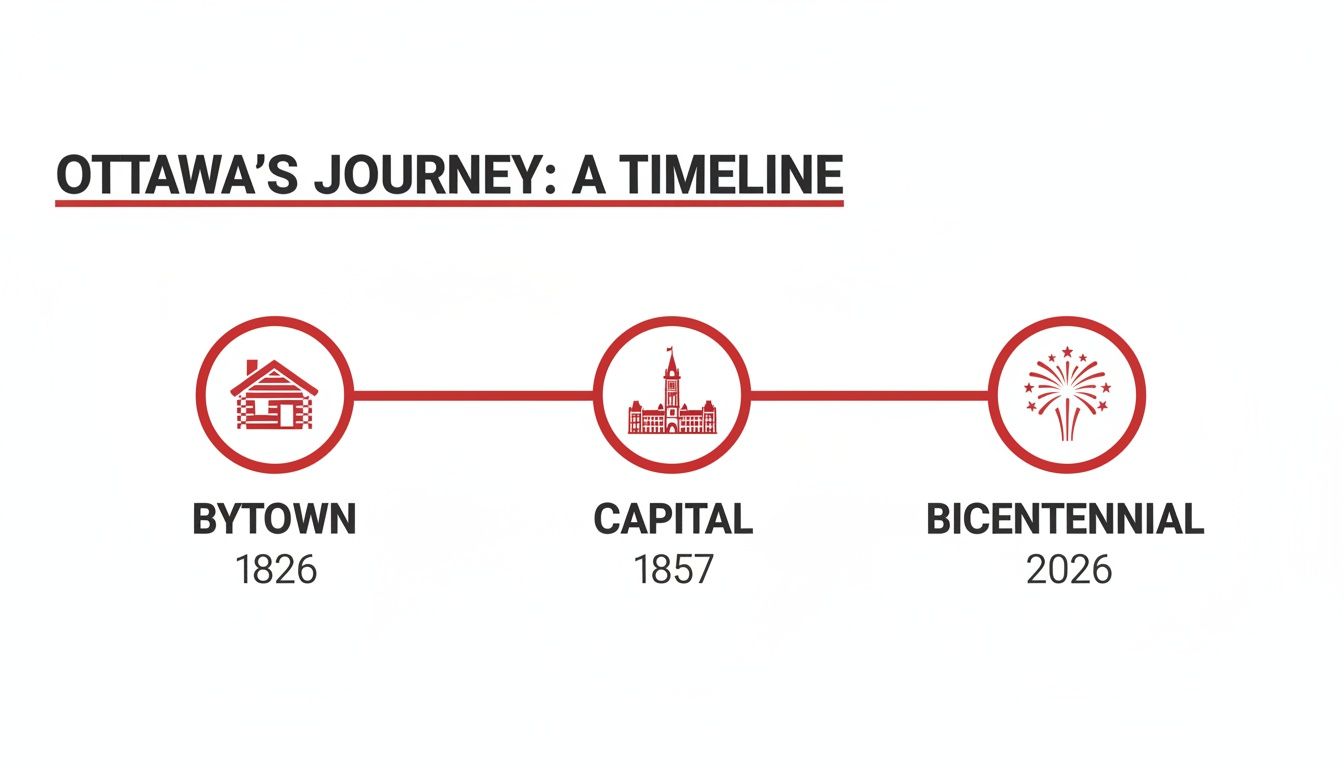
It is easy to see how these foundational moments, the canal, the capital designation, and now the bicentennial, are all deeply connected.
Growth and Identity
With its new status, Ottawa began to polish its rough edges. The Parliament Buildings began to rise on what was then called Barrack Hill, a symbol of the city’s new national purpose. The lumber trade was still the economic engine, making Ottawa a global timber powerhouse, but the federal civil service grew alongside it. This created a stable, professional class that shaped the city’s character for generations.
During this time, the city’s cultural makeup grew richer and more complex. Francophone communities, which had been here from the beginning, continued to flourish. New waves of immigrants arrived, each group adding their own traditions and stories to Ottawa’s evolving identity.
This celebration is a world away from Canada’s Centennial in 1967. That year was all about the nation, with massive projects like the National Arts Centre marking 100 years of Confederation. Ottawa was the stage, but the party was for Canada.
A Modern Capital
The 20th century saw Ottawa grow into the city we know today. In 1969, the creation of the National Capital Region formally acknowledged its deep connection with Gatineau, recognizing that we are one community spanning both sides of the Ottawa River. The amalgamation in 2001 expanded the city’s boundaries, bringing urban, suburban, and rural communities together under one municipal government.
From a chaotic work camp to an international hub for government, tech, and diplomacy, Ottawa’s 200-year journey is incredible. The bicentennial is not just about marking a date from 1826. It is about celebrating the vision, hard work, and diverse people who built this city. It is a chance to honour our past and get excited for the next chapter in Ottawa’s story.
Planning Your Bicentennial Experience
With a year-long event on the horizon, figuring out how to dive into the Ottawa Bicentennial can feel overwhelming. This guide is your roadmap to the festivities, helping you find the events that will make this 200th anniversary special. The celebration is designed to be a mix of large signature events and smaller community gatherings.
The City of Ottawa will anchor the year with several signature events. Think of these as the main chapters of the story: a grand opening ceremony, major exhibitions at national museums, and a large closing event. These are the moments meant to bring everyone together and capture the city’s collective spirit.
But the real heart of the Ottawa Bicentennial will be in its community-led events. Local groups, neighbourhood associations, and cultural organizations are all encouraged to host their own celebrations. This ensures the event reaches every corner of the city, from Stittsville to Orléans.
A Celebration Organized by Theme
To help you navigate a packed calendar, all events are being sorted into a few core themes. This makes it easy to find activities that interest you, whether you are a history buff, an art lover, or just looking for something fun to do with the family.
Here is a quick look at the themes you will be seeing:
- Arts and Culture: This is where Ottawa’s creative side will shine. Expect public art, special shows at the National Arts Centre, concerts with local bands, and gallery exhibits that look back on our 200-year journey.
- Heritage and History: For anyone wanting to connect with our past, this theme is for you. There will be guided historical walks, talks from local historians, and interactive exhibits. It is a chance to dig into the stories of Bytown and the people who built this place.
- Sports and Recreation: A nod to Ottawa’s active lifestyle, this theme will include special sporting events, community runs, and activities along our rivers and canals. It is all about celebrating the natural landscape that has always been a part of life here.
- Community and Family: These events are all about connection. Look for neighbourhood festivals, multicultural fairs, and family-friendly activities in local parks designed to bring people together and build a shared sense of pride.
Major Venues and Key Locations
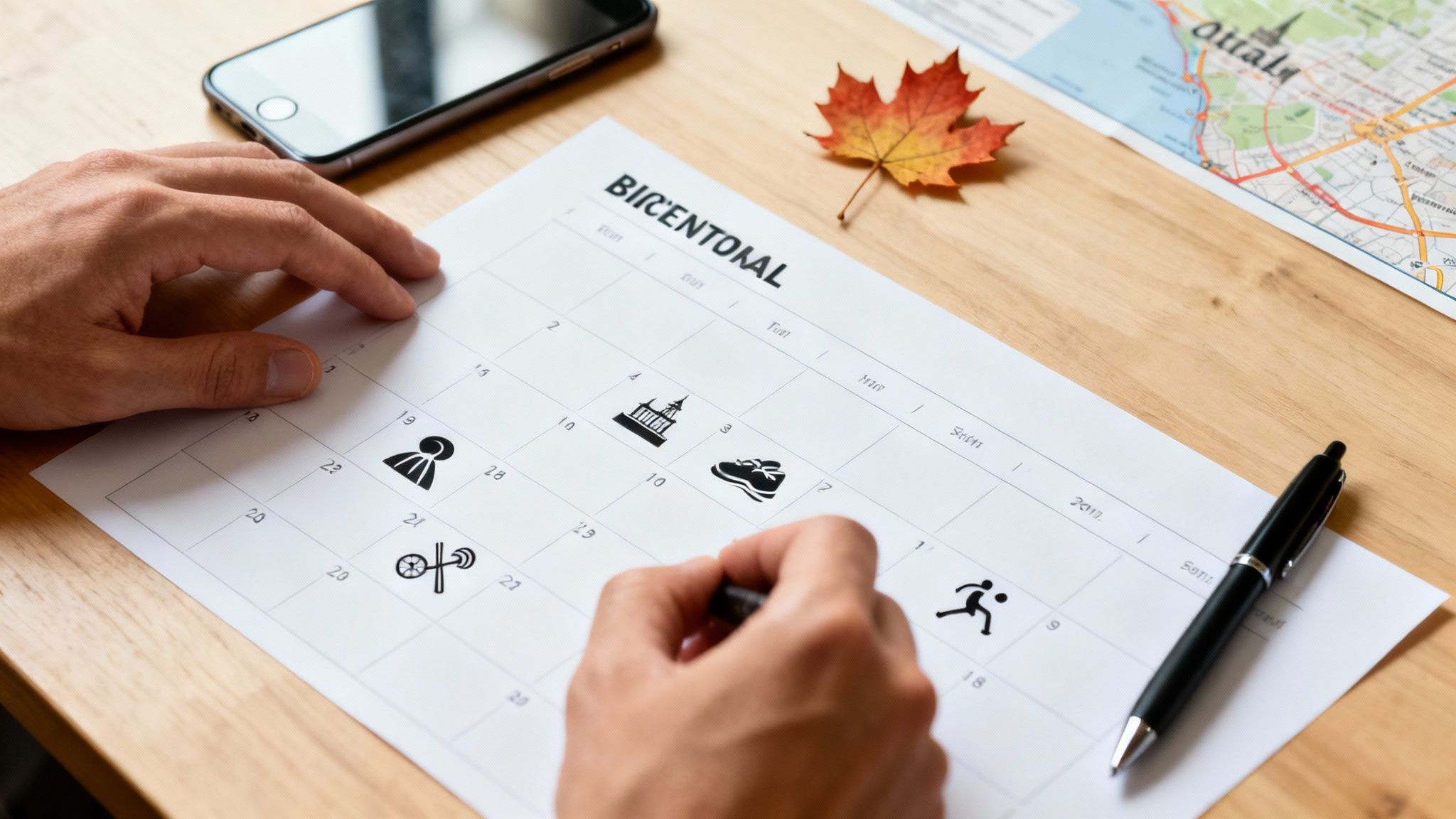
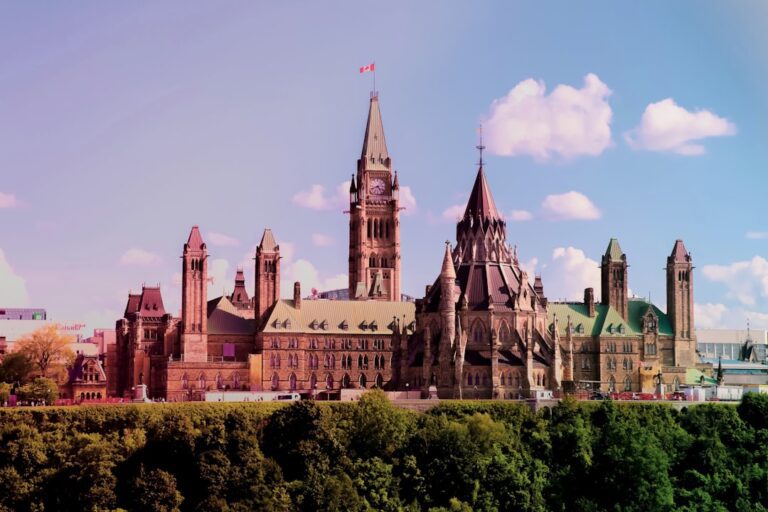
While events will be happening all over, a few key spots will act as the main hubs for the bicentennial. Downtown landmarks like Parliament Hill, Confederation Park, and City Hall will play a huge role, hosting many of the signature ceremonies and big celebrations.
Ottawa’s museums will also be must-visit destinations all year long. Places like the Bytown Museum, located right at the Ottawa Locks, will have exhibits directly tied to the city’s origins. You can bet other major museums will roll out their own unique programming, too. For a full rundown of what these institutions have to offer, check out our guide to the best museums in Ottawa.
The goal is to create a city-wide celebration. While the downtown core will be a focal point, the real success of the bicentennial will be measured by the vibrancy of events happening in local communities and parks across Ottawa.
This approach means the celebration is not just something you go to; it is something you are a part of, right in your own backyard.
How to Stay in the Loop
The best way to plan your bicentennial experience is to use the official channels as they go live. The City of Ottawa will launch a dedicated bicentennial website with a full, searchable calendar of events. Bookmark it. It will be your best source for dates, times, and locations.
You will also want to follow the city’s official social media accounts for real-time updates and behind-the-scenes information. Local news outlets, including us here at NCR Now, will be providing ongoing coverage, highlighting events and sharing community stories all year. By keeping these resources handy, you can build a personalized bicentennial plan that captures the spirit of this historic milestone.
How You Can Participate in the Celebration
The Ottawa Bicentennial is not just something to watch from the sidelines. It is an open invitation for every resident and local business to become a part of this historic milestone. From volunteering to organizing a neighbourhood get-together, there are many ways to get involved and leave your own mark on the city’s 200th anniversary.
This celebration belongs to all of us. Its success will not be measured in grand gestures, but in the depth of community spirit and participation we all bring. This is our chance to build a shared sense of ownership and create lasting memories together.
For Community Members and Residents
Getting involved does not have to be a massive commitment. Even small actions can spark community spirit and add to the bicentennial’s atmosphere. The goal is to find a role that fits your passion and your schedule, whether you have a few hours to spare or you are ready to lead a project.
Here are a few ways for residents to get involved:
- Volunteer Your Time: Signature events and community festivals will be powered by the energy of volunteers. Roles could include anything from greeting attendees and sharing information to helping with event setup. Keep an eye on the official bicentennial website. A volunteer portal is expected to launch soon.
- Organize a Neighbourhood Event: You do not need to wait for a major festival to start celebrating. Think about organizing a bicentennial-themed block party, a historical walking tour of your own street, or a potluck in a local park. These grassroots events are the heart of a city-wide celebration.
- Apply for a Community Grant: Have a bigger idea? The City of Ottawa is expected to offer a Community Grants Program designed to help non-profits and community associations bring their bicentennial projects to life. Start brainstorming now so your group is ready when applications open.
This is a fantastic opportunity to connect with your neighbours and strengthen local bonds. As you think about your summer plans, you can get some ideas by checking out our guide on 7 events you can’t miss in Ottawa this summer to see what makes local gatherings successful.
For Local Businesses and Organizations
For Ottawa’s business community, the bicentennial is an opportunity to connect with customers, support the city, and show local pride. Participation can range from official partnerships to creative, independent promotions that capture the celebratory mood.
The engagement of local businesses is crucial. It transforms the bicentennial from a municipal initiative into a true community-wide movement, embedding the celebration into the daily life of the city.
Here are a few ways your business can get in on the action:
- Become an Official Partner or Sponsor: The City will have formal partnership and sponsorship packages available. This is a perfect option for businesses looking for brand visibility while providing financial or in-kind support for major events and legacy projects.
- Develop Bicentennial-Themed Offerings: This is where you can get creative. A local restaurant could design a special “Bytown Menu,” a brewery could craft a “Bicentennial Ale,” or a retail shop could feature products from local artisans. These promotions add to the festive vibe across the city.
- Utilize Official Branding: Once it is released, businesses will be able to access an official Ottawa Bicentennial branding toolkit. Using the logo on your marketing materials shows customers you are part of the celebration and helps create a cohesive look for the anniversary year.
Bicentennial Participation Pathways
To make it clearer, here is a simple breakdown of how different groups can make their mark on this historic year.
| Participation Method | Best For | Key Steps to Get Started |
|---|---|---|
| Volunteering | Individuals with a few hours to spare who want to be hands-on at major events. | Watch the official bicentennial website for the volunteer sign-up portal. |
| Hosting a Local Event | Neighbourhood groups, friends, and families looking to build community spirit. | Pick a date, choose a simple activity like a BBQ or walking tour, and spread the word. |
| Community Grants | Non-profits and community associations with project ideas that need funding. | Start brainstorming project ideas now and prepare a proposal for when applications open. |
| Sponsorship | Businesses seeking high-visibility marketing and a way to support large-scale events. | Contact the City’s bicentennial organizing committee to inquire about sponsorship packages. |
| Themed Promotions | Restaurants, breweries, and retail shops wanting to engage customers creatively. | Brainstorm a unique product or service tied to Ottawa’s history and promote it in-store. |
| Using Official Branding | Any local business that wants to align with the city-wide celebration. | Download the official branding toolkit (when available) and incorporate logos into your marketing. |
Ultimately, whether you are an individual resident, a community group, or a local entrepreneur, your participation is what will make the Ottawa Bicentennial a meaningful and memorable success for everyone.
Building a Lasting Bicentennial Legacy
When the last of the bicentennial fireworks fade over the Ottawa River, what will be left? The success of an anniversary this big is not measured by the parties, but by the mark it leaves on our city long-term. The goal is to ensure the spirit of 2026 continues for years, shaping Ottawa’s future with tangible projects and stronger community ties.
This is about more than a year-long celebration. It is about building a legacy that matters. The bicentennial is meant to be a moment that strengthens our city’s foundation for the future.
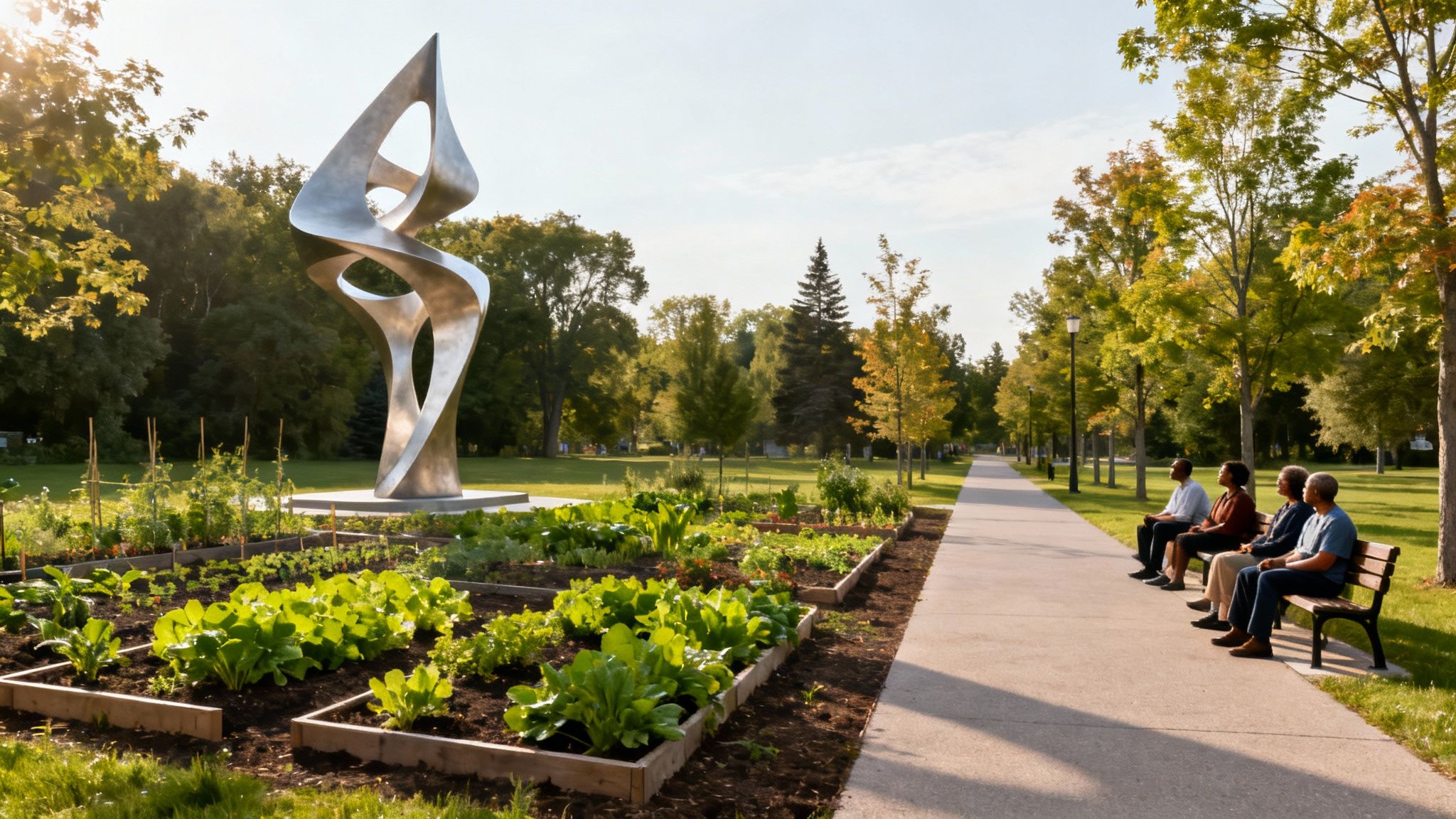
That legacy will take shape in two key ways: through physical projects and through cultural shifts that bring us closer together.
Tangible Legacy Projects
Legacy projects are the most obvious results we will see from the bicentennial. These are the permanent additions to our city, the new landmarks and cultural spaces meant to improve life for everyone long after 2026 has passed.
We can expect to see a range of initiatives that bring the core themes of the celebration to life in a physical way. They will serve as reminders of this milestone and new hubs for community life.
Here is a sample of what these legacy projects might look like:
- Permanent Public Art: Imagine new sculptures or murals going up in parks and public squares across the city. Each piece could tell a part of Ottawa’s 200-year story, from its Indigenous roots to its modern identity as a G7 capital.
- New Community Spaces: This could mean creating new parks or revitalizing existing community gardens and recreational facilities. These projects are about fostering connection and improving the quality of life in neighbourhoods from Kanata to Orléans.
- Digital Archives and Histories: Ensuring our stories survive is crucial. A major legacy project will likely be a comprehensive digital archive, making historical documents, old photos, and oral histories accessible online for students, researchers, and anyone who is curious.
These projects ensure the investment in the Ottawa Bicentennial pays dividends for decades, creating landmarks that future generations can enjoy and learn from.
Intangible Legacies for a Stronger Community
Perhaps even more important than new statues or parks are the intangible legacies. These are the shifts in how we see our city and the strengthened connections that can redefine a community’s spirit.
This side of the legacy is about fostering a deeper, more personal understanding of who we are. It is about moving beyond history as just a list of dates and turning it into a shared story that builds a sense of collective purpose.
The real measure of the bicentennial’s success will be in how it strengthens the social fabric of our city. It is an opportunity to foster a renewed sense of civic pride and a deeper appreciation for the diverse voices that make Ottawa what it is today.
Some of the key intangible goals are clear:
- Strengthened Community Connections: By encouraging neighbours to organize their own local events and volunteer together, the bicentennial aims to forge relationships that last. Stronger neighbourhoods make for a more resilient city.
- Renewed Appreciation for Local History: The year-long focus on our city’s journey from Bytown is designed to spark curiosity. The hope is that more residents will check out local gems like the Historical Society of Ottawa or the Bytown Museum, creating a lasting interest in our collective past.
- Advancing Reconciliation: A central piece of the legacy must be real progress on the path of reconciliation. By putting Anishinaabe Algonquin history and voices front and centre, the bicentennial is a commitment to a future built on mutual respect and understanding.
Ultimately, the Ottawa Bicentennial is not an end point. It is a catalyst. The legacy it builds, in our parks, our digital records, and most importantly, in our relationships with one another, will be the true marker of its success, defining our city’s next chapter.
Got Questions About Ottawa’s Bicentennial? We’ve Got Answers.
As Ottawa gears up for a year-long event, you probably have some questions. We are here to provide the straightforward answers you need to get the most out of this historic celebration.
When does the bicentennial start and end?
The official Ottawa Bicentennial celebrations will kick off in early 2026 and run through to the end of December 2026. This entire year is dedicated to marking the 200th anniversary of Bytown’s founding in 1826.
You might see some preliminary events or announcements in late 2025, but the main activities are all happening within the 2026 calendar year. For the latest scheduling, your best source will be the official City of Ottawa Bicentennial website as it gets closer.
Where can I find reliable, up-to-date information?
The City of Ottawa will launch a dedicated website for the bicentennial, which will be the central source for all official information including event calendars, volunteer sign-ups, and grant applications.
For real-time updates and a feel for what is happening on the ground, following the City of Ottawa’s social media channels is a good idea. Local news outlets, including us right here at NCR Now, will also be covering the festivities to keep you informed.
Will all events happen downtown?
Absolutely not. While some of the large signature events will naturally be centred around landmarks like Parliament Hill or City Hall, a major priority is making this a true city-wide celebration.
The goal is to empower communities from Kanata to Orléans to host their own unique events. This ensures the celebration reflects the character of every Ottawa neighbourhood, not just the downtown core.
How can my neighbourhood association get funding for an event?
The City is planning to launch a special Community Grants Program for the bicentennial. This is designed to give non-profit groups and community associations the financial support they need to bring their own celebratory ideas to life.
Applications will likely be handled through a portal on the official bicentennial website. To prepare, you will want a solid project plan and a budget that connects with the bicentennial’s key themes like heritage, community, or reconciliation. It is never too early to start brainstorming ideas.
Quick tip for community groups: Funding often goes to projects that show a clear benefit to the community and have strong local involvement. Getting your plans in order early will give you an advantage when applications open.
Is this the same as Canada Day?
No, these are two very different milestones. Canada Day on July 1 celebrates the anniversary of Confederation in 1867, the birth of our country. The Ottawa Bicentennial, on the other hand, specifically marks the 200th anniversary of Bytown’s founding in 1826.
That said, you can expect the Canada Day 2026 celebrations in Ottawa to be extra special, weaving in bicentennial themes to make it a memorable event. But the bicentennial itself is a distinct, year-long celebration of our city’s unique story.
How is Indigenous history being included?
Honouring the history of the Anishinaabe Algonquin people is a core part of the bicentennial. Reconciliation has been a central theme from the beginning of the planning process.
Here is how that commitment will take shape:
- Official Recognition: Every major event will start by acknowledging that Ottawa is built on the unceded, unsurrendered territory of the Anishinaabe Algonquin Nation.
- Collaborative Programming: Organizers are working directly with Algonquin communities and organizations to ensure their stories, culture, and voices are front and centre.
- Educational Initiatives: The year will be filled with opportunities for residents to learn about the deep Indigenous history of this land, a history that stretches back thousands of years before 1826.
The goal is to make this a moment for real dialogue and a meaningful step forward on our shared path to reconciliation. It is about recognizing that the story of this place did not start 200 years ago.
Will I still be able to get around the city during big events?
Yes. The City’s goal is to celebrate without shutting everything down. While major events, especially downtown, will likely mean some temporary road closures or bus detours, all of this will be announced well in advance. Keep an eye on official city channels for updates so you can plan ahead and still enjoy everything the year has to offer.
At NCR Now, we are dedicated to keeping you connected to your city. As the Ottawa Bicentennial unfolds, count on us for the practical guides and local stories you need to experience this historic year. For all our ongoing coverage, visit us at https://ncrnow.ca.
About The Author