
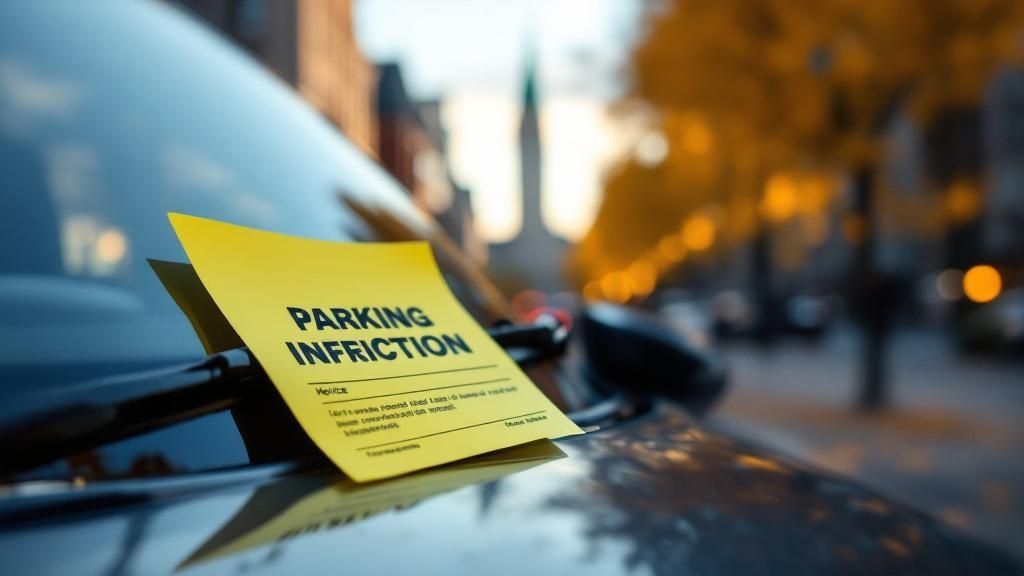
That bright yellow slip tucked under your windshield wiper is an unwelcome sight for any driver. Officially, it’s a parking infraction notice, the City of Ottawa’s way of telling you they believe you’ve violated a parking bylaw.
Before you get frustrated, take a deep breath. This notice is your starting point. It contains all the details you need to figure out what happened and decide whether to pay the fine or fight it.
Decoding Your Ottawa Parking Infraction Notice
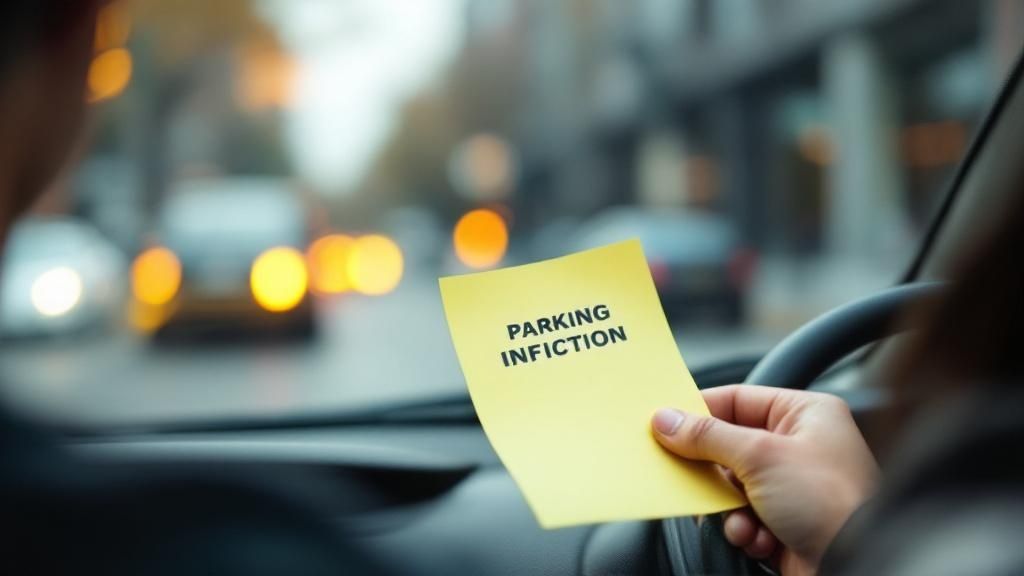
Panicking won't help, but understanding the ticket will. Think of the notice as a formal communication from the city that lays out their side of the story. It’s designed to be a complete record of the alleged violation, giving you everything you need to make a calm, informed decision.
Let's break down what to look for.
Key Information on Your Ticket
Your ticket is broken down into a few key sections. Each one provides a piece of the puzzle, so it’s worth taking a minute to go through them carefully.
Here’s what you need to focus on:
- Infraction Details: This is the heart of the matter. It will state the specific bylaw you allegedly broke, like "Park in excess of posted time limit" or "Park within 3 metres of a fire hydrant." This tells you why you got the ticket.
- Set Fine Amount: The ticket will clearly show how much you owe. Keep an eye out for an early payment option. In Ottawa, you can often save a few dollars by paying quickly. For instance, a $75 fine might be reduced to $55 if you pay it within 15 days.
- Date and Time: Double-check this. Is it accurate? If you have proof you were somewhere else—maybe a receipt from a paid parking lot showing you left before the ticket was issued—this detail is your best friend.
- Location of Infraction: The notice has to specify exactly where your vehicle was parked. It should be precise, something like "123 Elgin Street" or "West side of Bank Street south of Laurier Ave."
It’s crucial to remember that a parking infraction notice is an allegation, not a conviction. You have the right to review the evidence against you and decide on your next step, whether that's paying the fine or initiating a dispute.
To give you a better idea of what you might be facing, here is a quick reference table for some of the most common tickets in Ottawa.
Common Ottawa Parking Violations and Fines
This table can help you quickly understand what your notice is about and what factors might be at play.
| Violation Type | Typical Fine Range | Key Considerations |
|---|---|---|
| Exceeding Time Limit | $40 – $75 | Often has an early payment discount. Very common in 1P or 2P zones. |
| No Parking Zone | $50 – $90 | Fines can be higher in high-traffic areas like downtown or near event venues. |
| Parking Within 3m of a Fire Hydrant | $100 | This is a non-negotiable safety violation with a steep, fixed fine. |
| Parking During Prohibited Times | $60 – $85 | Common during rush hour on major arteries or for street cleaning schedules. |
| No Valid Permit | $70 – $120 | Applies to residential permit zones or private lots. Always check signage. |
Understanding these common infractions can demystify the ticket on your windshield and help you figure out if the fine matches the alleged violation. Now you’re ready to decide on your next move.
So, you found one of those dreaded yellow slips on your windshield. What now? Before you rush to pay it, take a breath. Getting a parking ticket in Ottawa doesn't mean you're automatically on the hook for the fine. You actually have three distinct paths forward, and picking the right one for your situation could save you a headache and some cash.
The simplest option, of course, is just to pay the fine. This is probably your best bet if you know you messed up—maybe you pushed your luck with an expired meter or completely missed a "No Parking" sign. The City of Ottawa makes it pretty easy to pay online, by mail, or in person, so if you're ready to move on, the process is straightforward.
Your Options Explained
But what if you think the ticket is unjustified? Maybe a massive tree branch was hiding the sign, or the details on your parking infraction notice are just plain wrong. In that case, you don't have to just accept it. You can request a formal review.
This is your first line of defence. It lets a screening officer look at your side of the story and any evidence you have, all without you having to step foot in a courtroom. For instance, if you have a time-stamped photo showing that the "No Parking" sign was completely faded and unreadable, a review is the perfect way to make your case.
Your third route is to request a formal trial and plead your case before a Justice of the Peace. This is a much bigger commitment, so you should only go this route if you have a rock-solid, evidence-based argument that you believe needs a proper hearing.
This handy infographic breaks down the typical decision-making process.
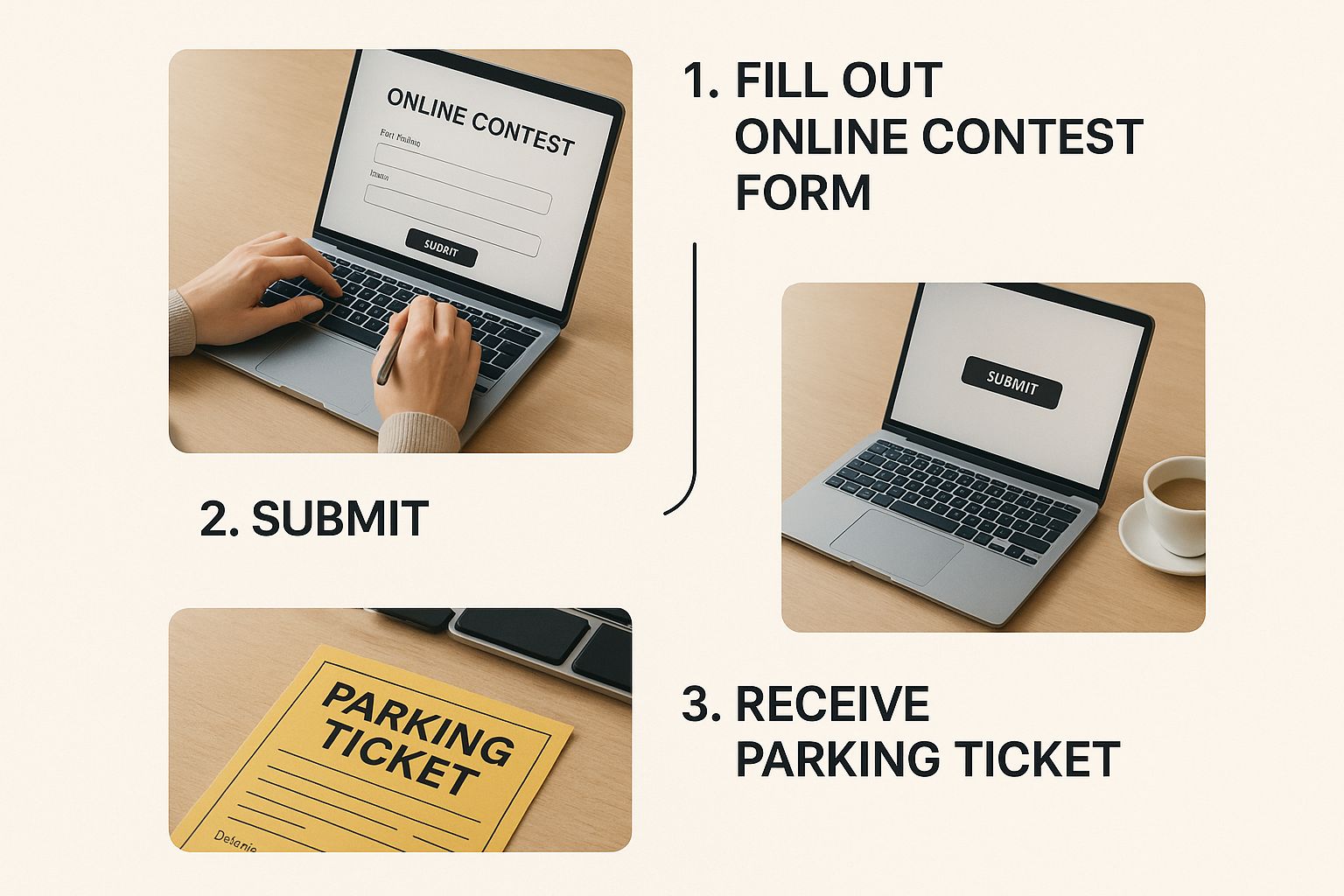
As you can see, gathering your evidence is the critical first move before you decide whether to pay up or fight back. Ticketing policies aren't set in stone; they evolve. Just look at recent data from the City of Ottawa, which shows that parking enforcement revenue has been steadily increasing, projecting over $37 million for 2024. This highlights that enforcement is a significant and growing municipal priority.
Knowing the local landscape—the bylaws, the enforcement quirks, the unwritten rules—is your best tool for making an informed choice. To get a better handle on the city's unique character, check out our article exploring 5 myths about Ottawa.
So You Want to Fight That Parking Ticket? Here's How
If you're staring at a parking infraction notice and you're certain it was slapped on your windshield by mistake, it's time to build your case. Fighting a ticket isn't about getting into a heated argument; it’s about methodically presenting the facts that prove the ticket shouldn't have been issued in the first place. Your objective is simple: create a clear, undeniable case for why it should be cancelled.
The first thing you need to do is act fast. As soon as you can, get back to where you were parked, smartphone in hand. Time-stamped photos are your best friend here. For example, if you were ticketed in a no-stopping zone but the sign was completely hidden by a thick tree branch, a photo of that obstruction is worth a thousand words.
Back It Up: Gathering Your Proof
Photos are a great start, but what else can you find to tell your side of the story? Your evidence needs to be objective and directly address the specific infraction written on your notice.
Think about collecting things like:
- Dated Photographs: Snap pictures of everything. Your car’s position, any relevant signs (or lack thereof), a broken parking meter, or even faded curb paint can all be critical.
- Supporting Documents: Were you dealing with an emergency? A note from a doctor's office or a receipt from a pharmacy can help paint the full picture. If you actually paid for parking, that valid Pay and Display stub is your golden ticket.
- Witness Details: Did someone see what happened? If a bystander can back you up, grab their name and contact info. A third-party statement can add serious weight to your claim, especially if they can confirm a key detail.
Putting Your Case Together
Once you've got your evidence lined up, it's time to craft your argument. When you request a screening, you’ll submit your case in writing. My best advice? Keep it short, respectful, and laser-focused on the facts. Emotion won’t win the day, but a logical, evidence-backed narrative just might.
Your written statement should be a straightforward account of what happened. Clearly state why you’re disputing the ticket and tie in each piece of evidence you've gathered. Don't make excuses—just present the facts.
For instance, skip the drama. Instead of writing, "This is totally unfair, I couldn't even see the sign!" try something more effective like, "I am disputing this infraction because the 'No Parking' sign was completely obscured by an overgrown tree, as shown in the attached photo taken on [Date] at [Time]."
After you submit everything, a screening officer will review your file. They have the power to uphold the fine, reduce it, or cancel it entirely based on the strength of your evidence. A well-prepared dispute gives you the best possible shot at getting that parking ticket tossed out for good.
How to Avoid a Parking Ticket in the First Place
Let's be honest, the best way to deal with a parking infraction notice is to never see one on your windshield. A little proactive knowledge about Ottawa’s key bylaws can save you a lot of future headaches and cash.
Most tickets come from a handful of common, and totally avoidable, situations. Let's break down the rules that trip people up the most.
Mastering the Most Common Parking Rules
Navigating Ottawa’s streets means keeping an eye on rules that can change with the seasons. Winter, in particular, has a habit of catching even the most seasoned local drivers off guard.
When the snow flies, the city often calls overnight parking bans so plows can clear the streets. Parking on the street during a ban—even if it's your regular spot—is a surefire way to get a ticket. Before leaving your car out overnight in the winter, always double-check the City of Ottawa’s website or local news for any active parking bans.
Another classic mistake is misreading the signs in residential permit zones. If you see a sign that says "Permit Holders Excepted," that means you need a specific residential permit for that street. Your standard visitor pass won't work there.
One of the biggest no-nos involves pedestrian safety. Never park within nine metres of an intersection or crosswalk. It blocks sightlines for drivers and people on foot. The same goes for fire hydrants—you have to leave at least three metres of clear space around them.
This focus on safety is a big deal and a growing trend. California, for example, just brought in a "daylighting" law that bans parking within 20 feet (about six metres) of any crosswalk, marked or not, with fines starting over $100. You can read more about this safety-first approach over at KQED.org.
Here in Ottawa, the conversation around protecting vulnerable road users is heating up, too. There's a lot of talk about strengthening bylaw enforcement to keep everyone safe. You can read more about Mayor Sutcliffe's approach to bylaw enforcement and safety.
Ultimately, getting to know these rules is your best defence against an unwanted parking ticket.
That little yellow slip under your wiper? It’s tempting to just shove it in the glove compartment and forget about it. We’ve all been there. But in Ottawa, ignoring a parking infraction is a mistake that can snowball into a much bigger headache.
What starts as a manageable fine doesn't stay that way for long. The City tacks on late payment penalties, and before you know it, that $60 ticket has grown into a much more painful number.
If you let it slide for too long, things get more serious. The City can pass your debt to a collections agency. That’s not just a few annoying phone calls; a collections account can drag down your credit score, making it tougher to get a mortgage, car loan, or even a new credit card down the road.
The Biggest Consequence: Your Licence Plate Renewal
For most drivers in Ontario, this is the real kicker. You cannot renew your vehicle’s licence plate sticker if you have outstanding parking fines anywhere in the province. That’s right—your vehicle becomes illegal to drive until the original fine and all the late fees are paid off completely.
This isn't just an inconvenience; it can have a major financial impact. When everyday costs are already high, an unexpected and inflated fine is the last thing anyone needs. It’s a clear example of how household finances are being stretched thin, a topic we explored in our recent article on the gap between wage growth and Canadian inflation.
Ignoring a parking ticket doesn't make it disappear—it just makes it more expensive and complicated. The system is designed to make you pay, so dealing with it quickly is always your best bet.
And Ottawa isn't alone. Municipalities everywhere take parking enforcement very seriously because it's a huge source of revenue. Take San Francisco, for example. In just over a year, they handed out over 570,000 parking tickets, bringing in more than $51 million. You can see the full breakdown of San Francisco's parking ticket data on ABC7 News. It just goes to show you’re not getting out of this one easily.
Still Have Questions? We've Got Answers
Even with a step-by-step guide, it's natural to have a few more questions pop up. Here are some quick answers to the most common things people ask after finding a parking infraction notice on their windshield in Ottawa.
Can I Really Get a Ticket on Private Property?
Yes, you absolutely can. It’s a common misconception that you're only on the hook for tickets on public city streets.
Places like shopping mall lots, grocery stores, and even private apartment complexes often have agreements with the City of Ottawa. This gives city bylaw officers the green light to enforce parking rules on their property. These are official tickets, not just warnings, and they carry the same weight as any other city-issued infraction. You'll need to pay or dispute it just the same.
What if There's a Mistake on My Ticket?
A major error on the ticket might just be your get-out-of-jail-free card. If you spot a critical mistake—like a completely wrong licence plate number, an incorrect date, or a location that doesn't exist—you have a solid case for getting it cancelled. Your best bet is to request a screening and present the faulty ticket as your proof.
But a small typo probably won't cut it. A misspelled street name that’s still clearly identifiable (e.g., "Rydau Street" instead of "Rideau Street") is unlikely to get the ticket tossed out.
The real test is whether the error creates genuine confusion about which vehicle committed the infraction. If the essential details are correct, the ticket will almost always stand.
How Long Do I Have to Deal With This?
Don't put it off. The clock starts ticking the moment that notice is issued. You have 15 days to either pay the fine or formally request a review.
If you miss that crucial 15-day window, you forfeit your right to dispute the ticket. On top of that, you'll almost certainly be hit with additional late fees. Always double-check the deadlines printed right on your ticket.
Will a Parking Ticket Mess With My Insurance?
Breathe easy on this one. In Ontario, a standard parking ticket has zero impact on your insurance rates. These are considered non-moving violations, which means they don't add demerit points to your driving record.
The real trouble comes from not paying. An unpaid ticket can block you from renewing your licence plate, which can snowball into much bigger problems down the road.
For the latest news and stories from Ottawa and the National Capital Region, trust ncrnow. Stay informed by visiting us at https://ncrnow.ca.
About The Author