


Thinking about moving to Canada? You're probably picturing stunning national parks and famously polite people. And while you wouldn't be wrong, the day-to-day reality of life here is far more nuanced. Getting a real sense of that reality is the first step to making your move a success.
An Honest Look at Modern Canadian Life

Life in Canada is a genuine mix of incredible opportunity and real-world challenges. It’s a country built on immigration, where values like community, safety, and work-life balance are taken seriously. But your experience can be wildly different depending on where you land—from the vibrant, fast-paced hustle of a major city to the tight-knit, community-focused lifestyle in a smaller town.
Think of it like putting together a puzzle. Each piece—the job market, housing, cultural integration, cost of living—is essential, and they all have to fit together to create your new life.
The Core Pillars of Your New Life
To really wrap your head around what life in Canada is like, it helps to break it down into four key areas. Each one comes with its own set of opportunities and hurdles you'll face as a newcomer.
- The Job Market: Canada is actively looking for skilled people, especially in tech, healthcare, and the trades. That said, landing a job means learning the local ropes, like how to tailor your resume and the importance of networking.
- Housing Realities: Finding a place to live is often one of the most significant challenges, particularly in major urban centres. Big cities like Toronto and Vancouver are known for their high housing costs, while you'll find more affordable options in the Prairie provinces and Atlantic Canada.
- Cultural Fabric: Canada is officially multicultural, and you see it everywhere—in the food, the festivals, and the communities. It's less about blending in and more about adding your own unique thread to the national tapestry.
- Cost of Living: A great salary in one city might not go as far as a more modest one in another. Beyond your rent or mortgage, daily costs for groceries, transit, and childcare vary a ton from one region to the next.
The secret to building a life in Canada is balancing your dreams with a healthy dose of pragmatism. The people who thrive are the ones who do their homework, stay flexible, and embrace the country's regional quirks and cultural norms.
To give you a clearer picture, here's a quick rundown of the key pillars that shape life in Canada.
Key Pillars of Canadian Life at a Glance
| Aspect | What to Know | The Reality on the Ground |
|---|---|---|
| Job Market | High demand for skilled workers, particularly in tech, healthcare, and trades. | Landing your first "Canadian experience" job can be a challenge. Networking is crucial. |
| Housing | Costs vary dramatically by region. Major cities are expensive. | Renting is often the first step. Expect competition for good places in urban centres. |
| Culture | Officially multicultural. Diversity is a core part of the national identity. | You'll find a mosaic of cultures, especially in big cities. Integration feels more like contribution than assimilation. |
| Cost of Living | Can be high, especially in urban areas. Varies significantly across provinces. | Your budget will need to account for more than just housing—groceries, phone plans, and transportation add up. |
Understanding these elements is the foundation for a smooth transition.
A Nation Shaped by Newcomers
One of the biggest factors shaping modern Canada is its reliance on immigration for both population and economic growth. This isn't just a policy on paper; it's a demographic reality you'll feel every single day.
As of early 2024, Canada's population officially surpassed 41 million people, a milestone driven largely by permanent and temporary immigration. This isn't by accident. The country is actively working to fill labour shortages and offset an aging population.
In fact, the annual population growth rate hit 3.2% in 2023—the highest since 1957. This constant flow of new people is continually redefining what it means to be Canadian, making multiculturalism a lived reality in cities and towns coast to coast. If you're a data-nerd, you can dig into the numbers behind this population boom directly on the Statistics Canada website.
Navigating The Modern Canadian Job Market

Finding good work is the bedrock of building a life in Canada. And while the country is actively looking for skilled people, the job market has its own unique rhythm and expectations that can catch newcomers by surprise.
Think of it like this: your professional skills are the language, but the Canadian job market has its own dialect. The core of what you do stays the same, but the etiquette, the slang, and the way you present yourself all change. Getting a handle on these local nuances is what turns a frustrating job hunt into a successful career move.
Where The Opportunities Are
Canada's economy is a real mosaic, with certain sectors booming more than others. If you know where the demand is, you can give yourself a serious head start. It means you can focus your energy—and your networking—where it’ll count the most.
Right now, these industries are consistently looking for fresh talent across the country:
- Technology: From the software hubs in Toronto and Vancouver to the AI research centres in Montreal and Edmonton, tech is a major engine for job growth. Roles in cybersecurity, data analytics, and cloud computing are especially hot.
- Healthcare: With an aging population, the need for healthcare professionals is constant and growing. This means nurses, personal support workers, medical technicians, and all kinds of specialists are in high demand.
- Green Energy: Canada is pushing hard for sustainability. That's creating jobs in renewable energy, environmental engineering, and green resource management, particularly in provinces like Alberta, British Columbia, and Ontario.
- Skilled Trades: You can't overstate how important the skilled trades are right now. There's a nationwide shortage of electricians, plumbers, welders, and construction workers, making these careers both stable and very well-paid.
If you’re leaning toward the public sector or tech, you might want to check out some common myths about Ottawa, as it's a huge hub for both.
One of the first hurdles you’ll hear about is needing “Canadian experience.” It’s a frustrating term, but it doesn’t usually mean you need a previous job in Canada. What hiring managers are really looking for is proof that you understand the local workplace culture—the communication styles, the teamwork, the unwritten rules.
Reshaping Your Resume For Success
Your resume is your foot in the door, and Canadian employers have a specific way they like to see it. A resume that works perfectly in another country might get tossed aside here. The trick is to stop listing duties and start showcasing achievements you can measure.
So, instead of saying, "Responsible for managing social media," you reframe it. Try this: "Increased social media engagement by 35% in six months by rolling out a new content strategy." See the difference? That data-driven approach shows an employer exactly what value you can bring.
It's also crucial to get a feel for Canadian workplace culture. It tends to be very collaborative and less hierarchical than in many other countries. Teamwork and soft skills are huge. Your resume and cover letter need to reflect that by highlighting projects where you collaborated and showing you’re someone who works well with others.
The Art Of Canadian Networking
Here's a secret: many of the best jobs in Canada are never even posted online. They’re filled through referrals and professional connections. That makes networking an absolutely essential part of your job search. And I'm not talking about just swapping business cards; it’s about building real relationships.
Here are a few ways to get started:
- Get on LinkedIn: Don’t just have a profile—use it. Connect with people in your industry, but make sure to personalise your connection requests. Engage with what they post.
- Attend Industry Events: Whether they're in-person meetups or virtual conferences, these are goldmines for meeting people. The goal isn't to collect contacts; it's to have real conversations.
- Ask for Informational Interviews: Find people working at companies you admire and ask for a quick 15-minute chat about their job and the company. You'd be surprised how many Canadians are happy to share their insights and help you out.
Building a career here is a marathon, not a sprint. By understanding where the jobs are, tweaking your resume, and building your network, you can find your place in the Canadian workforce.
Understanding the True Cost of Living
Let's talk money. Before you even pack a bag, figuring out your budget is probably the most critical part of planning your move to Canada. It’s easy to look at national averages, but to get a real sense of what your life will cost, you need to dig deeper into the day-to-day financial realities.
Think of it this way: a salary that sounds incredible in one city might just cover the basics in another. Getting a handle on these numbers isn't just about avoiding sticker shock; it's about making sure you can build the life you're envisioning.
Breaking Down Your Core Expenses
Housing is almost always the biggest slice of the pie, whether you're renting or buying. But it’s the smaller, recurring expenses that often catch people off guard. They add up fast if you’re not ready for them.
Here are the main things you'll need to budget for:
- Groceries: What you spend at the checkout can vary wildly. Canada's Food Price Report for 2024 projected that the average family of four will spend over $16,297 on food this year.
- Public Transit: Most major cities have great transit systems, but the cost differs. A monthly pass in a big city like Toronto will set you back around $156, whereas it might be closer to $100 in a smaller city.
- Childcare: This is a major expense for families. While the national $10-a-day program is rolling out, current monthly fees can still range from a few hundred dollars in provinces like Quebec to over $1,500 per child in cities like Vancouver or Toronto.
- Utilities and Bills: This bucket includes hydro (electricity), heat, water, and your mobile and internet plans. Tally it all up, and you can easily add another $250-$450 to your monthly budget, depending on your location and usage.
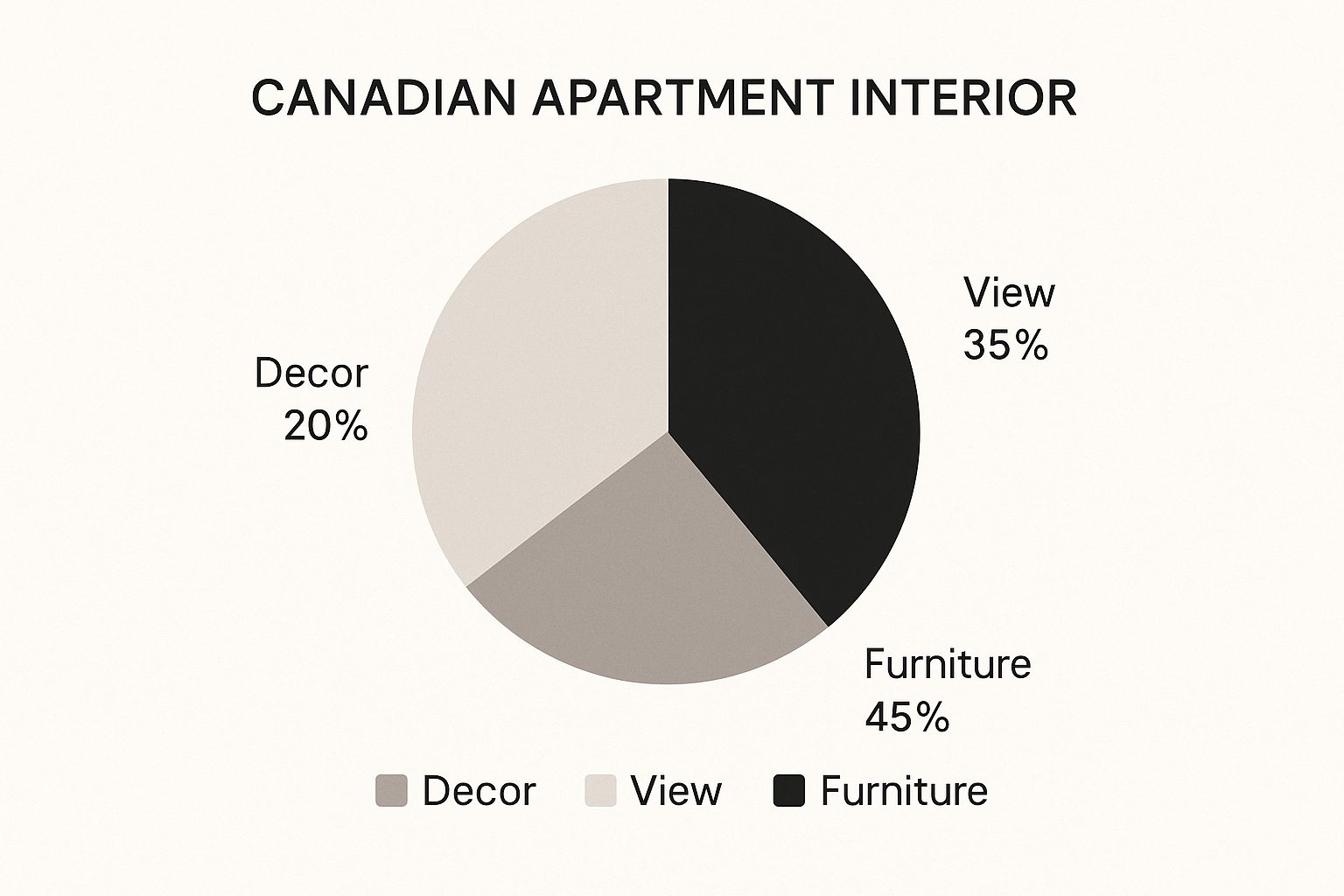
This picture captures the kind of modern, comfortable living space many people aim for in Canada—a blend of cozy style and urban convenience that has become a popular goal for city dwellers.
The Great Canadian Cost Divide
Here’s the single most important thing to understand: where you live changes everything. The financial story of Canada isn't one single narrative; it's a collection of very different regional tales. The gap between life in a major metropolis and a smaller city is huge.
The rule of thumb is pretty straightforward: the bigger the city and the more jobs it has, the more it’s going to cost you. Your paycheque will simply stretch further in some parts of the country.
Take Toronto and Vancouver, for example. They're notoriously expensive, largely because of sky-high housing costs. The jobs pay well, but the price of admission—both for housing and daily life—is among the steepest in the world.
On the other hand, cities like Calgary, Halifax, or Edmonton offer a much more balanced life. Housing is more affordable, and even if salaries in some fields are a bit lower, you often end up with more money in your pocket at the end of the month. For a really detailed, local look at expenses, this guide on how much you need to survive in Ottawa is a great starting point.
To really see the difference, have a look at this comparison of estimated monthly costs for a single person, not including rent.
Estimated Monthly Cost of Living Comparison (Single Person Excluding Rent)
This table offers a snapshot of how core monthly expenses stack up in three of Canada's major cities, showing just how much location matters to your budget.
| Expense Category | Toronto (Ontario) | Montreal (Quebec) | Calgary (Alberta) |
|---|---|---|---|
| Utilities & Phone | ~$250 | ~$200 | ~$300 |
| Groceries | ~$450 | ~$400 | ~$420 |
| Transit Pass | ~$156 | ~$97 | ~$115 |
| Entertainment | ~$200 | ~$175 | ~$190 |
| Total (Est.) | ~$1,056 | ~$872 | ~$1,025 |
As you can see, even before you pay rent, living in Montreal can be significantly cheaper per month than in Toronto or Calgary. Factoring in these regional differences isn’t just good planning—it’s the key to building a financially stable life in Canada.
Finding Your Place in the Housing Market
Figuring out where you're going to live is a huge step. It’s not just about signing a lease or a mortgage—it’s about putting down roots and starting to build your new life in Canada. The housing market here can be a real puzzle, with massive differences from one coast to the other. Getting a handle on these regional quirks is the first real test in finding a place that fits your wallet and your lifestyle.
The classic newcomer question is: should I rent or buy? For most people, renting is the logical starting point. It offers flexibility, gives you a chance to feel out a neighbourhood without a long-term commitment, and lets you build the Canadian credit history you'll eventually need for a mortgage. Jumping straight into buying is a fantastic long-term goal, but it comes with a mountain of upfront costs like down payments, legal fees, and land transfer taxes that can catch anyone off guard.
Whichever route you take, knowing your rights is non-negotiable. Every province has its own Residential Tenancy Act, which is basically the rulebook for landlords and tenants. It covers everything from how much your rent can increase to who’s responsible for repairs and the proper process for eviction. Get familiar with these rules—it's the best way to protect yourself.
Choosing Your Canadian Home Style
The kind of home you pick will shape your daily reality. It’s always a trade-off between space, location, and what you can afford. The "right" choice is all about what matters most to you.
- Downtown Condos: Perfect if you want to be right in the middle of the action. You trade a bit of space for ultimate convenience, with your job, restaurants, and entertainment just a short walk or transit ride away.
- Suburban Houses: The go-to for families or anyone who just needs more room and a patch of grass to call their own. Life is typically quieter and revolves around local parks and schools, but it almost always means a longer commute to the city centre.
- Basement Suites: A super common—and much more affordable—rental option, especially in pricey cities. You get a private space for less money, but the trade-offs are often less natural light and the potential for noise from the floor above.
Think of your housing choice as a direct reflection of your lifestyle. A young professional might absolutely thrive in a buzzing downtown condo. A family with kids, on the other hand, will likely find the community vibe and extra space of a suburban home a much better fit.
The Great Regional Divide in Housing
Nowhere are Canada’s differences more glaring than in the housing market. Trying to find a home in Southern Ontario or British Columbia is a completely different universe compared to the Prairies or Atlantic Canada. And it’s not just about the price tag—it’s about the whole culture of competition and accessibility.
In major hubs like Toronto and Vancouver, the market is fierce. Intense demand and not enough homes to go around mean bidding wars are the norm, whether you're buying or renting. The prices are some of the highest on the planet, and you need a hefty income just to get a foot in the door. While there's a lot of construction happening, demand still tends to run circles around supply. In fact, some reports show a coming surge in construction, which might offer some relief down the road. You can read our analysis on the projected Canadian housing starts in 2025 to learn more.
On the flip side, provinces like Alberta, Saskatchewan, Manitoba, and those in the Atlantic region offer a much smoother path to owning a home. Cities like Calgary, Edmonton, and Halifax have robust job markets, but their housing prices are far more grounded in reality. In these places, the dream of owning a detached house with a yard isn't so far-fetched. This creates a different kind of lifestyle, one with more disposable income and a lot less financial stress, which is exactly why so many newcomers are starting to look beyond the country's biggest cities.
So, What Is Canadian Culture Really Like?
Getting a job and finding a place to call home are the first big steps, but settling into Canada is about so much more than that. The real feeling of belonging comes when you start to connect with the people, the places, and the unwritten rules that shape everyday life.
Sure, everyone knows Canadians are polite. But that’s just scratching the surface. Underneath that famous friendliness is a unique mix of community spirit, a deep love for the outdoors, and a genuine commitment to making everyone feel welcome. These aren’t just nice ideas from a brochure; they’re values you’ll see in action everywhere, from neighbourhood potlucks to nationwide celebrations.
This isn't a new phenomenon. Canada's identity as a multicultural nation was forged over a century ago. Between 1901 and 1911, the country experienced its fastest population growth in history, with an average annual jump of 2.98%. This boom was fueled by over 1.2 million newcomers, mostly from Europe, who settled across the country and helped create the rich, diverse fabric we see today. If you're a history buff, you can dig into this foundational period with historical data from Statistics Canada.
More of a Mosaic Than a Melting Pot
What does "multiculturalism" actually feel like day-to-day? It’s wandering down the street and finding an authentic Vietnamese pho spot right next to a classic Italian pizzeria and a Syrian bakery. It's the explosion of energy at festivals celebrating cultures from all over the globe, like Caribana in Toronto or the Lunar New Year festivities in Vancouver.
The key thing to understand is that this diversity isn't just tolerated—it's celebrated. In Canada, people are encouraged to hold onto their own heritage while becoming part of a larger Canadian identity. It’s less of a "melting pot" where everyone blends together, and more of a mosaic, where each unique piece is essential to the beautiful, bigger picture.
The real magic of Canadian culture happens in its communities. Finding a sports league, a book club, or a volunteer group is where you'll build the connections that make a new country truly feel like home. It's all about finding your people.
How to Build Your Social Circle
Showing up in a new country where you don't know a soul can feel intimidating, but don't let that stop you. Canadians are generally friendly and approachable, you just need to be a little proactive.
Here are a few tried-and-true ways to start making connections:
- Find Your Tribe: Whatever you're into—hiking, board games, photography, or shinny hockey—there’s almost certainly a local group for it. Websites like Meetup are a fantastic place to find like-minded people.
- Give Back: Volunteering is one of the best ways to meet people who share your values. You could help out at a local food bank, an animal shelter, or a community garden.
- Check Out Community Events: Keep an eye on the bulletin boards at your local library or community centre. They're hubs for free workshops, local festivals, and neighbourhood gatherings.
- Get to Know the Neighbours: Seriously, a simple "hello" can open a lot of doors. Small gestures, like pulling in their recycling bin on a windy day or offering a hand with groceries, are classic Canadian icebreakers.
Cracking the Code of Local Customs
Like any country, Canada has its own set of unwritten social rules. Picking up on these little cues will help you feel less like a visitor and more like a local in no time. For instance, the "Tim Hortons run" is a sacred office ritual where one person grabs coffee and Timbits for the team.
You’ll also notice a strong emphasis on personal space and a general quietness in public. And the word "sorry"? It’s practically a reflex, often used less as an apology and more as a polite way to say, "excuse me." Embracing these little quirks is a huge part of making Canada feel like your own.
A Few Common Questions About Life in Canada
Moving to a new country always comes with a laundry list of questions. Sure, the big things like jobs and housing are top of mind, but it’s the little, everyday details that really help you find your footing and feel at home.
Think of this section as your quick-start guide to the practical side of things. Getting these answers sorted out early can make those first few months a whole lot smoother and give you the confidence to start your Canadian chapter on the right foot.
What Is the Canadian Healthcare System Really Like for New Residents?
Canada is known for its publicly funded healthcare system, often called Medicare, but it’s important to understand that access isn't automatic when you land. As a new permanent resident, your first big task is to apply for a health card in your province or territory.
One thing to be aware of is that most provinces have a waiting period—often up to three months—before your public coverage actually starts. This is a critical gap, and it makes getting private health insurance essential to cover any medical needs you might have in the meantime.
Once your provincial plan is active, it covers most essential doctor's visits and hospital care. However, many newcomers are surprised to learn that things like routine prescription drugs, dental work, and eye care are usually not included. This is why the vast majority of Canadians have extra private insurance, which is typically offered as part of a benefits package through their employer.
How Important Is Building a Credit Score in Canada?
In Canada, your credit score is your financial passport. It's a huge deal. It has a direct say in whether you can rent a decent apartment, get approved for a mortgage, finance a car, or even sign up for a mobile phone plan without forking over a hefty security deposit.
The biggest hurdle for newcomers is that you arrive with a blank slate—your credit history from back home doesn't carry over. Building a Canadian credit history from scratch, and doing it quickly, is one of the most important things you can do.
A great first move is to walk into a bank and ask about a "secured" credit card. You'll need to put down a small deposit, but it's one of the fastest ways to start building a positive payment record. From there, the golden rule is to pay every single bill on time, every time—from your phone bill to your internet. That's the bedrock of a strong score.
What Are Canadian Winters Actually Like and How Do I Prepare?
Canadian winters are legendary for a reason, but what they're actually like depends entirely on where you live. If you’re in coastal British Columbia, you can expect mild, rainy winters. But if you’re heading to the Prairies or Central Canada (that includes Toronto and Montreal), get ready for deep cold and serious snow, with temperatures often dropping below -20°C (-4°F).
The secret isn’t just to survive the cold; it’s learning to embrace it. And that starts with investing in the right gear. This is non-negotiable.
- A warm, insulated, and waterproof winter coat is your single most important purchase.
- Thermal layers, like long underwear, are the key to staying truly warm.
- Waterproof boots with a good grip will keep your feet dry and keep you from slipping.
- A warm hat (we call it a toque), gloves or mittens, and a scarf are everyday must-haves.
If you plan on driving, winter tires are an absolute must for safety. In some provinces, like Quebec, they're actually mandatory. And trust me, trying out a few classic Canadian winter activities, like skating or skiing, can completely change your perspective and turn the season into something you actually look forward to.
Should I Live in a Big City or a Smaller Town?
This is a classic dilemma, and the right answer really boils down to your personal and professional goals. The big hubs like Toronto, Vancouver, and Montreal are buzzing with job opportunities, amazing food, and endless culture. The flip side? A sky-high cost of living and a much faster, more anonymous lifestyle.
Smaller cities and towns, on the other hand, often offer far more affordable housing, a real sense of community, and nature right at your doorstep. The trade-off, of course, might be a smaller pool of specialized jobs. A common path for many newcomers is to start in a major city to get their career established, then later move to a smaller community to enjoy a different pace of life.
At ncrnow, we believe that being informed is the first step to feeling at home. For the latest news and insights on life in Ottawa and the National Capital Region, stay connected with us at https://ncrnow.ca.
About The Author