

Ever wonder how a city decides where to build new neighbourhoods, parks, or transit lines? In Ottawa, that's the job of the Official Plan—it’s the master blueprint guiding how our community will grow and develop all the way to 2046. Think of it as a strategic roadmap that ensures Ottawa evolves in a smart, sustainable, and organized way.
Understanding Ottawa's Blueprint for the Future
The City of Ottawa's Official Plan is far more than just a stack of documents; it's a legal framework that shapes the very fabric of our city. Imagine you're building a complex model city. You wouldn't just place buildings at random. You'd have a plan to make sure schools are near homes, shops are easy to get to, and green spaces are woven throughout for everyone to enjoy.
That's exactly what the Official Plan does for Ottawa, just on a much bigger scale. It sets a clear vision for growth, preventing chaotic development and instead fostering vibrant, "complete" communities where people can live, work, and play without always needing a car. For residents, developers, and business owners, getting to know this plan is crucial for understanding what the future holds for their neighbourhoods and investments.
A Plan for a Growing City
At its heart, the plan is a response to a simple reality: Ottawa is growing, and fast. The latest version, which received provincial approval in November 2022, is designed to manage this expansion responsibly. It sets the stage for Ottawa's population to climb from about 1 million people to nearly 1.5 million by 2046.
To handle that kind of growth, the plan cleverly integrates land-use policies with transportation, infrastructure, and environmental strategies, making sure every piece of the puzzle fits together. This forward-thinking approach is what will help us maintain Ottawa’s high quality of life. Without it, growth could easily lead to more traffic jams, housing shortages, and the loss of our precious green spaces.
You can dive into the detailed framework for this 25-year vision and its population projections in the official document on the City of Ottawa's website.
Core Principles Guiding Development
The plan isn't just about numbers; it's built on a few key principles that reflect our community's values. These big ideas ensure that as Ottawa expands, it becomes an even better place for everyone. The table below breaks down the high-level goals guiding the city's growth.
Core Objectives of the Official Plan at a Glance
| Objective Category | Key Goal |
|---|---|
| Complete Communities | Build 15-minute neighbourhoods where daily needs are a short walk, bike, or transit ride away. |
| Sustainability & Resilience | Prioritize environmental protection, climate change adaptation, and the preservation of natural areas. |
| Equity & Inclusion | Embed a commitment to reconciliation and aim for fair outcomes for all residents across the city. |
| Economic Vitality | Foster a diverse and innovative economy by supporting local businesses and attracting new investment. |
| Sustainable Mobility | Promote walking, cycling, and transit to reduce car dependency and create a more connected city. |
These objectives work together to create a city that's not just bigger, but smarter, greener, and more inclusive for all of us.
Here's a closer look at a few of the foundational goals:
- Creating Complete Communities: The dream is to build 15-minute neighbourhoods. This means most of your daily needs—groceries, schools, parks, a coffee shop—are just a short walk, bike, or transit trip from your front door.
- Promoting Sustainability and Resilience: The plan puts a heavy emphasis on protecting the environment. This includes everything from adapting to climate change to preserving natural areas, ensuring we have a green and healthy city for generations to come.
- Embedding Equity and Inclusion: For the first time, the plan formally acknowledges that Ottawa is on unceded Algonquin Anishinabe territory. This isn't just a statement; it embeds a real commitment to reconciliation within its land-use policies, aiming for fair and just outcomes for all residents.
The Five Big Moves Shaping Ottawa's Future
At the very heart of the City of Ottawa Official Plan are five interconnected strategies, better known as the "Five Big Moves." It's best not to think of them as separate items on a checklist. Instead, picture them as five powerful currents all flowing in the same direction, guiding Ottawa toward a future that’s more sustainable, lively, and fair for everyone.
Each move tackles a critical piece of city life, from how we grow our neighbourhoods to how we get from A to B. Getting a handle on these Five Big Moves is key because they're how the plan's lofty vision gets translated into real, on-the-ground priorities. They are the engine that will drive Ottawa’s transformation over the next 25 years.
This infographic really captures the spirit of these moves, symbolizing Ottawa's goal of balancing its iconic heritage with smart, modern growth.
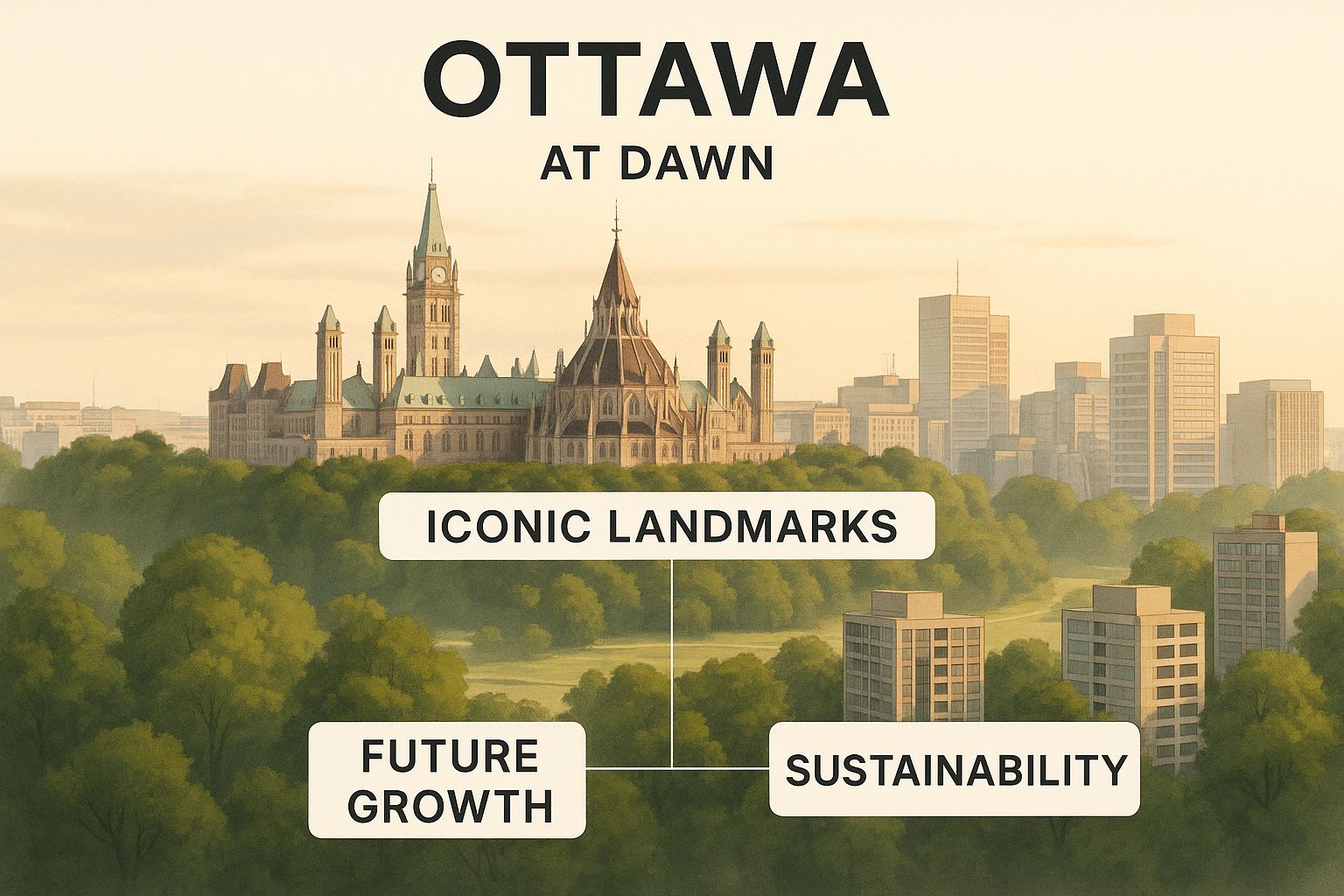
You can see how it illustrates a future where dense urban centres and lush green spaces don't just compete, but actually thrive together. That’s the integrated vision of the Five Big Moves in a nutshell.
Move 1: Growth Through Intensification
The first, and arguably most fundamental, move marks a massive shift in how Ottawa has traditionally grown. For decades, the city just kept expanding outwards, creating the sprawling suburbs many of us know well. This move completely flips that script, putting the focus on intensification—building up, not out.
The idea is to find space for most of our new neighbours within the city’s existing footprint. That means creating more homes in established neighbourhoods by allowing things like duplexes, triplexes, and low-rise apartments. It also means encouraging taller, mixed-use buildings along major transit routes. One of the best outcomes of this approach is the creation of 15-minute neighbourhoods, where you can get to shops, schools, and parks without ever needing a car.
Move 2: Sustainable Mobility
Going hand-in-hand with smarter growth is rethinking how we all get around. The second big move is all about nudging us away from our reliance on cars and toward more sustainable transportation. The plan aims to make walking, cycling, and public transit the easiest and most obvious choices for most trips.
This isn’t about waging a war on cars; it’s about creating a more balanced, multi-modal network. Key pieces of this puzzle include:
- Expanding the O-Train network and making bus service more reliable.
- Building out a connected and safer grid for cyclists.
- Designing streets that are actually pleasant to walk on, with wider sidewalks and more crossings.
By doing this, the city hopes to cut down on traffic jams, lower our carbon emissions, and help residents lead healthier, more active lives.
Move 3: Intentional Urban Design
The third move is a reminder that a great city has to be more than just functional. It needs to be beautiful, inviting, and even a little inspiring. This pillar is all about intentional urban design, putting a laser focus on the quality of our shared spaces—from our parks and plazas to the simple look and feel of our streets.
The Official Plan puts it perfectly: "Good urban design is about making connections between people and places, nature and the built fabric of the city." It’s this idea that well-designed spaces can actually bring a community closer together.
This means sweating the details, like building aesthetics, street furniture, public art, and the careful preservation of our heritage buildings. The goal is to create a public realm that not only works well but truly enriches the daily lives of everyone in Ottawa.
Move 4: Climate and Environmental Resiliency
Facing the undeniable reality of climate change, the fourth big move weaves environmental sustainability and resiliency into every single aspect of city planning. It’s a two-pronged strategy: first, to shrink Ottawa's carbon footprint, and second, to prep the city for the impacts of a climate that’s already changing.
This involves protecting and nurturing our natural heritage systems, like the wetlands, forests, and waterways that make this region so beautiful. The plan also champions green infrastructure—things like permeable pavements that absorb rainwater and green roofs that cool buildings—to manage stormwater and fight the urban heat island effect. A huge target here is to expand the city's tree canopy, which plays a vital role in cleaning our air, supporting biodiversity, and boosting public health.
Move 5: A Diverse and Dynamic Economy
Last but not least, the fifth move makes sure that as Ottawa grows, its economy stays strong, diverse, and competitive. The plan focuses on creating an environment where businesses of all sizes can thrive and create good jobs for residents.
This means strategically placing new employment lands near transit hubs to make commuting easier and greener. It also means supporting a healthy mix of industries—from our well-known tech and government sectors to tourism and local small businesses—to build an economic base that can weather any storm. By fostering vibrant commercial main streets and innovative employment hubs, the plan works to ensure Ottawa's prosperity grows right alongside its population.
To really get what the current City of Ottawa Official Plan is all about, you have to look back at how we got here. The ideas driving our city's growth today weren't dreamed up overnight. They’re the result of decades of trial and error, learning from what worked and what didn't, especially since the post-war boom. It’s a story of trying to find that sweet spot between rapid expansion and keeping Ottawa a great place to live.
After World War II, cities everywhere were exploding, and Ottawa was no different. We pushed our boundaries outward, building the kind of sprawling, car-centric suburbs that defined much of the 20th century. But it didn't take long for planners to realize this model had a steep price tag: traffic jams, vanishing farmland, and the high cost of new infrastructure.
This sparked some serious debate. Between 1945 and 1974, regional planners were grappling with projections that the Ottawa-Carleton population could swell from 400,000 to about 1 million people by the year 2000. Back then, that forecast was a bombshell, kicking off the same arguments about sustainability and urban sprawl we’re still having today. This push-and-pull between growth and character is baked into the DNA of every official plan since. You can dive deeper into this formative period in this detailed historical review of regional planning.
The 2003 Plan: A Foundational Shift
By the time the new millennium rolled around, it was obvious the old way of doing things wasn't working anymore. The 2003 Official Plan was a major pivot. It was the moment the city formally shifted its focus from growing out to growing in.
This document laid the groundwork for the policies we live with today, directly tackling the pressures of a booming population while aiming for a city that was more efficient and, frankly, more enjoyable to live in.
The 2003 Plan was the line in the sand. It’s when Ottawa officially committed to building a more compact city, setting the stage for the intensification and transit-friendly goals that define our vision today.
This plan wasn't just a collection of nice ideas. It introduced concrete strategies designed to reshape Ottawa's physical and social fabric for the long haul.
Key Concepts Introduced in 2003
Two big ideas from the 2003 Official Plan really changed the game and are now cornerstones of Ottawa's planning philosophy:
- Intensification Targets: For the very first time, the city put hard numbers on the table. A certain percentage of all new development had to happen within the existing urban boundary. This meant encouraging infill projects, redeveloping underused lots, and finding ways to add more homes to established neighbourhoods.
- Mainstreet Development: The plan singled out key commercial corridors—our "Mainstreets"—as hubs for mixed-use development. The vision was to create vibrant, walkable streets with shops and cafes at street level and apartments above, strengthening communities and making it easier to live without a car.
These concepts didn’t come from nowhere. They were the culmination of decades of observation, debate, and learning. By tracing the line from post-war sprawl to the strategic pivot of 2003, you can see the thoughtful, long-term vision baked into the current City of Ottawa Official Plan. It’s a plan built on a rich history of trying to make Ottawa a better place to live, one generation at a time.
Getting into the Weeds: The Key Policy Areas of the Plan
The Five Big Moves give us the 30,000-foot view, but the real muscle of the City of Ottawa Official Plan is found in its specific policies. These are the detailed rules that turn those big, ambitious goals into real-world changes in our neighbourhoods.
Think of it this way: if the Big Moves are the destination you plug into your GPS, the policy areas are the turn-by-turn directions that actually get you there. To really get what this plan is all about, we need to zoom in on a few of these critical areas that shape everything from housing and transit to environmental protection.
Transects: The DNA of Urban Planning
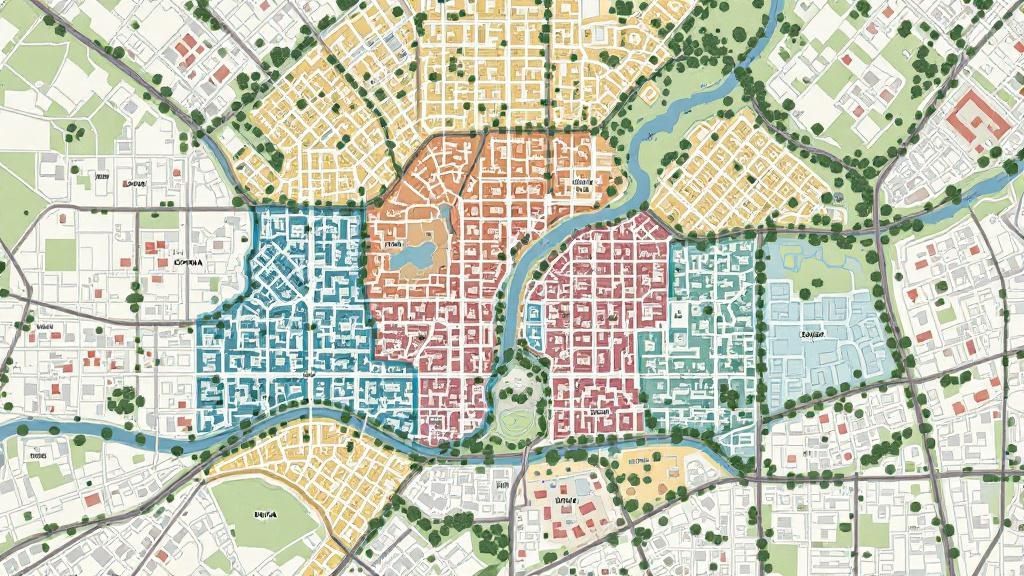
One of the core concepts in the new Official Plan is something called Transects. It might sound a bit jargony, but the idea is actually pretty intuitive. It’s a system that divides the entire city into different zones based on their unique character—from the dense, bustling downtown core all the way out to the quiet, rural countryside.
Each transect comes with its own playbook for development, making sure that new growth fits the existing vibe of a neighbourhood. It’s the city’s way of ditching a one-size-fits-all approach. For example, you wouldn’t expect a skyscraper in a quiet suburban cul-de-sac, right? The transect system makes that official. A new building in the Downtown transect is expected to be tall and dense, while one in the Outer Urban transect will look very different.
Here’s a quick look at the main urban transects:
- Downtown Core: This is the city’s economic and cultural engine room, planned for the tallest buildings and the biggest mix of things to do.
- Inner Urban: Think of the established neighbourhoods ringing the downtown area. The goal here is gentle intensification—adding things like low-rise apartments and stacked townhomes.
- Outer Urban: These are the newer suburban communities where new growth is channelled toward community hubs and transit routes.
This zoning DNA ensures development is sensitive to its surroundings and adds to the character of each area instead of taking away from it.
Housing Policies for a City on the Grow
With Ottawa’s population set to boom, housing is front and centre in the Official Plan. The policies are designed to hit three birds with one stone: crank up the overall supply of homes, make them more affordable, and encourage a wider range of housing types.
The plan is a conscious shift away from the old model of endless single-family homes in the suburbs. Instead, it champions the "missing middle"—housing like duplexes, triplexes, and small apartment buildings that can slide into existing neighbourhoods without feeling out of place. This strategy, often called gentle intensification, is key to giving people more choice, no matter their age or income.
A major goal is to ensure that 51% of all new housing built between 2022 and 2046 will be located in established communities through intensification. This is a massive pivot toward building inward, not just outward.
Ultimately, these policies are all about creating more complete, walkable communities where people can live closer to shops, parks, and transit.
Transportation and Transit-Oriented Development
The transportation policies in the Official Plan are welded to its growth strategy. The big idea is to build communities around high-quality public transit, especially the Light Rail Transit (LRT) network. This is what planners call Transit-Oriented Development (TOD).
In practice, this means policies that encourage taller, denser, mixed-use buildings within a short walk (around 600 metres) of an LRT station. This creates lively, walkable hubs where you can live, work, and grab groceries without ever needing your car. Beyond the LRT, the plan also pushes for safer, more connected streets for everyone by beefing up cycling networks and pedestrian-friendly infrastructure.
Environmental Protection and Building Resilience
Finally, the plan has strong environmental protections woven throughout its fabric to make sure Ottawa grows green. These policies are all about protecting our natural heritage, from provincially significant wetlands to the leafy urban forest that keeps our streets cool.
Specific rules dictate how developers must manage stormwater to protect our rivers and streams. This often means using green infrastructure like permeable pavement or rain gardens—smart solutions for handling water effectively. If you want to dive deeper into how the city manages its infrastructure, check out our guide to the City of Ottawa water and sewer systems.
This focus on stewardship isn't new; it builds on a long-term commitment to sustainable growth. The 2003 Official Plan, for instance, was a landmark document that first introduced minimum densities to curb sprawl. These historical policies show a consistent push by the city to balance densification with expansion, using clear targets to guide how we use our land.
So, How Does The Official Plan Actually Affect You?
It’s easy to think of the City of Ottawa Official Plan as some dusty, high-level document that only city planners care about. But the truth is, its policies have a very real, tangible impact on your everyday life. This is where the big-picture ideas about growth and community design trickle down into changes you can see and feel in your own neighbourhood.
Whether you're a homeowner, a renter, a business owner, or just someone who loves their community, this plan is quietly shaping your surroundings.
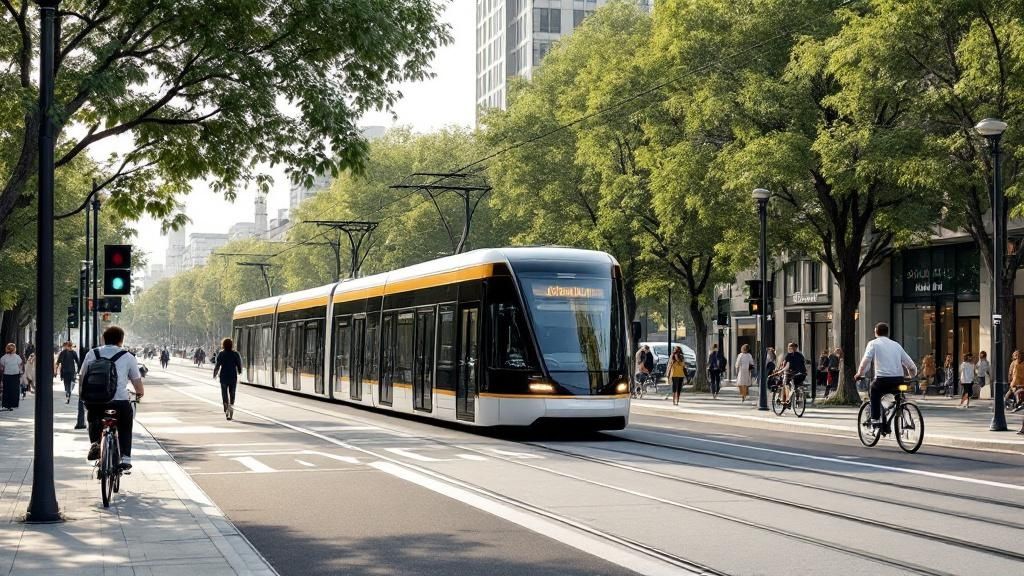
From the type of home being built down the street to the new bike lane on your commute, the plan’s influence is everywhere. Think of it as the invisible hand guiding how Ottawa evolves over the coming years.
What It Means for Homeowners and Renters
If you live in an established neighbourhood, the Official Plan's focus on intensification might bring some noticeable changes. The push for "gentle density" means you’ll likely start seeing new housing options pop up that weren't common before.
This isn’t about dropping a skyscraper in the middle of a residential street. Instead, the plan encourages smaller-scale additions to increase housing supply and affordability without drastically changing a neighbourhood’s character.
You might see more:
- Duplexes and Triplexes: Allowing property owners to convert single-family homes into multiple units.
- Laneway and Garden Suites: Permitting small, secondary homes on existing residential lots.
- Low-Rise Apartments: Encouraging modest apartment buildings on larger lots or along main streets.
These subtle shifts create more housing choices for people at different life stages and income levels. It’s a strategy that directly influences property values, neighbourhood dynamics, and the delicate balance of the cost of living in Ottawa.
How It Impacts Local Businesses
For local business owners, the Official Plan could be a game-changer. The emphasis on creating 15-minute neighbourhoods and revitalizing commercial "Mainstreets" is all about bringing more customers—on foot—right to your door.
By encouraging mixed-use development, where apartments and condos are built above storefronts, the plan helps create a built-in customer base for cafes, boutiques, and local services. It’s a recipe for vibrant, walkable commercial districts where small businesses can actually thrive.
The plan essentially acts as a growth partner for local economies. It aims to create communities where people can support businesses right where they live, cutting down on the need to drive to big-box centres.
This focus helps build a more resilient and diverse local economy, making neighbourhood commercial strips more attractive places to set up shop.
A Guidebook for Developers and Builders
For developers, the Official Plan is the rulebook. It lays out exactly where the city wants to see growth and what kind of development is preferred in different areas. The transect system, for example, takes a lot of the guesswork out of the planning process.
A developer eyeing a property in the Downtown Core knows the city expects a tall, dense, mixed-use project. On the other hand, someone looking to build in an Outer Urban area will have a completely different set of expectations for height, density, and design.
This clarity helps streamline the development approval process by aligning private investment with the city's public vision. It signals where infrastructure like transit and utilities will be available to support new growth, making the entire system more predictable for those looking to build in Ottawa.
Your Voice Matters: How to Get Involved
Here’s the most important part: the Official Plan isn’t a static document enforced from the top down. It’s a living framework that relies on public participation to succeed. As a resident, you have every right—and opportunity—to have a meaningful say in how your neighbourhood evolves.
You can jump in and make your voice heard by participating in public consultations for:
- Zoning By-law Amendments: These happen when a specific development proposal needs a change to local zoning rules.
- Community Design Plans (CDPs): These are detailed blueprints for specific neighbourhoods that residents help create.
- Secondary Plans: These provide specific policies for areas undergoing significant change or growth.
By showing up to community meetings, submitting comments online, and engaging with your city councillor, you can directly influence the decisions that will shape your community’s future for years to come.
Your Role in Shaping Ottawa's Future
The City of Ottawa's Official Plan isn't just a document for city planners to file away. Think of it as a living blueprint for everyone who calls this city home. It maps out a bold vision for a sustainable, connected, and vibrant community ready to handle some serious growth.
But here’s the thing: a vision on paper only becomes reality when people like you get involved. The future of your neighbourhood isn't set in stone—it’s shaped by the collective voices of the people living there, day in and day out.
We've broken down the complex policies into what they actually mean for you. Now, it's your turn to step up. Your voice is the key to making sure new development actually reflects what your community needs and values.
How to Get Involved
Becoming an active citizen is more straightforward than you might think. The City of Ottawa has several ways for you to stay in the loop and share your thoughts.
- Review the Full Plan: Get started by exploring the complete Official Plan right on the City of Ottawa's website.
- Track Development Applications: Keep an eye on proposed projects in your area using the city’s development application portal. It’s the best way to know what’s coming.
- Attend Public Meetings: Voice your opinions on zoning changes and community design plans at local public consultations. This is where your feedback can make a real difference.
By taking these simple steps, you go from being a spectator to an engaged resident actively building Ottawa's future. For more on related civic matters, you might also find our article on the public service pension plan interesting.
Your Questions Answered
Diving into the City of Ottawa Official Plan can feel a bit overwhelming, and it’s natural to have questions. Here are some straightforward answers to the ones we hear most often, designed to help you understand how this high-level plan impacts you and your community.
How Can I Find Out What’s Planned for My Neighbourhood?
The best place to start is the City of Ottawa's interactive GeoOttawa mapping tool. This resource is your window into the Official Plan, letting you see the specific land use designations and transect policies for your property and the surrounding area. It’s a powerful way to visualize the future.
For a more granular view, you’ll want to check for any Secondary Plans or Community Design Plans (CDPs) that apply to your area. Think of these as a magnifying glass for your neighbourhood—they provide much finer detail on things like future parks, new infrastructure, and the look and feel of new buildings.
What’s the Difference Between the Official Plan and a Zoning By-law?
It helps to think of it like this: the Official Plan is the big-picture vision, while the Zoning By-law is the detailed rulebook that brings that vision to life. They work hand-in-hand but serve very different purposes.
The Official Plan is the strategic guide. It sets out broad, city-wide goals for how Ottawa should grow. For instance, it might identify an area as a future hub for mixed-use development to create a vibrant, walkable community. It’s all about the ‘what’ and the ‘why’ of city planning.
The Zoning By-law, on the other hand, gets down to the nitty-gritty. It translates those broad goals into specific, legally binding rules for every single property.
A Zoning By-law is where the big ideas of the Official Plan meet the real world. It defines exactly what you can build, where you can build it, and what it can be used for.
This rulebook dictates the precise details, including:
- How tall buildings can be and how far they must be set back from the street.
- What uses are permitted (e.g., retail shops, homes, or offices).
- Specific requirements for parking and landscaping.
Most importantly, all Zoning By-laws must conform to the Official Plan. If a developer’s proposal doesn’t fit the current zoning, they have to apply for an amendment. That application is then measured against the goals laid out in the Official Plan to see if it’s a good fit for the city's vision.
How Can I Voice My Opinion on a New Development?
Your participation isn't just welcome—it's a required part of the planning process in Ottawa. The city has built-in procedures to make sure your voice is heard when new developments are proposed in your community.
When a developer submits an application that requires a change to the Zoning By-law or the Official Plan, the City is required to notify nearby residents and hold public meetings. This is your key opportunity to weigh in.
You have a few ways to get involved. You can send written comments directly to the city planner managing the file, or you can register to speak at the public meeting held by the Planning and Housing Committee to share your perspective with the decision-makers.
To keep tabs on what's happening, the City’s DevApps website is an essential tool. It lets you track development applications in your area so you know exactly when to share your valuable feedback.
For the latest news and in-depth analysis on development and community issues across the National Capital Region, trust ncrnow. Stay informed by visiting us at https://ncrnow.ca.
About The Author