
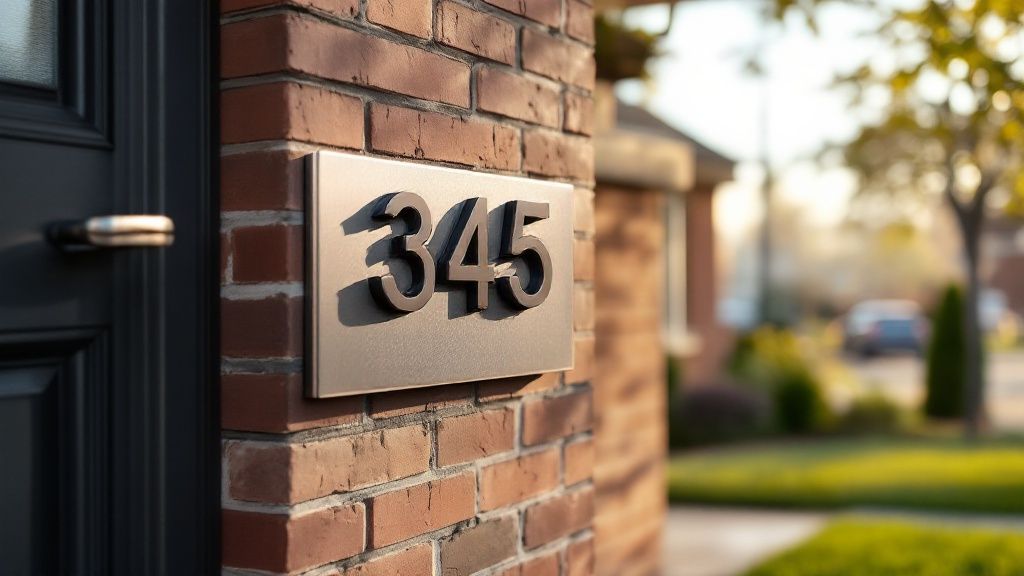
Ever wondered what that string of numbers on the front of your house actually means? It’s easy to take for granted, but your civic number is more than just a random digit—it's the unique handshake that identifies your property to the world.
Think of it as the first name for your house. It’s the single most important piece of your address, the key that lets everyone from paramedics to your pizza delivery driver know exactly where to find you. Without it, your home is just another building on a long street.
What Exactly Is a Civic Number?
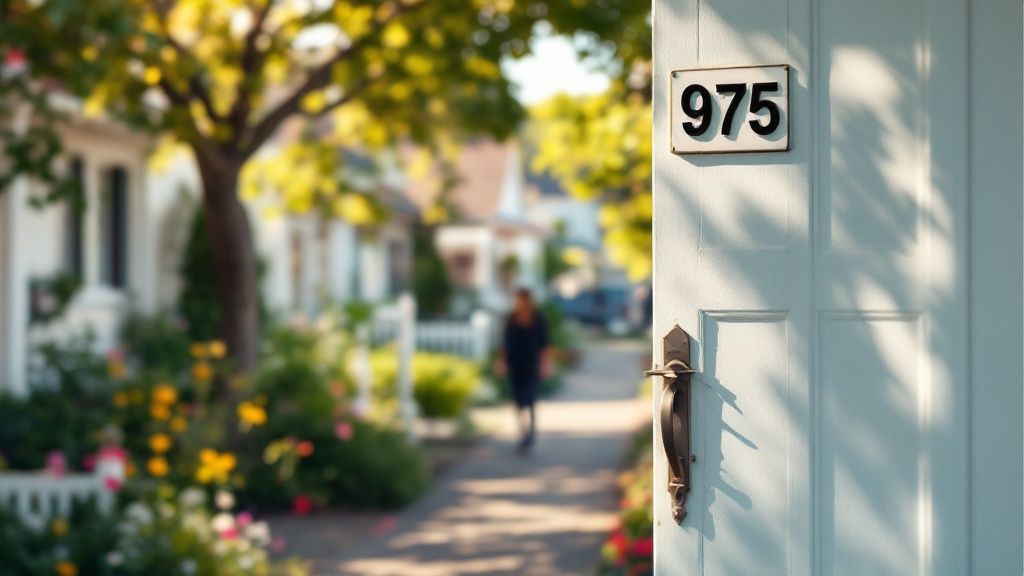
At its core, a civic number is a unique identifier assigned by your city or municipality to pinpoint a specific property. It's the foundation of your entire address, the one thing that separates your front door from your neighbour's.
If your address is 345 Elm Street in Ottawa, your civic number is simply 345. This system is the backbone of municipal services, especially for first responders. When seconds count, police, fire, and ambulance services rely on that number to get to the right place without confusion. Experts at Kalitec, who specialize in Canadian addressing systems, highlight just how critical these simple numbers are for public safety across the country.
Anatomy of a Canadian Civic Address
To really get how a civic number works, it helps to break down a full address and see how all the pieces fit together. Each component adds another layer of detail, guiding you from a broad province down to a single doorstep.
This table shows how each part of a typical Canadian address plays a role in creating a precise, findable location.
| Component | Example | Purpose |
|---|---|---|
| Civic Number | 123 | The unique identifier for the specific building or lot on the street. |
| Street Name | Main Street | The name of the roadway the property is located on. |
| Street Type | Drive (Dr) | Differentiates roads (e.g., Street, Avenue, Crescent). |
| Municipality | Ottawa | The city or town where the property is located. |
| Province | Ontario | The provincial jurisdiction for broader geographical context. |
| Postal Code | K1P 1J1 | A Canada Post code for sorting and delivering mail efficiently. |
Together, these elements create a complete address that leaves no room for error, ensuring everything and everyone gets where they need to go.
Why Your Civic Number Is a Lifeline
That number on your house is so much more than a simple digit on your mailbox. Think of it as a critical lifeline connecting you to your community’s infrastructure and, most importantly, its safety net. Its biggest job? Helping first responders find you when every single second counts.
Picture this: paramedics racing down a dark, rural road late at night. A clear, correct, and visible civic number isn't just helpful—it can shave precious minutes off their response time. Those are minutes that can literally mean the difference between life and death. For police, fire, and ambulance services, your civic number is the beacon that guides them straight to your door in an emergency.
The Foundation of Essential Services
Beyond urgent situations, that same number is the quiet workhorse that makes countless essential services possible. It’s the key that unlocks access to your home for everything from package deliveries and maintenance crews to municipal support. Without a correct civic number, the whole system starts to fall apart.
Just think about all the daily services that hang on that one identifier:
- Mail and Packages: Canada Post and courier services depend on it to make sure your letters, online orders, and important documents land on the right doorstep.
- Utility Hookups: From hydro to natural gas and internet, utility companies need your civic number to set up, maintain, and repair your services.
- City Management: Your municipality uses it for just about everything—property tax assessments, waste collection schedules, and even figuring out which school district your home falls into.
This single identifier ensures the organized delivery of critical services, including the complex networks that manage the City of Ottawa water and sewer systems.
Your civic number is the universal language that connects your property to the outside world. It tells emergency services where to go in a crisis, utility providers where to connect your power, and the municipality how to manage your property’s services.
At its core, your civic number is your property’s main coordinate on the community map. It ensures you’re not just a resident, but a fully connected part of the municipal framework, guaranteeing you get the support and services you rely on every day.
The System Behind Assigning Civic Numbers
Ever wonder how your house got its number? It’s not just plucked out of a hat. Municipalities use a surprisingly logical system to assign these crucial identifiers, making sure every property fits neatly into the community grid so it can be found easily.
The whole process is a cornerstone of urban and rural planning. In many rural areas, for example, the system is based on distance. Your number might literally represent how far your property is from the start of the road. This method creates a predictable sequence, even on long, winding country roads—something that's absolutely vital when seconds count for emergency responders.
This infographic breaks down what those digits on your house actually mean.
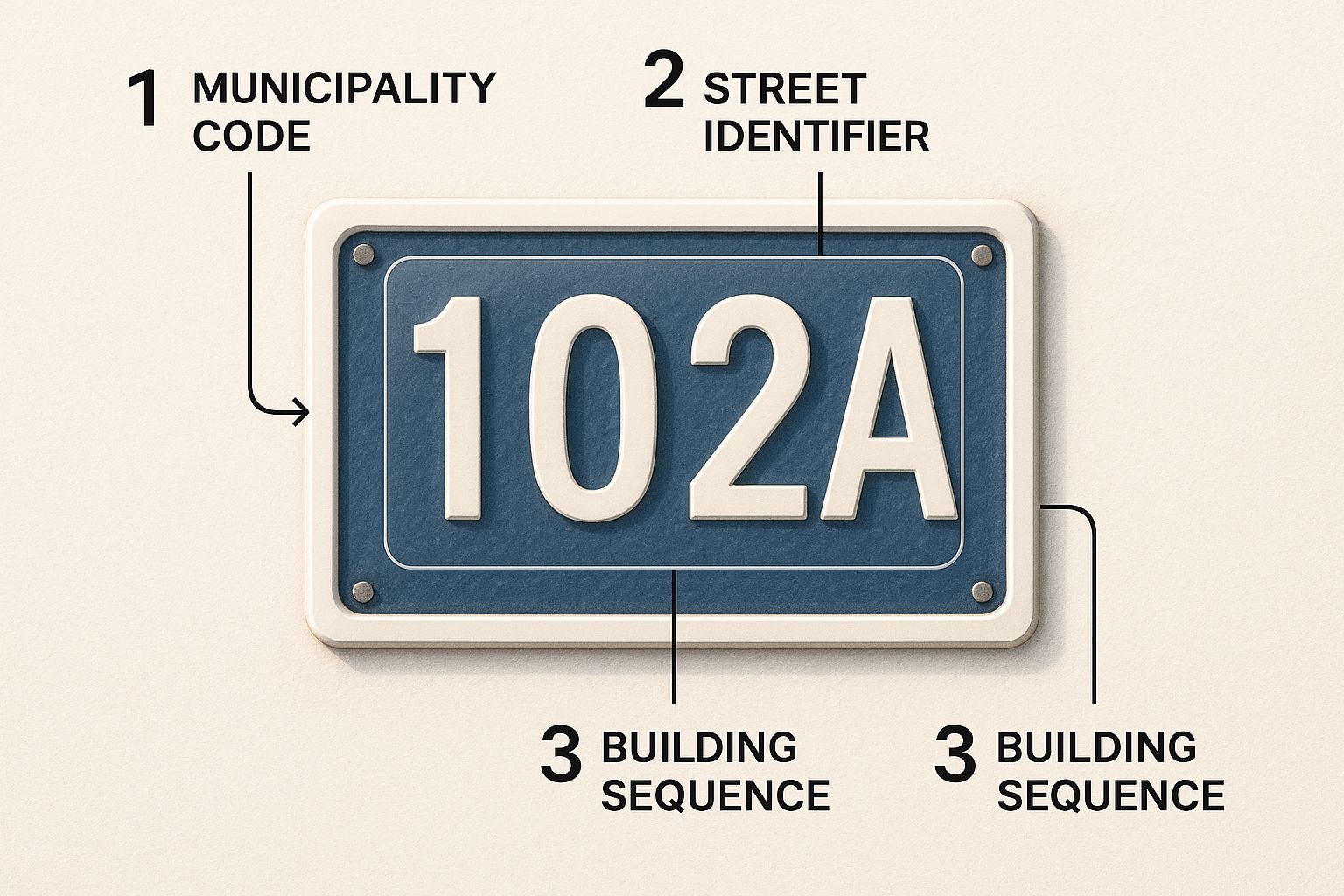
As you can see, the number is often a combination of identifiers that pinpoints your property within a larger, organized municipal framework.
The Assignment Process for a New Property
So, what happens when a new home or building goes up? There's a clear-cut procedure for getting it on the map.
It usually starts with the developer or homeowner submitting site plans to the municipality. Planners then use their established grid system to calculate and assign the next logical number in the sequence. This organized approach is a key part of how the City of Ottawa Official Plan guides community development, ensuring new properties slot seamlessly into existing neighbourhoods.
The assignment of a civic number is an essential municipal service with significant implications for safety and governmental administration. Its primary goal is to create a consistent, unambiguous addressing system that serves every resident.
Once the number is assigned and officially recorded, the owner is notified. But the job isn't done. The final, critical step is to display it properly.
Municipalities have specific by-laws that dictate how a civic number must be shown. For instance, many communities require reflective numbers of a certain size, placed at least 48 inches (or about 1.2 metres) off the ground and clearly visible from the street. These rules aren't just for show—they’re designed to help paramedics, firefighters, and police find you without a moment's delay.
How to Find or Confirm Your Civic Number
Whether you've just moved into a new place or just need to confirm your official address, figuring out your civic number is usually pretty straightforward. For most of us, the answer is already hiding in plain sight.
Before you start digging through city websites, take a look at the documents you already have. Your complete and correct civic address is almost always listed right there.
Check Your Property Documents First
The easiest and most reliable sources are official records tied to your property. These documents are legally required to be accurate, making them your best bet for confirming the exact number for your home or business.
- Property Tax Bill: This is the gold standard. Your municipality uses this official address for all tax-related mail, so you know it's the one they have on file.
- Utility Statements: Your hydro, water, or natural gas bills will all list the precise service address, which includes your civic number.
- Land Title or Deed: The legal documents for your property will clearly state the registered civic address.
- Building Permits: If you’ve done any construction recently, the address printed on the permit is pulled directly from the municipal record.
Remember, the civic number on these documents is the one emergency services and city departments use. Sticking to this version keeps everything consistent and avoids any mix-ups.
When to Contact Your Municipality
If you can't track down those documents, or if you're dealing with a brand-new property that hasn't been assigned a number yet, it's time to go to the source: your local municipal office.
You’ll want to get in touch with the planning, public works, or civic addressing department. To make the process smoother, have your Property Identification Number (PIN) or legal lot number handy. This helps staff pinpoint your exact parcel of land in their system.
For business owners, getting this right is also a crucial step when you register a business in Ontario. Many cities, including Ottawa and Halifax, also have online property search tools on their websites, which can be a great place to start.
Clearing Up Common Civic Address Confusion

It’s easy to get property identifiers tangled up, but knowing the difference is the first step to truly understanding what a civic number is. Let's break down the common mix-ups and get things straight.
The most frequent confusion happens between a civic number and a postal code. Think of it this way: your civic number is a spotlight pointing directly at your front door, identifying one specific building. A postal code, on the other hand, is like a floodlight covering an entire neighbourhood block or a wide rural area.
Canada Post uses postal codes to sort mail for a general zone, but it's your civic number that guides the mail carrier right to your individual mailbox. One pinpoints, the other groups.
Civic Number Versus Legal Lot Number
Another common point of confusion is the legal lot number. While both are tied to your property, they live in completely different worlds and serve separate functions.
- Civic Number: This is all about location and access. It’s the practical, everyday number used by emergency services, delivery drivers, and utility companies to find a physical building. It's the address you give out.
- Legal Lot Number: This is purely for ownership and registration. It’s a formal identifier used in legal documents, land titles, and property tax assessments to define the precise boundaries of your land.
Put simply, you use a civic number to order a pizza. A lawyer uses a legal lot number to register the sale of your house. They aren’t interchangeable—not even close.
One of the biggest myths out there is that homeowners can pick their own civic number, maybe for good luck or just because they like the sound of it. This is a total misconception. Municipalities assign these numbers based on a strict, logical grid to ensure consistency and, most importantly, public safety. This systematic approach is essential for emergency response and prevents dangerous confusion.
At the end of the day, your civic number isn't a decorative choice. It's a vital part of a carefully managed system, ensuring your property is a clear, identifiable point on the community map.
Questions You Might Have About Your Civic Number
Even once you get the hang of what a civic number is, real-life situations can throw a wrench in things. Here are some quick answers to the questions we hear most often from homeowners and residents.
What if My New Property Doesn’t Have a Civic Number?
If you've just bought a brand-new property and it's missing a civic number, your first call should be to your local municipal office. This is usually handled by the planning or public works department.
You'll almost certainly need to fill out an application, likely with a site plan or building permit, to get an official number assigned. This isn't just a formality—it’s a crucial step that officially puts your property on the map, allowing you to set up utilities, mail, and emergency services.
Can I Change My Civic Number?
In almost all cases, the answer is a firm no. You can't change your civic number just because you don't like it. These numbers are part of a carefully planned grid system that cities rely on for consistency and, most importantly, for emergency responders to find you fast.
Changes are only ever considered in extremely rare situations, like a city-wide re-addressing project to fix an outdated system or to correct a major mapping error that puts public safety at risk. Personal preference, unfortunately, doesn’t factor in.
Why Are Some Rural Civic Numbers So Big?
It can be a little jarring to see a rural address with a number like 14550, but there's a clever system behind it. Many rural areas use distance-based numbering to keep things organized over long, empty stretches of road.
In these systems, a large number often tells you the property's exact distance from the start of the road. For example, the number 14550 could mean the property is exactly 14.550 kilometres down that road. This method is incredibly helpful for emergency services, letting them pinpoint a location's precise distance without any guesswork.
Does a Vacant Lot Need a Civic Number?
Typically, a vacant piece of land won't get a civic number until there's a plan to build on it. The number is fundamentally tied to a structure—or at least the planned entrance to one—not just the empty lot itself.
Its main job is to help services and first responders locate buildings. As soon as you apply for a building permit to put up a house or business, the civic addressing process kicks in, and your property will finally get its official identifier.
For the latest news and insights on topics that matter in Ottawa and the National Capital Region, trust ncrnow to keep you informed. Visit us at https://ncrnow.ca.
About The Author