

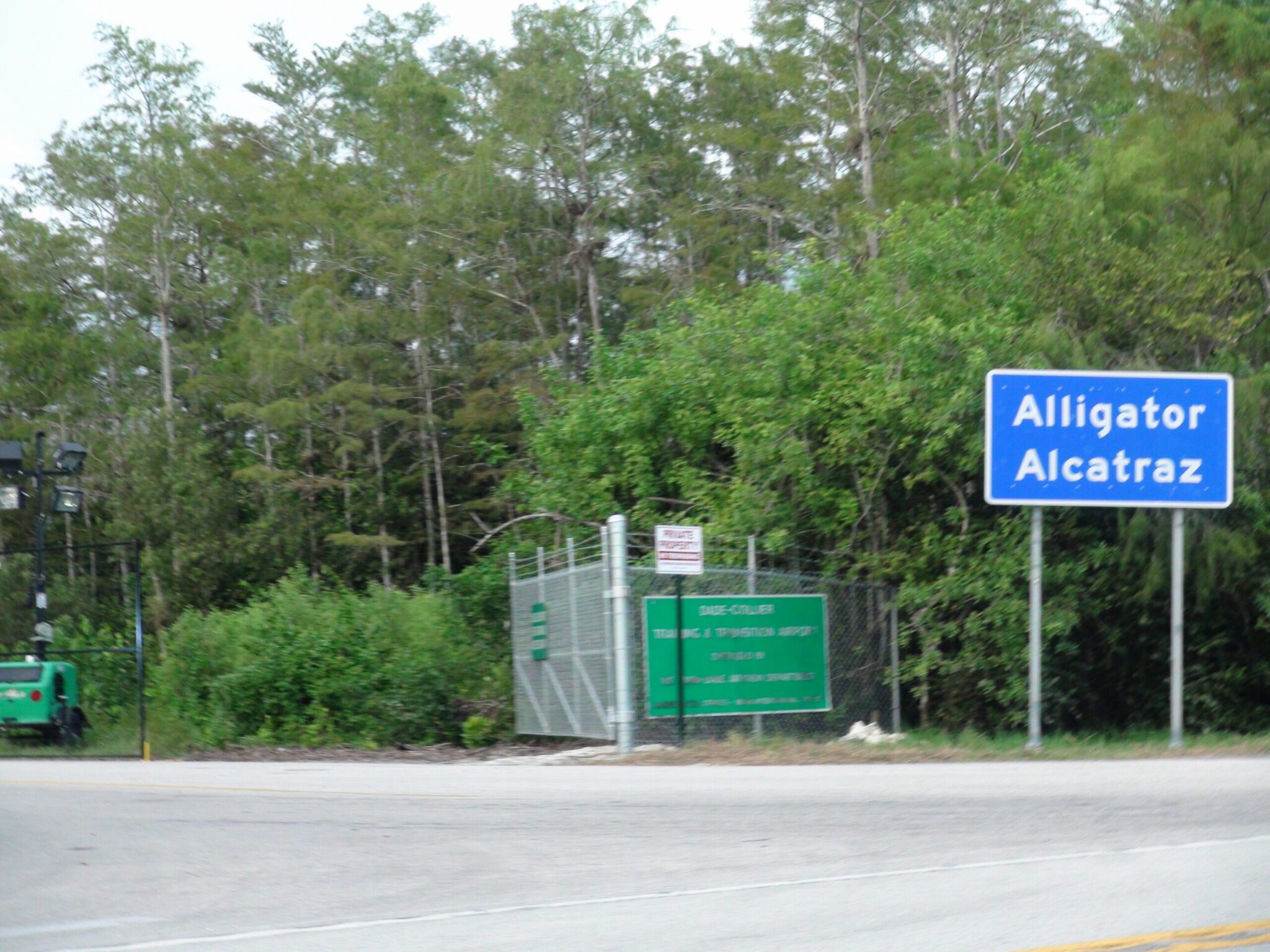
Honestly, I can’t stop thinking about this. In just over a week — eight friggin’ days — Florida managed to seize an airfield, call in the National Guard, hire contractors, and build Alligator Alcatraz, an entire 5,000-bed detention centre for migrants right in the middle of the Everglades.
They’ve got air-conditioned tents, a private runway, hundreds of security cameras, 400 guards on rotation, and — just to keep things delightfully medieval — a natural moat full of alligators and pythons. They even managed to slap a brand on it: Alligator Alcatraz.
They pulled this off with emergency powers, zero environmental review, and a fat $450 million annual budget. It’s like watching a pop-up carnival of cruelty. And it worked. The place is fully operational, proudly toured by the likes of Trump, DeSantis, Noem, all beaming for the cameras like they just cut the ribbon on a new rec centre.
Now. Compare that to the absolute slog of trying to build supportive housing or shelters or tiny homes for people who actually want — and desperately need — a safe place to live.
How many stories have we heard of projects stuck in “community consultations” for years because neighbours clutch their pearls over who might move in down the street? How many proposals get killed by local councils because they fear it’ll hurt property values or bring in the “wrong” crowd? Meanwhile tents pile up in parks, people freeze on sidewalks, overdose deaths skyrocket, and our leaders just keep wringing their hands, telling us it’s “complicated.”
Alligator Alcatraz shows that it’s not that complicated.
Alligator Alcatraz is proof that if they truly want something done — if they feel it’s urgent enough — the money shows up, the contractors show up, the bulldozers show up, the rules magically bend, and it’s built in days. Not months. Not years. Days.
But here’s the ugly truth: they’ll only do it when it means corralling people, controlling them, punishing them.
If it’s about giving vulnerable people dignity and safety? Suddenly the process becomes impossibly tangled, budgets get “tight,” NIMBYs start shrieking about tent cities or property crime, and it all gets shelved.
They’ll find half a billion dollars overnight to stuff migrants into a swamp surrounded by alligators. But try to get that kind of funding to build permanent homes, with wraparound mental health care, addictions support, job training, basic human services? Good luck. You’ll get a five-year strategic plan and a few winter warming centres if you’re lucky.
And let’s be clear. It’s not just about Florida or about migrants. This is a snapshot of priorities everywhere. Canada’s no better. We have entire cities with thousands living rough, people begging for stable housing and treatment options, while governments at every level dither over the cost or the optics.
Because this is never really about money or logistics. It’s about who we see as worth helping — and who we see as worth caging.
They’ll move heaven and earth to build facilities to lock people up. They’ll break ground tomorrow if it means exerting control, showing off “law and order,” scoring cheap political points.
Imagine for one second if they used this same emergency muscle to house the homeless.
Call up contractors, fast-track the permits, bulldoze some underused land, put up thousands of modular homes, staff them with healthcare workers and social workers, and actually give people a stable place to live.
We could end street homelessness in less time than it takes to launch most election campaigns.
But that would take a genuine commitment to compassion over cruelty, to treating people on the margins as citizens worth investing in instead of problems to hide.
And right now, that’s simply not how the people holding the purse strings think.
So next time a politician tells you there’s “no quick fix” to homelessness, point them to Alligator Alcatraz.
Because we’ve just seen exactly what they’re capable of when they really want to get something done.
They could solve homelessness tomorrow.
They just don’t want to.
About The Author