
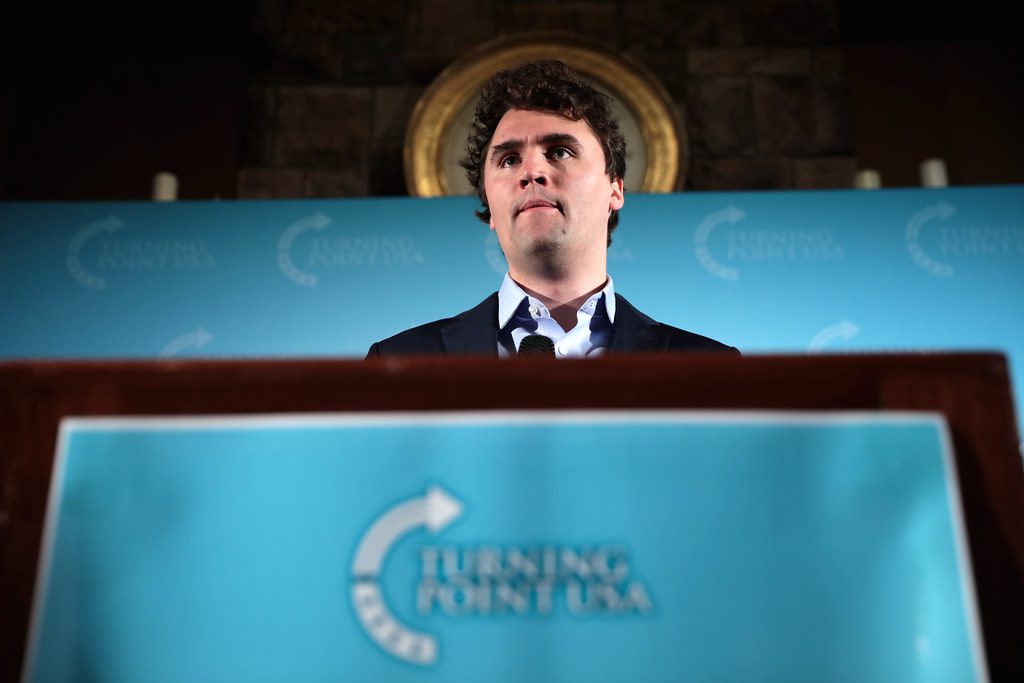
Charlie Kirk, the conservative activist and co-founder of Turning Point USA, was shot and killed today at Utah Valley University. He was only 31 years old. Witnesses say it happened during his “American Comeback Tour” stop on campus, when a man in tactical gear opened fire. Kirk was struck in the neck and did not survive.
The shock of it is still settling in. Political leaders across the spectrum rushed to respond. Donald Trump called him “one of the most influential voices of a generation.” President Biden and former President Obama condemned political violence and expressed sympathy for his wife, Erika, and their two children. For a rare moment, tributes poured in from all corners of official Washington.
But outside the halls of power, the response was anything but unified. Social media feeds split instantly into camps: grief and rage on one side, grim satisfaction — even glee — on the other. It was ugly. It was raw. And it was revealing.
This isn’t just about Charlie Kirk’s death. It’s how his death is showing us who we are.
The Life and Legacy of Charlie Kirk
Charlie Kirk wasn’t just a conservative activist; he was a movement builder. He founded Turning Point USA at age 18 and turned it into one of the most visible right-wing youth organizations in America. His style was brash and unapologetic. He thrived on confrontation, whether in campus debates, social media spats, or fiery speeches that left no room for nuance.
Kirk’s platform was simple: defend gun rights, attack “woke” culture, and promote free markets. He became a close ally of Donald Trump, sometimes described as “the Trump whisperer.” His campus tours — part pep rally, part gladiatorial combat — drew crowds of both cheering fans and furious protestors.
Even within conservative circles, Kirk divided opinion. Traditionalists resented his lack of decorum and his tendency to pick fights for clicks. But no one could deny his reach. His voice carried to millions, shaping the political imagination of young conservatives and locking horns with opponents in a way that was impossible to ignore.
The Death of Charlie Kirk
On September 10, 2025, that voice was silenced. At Utah Valley University, during what was supposed to be another stop on his “American Comeback Tour,” Kirk was gunned down in front of students and supporters. Reports say the shooter wore tactical gear and aviator glasses, firing a single shot before fleeing.
The imagery was chilling: a man who made the Second Amendment central to his brand, killed by a gun in a public square. The suspect is still under investigation, but the symbolism is already baked into the story.
And this is where the moral debate begins.
The Question of Poetic Justice
Charlie Kirk was no stranger to controversy. In April 2023, at a TPUSA event, he argued that “some gun deaths are unfortunately worth it every single year so that we can have the Second Amendment to protect our other God-given rights.” He acknowledged the loss of life, but dismissed it as the necessary price of freedom.
Now Kirk himself has died at the end of a gun. For critics, it feels like tragic irony, even poetic justice. A man who once justified other people’s deaths for the sake of a constitutional right became a victim of the very violence he defended.
But is that justice? Or just a brutal coincidence we’re too eager to dress up with moral meaning?
To many, pointing out the irony isn’t the same as celebrating the death. It’s an observation about how rhetoric collides with reality. Still, the fact that so many immediately framed it as “karma” says more about us than it does about him.
Mourning, Mocking, or Both?
The reactions to Charlie Kirk’s death reflect America’s polarization in its purest form. In some corners, people expressed grief and insisted that no political disagreement justifies mocking a death. In others, posts cheered his demise as a fitting end for someone they viewed as a dangerous amplifier of hate.
This split isn’t new. We’ve seen it before — at the deaths of dictators, terrorists, or deeply controversial leaders. When Hitler died, the world rejoiced. When Bin Laden was killed, crowds cheered in the streets. But Charlie Kirk wasn’t Hitler. He wasn’t Bin Laden. He was a provocateur, not a genocidal tyrant.
I’ve seen the moral grandstanding — people clutching their pearls, saying it’s a sad world when anyone feels relief at someone’s death. But what did they expect? This was a man who spent years stoking anger, normalizing cruelty, and helping create the very world they now complain about. Is it really shocking that some are glad to see the echo chamber fall silent?
So what does it say about us that some people still felt the urge to cheer?
What We Lose When We Rejoice in Death
There’s an argument that rejoicing in the death of a political enemy is natural. That it’s a gut-level human response. But it’s also corrosive. When we cheer a death, we reduce a human being to nothing but their politics. We ignore their family, their relationships, their humanity.
Charlie Kirk’s wife lost a husband. His children lost a father. Those facts don’t change because his politics were offensive to many. Mocking that loss doesn’t punish him — it punishes them.
And it corrodes us, too. Every time we indulge in “they got what they deserved,” we step a little further away from empathy, and a little closer to the kind of dehumanization that fuels the very violence we claim to oppose.
Charlie Kirk and the American Divide
What Kirk’s death exposes most is the intensity of America’s political divide. We don’t just disagree anymore; we cast our opponents as enemies to be destroyed. Kirk’s assassination will now become a symbol — for the right, a martyr killed by political hatred; for the left, a lightning rod who lived by the gun and died by it.
The truth is more complicated. He was a human being with flaws, strengths, and contradictions. He was a provocateur who drew fire — sometimes deliberately. He was also a son, a husband, a father. To flatten him into a caricature, in life or in death, is to miss the point.
The Real Cost of Words, who’s to blame?
Charlie Kirk often pushed the boundaries of rhetoric. He liked shock value. He liked framing debates in apocalyptic terms. But rhetoric isn’t harmless. Words shape cultures. They inspire actions. They justify choices.
People keep saying he was killed “just for having an opinion,” as if his words floated harmlessly in a vacuum. But Charlie Kirk didn’t just have opinions — he had a platform. Social media algorithms amplified him, profited off him, and made sure his every provocation was seen by millions. Outrage was the product, and he was one of its best sellers. We can say no one deserves to be killed for their views — and that’s true — but we also need to ask when the platforms that weaponize those views for clicks and profit will be held accountable for the fires they help spread.
The irony that someone who once said gun deaths are “worth it” was himself killed by gun violence is not just coincidence — it’s a mirror. It forces us to confront the consequences of the ideas we defend, the lines we’re willing to cross, and the human lives caught in the middle.
What Now?
Charlie Kirk’s death will not heal America’s divisions. If anything, it will deepen them. Already, the online battle lines are drawn: mourning versus mocking, sympathy versus scorn. His supporters will sanctify him. His critics will sneer. And the cycle of outrage will grind on.
But maybe there’s another way. Maybe Kirk’s death can serve as a reminder of just how fragile we all are, and how dangerous it is to treat politics like war. We don’t have to celebrate death to hold someone accountable for their words. We don’t have to mock grieving children to make a point about gun violence.
We can do better.
Conclusion: A Harder Path
Charlie Kirk’s assassination is tragic — not only because a young man’s life was cut short, but because of what it reveals about our society. We are quick to divide, quick to condemn, quick to celebrate when our opponents fall.
But if we keep going down this road, what’s left? If every death is greeted with cheers or jeers, then empathy itself becomes collateral damage. And without empathy, there’s no foundation left for justice, democracy, or even basic decency.
Kirk’s life was about confrontation. His death now confronts us. Do we rejoice? Do we mourn? Or do we take the harder, more human path — acknowledging the tragedy without losing ourselves to vengeance?
That choice will tell us more about America than Charlie Kirk ever could.
About The Author