
Meta Description: Your complete guide to Ottawa winter parking bans. Learn why they're called, how to avoid a ticket, and where to park for free when snow flies.
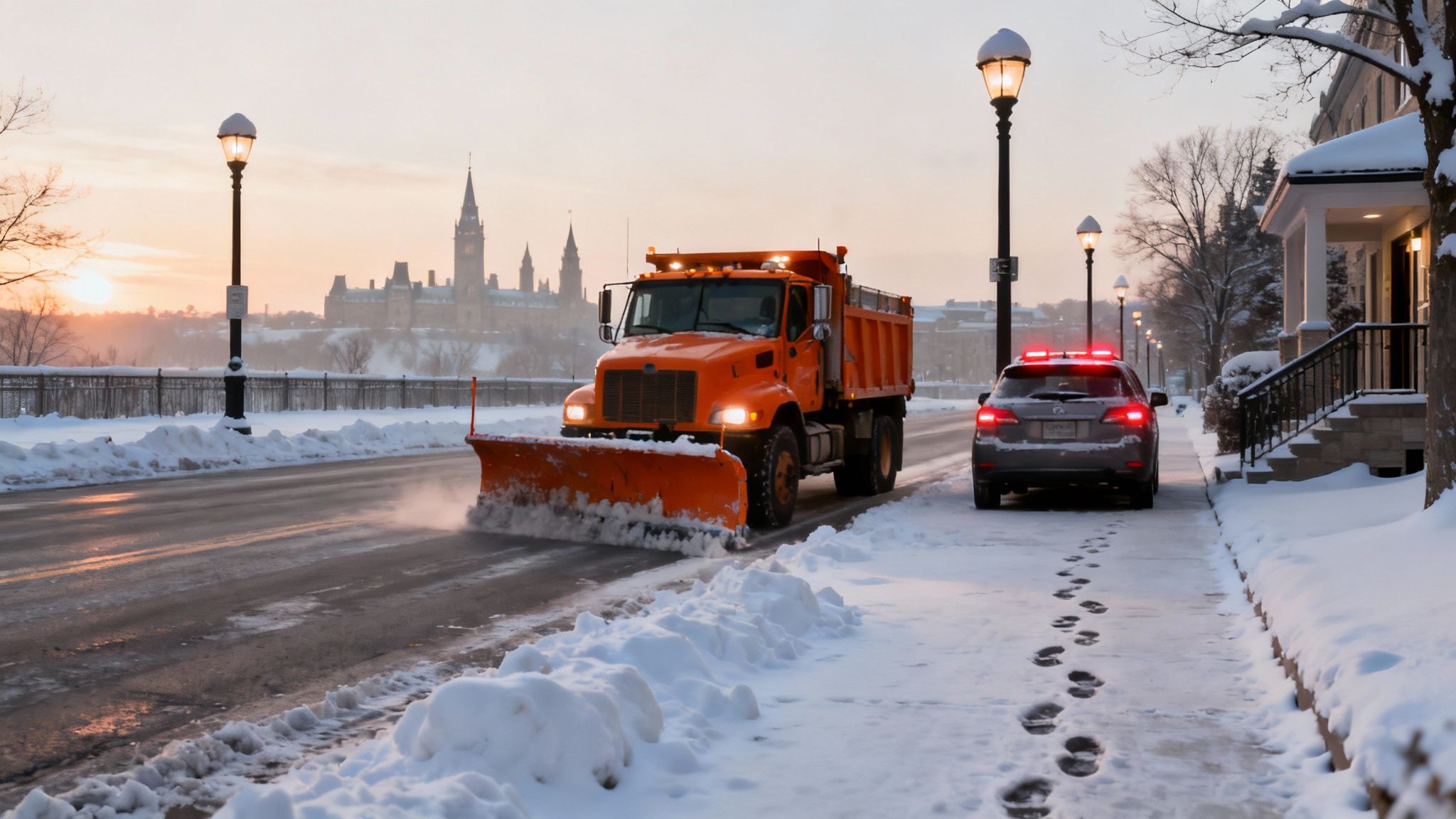
When the snow starts to fall in Ottawa, a familiar alert follows: the city has issued a winter parking ban. This temporary, city-wide freeze on street parking is a crucial tool that allows snowplows to clear roads safely and efficiently after a significant snowfall.
For residents, understanding how these bans work is key to avoiding a costly ticket and helping keep the city moving. In short, when a ban is called, all vehicles must be moved off the street to make way for snow removal crews.
What Ottawa Winter Parking Bans Mean for You
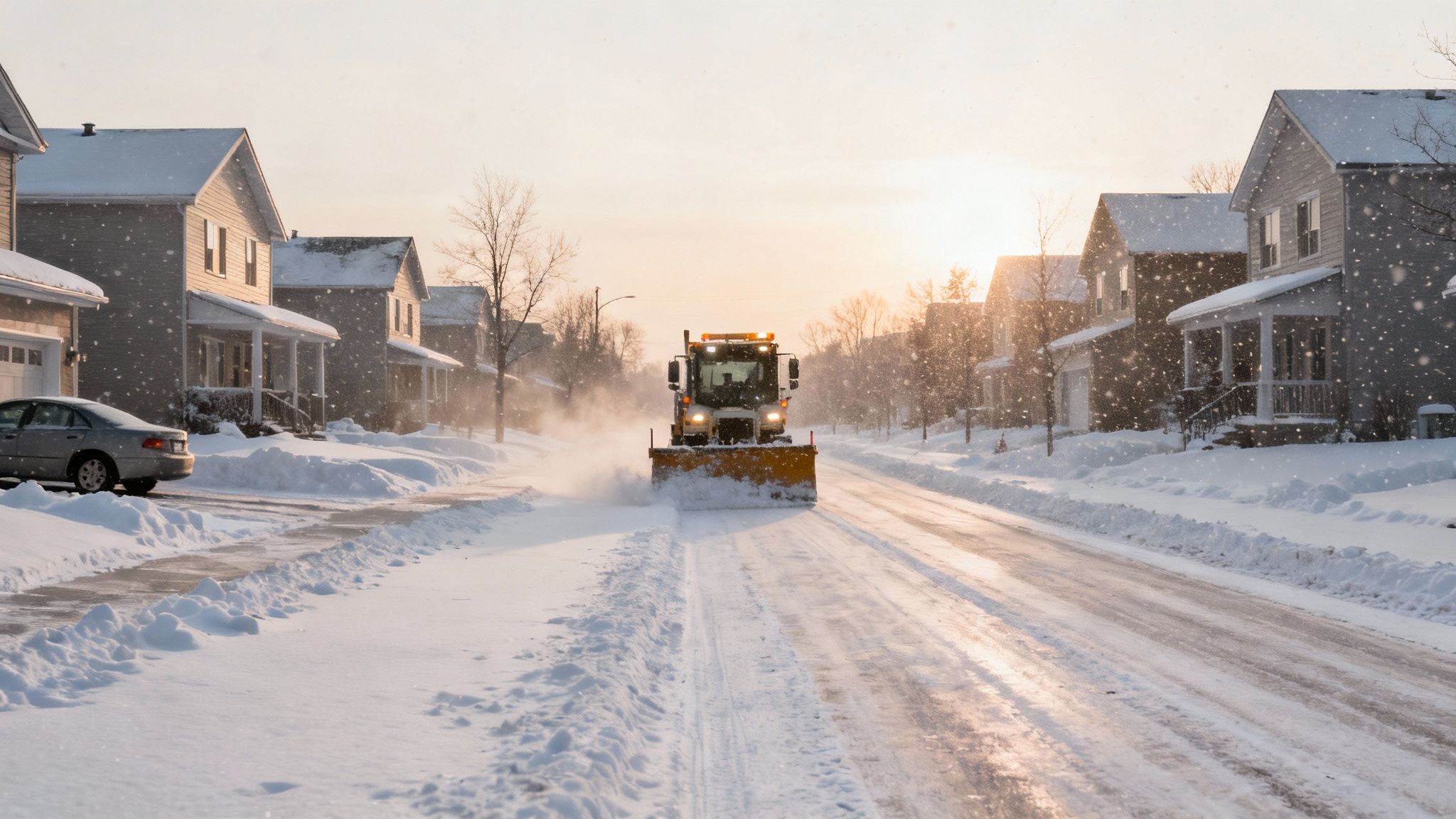
At its core, a winter parking ban is a practical measure for the city's public works teams. When a major snowfall is forecast, the city declares a ban to get vehicles out of the way, which has a major impact on how quickly and effectively our streets are cleared.
This system is a critical part of Ottawa's snow-clearing strategy. The city calls these bans strategically, typically announcing a Winter Weather Parking Ban by 9 a.m. for overnight restrictions that usually run from 7 p.m. to 7 a.m. This advance notice gives residents time to find an alternative spot. For more context on the city's process, you can find local coverage from sources like CityNews Ottawa.
Why the Bans Are Necessary
Imagine a snowplow trying to navigate a narrow residential street lined with parked cars. It's a slow, difficult process. The driver has to swerve around each vehicle, leaving large, messy snowbanks and icy patches that make the road hazardous for everyone.
When the streets are clear, the benefits are immediate:
- Faster, More Effective Plowing: Crews can clear snow from curb to curb in a single pass.
- Improved Safety: Clear roads mean better access for emergency vehicles like ambulances and fire trucks.
- Better Road Conditions: Proper clearing prevents the buildup of ice and slush, making driving safer for everyone.
It is important to know the difference between the two main types of winter parking rules. The first, and the focus of this guide, is the city-wide Winter Weather Parking Ban. This is an event-based ban called only when a heavy snowfall is forecast.
The second type is the seasonal Overnight Parking Ban, a standing rule that affects only certain residential streets, typically from November to April, regardless of the weather.
Ottawa Winter Parking Bans at a Glance
To keep things clear, here is a comparison of the two main types of winter parking restrictions you will encounter in Ottawa.
| Feature | Winter Weather Parking Ban | Overnight Parking Ban (Select Streets) |
|---|---|---|
| When It's Active | Only when called by the city due to a forecast of 7+ cm of snow. | In effect every night, typically from 1 a.m. to 7 a.m., from Nov 15 to Apr 1. |
| Where It Applies | City-wide, on all streets (with a few exceptions). | Only on streets with specific signs indicating the restriction. |
| How You're Notified | The city issues an alert via its website, app, social media, and local news. | Permanent signs are posted on the affected streets. It is always in effect. |
| Main Purpose | To allow for efficient and safe snow removal after a major storm. | To facilitate routine overnight snow clearing and street maintenance. |
Understanding this difference is key to navigating an Ottawa winter without the frustration of a ticket or finding out your car has been towed.
How the City Decides to Call a Parking Ban
The decision to call a parking ban is not made lightly. It is a calculated response to a specific weather forecast, designed to give residents fair notice while allowing city crews to act quickly.
The main trigger for an Ottawa winter parking ban is a forecast from Environment and Climate Change Canada. When meteorologists predict an accumulation of 7 centimetres or more of snow, the city’s public works department prepares for action. That 7 cm benchmark is the official trigger for a city-wide clearing operation.
The Official Timeline
The City of Ottawa knows residents need time to move their vehicles, so it aims to make the official announcement by 9 a.m. on the day the ban will take effect.
This notice provides most of the day to make other arrangements. It is a crucial buffer before restrictions typically begin overnight, usually from 7 p.m. to 7 a.m. The goal is to balance the need for clear streets with the reality that people need time to adjust.
The decision to call a parking ban is a proactive measure. The city acts on the forecast to ensure plows are ready to go when they're needed, preventing gridlock before it starts.
More Than Just Snowfall Totals
While the 7 cm forecast is the main catalyst, it is not the only factor. City officials consider several other conditions to get a complete picture of a storm's potential impact.
These additional factors help crews prepare for the unique challenges each storm brings. A heavy, wet snow followed by a deep freeze, for instance, creates a different clearing scenario than a light, powdery snowfall.
Other key factors include:
- Type of Precipitation: Freezing rain or ice pellets can make roads treacherous even with lower snow totals. A ban might be called to allow for more effective salting and sanding.
- Existing Snowpack: If there is already significant snow on the ground from previous storms, even a smaller snowfall can be enough to disrupt traffic and require a major clearing effort.
- Operational Readiness: The city also assesses the availability of staff and equipment. A well-timed ban ensures the full fleet of plows and salt trucks is ready to be deployed efficiently.
Understanding these factors helps residents anticipate when a ban is likely. By keeping an eye on the forecast, you can often get ahead of the official announcement and start planning. This proactive approach is a key part of the broader strategy of Ottawa snow removal that keeps the city moving all winter.
What Are the Rules and How Much Is a Ticket?
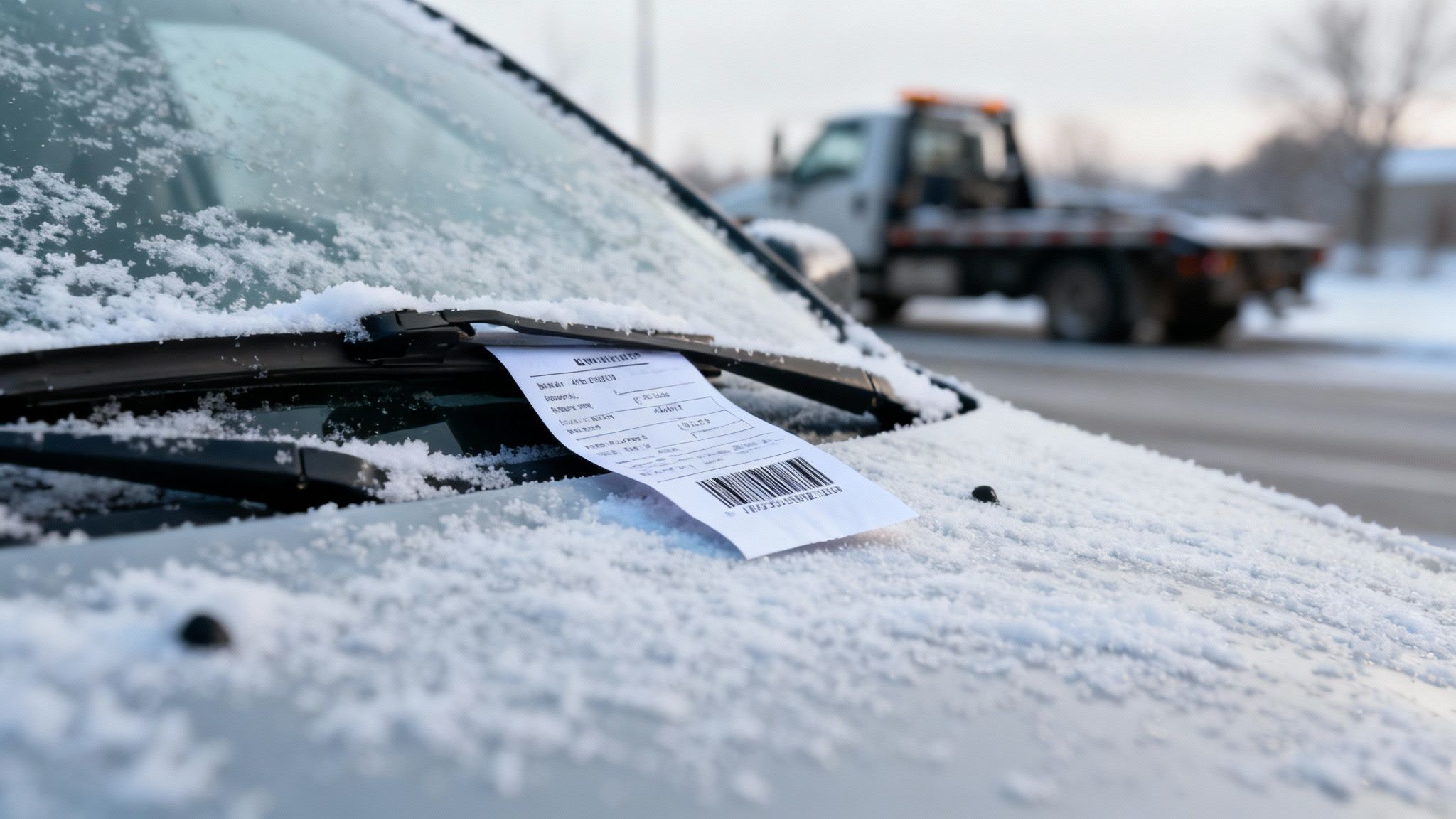
When the City of Ottawa calls a winter parking ban, the rule is simple: no on-street parking is allowed anywhere in the city. It is a temporary regulation designed to give snowplows the room they need to clear our streets safely.
These bans almost always run overnight, typically from 7 p.m. to 7 a.m., but the city can adjust the hours if necessary. The bottom line is, if a ban is on, your vehicle needs to be off the road.
This is a long-standing part of Ottawa's winter plan. You can see how this seasonal pattern impacts Ottawa residents here.
The Real Cost of Ignoring the Ban
Leaving your car on the street during a parking ban can be an expensive mistake. The consequence is not just a fine; it is a stack of costs that can add up quickly.
Your first penalty will be the parking ticket itself. To better understand the process, it helps to know what a parking infraction notice involves.
The real financial pain comes if your vehicle is towed. If bylaw officers decide your car is blocking the plows, they will have it removed, and you will have to pay the bill.
A parking ticket is just the start. When you add towing and impound fees, the total cost can easily triple, turning a minor oversight into a major financial headache.
Breaking Down the Costs
If your car is towed, getting it back is a multi-step process. You are on the hook for the ticket, plus separate towing and impound lot fees. These charges cover the tow truck service and the daily cost of storing your vehicle.
Here is a quick overview of what you could be facing if your car is ticketed and towed during a ban.
Potential Costs of a Parking Violation During a Ban
This table breaks down the various fines and fees you might encounter if you do not move your vehicle during a winter parking ban.
| Penalty Type | Estimated Cost (CAD) | Notes |
|---|---|---|
| Parking Ticket | ~$125 | This is the initial fine from the City of Ottawa for violating the on-street parking ban. |
| Towing Fee | ~$130 – $150+ | A flat fee charged by the towing company for removing your vehicle from the street. |
| Impound & Storage | ~$80 per day | A daily fee charged by the impound lot for every day your car is stored there. |
| Administration Fee | ~$15 | An administrative fee often charged by the impound lot upon retrieval of your vehicle. |
| Total Potential Cost | $350+ | The final amount can easily exceed this, especially if the vehicle remains in the lot for days. |
The math is clear: the longer you wait to retrieve your car, the bigger the bill gets. When you weigh the few minutes it takes to find a safe spot against hundreds of dollars in fees, moving your vehicle is always the smartest choice.
How to Get Parking Ban Alerts
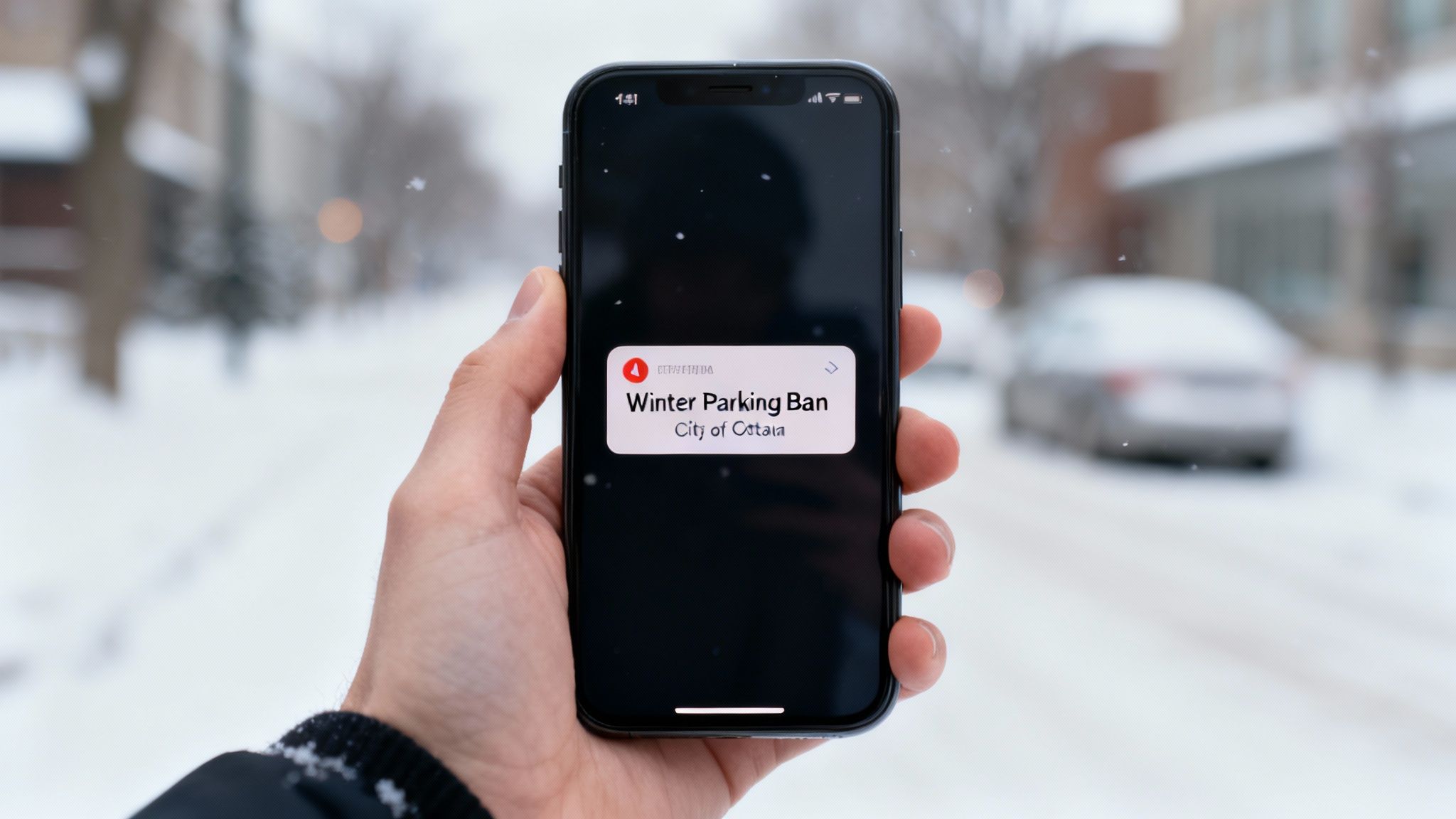
The easiest way to avoid a parking ticket is to know a ban is coming. Nobody wants to wake up to a ticket on their windshield.
Thankfully, the City of Ottawa has made it simple to get advance notice. Taking a couple of minutes to sign up for alerts can save you from a fine and a major inconvenience.
The most direct way to get the news is by subscribing to the city's official e-newsletter. An alert lands right in your inbox, giving you a clear warning that a ban has been called, along with the specific start and end times.
Signing Up for Official City Alerts
Getting these notifications is straightforward. The city runs all its subscriptions through one central system, so you can choose the information you want to receive.
Here is a quick guide to getting on the winter parking ban list:
- Go to the City of Ottawa Website: Visit the official city e-subscription page on ottawa.ca.
- Enter Your Email: Provide the email address where you want the alerts sent.
- Select Your Alerts: Scroll down until you see the "Winter parking alerts" option and check the box. You can also sign up for other city updates.
- Confirm Your Subscription: You will get a confirmation email. Click the link inside to finalize everything.
This simple signup ensures the information comes straight from the source, usually hours before the parking restrictions begin.
Other Ways to Stay Informed
If email is not your preference, the city pushes out notifications through other reliable channels.
- Follow on Social Media: The City of Ottawa’s official accounts on X (formerly Twitter) and Facebook are updated as soon as a ban is announced.
- Check the City Website: The homepage of ottawa.ca almost always has a prominent banner when a parking ban is active.
- Tune in to Local News: Ottawa news outlets, from radio stations to local news sites, are always quick to report when the city calls a parking ban.
Using one or more of these methods means you will never be caught by surprise. Being proactive is a huge part of navigating an Ottawa winter and keeping your vehicle safe when the plows need to get to work.
Where to Park Your Car During a Ban
When the city announces an Ottawa winter parking ban, the first thought for many is a stressful one: where am I supposed to put my car? Suddenly, your reliable on-street spot is off-limits.
Fortunately, the City of Ottawa provides a solid and free alternative. During an active ban, you can park your vehicle at select city-owned properties without charge. It is a straightforward solution that gives everyone a place to go, helping clear the streets for snow removal crews.
These designated safe havens are a mix of community facilities and transit lots, spread across the city to provide accessible options.
Free Parking at City Locations
The City of Ottawa opens up specific lots for residents to use overnight during a declared Winter Weather Parking Ban. This is your best and most reliable option if you do not have a private driveway.
The two main types of locations available are:
- Select Recreation Centres: Many community and recreation centres across Ottawa designate a portion of their parking lots for overnight use during a ban. This includes places like the Nepean Sportsplex, Ray Friel Recreation Complex, and Jim Durrell Recreation Complex.
- OC Transpo Park & Ride Lots: Several major park-and-ride lots are also available for overnight parking. This is especially useful for commuters.
It is crucial to park only in the designated spaces at these locations. Look for specific signs that indicate where overnight parking is permitted during a ban, as parking in the wrong section could still result in a ticket. The city provides an updated list of all available lots on its official website, so always check ottawa.ca for the most current information.
To learn more about how these lots operate year-round, you can find a helpful guide on the OC Transpo park-and-ride system.
Other Practical Parking Strategies
While the city lots are an excellent resource, they are not your only option. A bit of planning and neighbourly cooperation can also solve the parking puzzle.
The goal during a parking ban is simple: get your car off the street so the plows can work. Whether you use a city lot or a neighbour’s driveway, every car moved makes a difference for the entire community.
Consider these other common-sense approaches:
- Talk to Your Neighbours: If you have a neighbour with extra driveway space, ask if you can park there overnight. Many residents are happy to help out.
- Use Private Parking Lots: Some commercial lots or private garages offer paid overnight parking. While not free, it can be a convenient option in dense areas.
- Plan Ahead with Your Landlord: If you live in an apartment with limited parking, speak with your landlord or property manager. They may have a system or designated overflow area for residents.
By exploring these alternatives, you can find a safe and legal spot for your car, avoid a costly ticket, and do your part to help keep Ottawa's streets clear and safe this winter.
Special Cases and Common Misconceptions
When the City of Ottawa declares a winter parking ban, the main rule seems straightforward. But every year, common myths and tricky situations lead to a flurry of parking tickets for residents.
Let's clear the air on some of the most frequent points of confusion so you do not get caught out in the cold.
On-Street Parking Permits Are Not Exempt
This is the biggest one. Many people assume their residential parking permit gives them an exemption during a snow ban. Unfortunately, that is not how it works.
A Winter Weather Parking Ban is a temporary, city-wide emergency measure. The top priority is to clear the roads for plows and emergency vehicles. That means your regular permit is temporarily suspended. If a ban is on, you must move your car, permit or not.
This decision tree can help you figure out where to go when you get an alert.
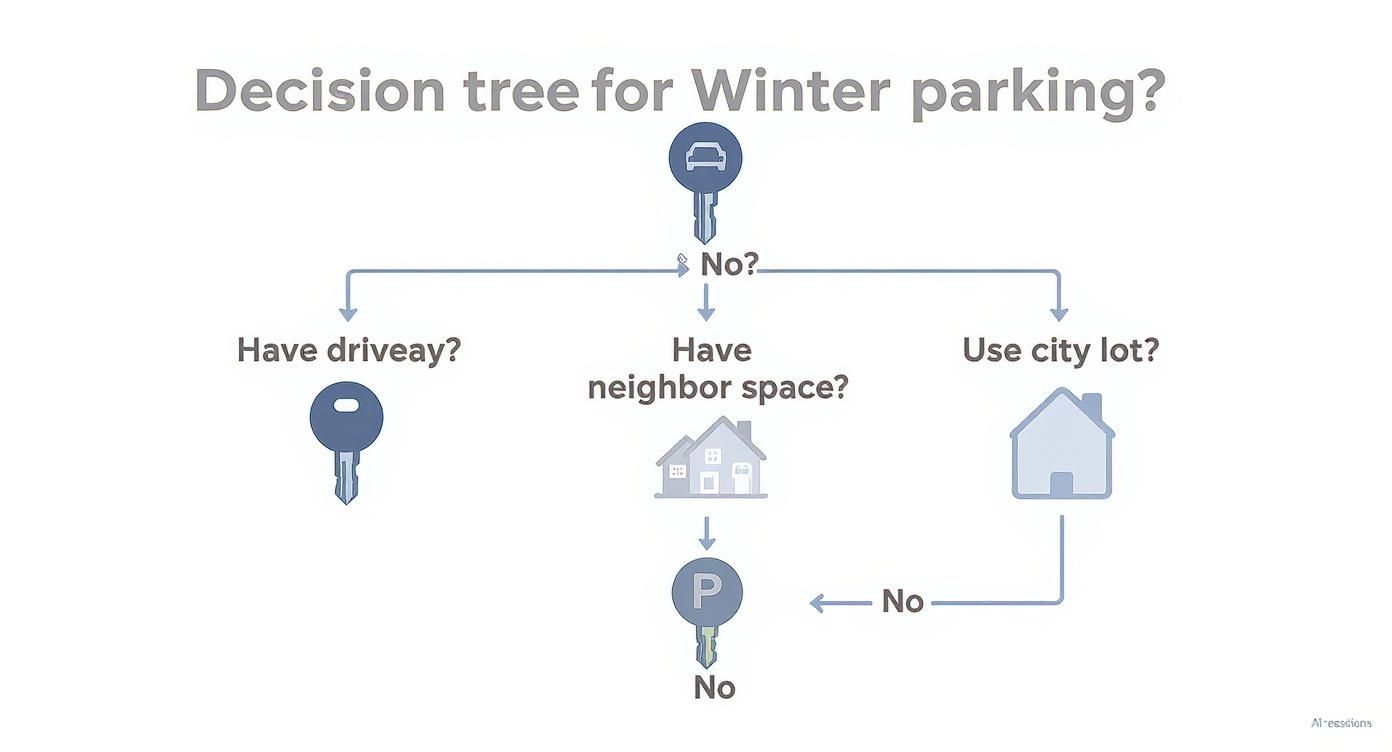
The game plan is straightforward, starting with the easiest options like your own driveway and moving on to city-provided alternatives.
Considerations for Accessibility
Another crucial point is how the ban affects residents with accessibility needs. The city understands that moving a vehicle on short notice can be a challenge for individuals with disabilities.
While the ban applies to everyone, the city does provide options. Those with an accessible parking permit are encouraged to use the designated accessible spots at the free city-run parking lots, like recreation centres and Park & Ride locations. It is always a good idea to check the City of Ottawa's website for the latest details on accessible parking during a ban.
The bottom line is this: if you're parked on a public street during a winter ban, your vehicle needs to move. There are no exceptions for permits, specific neighbourhoods, or even for streets that look like they've already been plowed.
At the end of the day, these bans are a community effort. When everyone understands and participates, the entire snow-clearing operation runs more smoothly. That means safer roads for paramedics, firefighters, and for you on your morning commute.
Got questions about the details of Ottawa’s parking bans? You are not alone. Let's clear up a few of the most common questions residents have each winter.
Can I Park on My Street After the Plow Has Already Passed?
Tempting, but the answer is no. A winter parking ban lasts for the entire declared period, usually until 7 a.m. the next morning, regardless of whether your specific street looks clear.
Snow clearing is a multi-step process. Crews often make an initial pass and then return later to widen roads, clear intersections, or lay down salt and sand. Parking your car before the ban is officially lifted can get in the way and will still get you a ticket and a potential tow. It is best to wait for the official all-clear.
What if a Ban Is Called but It Barely Even Snows?
It can be frustrating, but you still have to follow the rules. The city makes the call based on weather forecasts from Environment Canada, not on the actual amount of snow that falls.
It is a proactive measure. The goal is to have the streets clear and ready for plows before a predicted storm hits. So, even if a storm fizzles out, the ban remains in place until it is officially lifted.
Are Certain Neighbourhoods or Streets Exempt From a City-Wide Ban?
No. When the City of Ottawa declares a "Winter Weather Parking Ban," it applies to every street across the entire city, from Kanata to Orléans.
While some streets may have unique year-round parking restrictions, a city-wide ban temporarily overrides them. The goal is a coordinated cleanup, and that can only happen if everyone moves their vehicles off the road.
For more local guides and news that matters to you, trust NCR Now to keep you informed. Explore more at https://ncrnow.ca.
About The Author