

Meta description: Your guide to Ottawa snow removal. Learn about city clearing schedules, homeowner bylaws, hiring contractors, and safety tips for tackling winter in the capital.
Let’s be honest: living in Ottawa means dealing with a lot of snow. With an average snowfall topping 200 centimetres each year, getting through a Canadian winter in the capital is a team sport. This guide is your playbook for understanding exactly how the City of Ottawa and its residents work together to keep our region moving, even when the flakes are flying thick and fast.
We’ll cover everything from the city's clearing schedules and homeowner bylaws to hiring a reliable contractor for your own property.
Understanding Winter in Canada's Capital
An Ottawa winter isn't just a season; it's a core part of our identity, shaping everything from November through March. Unlike cities that get a weather break from the Great Lakes, Ottawa's geography puts us in a battleground between frigid Arctic air and warmer southern systems. This clash is why we see such massive and often unpredictable snow dumps.
That reality makes snow removal more than a matter of convenience. It’s a critical public service and a shared responsibility. It takes a massive, coordinated effort from the city, alongside the diligent work of homeowners and private contractors, to keep our communities safe and accessible.
A Partnership Between the City and Its People
Keeping Ottawa clear of snow and ice is a partnership. The City of Ottawa is responsible for a huge network of roads, sidewalks, and pathways, but homeowners have their own legal duties to keep their properties clear. This guide breaks down both sides of that equation.
You will get the inside scoop on:
- How the City Works: We will look at how municipal crews prioritize and clear everything from major arteries and residential streets to sidewalks and cycling paths.
- What You Need to Do: A straightforward breakdown of your responsibilities under local bylaws for clearing your sidewalk and driveway, including critical deadlines and rules on where you can pile the snow.
- Bringing in the Pros: Practical advice on how to find, vet, and hire a dependable Ottawa snow removal contractor without the usual headaches.
- Playing It Safe: Simple, effective tips for clearing snow safely, whether you're using a shovel or firing up the snow blower.
Why This Guide Is Your Winter Lifeline
Whether you’re new to the city or a seasoned veteran of Ottawa winters, knowing the system makes everything less stressful. Understanding the rules helps you avoid bylaw infractions, and knowing how the city operates provides context when you're wondering why your street has not been plowed yet.
At the end of the day, effective Ottawa snow removal is a collective effort. It’s what allows emergency services to get where they need to go, keeps businesses open, and lets us all move around our neighbourhoods safely. Think of this guide as the practical information you need to do your part and navigate the season like a pro.
How the City of Ottawa Manages Snow Clearing
Wrangling over 200 centimetres of snow each year is a massive undertaking. The City of Ottawa’s snow removal operation is a complex, well-oiled machine designed to keep residents safe and traffic flowing. Knowing how it works can offer some perspective when you are waiting for your street to get plowed after a big storm.
It's not a free-for-all. The entire effort is guided by the city's Maintenance Quality Standards, a detailed playbook that sets official targets for clearing roads, sidewalks, and pathways. This is a system built on priority, focusing first on public safety and the busiest routes.
Think of winter maintenance as a shared responsibility. This visual guide breaks down how the city, its residents, and professional contractors all play a part.
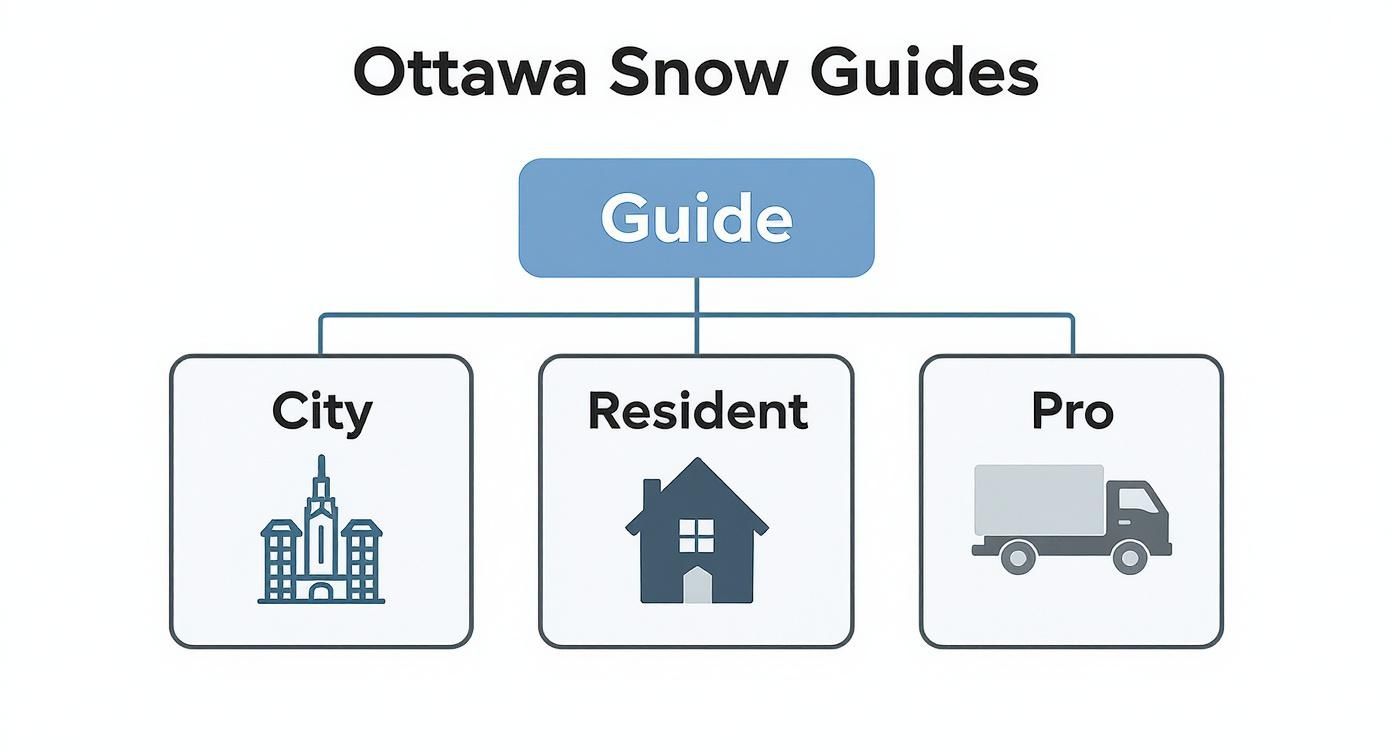
For the city to stay functional and safe during the winter, all three groups need to contribute.
The Priority System for Roads
When the plows roll out, not all roads are created equal. The city uses a tiered system to make sure the most critical routes get cleared first. It is essentially a triage system for Ottawa's transportation network.
Main arterial roads, major collector roads, and all bus routes are at the top of the list. These are the city's lifelines, essential for emergency vehicles, public transit, and the bulk of commuters. The city’s goal is to have these high-traffic corridors cleared within four to six hours after a storm wraps up.
Next up are residential streets and laneways. They are still a crucial part of the grid, but they see far less traffic. The target for clearing these streets is usually within 16 hours after the snow stops, but only if there has been at least 10 centimetres of accumulation.
Sidewalks and Cycling Paths
The city’s focus on walking and cycling does not stop when the snow flies. Just like the roads, sidewalks and cycling paths are cleared based on a priority system. Sidewalks in the downtown core, along major transit routes, and near schools get cleared first.
The objective is to clear these key pedestrian and cycling routes within 12 to 24 hours after a snowfall, helping to ensure residents who walk, cycle, or use mobility devices can still get around safely.
Understanding Winter Parking Bans
One of the most powerful tools in the city’s snow clearing kit is the winter weather parking ban. When a storm of seven centimetres or more is in the forecast, the city may issue a ban on all on-street parking.
A parking ban is not about causing inconvenience; it’s about efficiency and safety. When cars are off the road, plows can clear streets from curb to curb. This creates wider, safer lanes for everyone and prevents those dangerous snow ridges from building up.
Ignoring a parking ban is a good way to earn a ticket and maybe even have your vehicle towed. The best way to stay in the loop is by signing up for the city's email alerts or following their official social media channels.
The sheer scale of this operation is immense, involving hundreds of staff and a massive fleet of plows, graders, and salt spreaders. This modern approach was forged by lessons learned from the past. For instance, one of the most paralyzing storms in Ottawa's history hit on March 2, 1947, dumping a record 40.4 centimetres in 24 hours. The monumental effort to clear the nearly 80 centimetres that piled up over two days took 500 workers, 400 pieces of equipment, and cost the city an unbudgeted $5 million. You can read more about this historic storm from the Ottawa Citizen. It’s a powerful reminder of why a proactive, well-funded municipal snow removal strategy is so essential to the city's resilience.
Your Snow Removal Bylaws as an Ottawa Homeowner
While the City of Ottawa runs a massive snow clearing operation on our roads, keeping neighbourhoods safe and walkable is a shared effort. Every homeowner has a part to play, and the city’s bylaws spell out exactly what that looks like for the property you own or rent.
Think of it less as a list of rules and more as a community agreement. Getting these basics right is about more than just avoiding a fine. It’s about being a good neighbour and making winter easier for everyone, especially folks with mobility challenges or parents trying to push a stroller through a snowbank.
The Sidewalk Rule: Clear and Simple
One of your biggest winter jobs as a homeowner in Ottawa is clearing the public sidewalk bordering your property. This is not just a friendly suggestion; it's a legal duty under the city’s Property Standards Bylaw.
The moment the snow stops falling, the clock starts ticking. The rules are all about getting pedestrian routes cleared quickly and safely.
- Residential Sidewalks: You have a specific window of time to clear snow and ice from sidewalks next to your property after a snowfall ends. These timelines can change, so it's always smart to check the latest city guidelines.
- Commercial Properties: Businesses usually face a much tighter deadline, sometimes as short as six hours, because of the heavy foot traffic in their areas.
If you do not clear it, the city can hire a contractor to do the job for you. That bill, plus an administrative fee, will show up right on your property tax statement.
Where to Pile the Snow (and Where Not To)
Knowing where to put the snow is just as critical as clearing it in the first place. You are strictly forbidden from shovelling, plowing, or blowing snow from your driveway or yard onto the street or across the way onto your neighbour’s property.
Pushing snow onto the road creates serious hazards for drivers and gets in the way of the city’s own plows. It can leave behind dangerous, icy ridges or force municipal crews to make extra passes, slowing down the whole operation. This becomes a massive problem during a winter parking ban. You can get the full rundown on the latest rules in our guide to Ottawa winter parking bans.
Your property, your snow. The golden rule is simple: any snow that lands on your property needs to stay on your property. This means piling it on your front lawn, in your backyard, or anywhere else that does not block public sidewalks or create a blind spot for drivers.
Community Support: The Snow Go Program
The city understands that not everyone can handle the back-breaking work of shovelling. For seniors and people with disabilities, a heavy snowfall can be a huge obstacle, trapping them in their homes.
That's where the Snow Go Program steps in. It's a fantastic local initiative that connects eligible residents with screened individuals and contractors for snow removal services. Run by community support agencies, the program has two parts.
- Snow Go Assistance Program: This offers financial help for low-income seniors and people with disabilities to help pay for their snow removal.
- Snow Go Matching Program: This service acts like a matchmaker, connecting residents with reliable local contractors so they do not have to navigate the hiring process alone.
It’s a program that really captures the spirit of community we need to get through a long Ottawa winter, making sure everyone can get in and out of their homes safely, no matter their age or ability.
How to Hire a Snow Removal Contractor in Ottawa
For many Ottawa homeowners, calling in a professional snow removal service is not a luxury. It is a winter survival tactic. But with so many operators out there, from big fleets to a single person with a truck, finding a reliable one can feel like navigating a blizzard. This guide will walk you through how to properly vet a contractor, understand the costs, and spot the red flags so you can make a smart, confident choice.
Picking the right company means your driveway is clear when you need it, your property is safe, and you've got one less thing to worry about all winter. Making the wrong choice can lead to missed clearings, a damaged driveway, or even bigger headaches.
Essential Questions to Ask Before You Sign Anything
Before you commit to a contract, it is time to do some homework. Any reputable company will be happy and prepared to answer detailed questions about how they operate.
Think of it as an interview for a very important job. Your goal is to find a professional who is insured, properly equipped, and transparent about their services.
Here are the key questions you should always ask:
- Are you insured? This is non-negotiable. Ask to see proof of at least $2 million in liability insurance. This protects you if their plow clips your garage, damages your car, or scrapes up your neighbour’s fence. Without it, you could be responsible for the repairs.
- What kind of equipment do you use? A company running a fleet of well-maintained plows, tractors with snow blowers, and hand-shovelling crews is better prepared for a heavy winter than a solo operator with an old pickup. A great follow-up question is, "What's your backup plan if a machine breaks down?"
- What is your service trigger? Most contracts kick in after a specific amount of snow has fallen, usually around five to seven centimetres. You need to clarify this. Will they come out for smaller snowfalls or freezing rain events?
- What exactly does the contract cover? Is it just the driveway? What about the walkway to your front door, your steps, or the windrow the city plow leaves at the end of your driveway? Get every single detail in writing.
- How do I get in touch with you? A professional business should have a dedicated phone number and email for clients, not just a personal cell phone that goes to voicemail.
Understanding Costs and Contract Types
Snow removal pricing in Ottawa usually falls into two main categories. Knowing the difference will help you find a plan that fits your budget and your tolerance for risk.
- Seasonal Flat Rate: This is the most common model. You pay one fixed price that covers the entire winter, typically from November through April. It makes budgeting predictable because your cost is locked in, no matter how many blizzards we get.
- Per-Visit or Per-Push: With this setup, you pay each time the contractor shows up to clear your snow. This might seem cheaper in a mild winter, but it can get very expensive during a season with constant storms.
A seasonal contract is almost always the safer bet in a city like Ottawa, where heavy, frequent snowfall is the norm. It shields you from surprise bills during a record-breaking winter and ensures you're a priority client when the snow really starts flying.
Related reading: Our complete guide to Ottawa snow removal offers more insights and tips.
Estimated Seasonal Snow Removal Costs in Ottawa
To give you a clearer picture, we have put together some ballpark estimates for seasonal residential contracts in Ottawa. Keep in mind that prices can vary based on the company, your specific location, and the complexity of your property. This table provides a general idea of what to budget for the winter.
| Driveway Size (Number of Cars) | Basic Service (Plow Only) | Premium Service (Plow and Walkway Shovelling) |
|---|---|---|
| Small (1-2 Cars) | $350 – $550 | $500 – $750 |
| Medium (3-4 Cars) | $450 – $650 | $600 – $900 |
| Large (5-6 Cars) | $550 – $800+ | $750 – $1,200+ |
These figures should help you gauge whether a quote you receive is in the right range. A significantly lower price might be a red flag, while a much higher one could mean you're paying for extra services you may not need.
Red Flags to Watch Out For
Unfortunately, the snow removal industry does attract some less-than-reliable operators looking to make a quick buck. Be wary of anyone who pressures you into a fast decision or offers a deal that sounds too good to be true. It probably is.
Here are some common warning signs:
- Cash-only deals: A legitimate business provides a proper invoice and accepts various payment methods. Operators demanding cash upfront with no paperwork might be uninsured or cutting corners.
- Vague contracts: If the agreement is just a handshake or a one-page document with no specifics on service triggers, areas to be cleared, or insurance details, walk away.
- No local presence: Be cautious of companies with no local address or phone number. A contractor with established roots in the Ottawa community has a reputation to protect and is far more accountable.
Taking the time to properly vet a snow removal contractor is one of the smartest things you can do to ensure a stress-free winter. It keeps your property safe and accessible, freeing you up to focus on more important things, like enjoying the snow instead of cursing it.
Practical Safety Tips for Clearing Snow
Clearing snow in Ottawa is a serious workout. It is a physically demanding job that carries real risks if you are not careful. Whether you are grabbing the trusty shovel or firing up the snow blower, a few simple precautions can be the difference between a clear driveway and a pulled back, or worse.
Keeping yourself safe is just as important as getting the sidewalk cleared.
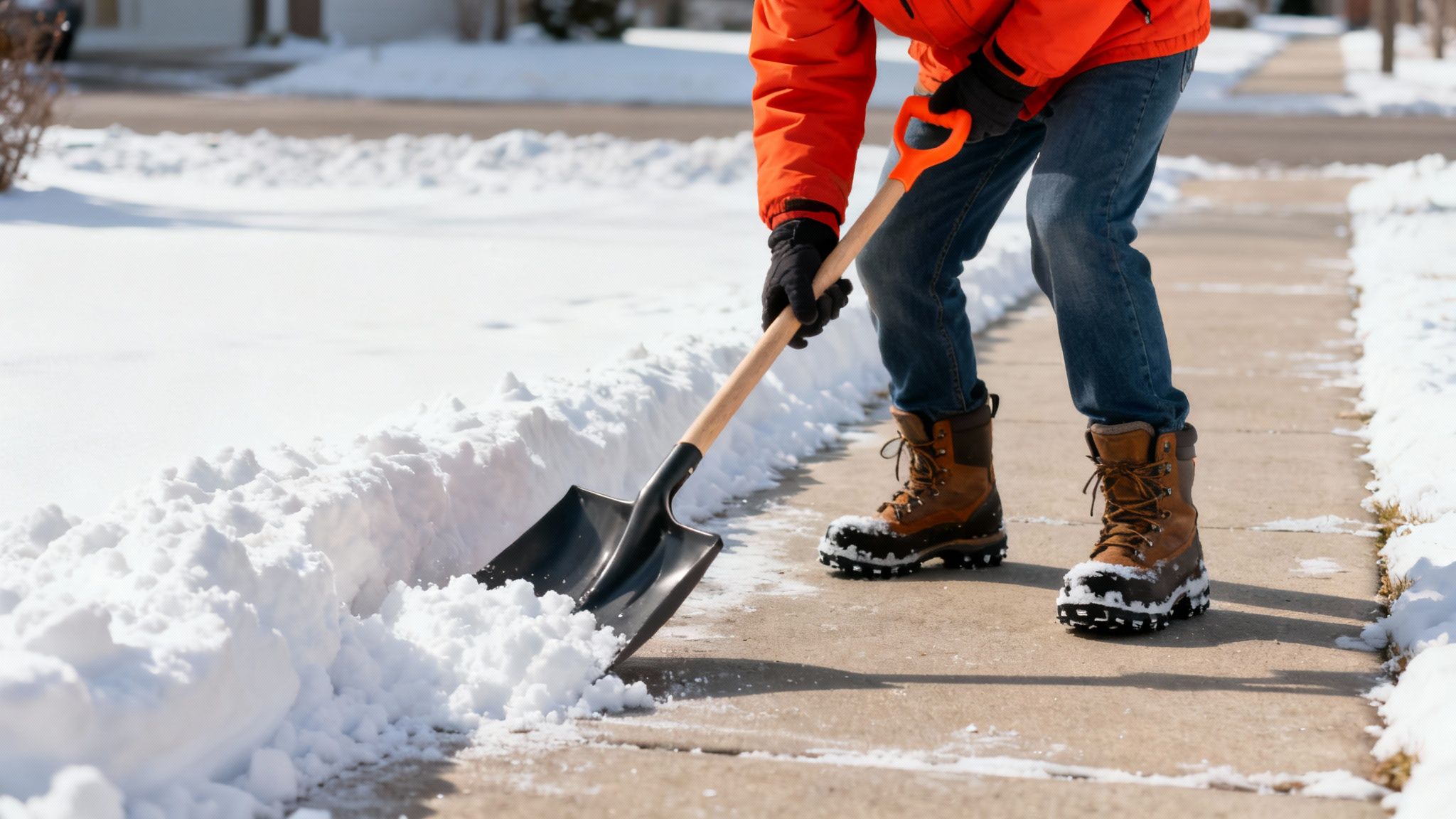
The mix of freezing temperatures and intense physical effort puts a huge strain on your body. The trick is to work smarter, not harder, by using the right gear and the right moves.
Prepare Your Body and Gear
Before you step outside, a little preparation goes a long way. You would not jump into a workout cold, so do not do it with snow clearing either. A few minutes of stretching will warm up your muscles and help you avoid painful strains and pulls.
Dressing for the occasion is just as critical. Ottawa winters do not mess around, and frostbite is a genuine threat.
- Layer Up: Go for several layers of light, loose-fitting clothes. This strategy traps warm air close to your body and lets you peel off a layer if you start to overheat.
- Stay Dry: Make sure your outer layer is water-resistant. Nothing chills you faster than melted snow seeping through your jacket.
- Protect Your Extremities: A warm hat, good gloves or mittens, and thick socks are non-negotiable. You lose a surprising amount of heat from your head, and your fingers and toes are the first to feel the bite of the cold.
- Get a Grip: Proper winter boots with deep, non-slip treads are your best friend. They can prevent a nasty fall on a hidden patch of ice.
Shovelling the Right Way
Shovelling is all about repetitive motion, which can destroy your back if you do it wrong. The secret is to let your legs and core do the heavy lifting, not your back and arms.
Using an ergonomic shovel with a curved handle can significantly reduce how much you have to bend over. It’s a small investment that pays huge dividends in preventing lower back pain.
Whenever you can, push the snow instead of lifting it. It's far less strenuous. When you do have to lift a scoop, bend at your knees and keep your back straight. Tighten your stomach muscles as you lift the load. And please, do not twist your body to toss the snow. Pivot your feet and turn your whole body to face your target.
Operating a Snow Blower Safely
A snow blower can feel like a superpower, but it's a machine that demands respect. Before that first big dump of snow, give your machine a once-over. Make sure the fuel and oil are fresh, and check the belts and auger blades for any signs of wear.
Now for the most important rule of all: never, ever clear a clog with your hands, even if the machine is off. The blades can stay under tension and snap back without warning, causing horrific injuries.
- Always shut the machine off completely.
- Wait for every single moving part to stop.
- Use the clean-out tool that came with your machine to clear any snow packed in the chute. It is usually attached right to the handle.
Finally, listen to your body. Take breaks often to catch your breath and have some water, even if you do not feel thirsty. If you start feeling any chest pain, shortness of breath, or dizziness, stop what you're doing immediately and get medical help. The snow can wait. Your health cannot.
How to Report a Snow Removal Issue
Even with a massive city-wide operation, some snow-related headaches are bound to happen. Knowing how to report a problem effectively is not just about complaining. It is about being an active part of the solution. You are helping the City of Ottawa pinpoint safety hazards and making winter safer for everyone.
Think of your report as valuable, on-the-ground intelligence. Whether it's a treacherous patch of ice on a sidewalk that is a nightmare for seniors or a huge snowbank blocking a driver's view at an intersection, your feedback helps get crews and equipment where they're needed most. It is this kind of collaboration that keeps our community safe and moving during the toughest months of the year.
Using the 3-1-1 Service
The most direct way to report a non-emergency snow issue is through the city’s 3-1-1 service. This is the central hub for almost any municipal request you can think of, including everything related to Ottawa’s snow removal operations.
You have a couple of ways to get in touch:
- By Phone: Just dial 3-1-1. This is usually your best bet for issues that need a quick response.
- Online Reporting: The City of Ottawa’s website has a straightforward portal for submitting service requests online. The big advantage here is that you can provide a ton of detail and even upload photos of the problem.
When you file a report, be ready to give as much specific information as you can. A vague complaint is much harder for city crews to act on.
What to Include in Your Report
To get your request handled efficiently, clarity is everything. The more precise your details are, the faster city staff can find the spot and fix the problem. A good report is like giving the response team a perfect map.
A report becomes actionable when it’s specific. Provide a clear location, a quick description of the issue, and when you first noticed it. For example, instead of just saying “the sidewalk is snowy,” try something like, “The sidewalk on the north side of Elm Street between 123 and 125 Elm is covered in about two feet of packed snow and ice.”
Here are the key details to include:
- The exact location: This means the full street address or the nearest intersection. Knowing what is a civic number and using it is incredibly helpful.
- A clear description of the issue: Is it an unplowed residential street? An icy patch on a public walkway? A snowbank blocking a stop sign?
- The time and date: Make a note of when you first saw the problem.
- Photos (if possible): A picture says it all. It is the most effective way to show just how bad or specific the issue is.
By providing a thorough and accurate report, you are not just flagging a problem. You are actively helping to solve it. Your eyes on the street help our city services work better, leading to a safer, better-managed winter for all of us in Ottawa.
Your Top Ottawa Snow Removal Questions Answered
When the snow starts piling up, so do the questions. From city plow schedules to your own sidewalk duties, navigating an Ottawa winter can feel like a pop quiz you did not study for. Let’s clear up some of the most common questions Ottawans have about snow removal.
What’s the City’s Timeline for Clearing Residential Streets?
While it might feel like forever when you are snowed in, the City of Ottawa follows a set schedule based on its Maintenance Quality Standards. Major roads and bus routes always get top priority. For residential streets, the target is to have them cleared within 16 hours after the snow has stopped falling, but only if we have received at least 10 centimetres of accumulation.
So, some patience is needed. Crews have a massive network of roads to get through, and they work methodically from the main arteries down to the neighbourhood level. If the plows have not hit your street yet, it is usually because they are still tackling the higher-priority routes.
Can I Get Fined for Not Shovelling My Sidewalk?
Yes, you absolutely can. Under the city's Property Standards Bylaw, you are legally responsible for clearing snow and ice from the public sidewalk bordering your property. It is not just about rules; it’s a critical part of keeping our neighbourhoods safe and accessible for everyone, especially seniors, parents with strollers, and people with mobility challenges.
If someone files a complaint about your sidewalk, a bylaw officer might visit and issue a notice to clear it. If you ignore that, the city can hire a private contractor to do the job for you. They will then add the bill, plus an administrative fee, directly onto your property tax bill.
What Should I Do if a City Plow Wrecks My Property?
It is incredibly frustrating to see your lawn torn up or your curb cracked after a plow goes by. If this happens to you, the first thing you need to do is document everything. Take clear photos of the damage from a few different angles.
Once you have proof, report the incident to the city right away. You can call 3-1-1 or file a claim directly on the City of Ottawa’s website. You will need to provide the date, time, and location. The city has a formal process for investigating these things and may cover the cost of repairs if they confirm their equipment was at fault.
Is It Okay to Use a Chair to Save the Parking Spot I Just Shovelled?
We have all seen it. The lone chair standing guard over a freshly cleared patch of asphalt. While it is a time-honoured tradition in some cities, it is not permitted here in Ottawa. The city’s bylaws strictly prohibit placing any object on a public road to reserve an on-street parking space. That includes chairs, garbage bins, or pylons.
These items are considered obstructions and can be dangerous for other drivers and for the plow operators trying to do their jobs. City staff can and will remove them, and you might even get a fine. On-street parking is always first-come, first-served, no matter how much work you put into clearing the spot.
At NCR Now, we believe informed residents are the foundation of a strong community. Our practical guides and local news are designed to help you navigate life in the National Capital Region with confidence. Explore more at https://ncrnow.ca.
About The Author