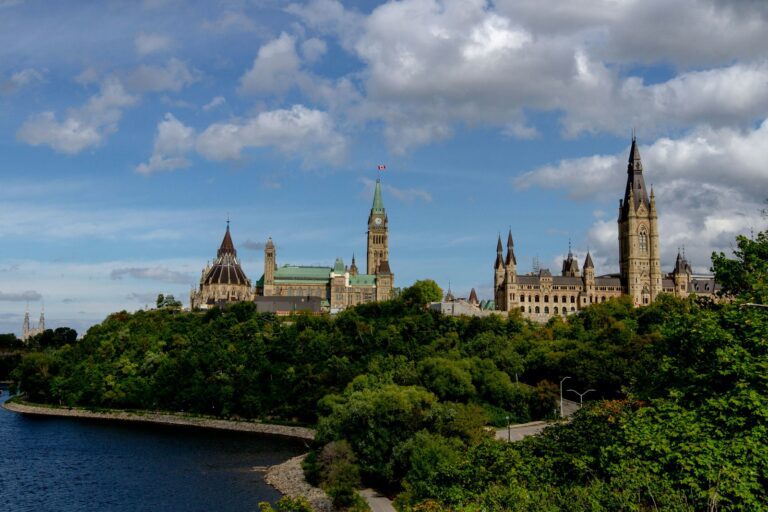


Ever wonder what public policy is all about? At its heart, it’s the government's game plan for tackling society's biggest challenges and opportunities. It's the collection of decisions, laws, and actions that shape how our communities work—from the transit routes you take in Ottawa to national healthcare funding.
Demystifying Public Policy
Think of public policy as a kind of community rulebook. It’s the set of principles governments at all levels—municipal, provincial, and federal—use to solve problems and make life better for everyone.
These aren't just abstract ideas debated in Parliament. They're the practical choices that influence your everyday life. When Ottawa’s city council decides to build a new bike lane, fund a library, or change garbage collection schedules, that's public policy in action.
The Blueprint for Society
Public policy is the blueprint that outlines how to build a better community. This plan is drawn up in response to public needs and pressures, addressing everything from economic stability to environmental protection.
Its main purpose is to turn a government’s vision into real, tangible results. You see these results in a few different ways:
- Laws and Regulations: These are the formal rules we live by, like traffic laws or standards for environmental emissions.
- Government Programs: Initiatives designed to deliver services, such as social assistance or employment insurance.
- Funding Decisions: The choices made on where to spend public money—think infrastructure projects, healthcare, or education.
To put it simply, here’s a quick breakdown of what goes into public policy.
Public Policy at a Glance
This table breaks down the core components of public policy with some real-world examples to make it stick.
| Component | Simple Explanation | Real-World Example |
|---|---|---|
| Problem Identification | Recognizing a community issue that needs a solution. | Noticing increased traffic congestion on the Queensway. |
| Policy Formulation | Brainstorming and developing potential solutions. | Proposing a new light rail transit (LRT) line. |
| Decision Making | Choosing a specific course of action (a law, program, etc.). | The City of Ottawa approving the budget for the LRT. |
| Implementation | Putting the chosen policy into practice. | Construction crews building the new transit line. |
| Evaluation | Assessing if the policy actually worked as intended. | Analyzing ridership data to see if the LRT reduced traffic. |
As you can see, public policy is a full-circle process, always aiming to respond to the needs of the community it serves.
Public policy is essentially a government's response to a public problem. It reflects not just what a government does, but also what it chooses not to do.
Ultimately, getting a handle on public policy helps you see the clear line connecting government action to its direct impact on your life.
The Journey of a Policy from Idea to Action
Public policy doesn’t just appear out of thin air. It follows a distinct lifecycle, a journey that transforms a simple idea into a full-fledged government action. Think of it like planning and building a new community park—it starts with recognizing a need, moves through design and approval, and finally ends with construction for everyone to enjoy. The process for creating policy is surprisingly similar.
The whole thing kicks off when a problem gets enough attention to land on the government's radar. This crucial first step, known as agenda setting, is often powered by public demand. For instance, when local groups in Ottawa advocate for issues like housing affordability or better transit, they're pushing those topics into the spotlight and forcing officials to take notice.

This visual shows how each phase builds on the last, making it clear that policy creation is a collaborative cycle, not just a one-off decision.
From Debate to Decision
Once an issue makes it onto the agenda, the next stage is formulation. This is where experts and civil servants dig in, exploring different solutions and weighing the pros and cons of each one. It’s a phase packed with research, consultation, and debate, all aimed at developing solid options that could actually solve the problem.
After that comes decision-making, which is usually the most visible part of the process. This is where elected officials—like city councillors or Members of Parliament—vote and choose a final course of action. Once a decision is made, the policy moves into implementation, which is all about the hands-on work of putting the plan into action. This might mean launching a new government program or enforcing a new regulation.
Finally, the cycle wraps up with evaluation. Here, the government steps back to assess whether the policy actually worked. Did it achieve its goals? Were there any unintended consequences? The answers to these questions are vital, as they help refine future policies.
The policy cycle is really a continuous loop. The evaluation of one policy often uncovers new problems, kicking off the agenda-setting process all over again for the next challenge.
This structured process is fundamental to all sorts of government activities, including many of the principles you can read about in our guide on what is urban planning, which applies a similar framework to shaping our cities.
The Key People Who Shape Canadian Policy
Creating public policy is a complex team effort, involving far more than just the elected officials we see on the news. Think of it as a collaborative project where different groups bring unique skills and perspectives to the table. While politicians ultimately sign off on the final decision, their choices are heavily shaped by a diverse cast of characters working behind the scenes.
This process ensures that decisions aren’t just top-down decrees but are instead the product of extensive research, negotiation, and compromise among many different stakeholders.

The Unseen Experts and Influencers
Behind every major policy is a network of dedicated people laying the groundwork for sound decision-making. These key players often work outside the political spotlight but are absolutely critical to the entire process.
Here are the main groups involved:
- Non-Partisan Civil Servants: These are the professional public service employees who form the very backbone of government. They’re the ones conducting research, analyzing data, and providing impartial advice to help politicians get a grip on complex issues and potential solutions.
- Advocacy Groups and Lobbyists: These organizations represent specific interests—from environmental protection to business development. They work to influence policy by presenting their own research, proposing solutions, and making sure their community's voice is heard loud and clear by decision-makers.
- Academic Experts: Scholars and researchers, particularly from institutions right here in the Ottawa area like Carleton University and the University of Ottawa, provide deep, evidence-based insights. Their studies and analysis help ground policy debates in solid facts and proven theories.
Ultimately, the most important player in shaping Canadian policy is the public. Through voting, participating in consultations, and engaging in activism, everyday citizens provide the ultimate direction and legitimacy for any government action.
A Balancing Act of Interests
Bringing all these voices to the same table is a delicate balancing act. A successful policy has to consider the expert advice from civil servants, the passionate arguments from advocacy groups, and the fundamental needs and desires of the public.
This collaborative dynamic is what defines how effective public policy gets made here in Canada. Each group plays an essential part in making sure policies are well-researched, responsive to society, and ultimately, serve the public good.
Public Policy in Your Daily Life
Public policy isn't just some high-level concept debated in government buildings. It's the invisible force shaping your everyday life, from your morning commute on the O-Train to the green spaces where you walk your dog.
These decisions, made by different levels of government, are direct responses to the challenges and needs of our communities. When you connect the dots between a policy decision and its impact on your routine, its importance becomes crystal clear. Let's look at a few examples right here in Ottawa and across Canada.
How Municipal Policies Shape Ottawa
Local policies have the most immediate and tangible impact on our daily lives. They govern the infrastructure and services you interact with every single day.
- Ottawa's Light Rail Transit (LRT): That massive transit project you see snaking through the city? It's a direct result of public policy. City council made a conscious choice to invest billions in the LRT to tackle traffic congestion and lower carbon emissions, fundamentally changing how thousands of us get around.
- The Greenbelt: The sprawling network of farms, forests, and wetlands encircling the city exists because of deliberate policy. Decades ago, leaders created regulations to limit urban sprawl and preserve natural spaces. This single policy affects everything from housing development and property lines to where your family can go for a weekend hike.
These local examples show policy in action—responding directly to community needs. This isn't unique to Ottawa. Think about California, a state that has long used public policy to manage explosive population growth and shifting demographics. With over 38 million people as of 2024, its policies on housing, water, and infrastructure have been critical. You can see more on how population drives policy at the Public Policy Institute of California.
The Bigger Picture: Provincial and Federal Policies
As we move up the ladder, provincial and federal policies tackle broader issues that affect everyone in Ontario and across the country.
Public policy at the federal level often sets the national direction on major issues, creating a framework that provinces and municipalities operate within. It’s the big-picture strategy for the country's future.
At the provincial level, Ontario's decisions on healthcare funding directly influence hospital budgets, ER wait times, and the availability of doctors in your neighbourhood. Likewise, when the province updates its education curriculum, it changes what students learn in every school from Kanata to Orléans.
Federally, think about big-ticket items like the national carbon pricing strategy. This policy was designed to fight climate change by putting a price on pollution, affecting everything from the cost of gas to your home heating bill. Another huge one is Canada's immigration strategy, which sets the targets for how many newcomers we welcome each year, shaping the nation's workforce and cultural fabric for generations to come.
Why You Should Care About Public Policy
Thinking about public policy might seem like something best left to academics or politicians, but it’s much more personal than that. It’s about understanding the real power you have to shape your neighbourhood, your finances, and your family's future. Every decision made at City Hall or on Parliament Hill trickles down, directly impacting the quality of your bus service, the parks your kids play in, and the opportunities available right here in Ottawa.
When you get involved in the process, you stop being just a spectator and become an active player in our democracy. Your voice helps make sure the policies being cooked up actually reflect what people in your community need and value. Without that input, decision-makers are basically working in a bubble, and that's when important local perspectives get missed.
Public policy is the language of our shared priorities. When we learn to speak it, we can advocate for the changes we want to see in our world.
Your Voice is the Missing Piece
You don't need a degree in political science to make a difference. In fact, some of the most powerful and persuasive arguments come from regular folks just sharing their day-to-day experiences. Simply showing up and speaking up is a huge part of what is public policy.
Getting involved is easier than you think. Here are a few simple ways to start:
- Attend a Town Hall: These meetings are literally designed for you to give feedback. Show up and share your two cents on a local issue.
- Contact Your Reps: A quick email or phone call to your City Councillor or MP is a surprisingly effective way to get an issue on their radar.
- Join a Community Association: These local groups are powerhouses for shaping neighbourhood-level policies across Ottawa.
This kind of hands-on participation is really the heart and soul of civic life. To dig a little deeper into this, check out our guide on what is civic engagement for more ideas on how you can contribute. At the end of the day, every voice adds a crucial piece to the puzzle of building a community that truly works for everyone.
Unpacking Public Policy: Your Questions Answered
To wrap things up, let's tackle a few common questions that pop up when people talk about public policy. Think of this as a quick debrief to help lock in what you've learned about the forces shaping our communities.
What Is the Difference Between Public Policy and Law?
It’s a great question, and the answer is simpler than you might think. Imagine public policy as the government's game plan—the “what” and the “why.” The law, on the other hand, is the rulebook—the “how.”
A policy sets a broad goal, like deciding to improve Ottawa's air quality. The law is the specific, enforceable tool created to make it happen, such as the Canadian Environmental Protection Act. While a good policy often becomes law, it doesn't have to. A policy can also be a funding decision, a new government program, or an official strategy. The policy is the vision; the law is just one of the tools to bring it to life.
How Can an Ordinary Citizen Influence Public Policy?
You actually have more clout than you might realize. Shaping public policy isn't just for the experts; it’s a conversation where every citizen can, and should, have a voice.
Here are a few direct ways to get involved:
- Voting in municipal, provincial, and federal elections is your most fundamental tool.
- Contacting your elected officials to share what you think—a call or email can go a long way.
- Showing up for public consultations and town hall meetings.
- Supporting advocacy groups that champion the causes you care about.
Living in Ottawa gives you a unique advantage. Joining a local community association is one of the most powerful ways to influence municipal decisions on everything from new bike lanes to zoning changes in your neighbourhood.
Public policy is not just a one-way street from government to citizen. It's a dynamic conversation where public input is essential for creating rules and programs that genuinely serve the community.
Where Can I Learn More About Public Policy?
If you're in Ottawa, you're in the right place. As the nation's capital, the city is a hub for policy education and debate. We have top-tier institutions right here, like Carleton University's School of Public Policy and Administration and the University of Ottawa's Graduate School of Public and International Affairs.
These universities often host public lectures, panels, and events that are fantastic learning opportunities for anyone curious about the field. On top of that, knowing how to critically evaluate the information you see is key. Understanding what is media literacy will help you cut through the noise and better analyze policy debates.
For the latest news and analysis on policy affecting the National Capital Region, follow ncrnow and stay informed about the decisions that shape your city. Visit us at https://ncrnow.ca.
About The Author