

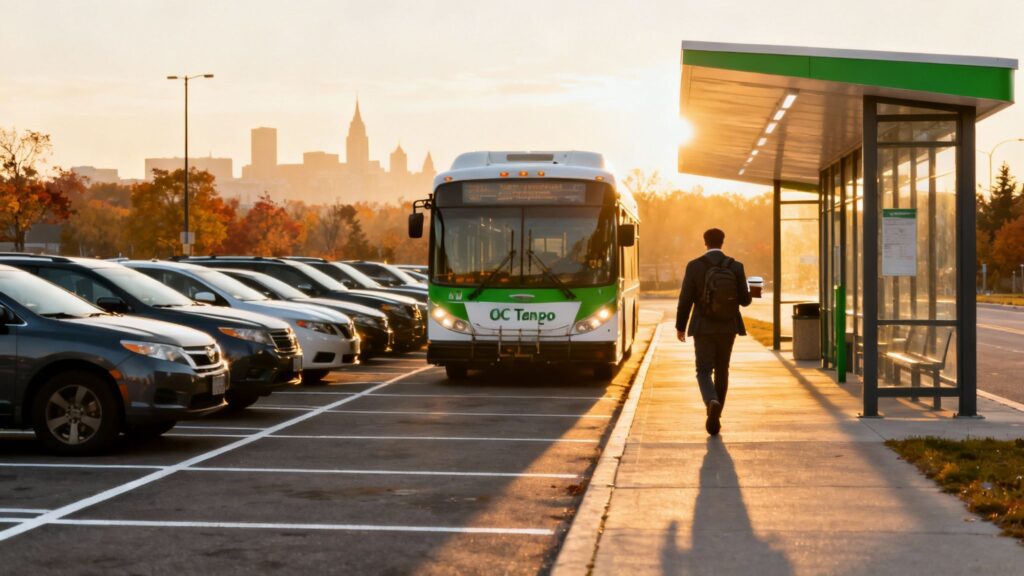
SEO Meta Description
Find your way with our guide to OC Transpo Park and Ride lots in Ottawa. Learn locations, parking rules, and tips to make your daily commute smoother and cheaper.
Your Guide to OC Transpo Park and Ride
If you have ever found yourself stuck in gridlock on the Queensway during rush hour or circling downtown for a parking spot that will not cost a small fortune, you already know the daily grind of commuting into Ottawa's core. It can be a frustrating and expensive experience.
This is where the OC Transpo Park and Ride program comes in. It is a straightforward solution: a network of parking lots where you can leave your car for free and hop onto a bus or the O-Train to finish your trip.
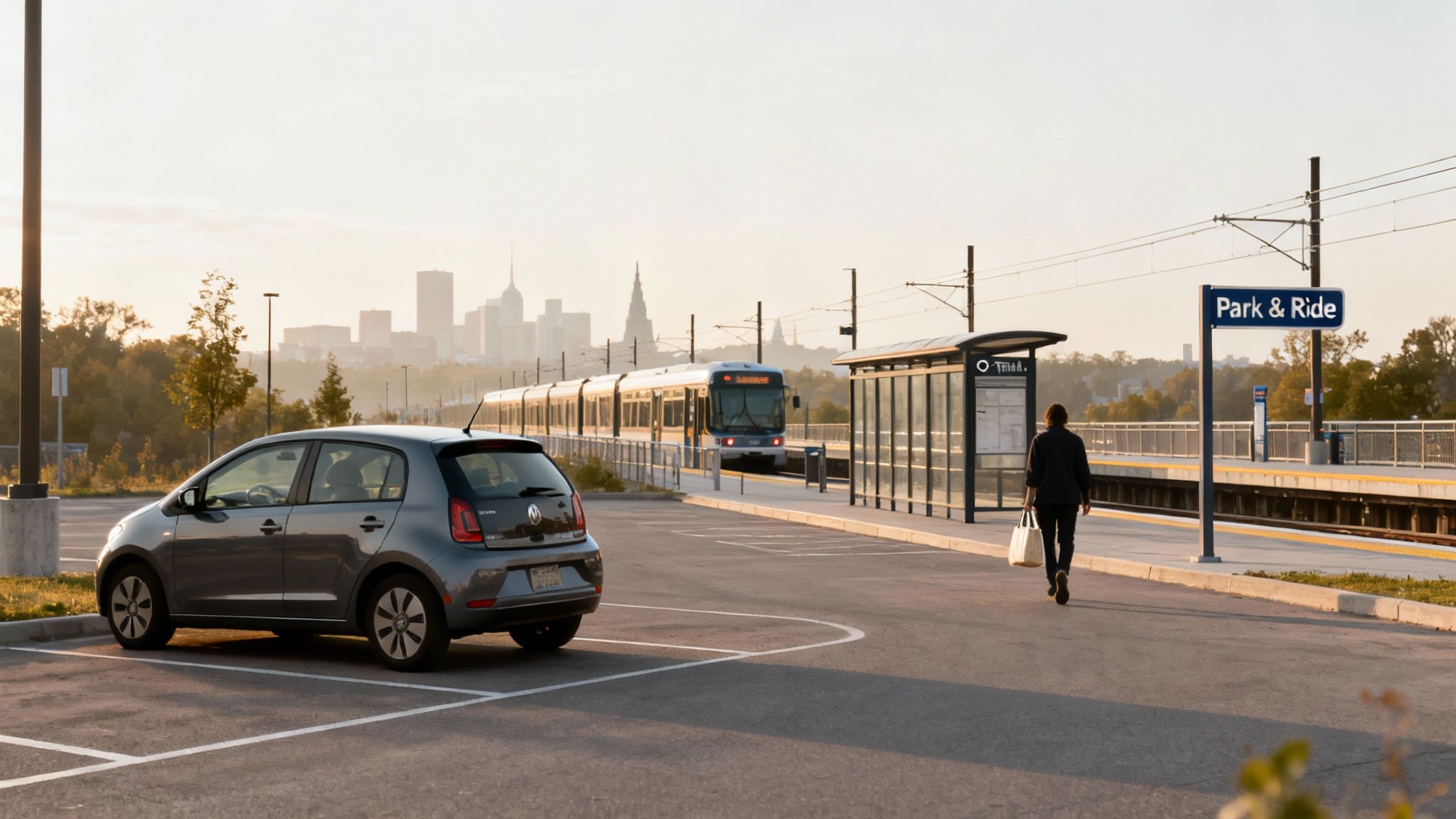
Think of Park and Ride as a hybrid approach to your commute. You get the convenience of driving for the first part of your journey, but you let OC Transpo handle the most stressful and expensive part, which is navigating congested downtown streets.
This system is designed specifically for Ottawa commuters, blending the flexibility of your own vehicle with the efficiency of public transit. You drive from home to a designated lot, then let a bus or train take you the rest of the way. It is a strategy that can save money, time, and your sanity.
How Does It Work?
The process is remarkably straightforward. The Park and Ride lots act as connection hubs, linking suburban and rural communities directly to the city's main transit lines. For many people living outside the downtown core, these lots are what make taking public transit a genuinely practical option.
Here is why many commuters use it:
- Real Cost Savings: Forget paying high daily parking rates downtown. Commuters can save hundreds of dollars every month.
- Less Stress, More Time: You can bypass the worst of peak hour traffic jams. This makes your arrival time more predictable and your journey more relaxed.
- Seamless Connections: These lots are strategically located next to major bus routes and O-Train stations for a quick and easy transfer. Our guide to Ottawa bus routes shows just how connected the network is.
The Park and Ride system is a major part of how Ottawa manages commuter flow. With over 9,000 parking spaces across the city and surrounding areas, these lots give thousands of people access to the transit network every day.
Getting Started with Park and Ride
To get the most out of OC Transpo’s Park and Ride system, it helps to know how the different lots work. They are not all the same; each is set up to handle different commuter patterns. Your best choice will depend on your schedule, how often you travel, and whether you need a guaranteed spot waiting for you.
The concept itself is simple. You drive the first part of your trip from home, park the car, and let public transit tackle the challenge of getting into the city's busiest areas. This works because the lots are located near major Transitway stations and O-Train Line 1 stops, making your transfer quick.
Understanding the Different Types of Lots
You will find three main kinds of parking lots in the network, and each has its own rules. It is always a good idea to read the signs when you pull in, as they will tell you the specific rules for that location.
- Free Park and Ride Lots: These are the most common. Spots are first come, first served, and completely free for anyone using transit. They are popular with occasional commuters or anyone looking to keep travel costs low.
- Permit-Only Parking Areas: At some of the busier lots, you will find sections reserved for people with monthly permits. This is a good option for daily commuters who cannot waste time hunting for a spot during the morning rush.
- Paid Daily Parking: A few locations offer a pay per use option. This gives you the flexibility to pay for a spot just on the days you need one, without committing to a monthly permit.
How to Secure a Monthly Parking Permit
If you are a daily Park and Ride user, getting a monthly permit can be a game-changer. It takes the guesswork out of your morning commute by ensuring you have a spot waiting for you.
A monthly Gold permit guarantees you a parking spot in a designated permit-only area from Monday to Friday. Think of it as your personal reservation for a stress-free start to the workday.
Getting a permit is usually done online through the City of Ottawa or its parking authority. The process is straightforward, but it is wise to apply well in advance, especially for popular lots that often have waiting lists. The cost varies by location but is almost always a fraction of what you would pay for downtown parking. Remember that permits are limited and in high demand at the most convenient OC Transpo lots.
Finding Your Ideal Park and Ride Location
Choosing the right OC Transpo Park and Ride lot is key to a smooth daily commute. With options all over the city, the best spot for you depends on where you live and where you are going. Ottawa’s network is divided into three main zones, East, West, and South, designed to serve major residential areas and funnel commuters into the core transit system.
Major hubs like Trim and Place d'Orléans are in the east, Fallowfield is to the south, and Tunney's Pasture is in the west. These are some of the biggest and busiest lots for a reason. They offer direct, frequent connections to the O-Train and major bus routes, making them a popular choice for thousands of people every day.
Major Park and Ride Lots by Area
To make it easier, let's break down the main options across the city. Remember, the most popular lots fill up fast, especially during the morning rush. It is always good to have a backup plan.
This infographic gives you a quick visual on the different parking rules you will find across the network.
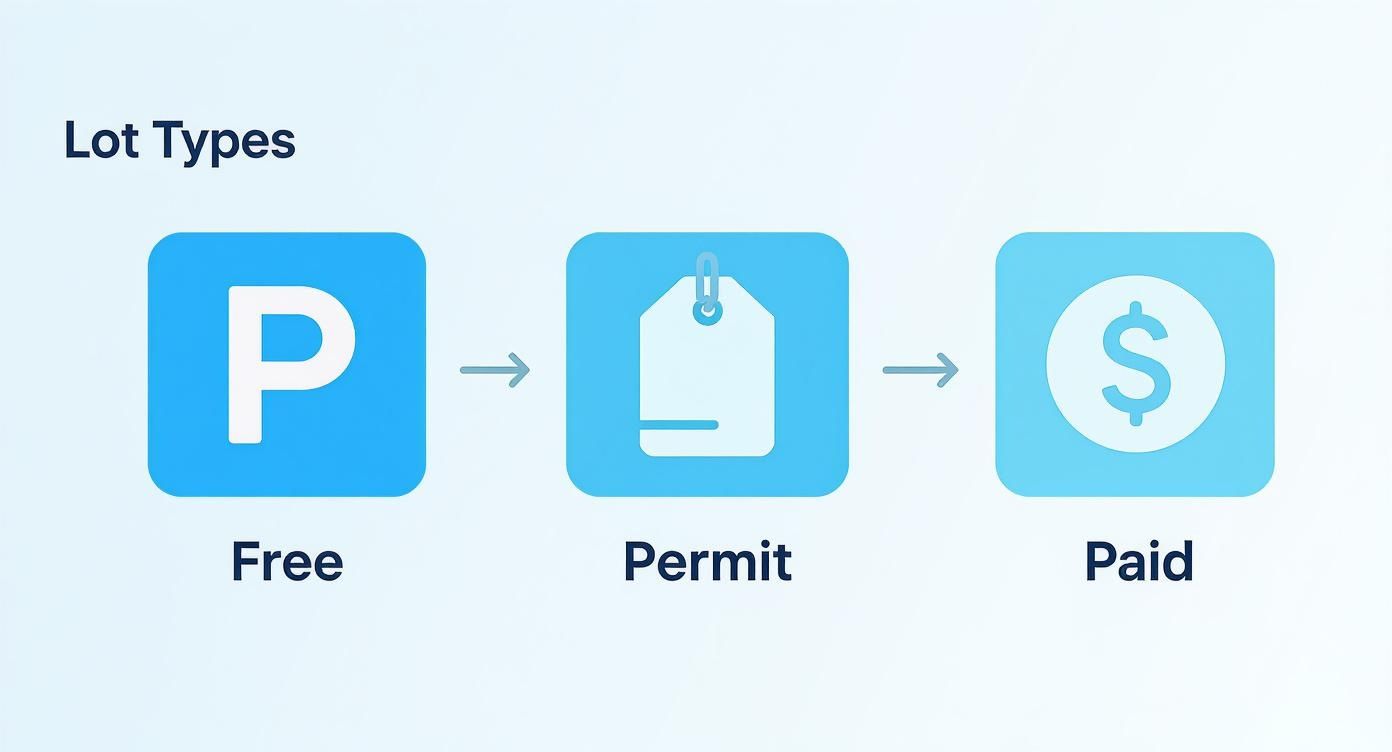
As you can see, the system is a mix of free spots, monthly permits, and daily paid parking, so there is an option for almost every type of commuter.
To help you find the best lot for your routine, here is a quick reference table of the major locations.
Key OC Transpo Park and Ride Lots
| Lot Name | Location (Area) | Approximate Spaces | Parking Type | Primary Transit Connection |
|---|---|---|---|---|
| Trim Station | East | 1,000+ | Free & Permit | O-Train Line 1 |
| Place d'Orléans | East | ~750 | Free & Permit | O-Train Line 1 / Bus |
| Eagleson Station | West | ~1,800 | Free & Permit | Express Bus Routes |
| Tunney's Pasture | West | Limited | Paid Only | O-Train Line 1 |
| Fallowfield Station | South | ~1,600 | Free & Permit | Express Bus / VIA Rail |
| Greenboro Station | South | Ample | Free | O-Train Line 2 / Bus |
This table should give you a solid starting point, but let’s look at what makes each of these hubs unique.
East End Hubs
The east end is well served by a couple of major facilities that feed directly into the O-Train’s Confederation Line, making for a smooth trip downtown.
- Trim Station: This is a large lot with over 1,000 spaces. It is the main choice for anyone coming from Orléans or the surrounding rural communities. You will find both free and permit sections here, and it is the final stop at the eastern end of Line 1.
- Place d'Orléans Station: Located beside the shopping centre, this lot offers around 750 spaces. Its convenient location and direct access to both the O-Train and major bus routes make it very popular, and it fills up fast on weekday mornings.
West End Connections
Out west, a few key lots serve as crucial links for commuters driving from Kanata, Stittsville, and Nepean.
- Eagleson Station: This is a massive lot with roughly 1,800 spaces, acting as a vital hub for express buses that go downtown along the Transitway. It offers a mix of free and permit parking.
- Tunney's Pasture Station: While it mainly serves the federal government complex, this station is a major transfer point and the western end of the downtown O-Train tunnel. Parking here is limited and paid only, so it is more of a destination than a traditional starting point for commuters.
Local Tip: Be aware that large lots like Trim and Fallowfield are often full by 7:30 a.m. on weekdays. If your schedule has some flexibility, arriving a bit earlier can save you the headache of looking for a spot. You can also check a live Ottawa traffic cam before you leave home to better time your drive.
South End Options
For everyone in Barrhaven, Riverside South, and Manotick, the southern lots are your connection to the O-Train's Trillium Line and bus routes.
- Fallowfield Station: This is a major multimodal hub where OC Transpo meets VIA Rail. It provides over 1,600 parking spaces (both free and permit) and is the primary park and ride for most of Barrhaven.
- Greenboro Station: Another key transfer point, Greenboro connects the south end bus network with the Trillium Line. It has a good number of free parking spaces and is usually a reliable option for commuters in the area.
A Look at Lot Safety and Accessibility
Beyond just finding a parking spot, you want to know what to expect at an OC Transpo Park and Ride. A safe, well lit environment can make a big difference, letting you start and end your commute with peace of mind. OC Transpo has designed these lots with a focus on accessibility and security.
Park and Ride lots have long been a core part of Ottawa’s plan to ease traffic downtown. Even in the late 1990s, four large facilities offered roughly 2,140 spaces to help suburban commuters use Transitway buses instead of driving into the core. It is a strategy that has evolved but has always aimed to make the transit switch seamless.
Accessibility for All Riders
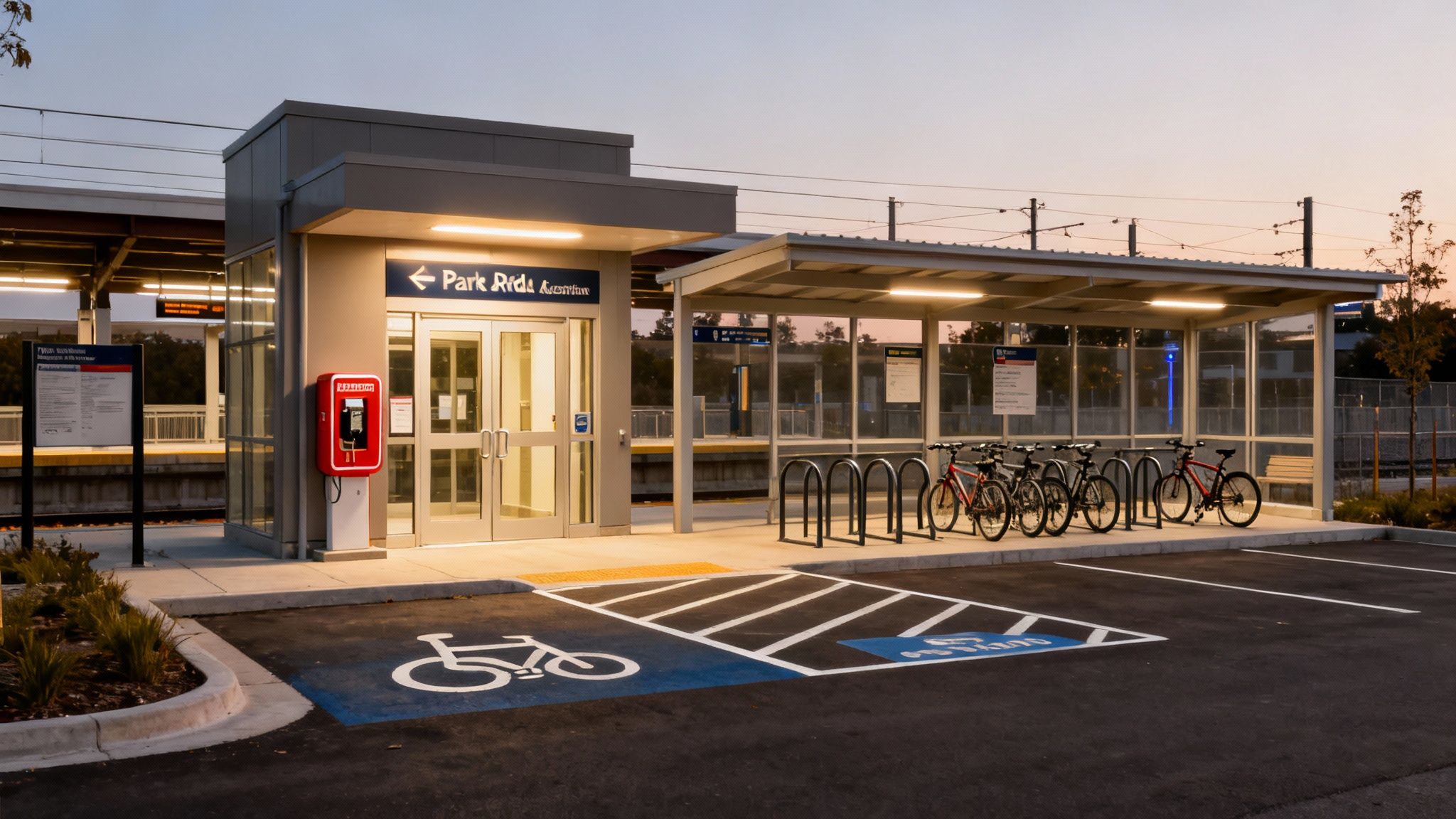
Ensuring everyone can use the system is a priority. All OC Transpo Park and Ride lots are built to meet provincial accessibility standards, so you will always find designated accessible parking spaces.
These spots are placed where they make the most sense:
- Close to Station Entrances: They are set up to offer the shortest, most direct route to the bus stop or O-Train platform.
- Clearly Marked: They are easy to identify. Look for the familiar blue and white accessibility symbol on signs and painted on the ground.
- Sized for Accessibility: The spaces are wider to give plenty of room for vehicles with ramps and lifts.
This type of design helps break down barriers for riders with mobility needs, making the switch from car to transit as easy as possible.
Safety and Security Measures
Feeling safe when leaving your car at dawn or returning after dark is essential. While no parking lot can be completely incident proof, OC Transpo has several features in place to boost security across its network.
Many of the larger lots have emergency call boxes, giving you a direct line to security or emergency services if you need it. Good lighting is also a standard feature, which makes a big difference for visibility in the early mornings and late evenings. On top of that, some major stations have regular patrols from OC Transpo Special Constables, adding another layer of security.
Commuter Tip: Always lock your car and keep your valuables out of sight. Even with security measures in place, these simple habits are your best defence against theft.
Amenities to Improve Your Commute
It is often the small things that improve the daily routine. Many lots offer extra amenities that make life easier. For cyclists, bike racks are common, which is great if you want to combine a bike ride with your transit trip.
At the bigger stations, you will usually find covered waiting areas to keep you out of the rain or snow. These details might seem minor, but they add up to a more comfortable and convenient commute.
Tips for a Smarter Commute
Getting the hang of the OC Transpo Park and Ride system is about strategy, especially when dealing with the morning rush. A few simple adjustments to your routine can turn a potentially frantic morning into a smooth, predictable trip. It comes down to thinking ahead.
A little planning helps you avoid the classic problem of pulling into a full lot. You will build a more flexible commute that can handle whatever the day brings, whether it is a traffic jam or a sudden snowstorm.
Beat the Morning Rush
It is an old saying for a reason: the early bird gets the worm, or in this case, the parking spot. At popular lots like Trim, Eagleson, and Fallowfield, spots can disappear quickly, often well before 7:30 a.m. on a typical weekday. Arriving just 15 minutes earlier can be the difference between getting a great spot and circling the lot.
It is also smart to have a Plan B. Know where your next closest Park and Ride is. Sometimes, driving an extra five minutes to a less crowded lot is quicker than waiting for someone to leave your preferred spot.
Plan for the Weather
Ottawa’s weather is unpredictable, and each season calls for a different plan. Winter, especially, demands more patience. After a big snowfall, give yourself extra time. You will need it to navigate slick parking lots and to account for potential transit delays. Good winter boots are essential for the walk from your car to the bus platform.
Good weather can be an opportunity to switch things up. Maybe you can drive to a lot that is a bit farther from home but closer to a major O-Train station, cutting down your time on the bus or train. Flexibility is your friend.
A resilient commute is not just about having one solid plan; it is about having options. Combining Park and Ride with other strategies, like carpooling to the lot or using a local bus to connect to a station, builds a system that works for you.
Use Technology to Your Advantage
Do not leave your commute to chance when you have powerful tools in your pocket. A quick check before you leave home can help you make smarter decisions.
- The OC Transpo App: This should be your source for live bus and train schedules. You can use it to time your arrival at the lot, minimizing your wait time.
- Live Traffic Maps: A quick look at Google Maps or Waze can help you pick the best route to the lot, letting you avoid unexpected gridlock.
Using these tools helps you stay one step ahead. It is a proactive approach that pairs with OC Transpo's own goals for reliability. The organization aims for a 99.5% service delivery rate on its bus routes, which highlights the value of the Park and Ride network.
For many commuters, cost is also a factor. If you are looking for ways to reduce your monthly transit budget, it is always worth checking if you qualify for programs like the city's low-income bus pass.
Got Questions? We’ve Got Answers.
Even with a solid plan, the daily reality of commuting can be challenging. It is a good system, but certain situations come up that every Park and Ride user eventually wonders about.
This is your quick reference guide for handling those specific scenarios. From what to do on a snow day to figuring out payment, these answers can clear up any confusion and get you on your way.
Can I Leave My Car Overnight at a Park and Ride Lot?
The short answer is no. OC Transpo Park and Ride lots are for daily commuter use. Leaving your car overnight will likely result in a ticket or having your vehicle towed at your own expense.
You will see clear signs at every lot that state the hours. If you are in a situation where you might have to leave your vehicle, your best option is to call OC Transpo directly to see what options you have. For trips that need multi day parking, such as flying out of YOW or taking VIA Rail, you should use their designated long term lots.
What Should I Do If a Park and Ride Lot Is Full?
It is a common commuter frustration, especially at popular spots during the morning rush. Finding a "Lot Full" sign can disrupt your morning, which is why having a backup plan is so important.
Your best strategy is to already know where a second, nearby lot is. Driving a few extra minutes to a less crowded alternative can save you a lot of stress. Seasoned commuters will tell you to get to high demand locations like Trim, Eagleson, or Fallowfield before 7:30 a.m. if you want to guarantee a spot.
Another tip is to drive to a smaller, local bus stop instead of the main Park and Ride. If it has a route that feeds directly into a major transit station, you can bypass the busiest lots altogether while still connecting to the main transit network.
Do I Need a Presto Card to Park My Car?
No, you do not need a Presto card just to park your vehicle, since parking itself is free at most OC Transpo lots. The fare is for the transit ride, not the parking spot.
That said, you still need a way to pay for the bus or O-Train. If you do not have Presto, you have other options:
- On the bus, you can pay with a credit card, a debit card with tap, or the exact cash fare.
- O-Train stations all have ticket machines where you can buy a single ride ticket or a day pass using cash, credit, or debit.
So while Presto is not required to park, you will need a valid payment method to get on board.
Are the Park and Ride Lots Maintained in the Winter?
Yes, they are. The City of Ottawa and OC Transpo are responsible for winter maintenance, which includes snow clearing and salting to keep the lots as safe as possible.
However, during and right after a major snowstorm, conditions can still be difficult. It is always a good idea to give yourself some extra time to navigate the lot and walk to the station. Drive slowly, watch for ice, and wear proper winter boots. A little extra caution on a snowy Ottawa morning makes a world of difference.
For commuters, the OC Transpo Park and Ride system offers a practical way to manage the daily trip downtown. It is a civic tool designed to reduce traffic, save money, and make public transit more accessible to everyone in the region.
At NCR Now, we're dedicated to providing practical guides that help you navigate life in Ottawa and the National Capital Region. For more local news, community stories, and useful explainers, visit us at https://ncrnow.ca.
Article created using Outrank
About The Author