
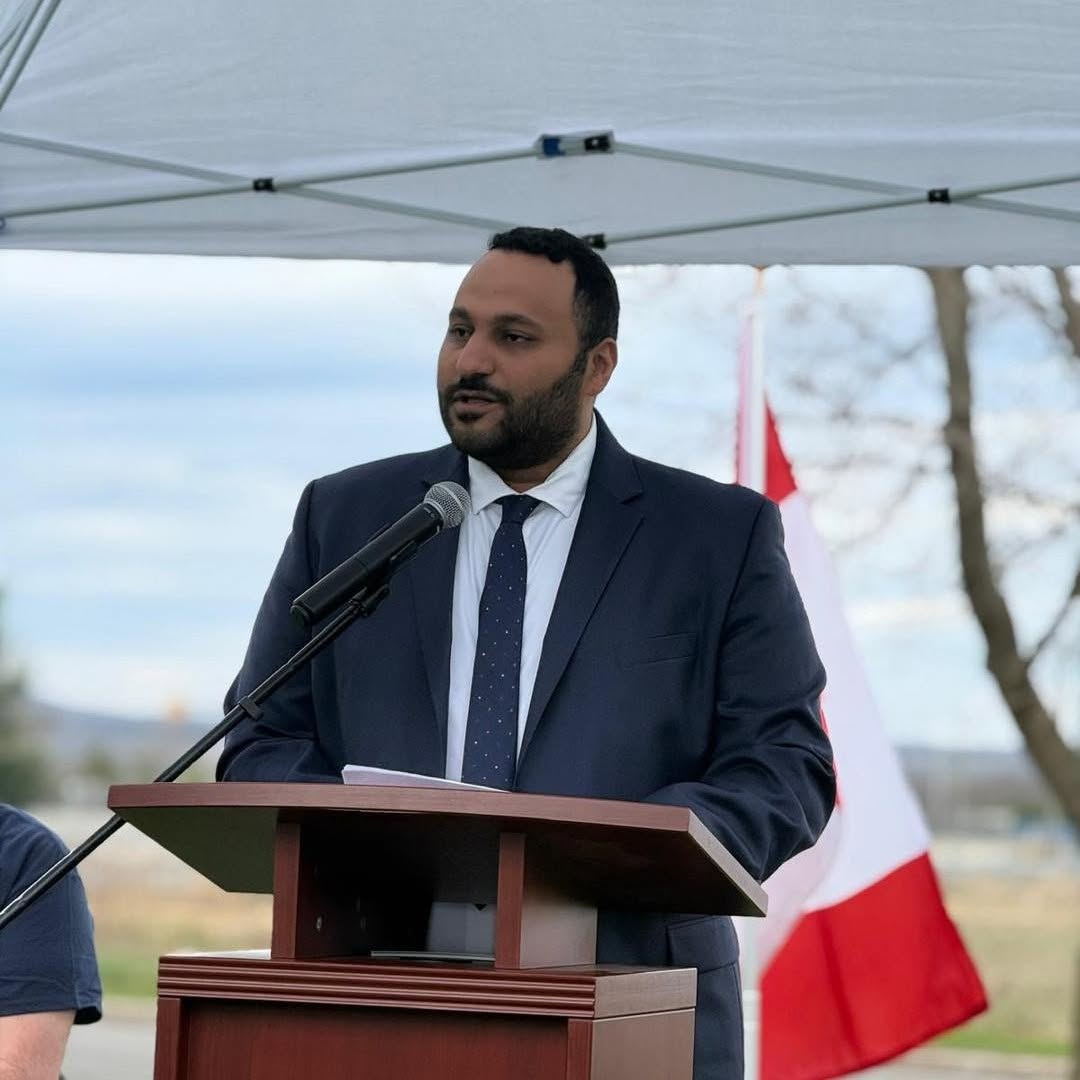
Sherif Rizk via Sherif Rizk on Facebook
The following are 5 questions that we sent out to every council candidate in hopes of getting to know them better. We publish the responses exactly as we receive them, in the order that they were sent to us. Here are the responses from Orléans East-Cumberland (Ward 1) Council candidate Sherif Rizk.
1. Who are you? Where are you from? What relevant experience do you have for the job?
My name is Sherif Rizk. I am a lawyer and notary public. I’ve been a proud resident of Orleans since 2009, although I had a brief stint from 2016 to 2018 where I worked in Toronto. Before that, I lived in various places for work and education, including the East Coast. I proudly moved back to Orleans and started my business here in Ottawa. Through my law practice, Rizk Law Office, I have served residents in Orleans and Cumberland as both a lawyer and notary public, in English and French. Over the years, I’ve met thousands of people, helping them navigate some of life’s most difficult circumstances, as well as helping them plan ahead by preparing their wills and powers of attorney. There’s a very good chance that you, or someone you know, has met me for one of these services!
But I’m more than a lawyer. I’m also a proud husband and father to two young kids (5 and 1). They are one of the reasons I wanted to run for office. I wanted to build a better community for them; I want them to feel like this is a place where they can work, play, grow their own families, and lay down their roots here, too.
My experience as a lawyer, as a business owner, and as a father have equipped me with the relevant experience for this job. Being a city councillor requires you to put on many different hats. You have to solve problems. You have to advocate. You have to care about your community. You have to think ahead and plan for the future. These are all hats that I already wear on a day-to-day basis at work and at home. And I don’t only do this for myself or for my family, but I do it for members of the community who come to me seeking my legal services. I feel that I am ready to provide this service to the community at large, and I think I have the experience and knowledge to be a strong advocate for our community.
2. The city spends nearly $1B/y on OCTranspo, though many constituents remain dissatisfied with the state of Ottawa’s public transportation. What would you do as a councillor to improve the city’s transportation system?
Yes, I get this question very frequently. In order to understand this frustration, we have to understand what we used to have, and what we have now.
Ottawa used to have a public transportation system that was the envy of North America. We were among the first to create a transitway system that made public transportation efficient and reliable. It was an idea that put Ottawa on the global map for its ingenuity and efficiency.
We were all asked to give that up for something more promising: an LRT system that would be just as, if not more, reliable and efficient. But the result so far has been far from that. And it has become unreliable and inefficient at a significant cost, too. And while we’re trying to resolve the LRT issues, we don’t have enough buses or efficient routes that can make public transportation reliable again.
So when you ask me “what would you do to improve the city’s transportation system?”, I would simply answer “We need accountability”. There has to be some accountability for who is responsible for completing the LRT and bringing what was promised to residents and taxpayers. There has to be some accountability for someone at the city to say “we cannot sit here idly while people struggle to get around on public transportation”. We need some accountability to say “this was a bad decision, and we need to make it right”. One of the things I would advocate for is to complete a comprehensive legal review to determine what legal avenues the City has for accountability, and to the extent that those legal avenues have not yet been exercised, advocate for using them. This does not necessarily mean litigate against everyone in court; it means looking at the underlying contract, asking the tough questions, and determining if the City has done enough to push RTG (the builders of the LRT) to get this project done and done well.
It also means being more proactive about preventing system setbacks and breakdowns. It was shocking to learn that the LRT had 130,000 failure points within the first few months of operation after Line 1 opened. The contract permitted failure points, but not as high as 130,000. That history raises serious questions about whether enough was done before opening to identify and rectify problems, and whether the City’s contractual protections have been used effectively since. We need to continue to monitor the transportation network and system to identify problems and fix them before they become bigger problems.
These are not problems that only one councillor can solve, but it takes one councillor to start demanding these standards for others to follow suit, and for City Staff to start implementing these measures.
3. In a December 2025 poll from Abacus Data, 37% of respondents said that cost of living was the most important issue facing the city; another 19% responded ‘housing affordability.’ What would you do as a councillor to make the city of Ottawa more affordable?
Making Ottawa more affordable should start with understanding that the costs of living have increased for reasons not entirely within the City’s control. If costs of living includes costs of groceries, the City does not control grocery costs, and cannot directly impact that aspect of the affordability crisis.
But with that said…there is a lot that the City can do to make life more affordable. It starts with looking at ways to prevent or limit tax increases. If the answer to the budget shortfall is “we need to raise more money”, we should be looking at other sources for those funds rather than continuing to raise property taxes. Only after we’ve looked at different sources of revenue should we be asking if raising property taxes is necessary or reasonable in the circumstances. That means aggressively pursuing senior government funding, examining underused municipal revenue opportunities, and reviewing fees where appropriate and finding efficiencies before asking homeowners for more.
But there is also a lot of benefit in fixing our transportation system in that it can make life more affordable. If it costs less for you to take the bus or the train to where you need to go, and it’s just as reliable as getting there by car, then this can fix affordability issues as well. We shouldn’t look at things in isolation.
Housing affordability is a complex issue, but certainly the City has a role to play by making more housing units available and at a faster rate. Our city has grown significantly over the last 20 years or so; and we’re estimated to have another significant increase in residents over the next 20 years. It’s estimated that we’ll need to build close to 600,000 homes to accommodate this population growth, and we have currently built around 470,000. Due to that shortfall, housing affordability has become an issue because housing supply is the issue. There is a plan to build close to 200,000 units over the next 20 years, but we need to move efficiently to be able to meet that goal.
If elected, I would want to identify areas that are ripe for development, and advocate for a responsible plan to build medium-density housing in these areas while making sure that city services (like water, sewage, garbage and snow removal) operate efficiently across the board. This is how we can make sure we not only fix housing affordability, but can continue to grow sustainably and with purpose.
4. Certain city services like OCTranspo and the OPS have run significant deficits in recent years. Is there anything that you would do as a councillor to try to balance the city’s budget?
OC Transpo’s budget deficit is closely tied to the LRT issues. OPS has significant deficit (anticipated at $21.6 million for 2026) due to overtime and project costs, among other reasons. I have asked residents in Ward 1 what they think about this issue, and most residents I’ve spoken to want City Council to assess whether the original budget was realistic. But a significant portion of residents also want to assess whether police overtime costs are reasonable. Regarding the OPS deficit, these two aspects would be the first I would examine to balance the budget more effectively. I want to make sure that members of OPS have the resources they need to do their very difficult job, but at the same time on budget and in line with respecting the taxpayer’s dollars.
I understand that these are two significant line items in the City’s budget, and making cuts to these items can have significant consequences. They also have to be balanced with other city services like road repairs and maintenance, public health, and recreational programs. Balancing a budget is not just about making cuts, but it also involves seeking new avenues for funds (e.g. provincial or federal government grants and programs, or new revenue streams for the city that have been underutilized), and identifying more efficient ways to use the funds already in the budget.
5. Why are you running for Council? What do you think is the biggest issue facing your ward today?
Our ward is at a crossroads. The biggest challenge facing Ward 1 is managing growth without sacrificing the services and quality of life people already depend upon. Orleans East-Cumberland is entering a growth phase, and needs leadership that will act today for the benefit of tomorrow. Many residents here are growing older, and need to have reliable access to city services like buses and trains, while also maintaining the local charm that keeps Orleans and Cumberland unique. Many young families are also having children here, and they want to make sure that their community will remain safe and affordable for themselves and for their kids in the future.
The question isn’t whether we’re going to grow. It’s whether we’re going to grow by accident or grow with purpose
There is also a real desire for Orleans to become a significant contributor to Ottawa’s economic and recreational scene. Orleans can become an incredible hub for business and innovation if we invest in it and help it to grow, with purpose. I want to bring my experience, knowledge, and ideas to the table to help Orleans East-Cumberland have a real, strong voice at City Hall. I believe I can deliver on making sure our services remain accessible, that we have efficient and reliable infrastructure, and that we grow our community with purpose.
I’m running to Put Ward 1….On Track!
About The Author