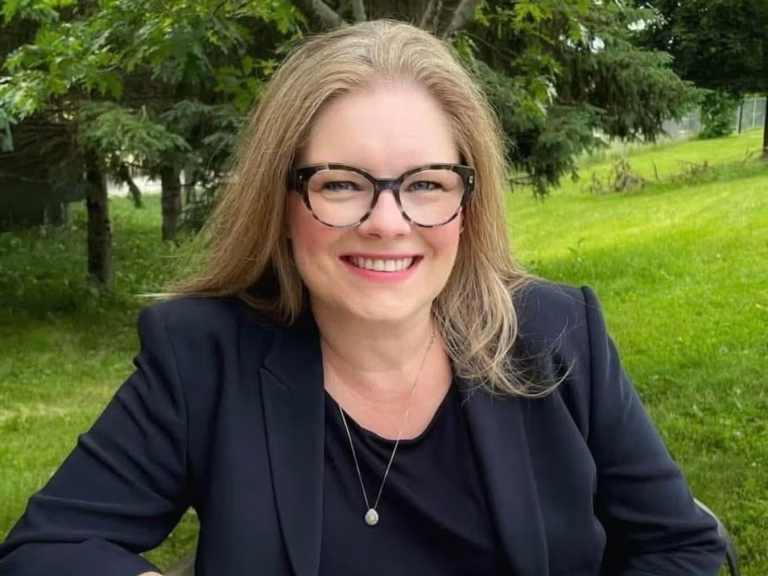

Jenna Jessop. Photo courtesy of Jennajessop.ca
The following are 5 questions that we sent out to every council candidate in hopes of getting to know them better. We publish the responses exactly as we receive them, in the order that they were sent to us. Here are the responses from Orléans West-Innes (ward 2) council candidate Jenna Jessop.
1. Who are you? Where are you from? What relevant experience do you have for the job?
I grew up between Belleville, Ontario, and moved to Ottawa to attend Carleton University. I now live in Convent Glen with my family and am proud to call Orléans home.
Before joining the public service, I spent 10 years as a corporate travel agent. A decade of dealing with cancellations, missed connections and last-minute changes may be better preparation for City Hall than it sounds! It taught me to stay calm, solve problems and help people when plans go wrong.
Today, I specialize in change management, communications and stakeholder engagement. Change management is about the people side of change. It means understanding who will be affected, involving them early, communicating clearly and helping turn plans into changes that work in practice.
A strong feedback loop is central to that work. Consultation should not mean asking for input once and then disappearing. It means listening, explaining what was heard, showing how feedback influenced the decision and continuing to make adjustments when something is not working.
That experience is directly relevant to Council. I would bring a practical, collaborative and people-focused approach to representing Ward 2, with residents involved throughout the decision-making process.
2. The city spends nearly $1B/y on OC Transpo, though many constituents remain dissatisfied with the state of Ottawa’s public transportation. What would you do as a councillor to improve the city’s transportation system?
Spending more alone will not rebuild public trust. We need to ensure transit funding produces reliable, practical service that reflects how residents actually travel.
I would prioritize frequent and dependable local buses connecting residents to work, schools, appointments, businesses and the LRT. I would push to restore service in underserved neighbourhoods, protect successful express routes where demand supports them and improve direct peak-period options for communities poorly served by rail.
We also need a reliable plan for major Line 1 disruptions. Riders should not be left waiting while replacement service is improvised. I would advocate for a pre-planned network of express buses from key suburban hubs, supported by clear routes, available operators and timely communication.
Finally, I would push for transparent reporting on cancellations, on-time performance, missed connections and staffing. Residents should also be meaningfully consulted before routes are changed, not simply informed afterward.
3. In a December 2025 poll from Abacus Data, 37% of respondents said that cost of living was the most important issue facing the city; another 19% responded ‘housing affordability.’ What would you do as a councillor to make the city of Ottawa more affordable?
The City cannot control every cost residents face, but its decisions still affect household budgets. Property taxes, transit fares, recreation fees and the availability of housing and essential services all matter.
I would focus City spending on essential services and carefully review major projects to ensure residents are receiving good value. I would also consider the impact on families, seniors and lower-income residents before supporting increases to taxes or user fees.
On housing, I would support building a wider range of homes, including more rental housing, family-sized units and housing options for seniors. I would push the City to use suitable public land for affordable housing, work more closely with non-profit and co-operative housing providers, and protect existing affordable rental homes. New development must also be supported by the infrastructure and services communities need.
Affordability is about more than housing. Reliable local transit can help families avoid the cost of owning another vehicle, while accessible recreation programs and well-maintained public spaces allow residents to participate in community life without facing high costs.
For every major decision, I would ask: Is this necessary, is it affordable, and does it make everyday life better for residents?
4. Certain city services like OC Transpo and the OPS have run significant deficits in recent years. Is there anything that you would do as a councillor to try to balance the city’s budget?
Balancing the budget starts with honest and realistic budgeting. Repeated deficits should not be treated as unexpected if the same pressures appear year after year.
I would push for earlier public reporting when departments are going over budget, closer review of overtime and outside contracts, and clear plans to address recurring cost overruns. I would also look for savings in administration, procurement and duplicated work before cutting frontline services residents rely on.
For transit, the City must rebuild ridership through reliable service while continuing to press the provincial and federal governments for fair operating support.
Every department should be accountable for public dollars, but balancing the budget cannot simply mean reducing essential services or passing every shortfall on to taxpayers.
5. Why are you running for Council? What do you think is the biggest issue facing your ward today?
I am running because Ward 2 deserves a councillor who is present, listens carefully and communicates openly. As a resident, mother and public servant specializing in change management and stakeholder engagement, I understand how important it is to involve people early and ensure they know how decisions will affect them.
The biggest issue facing our ward is that growth is moving faster than the infrastructure and services needed to support it. Residents see this in unreliable local transit, congested roads and delayed community improvements. We need to plan ahead, invest in essential services and consult residents before decisions are made, not after.
About The Author