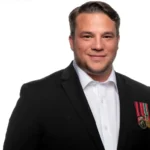

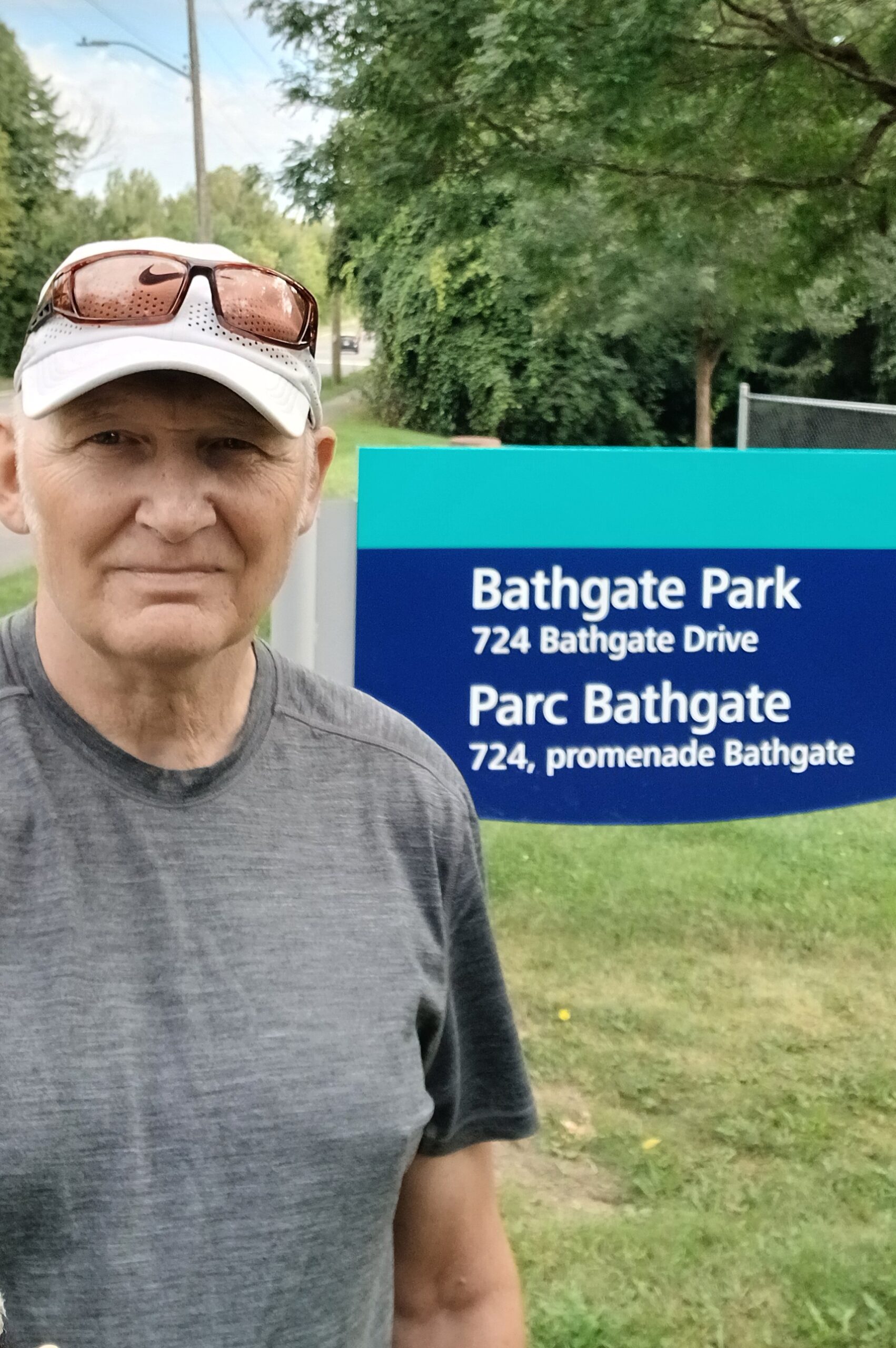
Peter Karwacki. Photo courtesy of the Peter Karwacki campaign
The following are 5 questions that we sent out to every Ottawa City Council candidate in hopes of getting to know them better. We publish the responses exactly as we receive them, in the order that they were sent to us. Here are the responses from Rideau-Rockcliffe (Ward 13) Council candidate Peter Karwacki.
1. Who are you? Where are you from? What relevant experience do you have for the job?
I’m Peter Karwacki, running for Ward 13 (Rideau-Rockcliffe). I’ve got deep roots in this community and I’ve been engaged in it for years, well before this campaign. Professionally, I’m a certified Project Management Professional (PMP) and a trained data analyst — I spent 13 years at IBM and Cognos, and I have 15 years of experience in health services on top of that. I now run a consulting business, peermetrics.ca, benchmarking project performance. That combination is the whole reason I’m running: I’ve spent my career in fields where outcomes get measured — where you don’t get to just say a program worked, you have to show it — and almost nothing at city hall gets held to that same standard. I’ve spent the last several years publishing accountability journalism on Ottawa municipal governance — committee attendance records, audit findings, budget liabilities — at peterkarwacki.blogspot.com, because someone has to actually check the paperwork, not just react to the press release.
2. The city spends nearly $1B/y on OC Transpo, though many constituents remain dissatisfied with the state of Ottawa’s public transportation. What would you do as a councillor to improve the city’s transportation system?
OC Transpo doesn’t have a money problem so much as an oversight problem. Ward 13’s own councillor has spent years publicly calling for stronger LRT oversight while never once sitting on the Transit Commission or the Light Rail Subcommittee — the actual bodies where that oversight happens (background: https://peterkarwacki.blogspot.com/search?q=Transit+Commission). I’d fix that mismatch on day one: sit on transit committee, and hold every major rollout — the O-Train East extension included — to real testing rigor before launch, not after a failure (https://peterkarwacki.blogspot.com/search?q=testing+rigor+LRT). I’d also push to modify 311 into real infrastructure — GPS-triggered project and service lookups — instead of another app nobody downloads (https://peterkarwacki.blogspot.com/search?q=311), so residents can actually see where their transit dollars go, in real time.
3. In a December 2025 poll from Abacus Data, 37% of respondents said that cost of living was the most important issue facing the city; another 19% responded ‘housing affordability.’ What would you do as a councillor to make the city of Ottawa more affordable?
Affordability isn’t just a housing-supply problem, it’s a bookkeeping problem too. I’ve documented over $400M in affordable housing funding the city was eligible for and hadn’t drawn down (https://peterkarwacki.blogspot.com/search?q=affordable+housing+funding). That’s real money sitting on the table while people can’t find a place to live. My time in health services also taught me how quickly service costs compound when preventive investment gets deferred — the same logic applies to housing and to core city services generally. I’d also flag that Ward 13 has real exposure to federal workforce cuts and trade-war fiscal pressure that most residents don’t see coming through their municipal tax bill (https://peterkarwacki.blogspot.com/search?q=federal+workforce+cuts) — I’d rather warn people now than let city hall discover it for them later.
4. Certain city services like OC Transpo and the OPS have run significant deficits in recent years. Is there anything that you would do as a councillor to try to balance the city’s budget?
Yes — and it starts with naming what the city actually owes. I’ve catalogued Ottawa’s liabilities in detail (https://peterkarwacki.blogspot.com/search?q=Ottawa+liabilities), and Lansdowne 2.0 is the clearest example: financing structured in a way that leaves the city holding risk it never should have accepted (https://peterkarwacki.blogspot.com/search?q=Lansdowne). OC Transpo and OPS deficits aren’t going to be solved by finding villains — they’re going to be solved by treating them as solvable process problems, the same way you’d manage risk in any large service organization. On policing specifically, an annual independent audit of database access and use — not another statement of confidence — would cost far less than the failures it prevents (https://peterkarwacki.blogspot.com/search?q=police+database+audit). I’d rather fix the structure once than keep paying for the same mistake every budget cycle.
5. Why are you running for Council? What do you think is the biggest issue facing your ward today?
Because Ottawa’s incumbents win effectively every time, turnout sits around 40%, and urban wards like ours get outvoted 16-9 on council by suburban ones. That’s not a conspiracy, it’s just structural — and nobody’s vote matters until residents show up and start asking harder questions than “how do I feel about my councillor.” I’m not chasing a career here — I’ve committed to one term — so my only job is to tell people the truth about how this city is actually run, even when it’s less comfortable than the newsletter version. The biggest issue facing Ward 13 today is that basic infrastructure decisions — sidewalks, flood mitigation, traffic safety — keep getting decided on optics instead of evidence, and residents are left finding out after the vote instead of before it.
Editor’s note: Unlike most of the interviews that we’ve published, the hyperlinks found in Mr. Sewanaku’s answers were placed by him, not the NCRNow team.
About The Author