
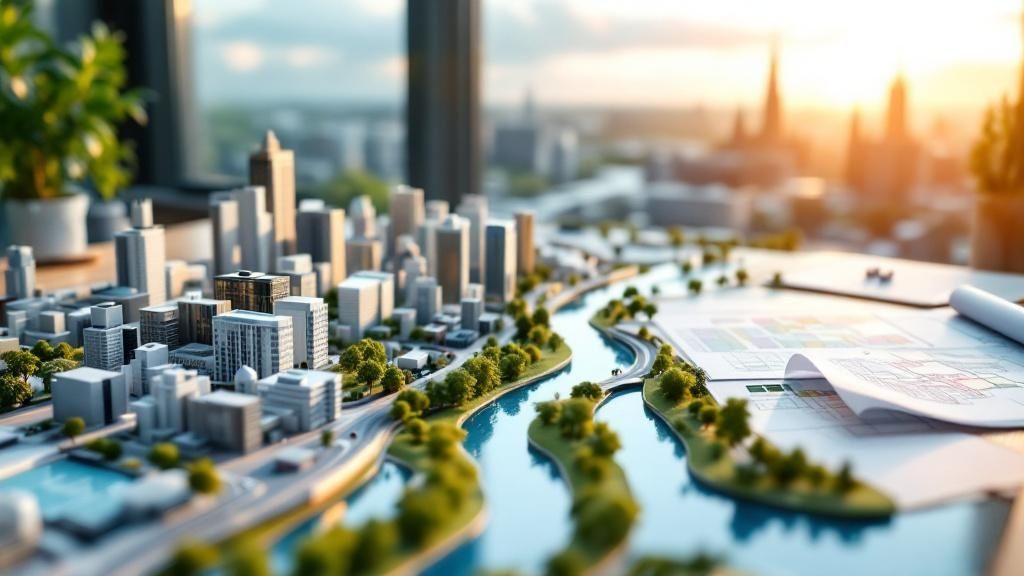
Think of the last time you walked through your neighbourhood. Did you ever wonder why the park is just there, or why the grocery store is a short walk away, but the noisy industrial area is miles across town? That’s no accident. That’s urban planning in action.
At its core, urban planning is the art and science of shaping our communities. It’s about creating a blueprint for a city's future, thoughtfully deciding where homes, businesses, parks, and roads should go to make life better, fairer, and more enjoyable for everyone.
What Is Urban Planning, Really?

Urban planning is much more than just drawing lines on a map. It’s a complex and deeply human field that blends technical know-how with political savvy to guide how our cities grow, manage precious resources, and ultimately, improve our quality of life.
When we talk about "what is urban planning," we're really asking how we organize our shared spaces to hit key social, economic, and environmental targets. It's the invisible force behind the convenience of a nearby bus stop, the safety of a well-lit street, and the very structure of your daily commute.
More Than Just Buildings and Roads
While infrastructure is a huge piece of the puzzle, modern urban planning goes much deeper. It’s a delicate balancing act between meeting the needs of today's residents and anticipating the challenges of tomorrow. The goal is to build cities that are not just efficient, but also resilient, inclusive, and sustainable.
Planners have to juggle several critical elements all at once:
- Community well-being: This means ensuring everyone has access to the essentials—good schools, healthcare, fresh food, and green spaces to relax and play.
- Economic health: It’s about creating an environment where businesses can thrive, local jobs are available, and the economy is strong and diverse.
- Environmental sustainability: This involves protecting our natural spaces, encouraging green building, and designing communities that can adapt to a changing climate.
Every single decision, from a new bike lane to a major housing development, is part of a much bigger picture. These choices are all interconnected, and one project can ripple outwards, affecting traffic, property values, and the unique character of a neighbourhood for decades to come.
Urban planning is fundamentally about making choices. It’s about envisioning what a community can become and creating a practical, step-by-step plan to get there, ensuring the final result serves the public good.
The Planner's Balancing Act
So, who makes these choices? Urban planners are the guides who navigate the complex and often competing interests within a city. They work with everyone—government officials, developers, community groups, and the public—to try and build a shared vision.
Think about it: a proposal for a new high-rise might be championed for adding much-needed housing, but neighbours might worry about the shadow it casts or the extra traffic it brings.
This is where the planner steps in. Their job is to analyze all the potential impacts, listen to public feedback, and recommend a path forward that aligns with the city’s long-term goals. They use data, community consultation, and proven principles to inform their recommendations, shaping the very fabric of our daily lives.
To put it simply, here’s a quick look at what urban planning aims to achieve and how it affects you directly.
Core Functions of Urban Planning at a Glance
This table breaks down the main goals of planning and what they mean for your everyday life in the community.
| Core Function | What It Means for You |
|---|---|
| Land Use Management | A well-placed grocery store, parks near your home, and industrial zones kept safely away. |
| Transportation Planning | Smoother commutes, accessible public transit options, and safe routes for walking and biking. |
| Environmental Protection | Clean air and water, preserved natural areas, and a city resilient to climate change. |
| Economic Development | A vibrant local economy with job opportunities and thriving commercial districts. |
| Community & Social Equity | Access to affordable housing, quality schools, and essential services for all residents. |
| Historic Preservation | Protecting the unique character and heritage of your city's most cherished buildings and sites. |
Ultimately, these functions all work together. A city that is well-planned isn't just more efficient—it's a healthier, more prosperous, and more enjoyable place to call home.
How Past Decisions Shape Our Cities Today
The layout of your city wasn’t an accident. It was born from a long series of choices made over decades, and the very bones of our communities were set by pivotal moments in our history. The planning philosophies of the past continue to shape everything from the type of housing we have to how we get to work each day. Digging into this history is the key to understanding what urban planning is all about.
The story of modern city planning really gets going during the Industrial Revolution. As factories shot up in the 19th century, cities swelled with workers, which quickly led to overcrowded, unsanitary living conditions. This public health crisis was a wake-up call, forcing leaders to create the first real planning efforts focused on the basics: clean water, sanitation, and separating the grimy industrial zones from where people lived.
These early reactions gave us a foundational principle of urban planning: zoning. The simple idea of keeping polluting factories away from homes was a direct response to a real-world problem, but its legacy is felt in every city today. It’s the reason you don’t usually see a skyscraper pop up next to a quiet, single-family house.
The Rise of Suburbia and its Lasting Impact
The years after World War II brought another massive shift. Economic prosperity and the mass production of the automobile fuelled a powerful new vision: the suburban dream. Planners and developers jumped on board, creating sprawling, low-density neighbourhoods connected by vast networks of roads and highways.
This era put the car on a pedestal, leading to communities designed around driving, not walking. The result was the physical separation of where we live, where we shop, and where we work—a model that still dominates many North American cities and contributes to modern headaches like traffic jams and car dependency.
Today’s urban challenges and opportunities are deeply rooted in yesterday’s choices. The debate over a new bike lane or a transit line is often a direct conversation with planning decisions made more than 70 years ago.
This pattern of growth isn't unique to one region. For instance, urban planning in California has a deep history shaped by over a century of growth management challenges. Early efforts around 1900 aimed to coordinate transportation and land use, but post-war suburban expansion shattered these unified metropolitan plans, creating problems that linger today. You can explore more about how historical growth influenced California's metropolitan planning and its long-term effects.
Reacting to the Past
Much of what we see in contemporary urban planning is a direct response to these historical trends. Movements pushing for mixed-use development, walkable communities, and better public transit are all attempts to fix what many see as the shortcomings of mid-century suburban design.
When planners now talk about creating “15-minute cities”—where daily needs are just a short walk or bike ride away—they are consciously pushing back against that car-centric legacy. By learning from the successes and failures of the past, today’s urban planners are trying to build cities that are more sustainable, equitable, and livable for generations to come.
The Guiding Principles of Modern City Planning
When cities grow and change, planners don't just throw ideas at a map. Their decisions are shaped by a core set of principles—an ethical compass for designing the communities of tomorrow. Grasping these values helps clarify what urban planning is really trying to do. It’s about more than just roads and buildings; it’s about crafting places that are fair, functional, and fulfilling for people to live in.
Four ideas really drive modern city planning: sustainability, equity, efficiency, and livability. These aren't just buzzwords; they're the benchmarks every new project gets measured against. Think of them as the essential ingredients for a truly healthy, thriving city.
Weaving Sustainability into the City Fabric
In planning, sustainability means building communities that can last for generations without draining our natural resources. It’s a shift toward working with the environment, not against it. This isn't some abstract concept; it creates tangible features you can see and feel in a neighbourhood.
A sustainable approach pushes for walkable communities where your daily needs are just a short stroll away, cutting down our reliance on cars. It also means protecting natural gems like rivers and forests and weaving in green infrastructure—like parks and green roofs—to help manage stormwater and keep our cities cool.
Championing Equity and Access for All
Equity is the principle that ensures everyone, no matter their income or background, can access the things that make a community great. It's a conscious effort to correct historical patterns that often left certain neighbourhoods behind.
An equitable city has high-quality public transit that serves all areas, not just the wealthy ones. It means every kid has a safe park to play in, and that libraries and community centres are distributed fairly across the map. It also means creating a diverse mix of housing options. With affordability becoming such a critical issue, planners are exploring new ways to meet demand, which you can read about in our analysis of the recent surge in Canadian housing starts.
“At its heart, equitable planning asks a simple question: Does this project benefit everyone, or just a select few? The goal is to build a city where opportunity is not determined by your postal code.”
Designing for Efficiency and Livability
Efficiency and livability are two sides of the same coin. Efficiency is all about making the most of our land, infrastructure, and public money. It means designing compact, mixed-use communities to avoid costly sprawl and ensuring public services are delivered without waste.
Livability, on the other hand, is about the human experience—the intangible quality that makes you actually want to spend time in a place. It’s the feeling of safety on a well-lit street, the energy of a public square buzzing with people, and the simple convenience of having shops and cafes just a pleasant walk from your front door.
When these principles work together, they create cities that aren't just well-run, but are genuinely great places to call home.
How A Planning Idea Becomes Reality
Ever see a new park or condo building pop up in your neighbourhood and wonder how it all started? It’s not magic. The journey from a simple proposal to a place you can actually visit is a structured, step-by-step process. Understanding this journey demystifies what is urban planning and, more importantly, shows you exactly where you can have your say.
Let’s use a real-world example. Imagine the city wants to build a new community hub in a growing neighbourhood. That idea doesn't just jump straight to construction. First, planners have to do their homework.
This kicks off a detailed research and analysis phase. They gather crucial data to understand the area's needs—things like demographics (how many families, seniors, or young people live nearby?), land use studies (is the proposed site even suitable?), and environmental assessments (will the project disrupt local ecosystems?). This data-driven foundation ensures the project is based on solid evidence, not just a whim.
Gathering Community Input
After the initial research, the process shifts to what I believe is its most critical phase: community engagement. This is where the public—people like you—get to weigh in. A good planning process is a two-way conversation, not a top-down order.
For our community hub example, this would involve public meetings where residents can see the first drafts of the designs and ask tough questions.
Municipalities use a few different tools to gather this feedback:
- Public Meetings and Workshops: These are interactive sessions where you can share your ideas and concerns directly with the planners.
- Online Surveys: A super convenient way for a lot of people to provide structured feedback on specific parts of the project.
- Advisory Committees: These are groups of local stakeholders, including residents and business owners, who provide ongoing guidance throughout the project.
This feedback is absolutely essential. Residents might suggest adding a playground, demand more green space, or raise legitimate concerns about parking. Planners then take this input and use it to refine the proposal, making it a better fit for the community it's supposed to serve.
“Public participation is not a box to be checked; it is the fundamental right of residents to co-design the future of their own neighbourhoods. Effective engagement leads to projects that are not only better but also more deeply valued by the community.”
From Plan To Approval
Once the plan has been tweaked based on all that public feedback, it enters the formal approval stage. This is where things get official. The final proposal is submitted to the municipal council or a planning committee for a public hearing.
At this hearing, planners present their case, developers explain their vision, and residents get one last chance to voice their support or opposition. The infographic below breaks down this typical journey from a simple idea to a finished project.
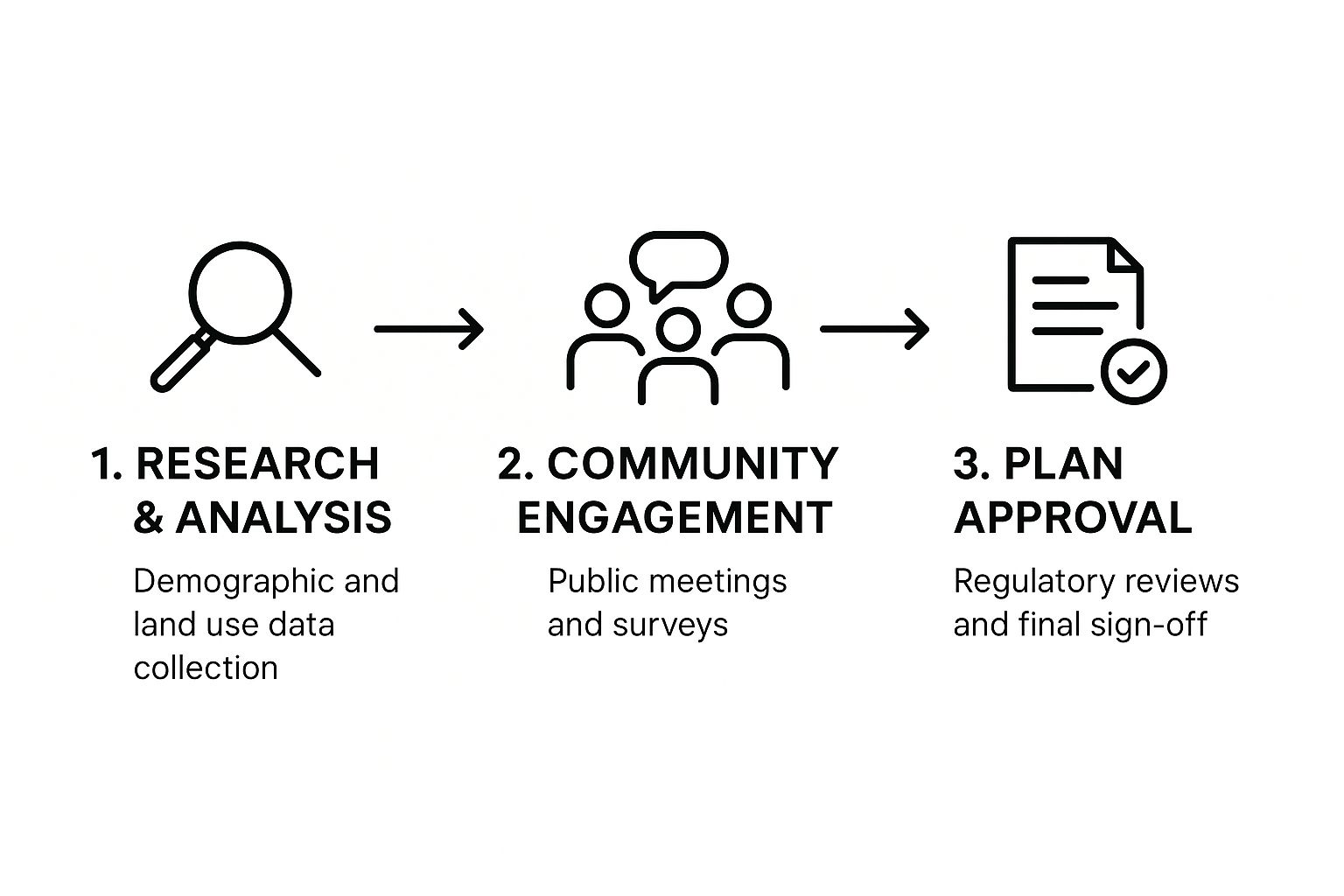
As you can see, each stage builds on the last, from data collection to community consultation and finally to the official sign-off. If the council gives the green light, the necessary permits are issued, and construction can finally begin. An idea, shaped by the community, finally becomes reality.
To give you a clearer picture, here's a table breaking down the lifecycle of a typical urban planning project.
Key Stages in a Typical Urban Planning Project
| Stage | Key Activities | Public Involvement Opportunity |
|---|---|---|
| 1. Preliminary Research | Data collection (demographics, land use), site analysis, environmental screening, defining project goals. | Limited, but background reports are often made public. |
| 2. Concept Development | Creating initial designs and master plans, exploring different options and scenarios. | High: Public meetings, workshops, and online surveys to review initial concepts. |
| 3. Plan Refinement | Revising the plan based on technical studies and public feedback, preparing detailed drawings. | Moderate: Follow-up meetings or surveys to review the revised plan. |
| 4. Formal Application & Review | Submitting the official application to the municipality, review by city staff against official plans and zoning. | Key: Official public hearings where you can make a formal statement to decision-makers. |
| 5. Decision & Approval | The municipal council or planning committee votes to approve, deny, or approve with conditions. | Final opportunity to voice support or opposition at the public hearing. |
| 6. Implementation & Monitoring | Issuing building permits, construction begins, post-construction monitoring to ensure compliance. | Reporting any issues or non-compliance during construction. |
This table shows how a project moves from a simple idea to a real, tangible part of your community, with clear points where your voice can make a difference.
Urban Planning in Action Across North America
Theory is one thing, but seeing urban planning principles come to life in our cities is how we truly get their power. Across North America, major hubs are actively using planning tools to steer growth, fix modern problems, and reshape the urban experience. These aren't just abstract exercises; they're real-world projects creating tangible change.
By looking at a few key examples, we can connect the dots between concepts like density and sustainability and the neighbourhoods we actually live in. So, what is urban planning? It's the hands-on, ongoing process of making cities better for everyone.
Ottawa's Transit-Oriented Transformation
Here in Canada’s capital, the expansion of the O-Train light-rail transit (LRT) network is a masterclass in transit-oriented development (TOD). The City of Ottawa isn't just laying down tracks; it's using the new stations as magnets for creating more compact, walkable, and mixed-use communities.
The whole idea is to cluster housing, jobs, and shops within a short walk of an LRT station. This simple shift helps reduce our dependence on cars, boosts transit ridership, and creates more vibrant local centres. You can see it happening right now around new stations, where zoning rules are encouraging taller buildings and a wider mix of housing, from condos to apartments. This strategy also aims to build more livable communities for all ages. For anyone planning for their later years, exploring the best Ottawa neighbourhoods for retirees shows just how much transit access and smart planning can improve quality of life.
Ambitious Projects in Other Major Hubs
This focus on smarter growth isn't just an Ottawa thing. Cities across the continent are rolling out creative solutions to some of their most pressing urban issues.
-
Austin's Housing Reforms: Facing explosive population growth where it became the fastest-growing major metro area from 2010 to 2020, Austin, Texas, overhauled its land-use regulations. The changes made it easier to build more diverse types of housing to boost affordability and availability.
-
Saanich’s Innovative Zoning: In British Columbia, the District of Saanich developed a clever model for affordable housing. By rezoning lands traditionally owned by faith-based groups for residential use, it unlocked new development opportunities without lengthy and expensive rezoning battles, a move that is now being replicated by other municipalities.
These examples really show how planners are adapting to specific local challenges with sharp, effective strategies.
Urban planning is a dynamic response to a city's evolving needs. From managing a housing crisis to promoting green infrastructure, it's about finding practical solutions that build more resilient and equitable communities for the future.
Learning From Historical Responses
Even lessons from the past have a lot to teach us. Los Angeles provides a powerful case study in reacting to massive population growth after World War II. Staring down a severe housing shortage, the city rolled out a Master Plan of Housing in 1945 to get a handle on the crisis. By 1946, a comprehensive Zoning Ordinance was in place to control land use—a direct attempt to bring order to the city's rapid, and sometimes chaotic, expansion. You can discover more insights about Los Angeles's historic planning efforts on urbanla.weebly.com and see how those early decisions shaped the sprawling metropolis we know today.
From Ottawa's LRT corridors to housing initiatives in Texas and B.C., these cases prove that urban planning isn't just a textbook concept. It's a proactive force, constantly at work shaping the cities we call home.
The Future of Our Cities and Their Biggest Challenges
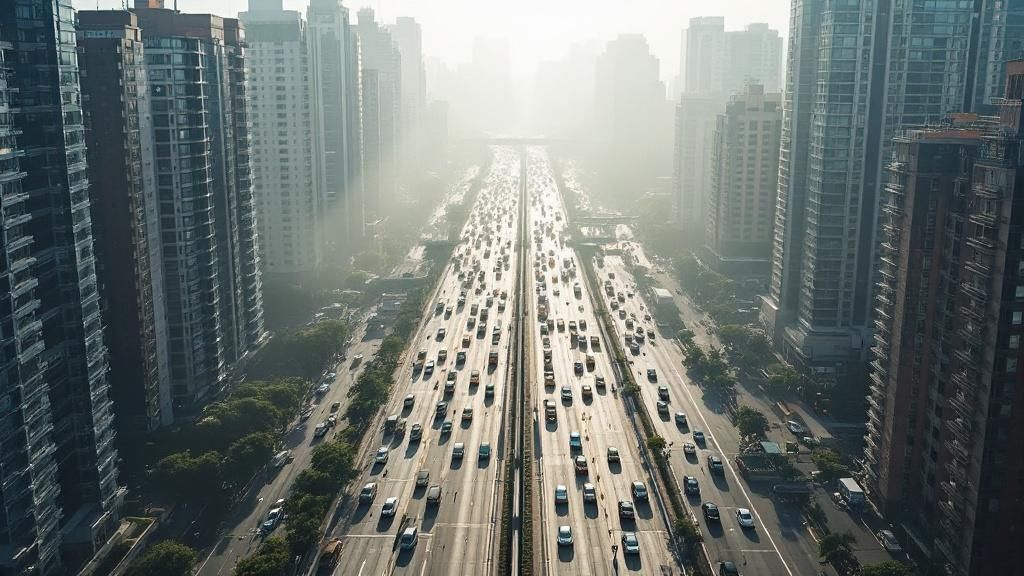
As we look toward the horizon, it’s clear our urban centres are at a critical juncture. They’re facing a complex tangle of challenges that will define life for generations to come. For anyone wondering what is urban planning, its forward-looking role has never been more vital.
Today, planners are on the front lines, grappling with urgent issues that demand bold, creative solutions. Three major pressures stand out: the escalating housing crisis, the undeniable impacts of climate change, and the immense strain on aging infrastructure. These aren’t just abstract problems on a whiteboard; they directly affect our wallets, our safety, and our daily quality of life. The goal isn’t just to build bigger cities, but to build smarter, more resilient, and genuinely liveable ones.
Navigating Pressing Urban Issues
The housing crisis is arguably the most immediate and personal challenge. As cities like Ottawa expand, the gap between the housing we have and the housing we need widens, pushing prices to historic highs. Planners are now tasked with the monumental job of creating more housing options for everyone—from affordable rentals to family-sized homes—without letting our cities sprawl uncontrollably.
At the same time, climate change is forcing a complete rethink of how we design our communities. More frequent and intense weather events mean cities must prepare for everything from flash floods to brutal heatwaves. This demands a shift toward green infrastructure, like rain gardens and urban forests, protecting natural systems, and fundamentally reducing our carbon footprint.
The future of urban planning is about proactive adaptation. It’s no longer enough to plan for growth; we must plan for survival and resilience in a world of increasing uncertainty and change.
This tension between old policies and new realities is visible everywhere. A prime example is California, where the planning system is still heavily influenced by suburban-era rules from the 1970s and 1980s. This creates a major roadblock when trying to address modern problems like severe housing shortages and a lack of available land. It’s a constant balancing act between controlling growth and meeting the urgent demand for more housing and infrastructure. You can learn more about how California’s planning is adapting on Planetizen.com.
Pioneering Solutions for Tomorrow's Cities
In response to these massive challenges, planners are exploring groundbreaking solutions that could completely reshape our daily lives. These innovative approaches aren't just about tweaking the old ways; they’re about building more efficient, equitable, and enjoyable cities from the ground up.
Some of the most promising ideas gaining traction include:
- The '15-Minute City' Concept: Imagine a neighbourhood where your groceries, your kids' school, a park, and even your job are all within a 15-minute walk or bike ride. This model aims to reduce our reliance on cars, build stronger local communities, and give us back more of our time.
- Smart City Technologies: Planners are using data and technology to make city services work better for us. Think smart traffic lights that adjust to reduce congestion, real-time public transit apps that are actually accurate, and sensors that monitor air quality to keep us healthy.
- Circular Economy Principles: Instead of the old "take-make-waste" model, cities are embracing a circular approach. This means focusing on reusing materials, slashing waste, and designing buildings that can be easily adapted or even disassembled for future use.
These aren’t just futuristic fantasies; they are active experiments happening in cities around the world. Moving forward, the thoughtful integration of technology with human-centred design will be key. It’s a theme that comes up again and again, even in discussions about artificial intelligence, a topic explored in a new AI documentary providing a message for humans.
Ultimately, the future of urban planning lies in its ability to innovate, adapt, and always put people at the very centre of every single decision.
Your Urban Planning Questions, Answered
Okay, so you’ve got the big picture of urban planning down. But how does it all work in the real world? It's natural to have a few practical questions pop up. Let's break down some of the most common ones to connect the dots between the grand vision and what happens on your street.
How Can I Get Involved in My City's Planning?
Getting involved is easier than you might think. A great first step is to follow your local municipality’s planning department on social media and sign up for their newsletters. This puts you on the inside track for news and updates.
Attending public meetings for new developments proposed in your neighbourhood is another fantastic way to have your voice heard directly. Even better? Join your local neighbourhood or community association. These groups are often the first point of contact for consultations, giving your input the collective power needed to shape development that truly reflects the community’s values.
What Is the Difference Between Urban Planning and Zoning?
It’s easy to get these two mixed up, but the difference is pretty simple when you think about it.
Urban planning is the big-picture dream for a city. It’s the "what" and the "why." Planners create a strategic blueprint that sets long-term goals for things like sustainability, quality of life, and economic growth. It's the vision.
Zoning, on the other hand, is the rulebook that brings that vision to life. It’s the "how" and the "where." Zoning by-laws are the specific, legally-binding tools that dictate exactly what can be built where—for example, making sure a noisy factory doesn't end up next to a quiet residential street.
In short: Planning is the city's vision. Zoning is the set of rules that brings that vision to life, street by street.
What Education Do You Need to Be an Urban Planner?
Becoming a professional urban planner in Canada is a dedicated path. Most start with an undergraduate degree in a related field like geography, architecture, political science, or environmental studies.
From there, the standard is to earn a master’s degree in planning from an accredited university. After completing their education, aspiring planners often work toward their professional certification to become a Registered Professional Planner (RPP). This designation is the gold standard, showing they’ve met rigorous national requirements for competence and ethics in the field.
Stay in the loop on the planning decisions and news shaping our region. For the latest on development, community projects, and urban affairs in Ottawa and the National Capital Region, ncrnow is your trusted source. Visit us at https://ncrnow.ca.
Article created using Outrank
About The Author