
Will Thorpe, CC BY 4.0 <https://creativecommons.org/licenses/by/4.0>, via Wikimedia Commons
Introduction
Every year on the second Monday of March, millions of people across the globe pause to mark a day that binds together one of the most diverse associations of nations on earth. Commonwealth Day is an annual observance celebrated by the 56 member countries of the Commonwealth of Nations — a voluntary association representing approximately 2.7 billion people, spanning every continent and ocean. From schoolchildren in Nigeria gathering for special readings to street parades in Antigua and Barbuda, from flag-raising ceremonies in Northern Ireland to parliamentary observances in New Zealand, Commonwealth Day is a remarkable expression of shared values across profoundly different cultures and societies. And yes, in Canada too.
Yet few people outside these nations — and even some within them — know the full story of what Commonwealth Day is, where it came from, and what it means today.
Origins: From Empire Day to Commonwealth Day
The roots of Commonwealth Day stretch back to the height of the British Empire in the late 19th century. Early calls for an annual Empire-wide celebration emerged in the 1890s — some secondary sources cite Thomas Robinson, an official of the Royal Colonial Institute in Winnipeg, as having first raised the idea — but the figure most clearly credited by historical record as the founder of Empire Day is Lord Meath (Reginald Brabazon, 12th Earl of Meath), an Irish peer and social reformer who campaigned tirelessly to establish the celebration and embed it in schools and civic life across Britain and the Dominions. The Royal Colonial Institute’s London council also petitioned Queen Victoria in 1894, arguing that while other nations enjoyed annual national celebrations, the British Empire lacked one, and proposing the Queen’s birthday for this purpose.
The formal celebration known as Empire Day was established in 1904, observed annually on May 24 — Queen Victoria’s birthday — or the last weekday before it. Through Lord Meath’s continued advocacy, the day took hold across the Empire’s schools and communities as a vehicle for fostering imperial identity and pride. The day carried a strong message for children of the era: to recognize themselves as part of a great global empire, to think about those living in other territories, and to take pride in being “daughters and sons of the Empire.”
An article from 1916 described the significance of the day as being “an emblem of the unity of sentiments to those ideals of justice, freedom, and tolerance for which the British Empire stood throughout the planet.”
The Transition: Renaming and Reimagining
As the British Empire began to transform in the post-war era — with colonies gaining independence and a new spirit of voluntary cooperation emerging — the character of the celebration had to change too. In 1958, then-Prime Minister Harold Macmillan announced that Empire Day would be renamed Commonwealth Day, reflecting the shift from imperial rule toward a modern association of independent nations united by shared history, legal systems, culture, and common values.
The date, however, remained in flux. For many years, Commonwealth Day continued to be observed on May 24 in some countries, including India. The turning point came in 1973, when the National Council in Canada of the Royal Commonwealth Society submitted a proposal to Prime Minister Pierre Elliott Trudeau that Commonwealth Day should be observed simultaneously throughout all member nations. The proposal was included in the Canadian items for the 1975 Commonwealth Heads of Government Meeting, after which it was agreed that the Commonwealth Secretariat would identify a new date with no historical colonial connotations. The final choice of date was made not by the Heads of Government themselves, but by senior Commonwealth officials meeting in Canberra in May 1976, who agreed on the second Monday in March. This date was specifically chosen because it fell when most schools in member nations would be in session, facilitating student participation in Commonwealth-related activities, including simulated Commonwealth Games and model Heads of Government meetings. The new date took effect in 1977, and has been observed on that day ever since.
The Commonwealth of Nations: What It Is
To understand Commonwealth Day, one must understand the organization it celebrates.
The Commonwealth of Nations is a voluntary association of 56 independent countries, almost all of which were formerly under British rule. Together, these nations make up a vast and diverse network that spans Africa, Asia, the Caribbean and Americas, the Pacific, and Europe. Member states range from the world’s largest democracies to some of its smallest island nations. India, with its population of over a billion, stands alongside Tuvalu, whose population numbers fewer than 12,000.
What unites these nations is not a common monarch (only 15 still recognize the British monarch as their head of state) nor a formal treaty, but a shared set of values enshrined in the Commonwealth Charter — a document that commits member states to democracy, human rights, the rule of law, good governance, freedom of expression, and sustainable development.
The Commonwealth is guided by the Commonwealth Secretariat, its executive arm, which was established in 1965 and celebrated its 60th anniversary in 2025. The Secretariat works with member countries on issues ranging from climate change to trade, youth development to peacebuilding.
The Head of the Commonwealth is a role currently held by King Charles III, who succeeded Queen Elizabeth II in that position in 2022. Unlike the role of monarch, the position of Head of the Commonwealth is not automatically hereditary — it was conferred upon King Charles by Commonwealth leaders at the 2018 Commonwealth Heads of Government Meeting in London.
How Commonwealth Day Is Observed
The Westminster Abbey Service
The centerpiece of Commonwealth Day observances in the United Kingdom is the Commonwealth Day Service at Westminster Abbey in London. This traditional inter-faith, multi-cultural service is attended by the King and members of the Royal Family, the Commonwealth Secretary-General, High Commissioners, dignitaries, and hundreds of schoolchildren. The service is unique in its inclusive, multi-faith character, featuring performances and prayers from traditions across the member nations.
In 2025, the service reportedly featured performances from the Masai Cultural Arts team, an African arts organization; Braimah and Jeneba Kanneh-Mason, siblings of Antiguan and Barbudan heritage; Errollyn Wallen, the first Master of the King’s Music; and Aivale Cole, a Samoan soprano — reflecting the Commonwealth’s cultural breadth.
The King’s Message
Each year, the Head of the Commonwealth delivers a Commonwealth Day Message — a broadcast addressed not to governments, but to the people of the Commonwealth. This message typically focuses on a theme of importance to the member nations. The message is broadcast throughout the Commonwealth and, in some member states, is augmented by an address from a president, prime minister, or senior minister.
For Commonwealth Day 2025, King Charles III reflected on the uncertain times facing the world, calling on the Commonwealth’s values of friendship and cooperation to guide member nations forward. He emphasized that the Commonwealth’s ability to bring people together across all differences remains as vital as ever.
The Commonwealth Secretary-General also issues a statement on the day, which is read on the radio or published in Commonwealth countries.
Flag-Raising and Other Ceremonies
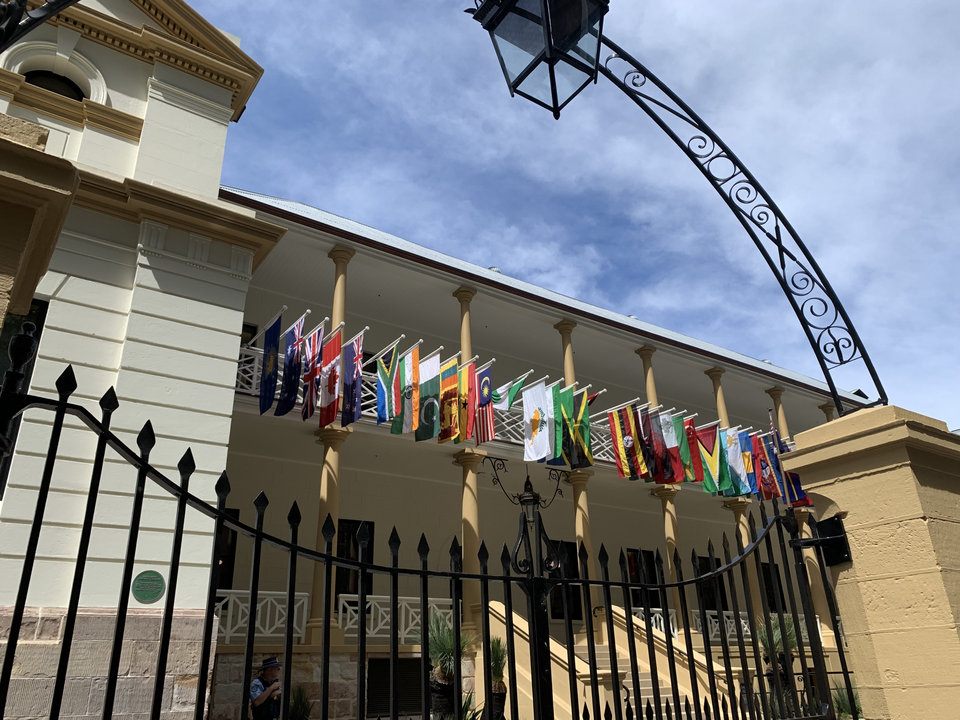
Flag-raising ceremonies are held across Commonwealth nations, with the flag of the Commonwealth of Nations raised in public spaces and government buildings. In the United Kingdom, the flags of all Commonwealth member states are flown at select locations. In Canada, the Royal Union Flag is flown at federal installations.
Global Celebrations
Beyond formal ceremonies, Commonwealth Day is marked by festivals, fairs, school assemblies, civic gatherings, cultural celebrations, and faith-based services across member nations. In recent years, what began as a single-day observance has expanded into a full week of celebrations, including announcements of the Commonwealth Youth Awards and the Commonwealth Peace Prize, which recognize exceptional individual contributions to peace and development.
Annual Themes
Each year, Commonwealth Day is anchored by a theme that guides celebrations and messaging throughout the member nations. These themes reflect the priorities and aspirations of the Commonwealth family at a given moment in history. Notable recent themes include:
- 2025: Together We Thrive — celebrating the enduring spirit of the Commonwealth family, emphasizing connected communities, shared values, and collective progress
- 2024: One Resilient Common Future — focusing on resilience and shared commitment to a sustainable future
- 2023: Focused on the Commonwealth’s unique ability to address global challenges through cooperation
The themes are announced by the Commonwealth Secretary-General, and are incorporated into events, school programs, and official messaging worldwide.
Public Holiday Status
Despite its significance, Commonwealth Day is not a public holiday in most Commonwealth countries, including the United Kingdom itself. The day holds official status in a select number of member states and territories, though this has changed over time.
Historically, Commonwealth Day was observed as a school holiday in British Hong Kong before the territory was handed over to China in 1997. It was also a public holiday in Gibraltar until 2022, when it was replaced by the Winter Midterm Bank Holiday (though Gibraltar still marks the day through official events). In Australia, the day is observed by state governors and the governor-general.
In India, Commonwealth Day continues to be observed on May 24, maintaining the historical connection to Queen Victoria’s birthday. Similarly, Belize and some other nations retain the May 24 date, reflecting the diversity of how the day is commemorated across its vast membership.
The Commonwealth Games
One of the most beloved and visible expressions of Commonwealth identity is the Commonwealth Games, a multi-sport event held every four years among Commonwealth member nations — often described as the “Friendly Games” due to their spirit of sportsmanship and inclusion. The Games bring together athletes from some of the world’s most powerful nations alongside those from tiny island states, offering a platform for sporting talent across a uniquely diverse community.
Commonwealth Day has, at various times, been connected to the launch of the King’s Baton Relay, which carries a message from the Head of the Commonwealth to the Games’ Opening Ceremony. In 2022, King Charles officially launched the inaugural relay of his reign from Buckingham Palace, with the baton sealed by Paralympic champion Kadeena Cox before beginning its journey through all 72 nations and territories of the Commonwealth.
Debates and Complexities
Commonwealth Day and the organization it celebrates are not without controversy. The Commonwealth’s roots in British colonialism — a system that subjugated, exploited, and in many cases brutalized the peoples now gathered under its banner — means that the day carries complicated meanings for many.
Critics point out that many Commonwealth nations were, at various points in history, denied independence and subjected to severe human rights abuses under British imperial rule. For some, a day that traces its origins to “Empire Day” can feel like a celebration of that legacy, regardless of how much the framing has changed. Calls to decolonize the Commonwealth and to more honestly reckon with its history have grown louder in recent decades.
Supporters of the Commonwealth, however, argue that the modern organization bears little resemblance to its imperial predecessor. Today’s Commonwealth is a voluntary association in which members — including some of the world’s most populous and influential nations — choose to participate because of the practical benefits of cooperation and the shared commitment to democratic values. The Commonwealth has been particularly active in areas such as climate action, support for small island developing states, youth development, and conflict mediation.
As Commonwealth Day 2025’s theme, Together We Thrive, suggests, the focus of the modern celebration is not on empire but on the shared future of 2.7 billion people across one of the world’s most diverse international associations.
Commonwealth Day 2026
Commonwealth Day 2026 falls on Monday, March 9, 2026 — today. As in previous years, celebrations will take place across the Commonwealth’s 56 member countries, from the Pacific islands to the Caribbean, from West Africa to South Asia. The service at Westminster Abbey will once again bring together members of the Royal Family, Commonwealth leaders, and schoolchildren in a multi-faith celebration. King Charles III, as Head of the Commonwealth, will deliver his annual message to the world’s 2.7 billion Commonwealth citizens.
Conclusion
Commonwealth Day is, at its heart, a day of reflection and affirmation. It asks the citizens of 56 very different nations — of different faiths, languages, economies, and histories — to pause and recognize what they hold in common: a commitment to democracy, human rights, and the rule of law; a history that, for better or worse, has shaped each of them; and a belief that cooperation between nations is more powerful than isolation.
From its origins as Empire Day in 1904, through its renaming in 1958 and its standardization on the second Monday in March in 1977, Commonwealth Day has evolved alongside the extraordinary transformation of the world it was created to celebrate. Whether observed with a grand service in Westminster Abbey or a flag-raising in a small Pacific town, the day represents something quietly remarkable: the ongoing, voluntary choice of nations with a complicated shared past to continue building a common future.
Sources: Commonwealth of Nations, The Royal Family, Wikipedia, Commonwealth Parliamentary Association, Commonwealth Local Government Forum
About The Author