
When a highly controversial public figure passes away, the immediate reaction from global leadership often defaults to absolute, unvarnished praise, setting the stage for a dangerous cycle of political whitewashing. We see it time and time again: the rough edges of history are sanded down, the jagged contradictions smoothed over, and a deeply polarizing career is transformed overnight into a monument of unblemished service.
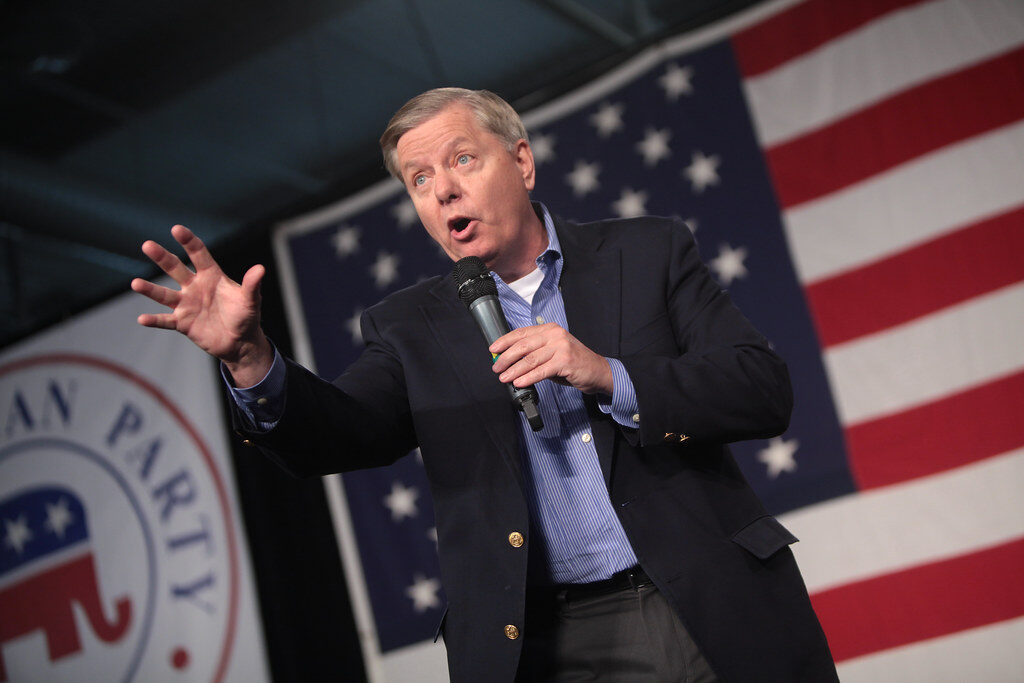
The most recent catalyst for this article came following the death of longtime U.S. Senator Lindsey Graham. Among the flood of official condolences, a public statement by Mark Carney caught my eye. Carney wrote:
“Senator Lindsey Graham dedicated his life to serving the people of South Carolina and the United States. Throughout his career, he stood resolutely in defence of democracy and freedom, most recently and particularly with Ukraine and its people. I offer my condolences to Senator Graham’s family, friends, and all those who served alongside him.”
When I read that, it didn’t sit right with me.
It wasn’t because the statement offered condolences; extending comfort to a grieving family is a baseline human courtesy and politically expedient. It didn’t sit right because of the absolute, unyielding nature of the praise. To claim that Graham stood “resolutely in defence of democracy and freedom” throughout his career isn’t just standard diplomatic politeness—it is a direct clash with a heavily documented reality.
This leaves us with a profound question: Where is the line between institutional diplomacy and historical honesty? When does a polite eulogy cross over into active political whitewashing?
The Reality vs. The Record: A Career of Contradictions
To understand why Carney’s remark feels so jarring, we have to look past the sanitized language of diplomacy and review the actual, unvarnished record. Lindsey Graham’s political tenure was many things, but “resolute” is perhaps the least accurate word to describe it. His career was defined not by unwavering stances, but by staggering reversals and severe political shifts.
Challenges to Democratic Norms
For an individual praised for defending democracy, Graham’s actions following the 2020 presidential election tell a vastly different story. He was a central figure in the controversies surrounding attempts to overturn the election results. Most notably, he made phone calls to Georgia Secretary of State Brad Raffensperger, who later stated that Graham questioned him in a way that suggested legally cast absentee ballots might be discarded. While Graham denied this, the incident became a focal point of intense investigation. Furthermore, Graham actively fought a court subpoena to avoid testifying before the Fulton County special grand jury investigating election interference. Later, he did so under limited conditions after the U.S. Supreme Court declined to block it entirely.
The Trump Metamorphosis
Perhaps no dynamic illustrated Graham’s political “flexibility” more than his relationship with Donald Trump. During the 2016 Republican primary, Graham was highly critical, publicly calling Trump “unfit for office”. Yet, once Trump secured power, Graham underwent a complete political metamorphosis, becoming one of the president’s fiercest and most unflinching allies in the Senate.
That alliance became particularly significant for Canadians as Graham consistently backed many of Trump’s policies affecting Canada, including his aggressive tariff strategy and rarely challenged the former president’s increasingly hostile rhetoric toward Canada’s sovereignty.
This pattern recurred during one of the darkest moments in recent American political history. Following the January 6, 2021 attack on the U.S. Capitol, Graham initially seemed to draw a line, publicly declaring “enough is enough”. Yet his moral outrage apparently had a rapidly approaching expiration date. Within a few short months, his sudden bout of conscience miraculously evaporated, and he scurried back into the fold—dutifully serving as the chief public relations officer for Trump’s political image-laundering.
Institutional Hypocrisy
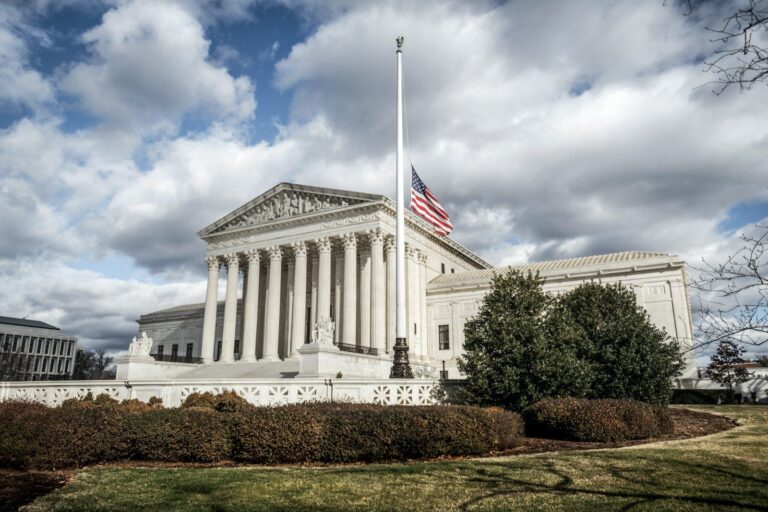
The record also shows glaring inconsistencies on the institutional stage. In 2016, Graham famously argued that a Supreme Court vacancy should never be filled during a presidential election year, insisting his Democratic colleagues hold him to that standard. Four years later, in 2020, following the death of Justice Ruth Bader Ginsburg, mere weeks before the election, he abandoned his own logic entirely to rush through Amy Coney Barrett’s confirmation. Critics called it naked hypocrisy; Graham brushed it off as a shift in political circumstances.
From his aggressive foreign-policy commentary—which included a widely criticized 2022 public suggestion that someone in Russia should assassinate Vladimir Putin—to his sudden abandonment of bipartisan climate policy, Graham’s record was a mishmash of shifting alliances and political convenience.
The “Insular Club” Effect and the Politics of “Getting Along”
When public figures like Carney look at a record like that and see only a “resolute defence of democracy,” they are participating in what can only be described as the “Insular Club” effect. This is the pervasive, cross-partisan culture where institutional status, professional decorum, and elite relationships matter far more than actual conduct, ethics, or the real-world consequences of a politician’s choices.
We see this dynamic everywhere—not just in politics, but in corporate boards, international organizations, and the upper echelons of global finance. It is the politics of “getting along.” It enforces an unspoken but well-known rule: preserve the club at all costs. Do not break the illusion of dignity, even when the behaviour of its members is deeply undignified.
By closing ranks and releasing generic, glowing tributes, the political class insulates itself from accountability. It protects the deceased from their worst actions, whether that involves taking massive campaign influxes from corporate PACs and defence contractors or upending long-standing legislative norms to rush judicial confirmations.
This institutional silence brings to mind the profound observation made by British philosopher John Stuart Mill in 1867:
“Bad men need nothing more to compass their ends, than that good men should look on and do nothing.”
Releasing a sanitized, historically blind eulogy is the modern, bureaucratic equivalent of “doing nothing”. When influential figures prioritize the polite etiquette of the elite club over telling the truth, they become complicit. They passively normalize extreme political opportunism, erratic governance, and the erosion of democratic principles by pretending those things never happened.
The Threat of Modern Political Whitewashing
The real danger here is that framing a chaotic, contradictory career as a flawless crusade for freedom actively distorts the historical record while the ink is still wet. This isn’t just about being polite to the dead; it is a form of active revisionism.
Political whitewashing demands a kind of collective amnesia from the public. It asks us to scrub away the messy, uncomfortable facts—the ethics complaints, the sudden policy reversals, the election-related phone calls—and replace them with a digestible pablum, heroic narrative.
| The Public Record | The Diplomatic Framing |
| Pressuring election officials and resisting grand jury subpoenas. | “Resolutely standing in defence of democracy.” |
| Calling a leader unfit, condemning him, then repeatedly defending him. | Consistent, lifelong service to the nation. |
| Reversing explicit promises on Supreme Court nominations for partisan gain. | Upholding constitutional and institutional integrity. |
When diplomacy reaches this level of exaggeration, it stops being a harmless formality. It becomes a tool used to rewrite history before the public even has a chance to process the legacy of the person who passed away.
How Political Whitewashing Fuels Public Cynicism
This brings us to the true cost of these sanitized narratives: the total fracture of public trust.
This is precisely how deep, immovable public cynicism grows. When regular citizens observe obvious, documented contradictions being swept under the rug for the sake of elite etiquette, it sends a chilling message. It signals that truth is entirely malleable, that history can be rewritten at convenience, and that accountability is strictly optional for those at the top.
We are constantly warned about the dangers of misinformation and the rise of “alternative facts.” Yet when established institutions and leaders engage in performative fiction, they generate their own version of alternative facts. They are telling us that what we saw, what we heard, and what we lived through doesn’t matter as much as the official, curated story.
But here is the truth that the insular club consistently underestimates: we, the people, do read. We have memories. We follow the path politicians take, and we pay attention to the footprints they leave behind. We don’t just look at the polished bronze plaques; we remember the backroom deals, the partisan flip-flops, and the moments where democratic norms were pushed to the brink. We know the truth.
When leadership acts as though the public has no memory, it deepens the divide between the governed and the governors. It tells everyday people that their perception of reality is irrelevant to the ruling class.
Final Thoughts
I realize there may not be an easy blueprint for how public figures should navigate the death of a highly controversial political leader. Finding the balance between showing basic human respect to a family in mourning and maintaining a commitment to historical truth is undeniably difficult.
But crossing the line into historical revisionism is not the answer. Mark Carney’s statement didn’t sit right with me because it chose institutional comfort over factual honesty. If we are to have any hope of repairing a badly fractured public trust and preserving the integrity of our history, our leaders must stop using the cover of diplomacy to engage in political whitewashing. The public record belongs to the people, and it is far too important to be sacrificed for the sake of expedient fiction.
About The Author