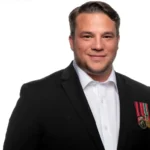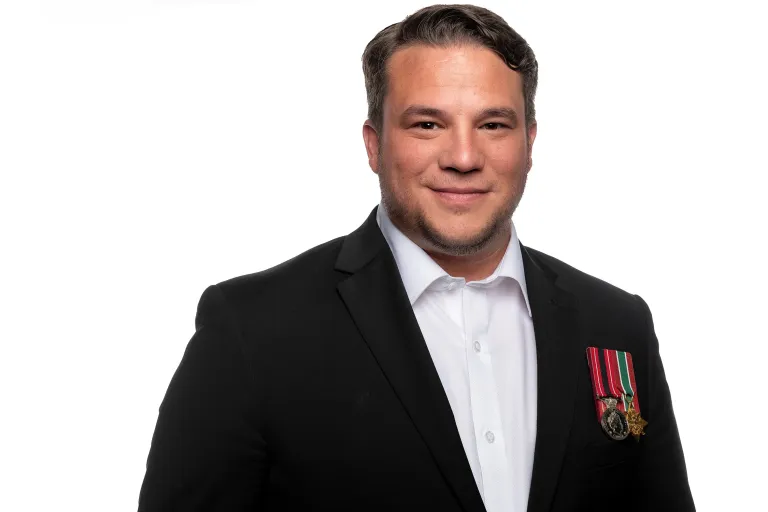

The following are 5 questions that we sent out to every council candidate in hopes of getting to know them better. We publish the responses exactly as we receive them, in the order that they were sent to us. Here are the responses from Rideau-Vanier (Ward 12) council candidate Michael Karl Sewanaku.
1. Who are you? Where are you from? What relevant experience do you have for the job?
My name is Michael Karl Sewanaku, I was born and raised in Ottawa – went to Manor Park, Ashbury College, Queen Elizabeth, Lisgar and Gloucester High School before attending the University of Ottawa where I have been enrolled for a total of 9 years and counting. I lived in Ottawa Community Housing on Bernard Street during my teenage years and early university. Affordable housing gave me stability during a difficult moment in my family’s life and gave me room to build a future.
After graduating with three degrees at the University of Ottawa (Hon. Biochem, Hon. Bipharm – medicinal chemistry and general science), I later earned a law degree from Osgoode Hall and a medical degree, and I train in family medicine. Law taught me to read documentation such as legislation and contracts carefully. Medicine continues to teach me to listen, weigh evidence and understand how housing and poverty affect health. And as an Osgoode grad who’s had to make my case in front of judges, I learned pretty quickly that I’m not the smartest person in the room. On major infrastructure projects, lawyers have their role and engineers have theirs. My background would help to make sure Ottawa residents can clearly see where the legal advice ends, where the engineering judgment begins, who makes the final call and why. Before law school, I also worked in Fort McMurray as a labourer to save for my education.
My path is not the usual one. I wasn’t shaped by the political establishment before entering politics. What I offer is lived experience, professional training and a willingness to do the detailed work. A councillor should listen, ask hard questions, work with others and be honest about what the City controls. That is the approach I would bring to Council.
2. The City spends nearly $1 billion per year on OC Transpo, though many constituents remain dissatisfied with the state of Ottawa’s public transportation. What would you do as a councillor to improve the city’s transportation system?
These days I think riders judge OC transpo by reliability more than ever. My first priority would be reliability.
I would press for public deadlines for the Auditor General’s accepted bus planning recommendations. I would also require clear route level reports comparing scheduled and delivered service, with cancellations and reasons, wait time consistency and Para Transpo results. Missed targets should come with a corrective plan.
In Ward 12, I would focus on dependable connections along Montréal Road and Rideau Street, and through Vanier, Lowertown, Sandy Hill and Lees for workers and students. I would support transit priority at proven bottlenecks, safer accessible stops and winter walking routes. Transit workers should be part of schedule reviews because they see where plans fail in practice. I would protect affordable fare options and consider a limited late night pilot where evidence shows a real gap for shift workers, students and downtown employees. Years ago at the University of Ottawa I remember the good ol’ 95 that took us downtown and home on nights.
A councillor cannot personally set routes or direct operators, but I can move motions and press for clear results.
3. In a December 2025 Abacus Data poll, 37 percent of respondents said that the cost of living was the most important issue facing the city, while another 19 percent identified housing affordability. What would you do as a councillor to make Ottawa more affordable?
I know what affordable housing can make possible because I lived in Ottawa Community Housing. It gave me the stability to study and move forward. The City cannot control grocery prices, interest rates or provincial laws affecting affordability, but it can act on housing, transit, taxes and fees.
I would work with Council to use City land and capital funding for more public, nonprofit, cooperative and supportive housing, with permanent affordability protected in the agreements. I believe we need a long term goal to be more like Vienna, Austria when it comes to affordable housing. I would speed approvals for nonprofit and cooperative projects and support City funding for nonprofit providers to purchase existing lower rent buildings before those homes are lost. Because Ward 12 is a renter majority ward, I would prioritize property standards and publish a quarterly tracker of housing starts, completions and enforcement results.
I would protect Vacant Unit Tax proceeds for affordable housing, seek firm federal and provincial commitments, and apply an affordability test to property tax decisions. Targeted help for people on low and fixed incomes is more responsible than a blanket tax freeze that quietly weakens services.
4. Certain city services, including OC Transpo and the Ottawa Police Service, have run significant deficits in recent years. What would you do as a councillor to help balance the City’s budget?
Ottawa needs to balance its operating budget, and it’s a very difficult task, but the real test is whether we are reducing costs or simply moving them somewhere else. A cut in one department can create a bigger bill elsewhere.
Unreliable transit is a clear example. When a bus does not arrive and someone is late for work, the cost is carried by the worker, the employer and the local economy. If poor service drives riders away, OC Transpo also loses fare revenue. Homelessness works the same way. When we do not invest effectively in permanent supportive housing and prevention, costs can reappear through shelters, paramedic calls, police responses, public health, sanitation and hospital emergency departments. Some of those costs fall on the City and others on the province, but residents and taxpayers ultimately bear them.
As a councillor, I would require quarterly reports, realistic forecasts and corrective plans. Major proposals should identify the full initial and annual cost, the funding source, the expected result and whether the investment prevents larger costs elsewhere. Permanent programs need permanent funding, and one time funds should not hide an ongoing shortfall.
For OC Transpo, I would focus on reliability and rebuilding ridership rather than cuts that strand people and further reduce revenue. For policing, Council should scrutinize the overall budget and results while respecting the roles of the Police Services Board and Chief. I am very grateful for the protection the Ottawa Police provides me and other residents, and so they need to be supported adequately. Across the City government, I would review external legal and consulting costs as new technology has likely made an impact to reduce costs in those areas, strengthen procurement and try to compare recurring contracted work with the full cost of doing it inside City Hall.
At the end of the day, the goal is the lowest responsible budget and value for money, not cuts for their own sake.
5. Why are you running for Council? What do you think is the biggest issue facing Ward 12 today?
I am running because Ottawa helped give me a chance, and I want to push for more “Diane Deans style” accountability in City Hall. I want Ottawa to help more people build a future here. Affordable housing gave me stability. Residents who cannot find a home they can afford, count on the bus or get basic problems resolved need a councillor who is present, tells the truth and reports what is getting done.
The biggest issue, in my opinion, in Ward 12 is housing affordability and everything that flows from it, including homelessness, shelter pressure, neighbourhood stability and pressure on public space. In Vanier and Sandy Hill, renters worry about cost, condition and displacement. In Lowertown, the ByWard Market and Downtown Rideau, the shortage of permanent housing and adequate health supports is visible every day.
I would focus on preserving affordable rental and cooperative homes, building more public, nonprofit and supportive housing, enforcing rental standards, and pressing for supportive housing and emergency services to be shared fairly across Ottawa. Existing services must also be properly funded. Violence, weapons, predatory dealing and harassment require focused enforcement, while mental health and substance use crises often need trained civilian responders and health care. Everyone, including unhoused residents, workers, families and visitors, deserves safe and clean public space.
Editor’s note: Unlike most of the interviews that we’ve published, the hyperlinks found in Mr. Sewanaku’s answers were placed by him, not the NCRNow team.
About The Author