
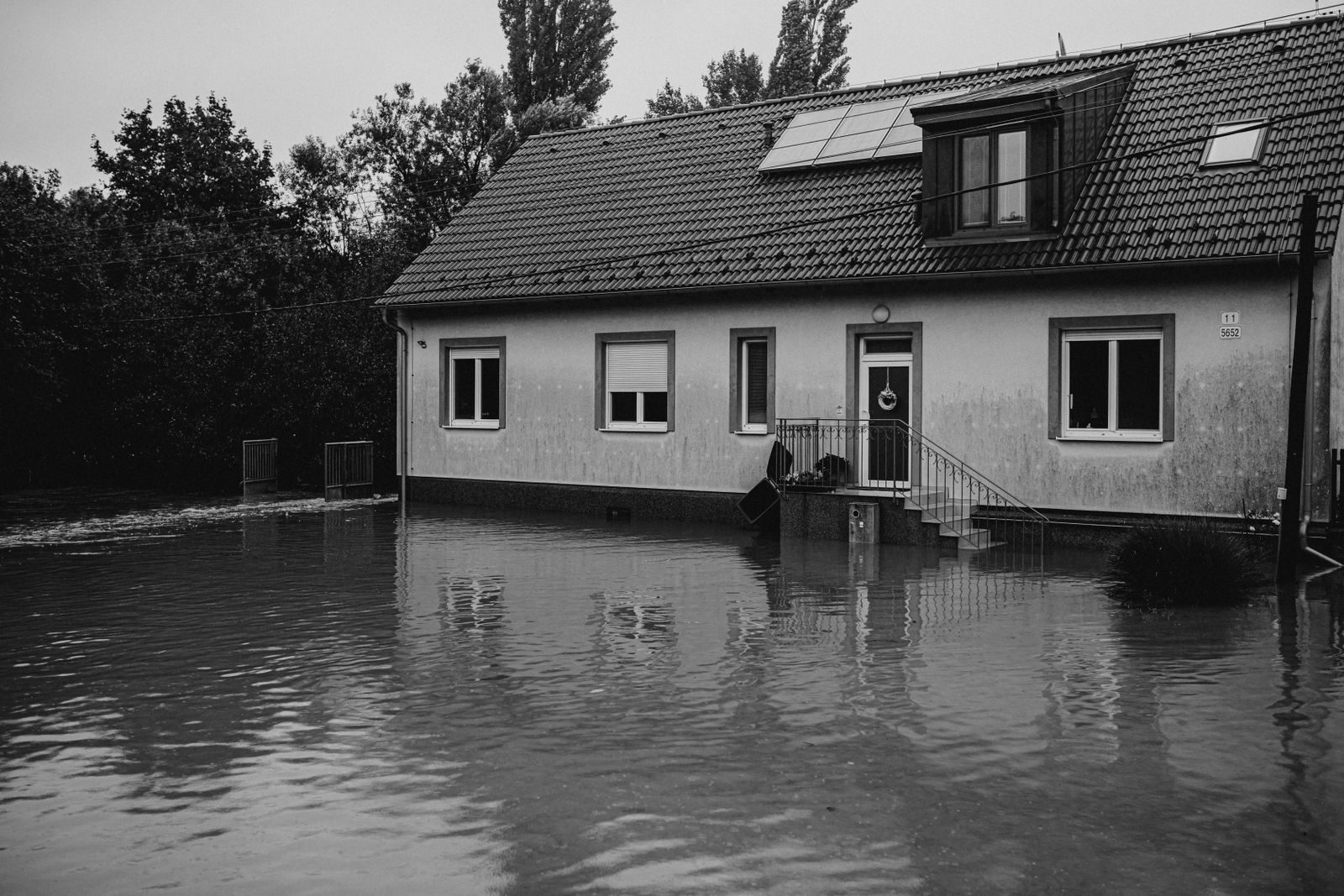
Most basement flooding in Ottawa happens on two or three days a year, and almost all of the damage is decided by work that was or was not done months earlier. Water arrives faster than any homeowner can react to it, so prevention is genuinely the whole game. This guide explains why National Capital Region basements take on water, what a sump pump and a backwater valve each actually do, how grading and downspouts change the odds, and what to check as the seasons turn. It is for homeowners who have either had water in a basement or would prefer not to find out what that is like.
Why Ottawa Basements Flood
There are three separate ways water gets into a finished basement, and they are often confused because they all end the same way.
The first is groundwater. Snowmelt and heavy rain raise the water table around your foundation, water collects in the weeping tile, and if it cannot be pumped away it finds the joint where the floor slab meets the wall. That is the seasonal source, and it is what a sump pump exists to manage.
The second is sewer backup. During an intense storm the municipal sanitary system can surcharge, meaning it fills faster than it can drain. The water has to go somewhere, and the lowest open fixture on that line is often a basement floor drain. That is sewage rather than rainwater, and it is a far more expensive event to clean up.
The third is plumbing failure inside the house: a split supply line, a failed water heater tank, a burst pipe behind a wall. These are unrelated to weather and happen year-round, and they are the reason a main shutoff you can find and turn matters.
Which Ottawa Neighbourhoods See It Most
No neighbourhood is immune, but the pattern is predictable. Older areas with vintage sewer infrastructure, including parts of Centretown, Alta Vista and older Gloucester, tend to see backup problems. Newer subdivisions in Barrhaven, Riverside South and Stittsville more often deal with groundwater, because backfill around a young foundation keeps settling for years after the builder leaves.
Sump Pumps and Backwater Valves Are Not the Same Thing
This is the single most useful distinction in the whole subject.
A sump pump manages groundwater. It sits in a pit that collects water from the weeping tile around your foundation and pumps it away from the house before it can rise to slab level.
A backwater valve stops municipal sewage from reversing into your basement when the sanitary system surcharges. It is a mechanical flap installed in the building drain that swings open for water leaving your house and closes when flow tries to come the other way.
They solve different problems, and neither covers for the other. A house with a perfect sump pump can still take sewage through the floor drain, and a house with a backwater valve can still have groundwater come through the slab joint. Many Ottawa homes need both. Some Ontario municipalities offer subsidy programs toward the cost of backwater valve and sump pump installation, so check with your own municipality before paying full price for either.
Testing a Sump Pump Properly
Listening for it to run once during a storm is not a test. Pour a bucket of water into the pit and watch three things happen. The float should lift and switch the pump on. The pump should run and empty the pit without labouring. And the discharge should carry that water well away from the foundation.
That last point is where most failures hide. A discharge line that dumps a metre from the wall is recirculating the same water back into the weeping tile, so the pump runs constantly and the pit never really empties.
Why Battery Backup Matters Here
Storms deliver power outages and water in the same event. That is not a coincidence, it is the defining risk. The moment your sump pump loses power is very often the moment it is needed most, and a pit fills quickly with no pump running. A battery backup covers exactly that window. Homes on private wells around Manotick and the rural townships have a related problem, because a well pump also stops the instant the power drops, taking the household water supply with it.
Grading, Downspouts and the Cheap Fixes
Before anything mechanical, look at where water lands. Downspouts should discharge at least two metres from the foundation, and the ground should slope away from the house for the first couple of metres. Backfill settles, garden beds get built up against the wall, and interlock patios get laid flat or tilted toward the house. Any of those can turn a dry basement into a wet one without a single plumbing component failing.
What to Check Seasonally
In late fall, disconnect every garden hose from every exterior tap. A hose left attached through a hard freeze traps water in the valve body, and when that water expands it splits the pipe behind the wall. Frost-free hose bibs are not exempt, because the design only works with the hose disconnected. Also clear the eavestroughs and test the sump pump before the first freeze. In spring, test it again and check the discharge line is not blocked. Any time of year, know where your main water shutoff is and confirm it turns.
If drains are slow, gurgling or backing up repeatedly, that is a symptom rather than a nuisance. Recurring blockages in a main line are often tree roots or a failing section of pipe, and a camera inspection tells you which before you spend money guessing.
When to Call
Active water, sewage backup, no water at all, or a burst pipe are all immediate calls, and this is one of the few trades where 24/7 availability is a practical requirement rather than a marketing line. Plumbing Services Ottawa, reachable at (343) 326-4111, says it provides emergency response across the Ottawa area, and its plumbing services also cover drain cleaning, camera inspections, leak detection, repiping and sewer line repair.
The non-urgent calls are the ones that save money. A pre-purchase inspection before you buy an older home, or a sump pump installation or backwater valve added before the spring melt, costs a fraction of what a flooded finished basement does. Prevention work is quotable, plannable and done on a dry day. Emergency work is none of those things.
Frequently Asked Questions
Do I need both a sump pump and a backwater valve?
Many Ottawa homes do, because the two address different water sources. A sump pump removes groundwater collected by the weeping tile, while a backwater valve blocks sewage from reversing through your building drain during a storm surcharge. If your basement has ever backed up through a floor drain, a sump pump alone will not prevent a repeat.
How often should I test my sump pump?
Twice a year at minimum, before the spring melt and before the first hard freeze. Fill the pit with a bucket of water and confirm the float lifts, the pump runs, and the discharge moves water away from the foundation. Pumps that sit unused for months are the ones most likely to seize.
What causes a burst outdoor tap in winter?
Almost always a garden hose left connected. The hose holds water inside the valve body where it cannot drain, that water freezes and expands, and the pipe splits behind the wall. The damage often only becomes visible the following spring, when the tap is turned on and water pours into the wall cavity.
Is a slow drain worth calling about?
If one fixture is slow, it is usually a local clog. If several are slow, or a drain gurgles when another one is used, the problem is in the main line. A camera inspection identifies roots, grease buildup or a collapsed section before it becomes a backup.
What happens to my water if the power goes out and I am on a well?
You lose supply immediately, because the well pump is electric. That is why rural properties around the National Capital Region often keep a generator connection for the pump. The same outage stops a sump pump too, which is the argument for battery backup.
About The Author