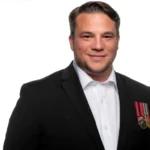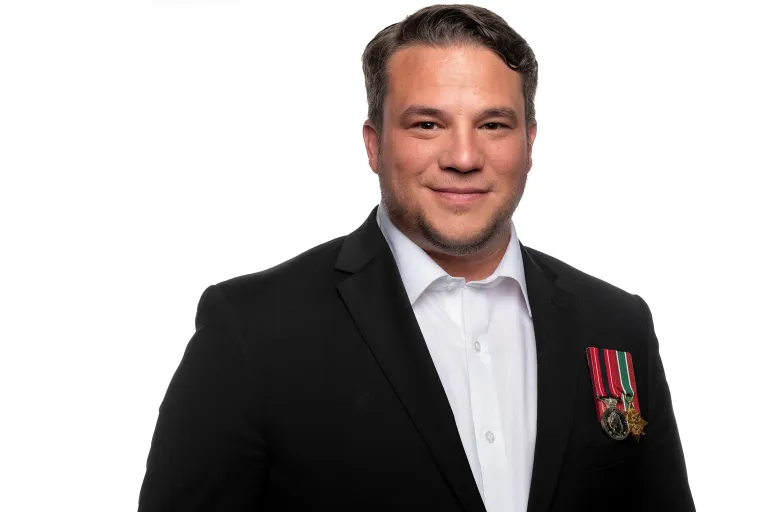

Shawn Menard. Photo courtesy of the Ottawa Citizen
The following are 5 questions that we sent out to every Ottawa City Council candidate in hopes of getting to know them better. We publish the responses exactly as we receive them, in the order that they were sent to us. Here are the responses from Shawn Menard, the incumbent councillor for Capital (Ward 17) seeking re-election.
1. Who are you? Where are you from? What relevant experience do you have for the job?
I grew up in Ottawa, in the west end. I attended Carleton University first for my undergrad and then for my masters degree in Public Policy and Administration. I lived in Capital Ward on and off during my studies and then permanently settled here 17 years ago. Prior to my election to City Council in 2018, I served as OCDSB School Board Trustee. Among other past professional experiences , I was a senior staff person for Canada’s Big City Mayors’ Caucus and the Federation of Canadian Municipalities.
2. The city spends nearly $1B/y on OC Transpo, though many constituents remain dissatisfied with the state of Ottawa’s public transportation. What would you do as a councillor to improve the city’s transportation system?
I have dedicated much of my life to advocating for better public transit. I led the campaign to bring the U-Pass to Ottawa for post-secondary students 15 years ago and am the former Vice Chair of the City of Ottawa Pedestrian and Transit Advisory Committee. In this past term of Council, I moved a motion which secured free transit for youth 18-and-under on evenings, weekends, holidays, and all summer. As a result, affordability improved and OC Transpo reported that 28,000 youth transit riders made ~456,000 trips this summer (on existing routes)—whereas in summer 2025, 8,000 youth made ~130,000 trips. City council must build on this success by continuing to reduce fares.
If we want to keep these new riders and retain existing ridership, it is imperative that we commit to improving reliability and accessibility of service. I have and will continue to advocate for expanding bus lanes and purchasing new buses so we have a fleet that can meet the growing demands of our City. We must also improve scheduling across the system and ensure that OC Transpo has the funding it needs to operate a transit system befitting of a G7 capital.
3. In a December 2025 poll from Abacus Data, 37% of respondents said that cost of living was the most important issue facing the city; another 19% responded ‘housing affordability.’ What would you do as a councillor to make the city of Ottawa more affordable?
I will continue to push for reduction/elimination of transit fares. We must also increase the city-wide affordable housing budget to build more co-op and not-for-profit housing. We can do this by expanding Ottawa Community Housing in order to create a full public developer; a motion brought by my office this past term directed staff to explore this measure. Ottawa requires a post-war style not-for-profit housing investment from all orders of government and cannot simply rely on tax subsidies to for-profit developers. Addressing housing affordability is a key component of any credible cost of living plan.
4. Certain city services like OC Transpo and the OPS have run significant deficits in recent years. Is there anything that you would do as a councillor to try to balance the city’s budget?
People often assume that the only way to address budgetary deficits is to cut services or significantly raise taxes. Property tax changes should not be set based on arbitrary maximum increases; this approach is often seen as the politically expedient way of addressing tax rates. Instead, council must seriously assess the state of the city—our inflation rate, debts and reserves, financial forecasting and asset management plans, and residents’ needs—and set a rate which would improve our public goods and services. A $10.8 billion infrastructure deficit is evidence that this, for many years, has not been the case.
Residents rely on the city for essential services: running water, safe streets, public transit, waste collection. City council must allocate the resources to provide these services and more. That does not mean large increases in property taxes, but it does require a change in priorities. At the same time, keeping property taxes artificially low—and misallocating funds to risky P3s and road widening projects—has only detracted from residents’ priorities. I will continue to use my office to advance concrete alternatives for allocating property taxes to serve residents first.
5. Why are you running for Council? What do you think is the biggest issue facing your ward today?
I’m running to Council to do my part in enhancing the quality of life for Ottawa residents. My vision is for a city where everyone can thrive and realize their full potential. For that to happen, we need to get back to the basics and focus on prioritizing the needs of residents. This means we must rein in wasteful P3s and mega project spending (e.g. Lansdowne 2.0, the LRT, needless urban boundary expansions such as Tewin, etc.) and instead focus on maintaining and improving our existing infrastructure, parks, community centres, pathways, roads, and low cost but effective quality of life improvements. These include affordable and reliable bus service, new and improved community centres, safer streets, more not-for-profit housing, longer library hours, and community climate action to reduce emissions and make our city more resilient to worsening storms, heat, and smoke.
We must see this transition in priorities in Ottawa this term of council, or we will continue down a path of austerity, bad debt, and worsening affordability for residents, including our children.
About The Author