
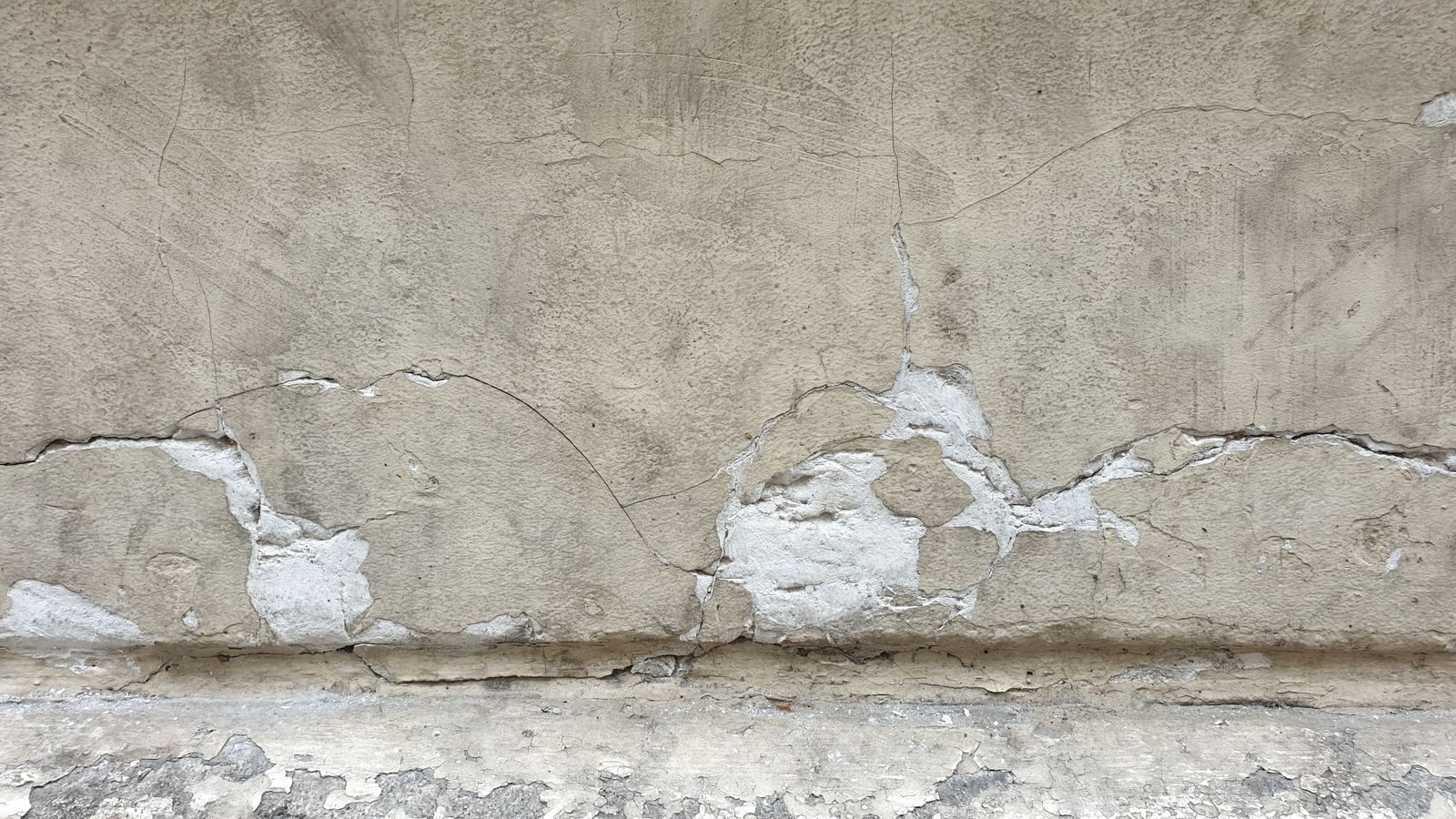
The grey band of cement around the base of your house is the part of the foundation most homeowners never think about until it starts falling off in pieces. When it does, the natural conclusion is that the foundation is crumbling, and that conclusion is usually wrong. This guide explains what parging actually is, how to read the symptoms on your own wall, the four things that cause it to fail, and when a recoat is the answer versus when the real problem is elsewhere. It is for homeowners across Ottawa and the National Capital Region looking at a flaking foundation and trying to work out how worried to be.
What Parging Is, and What It Is Not
Parging is a thin cement or acrylic-modified coating applied over the exposed part of a foundation wall, the strip between the ground and the siding or brick. It tidies up rough concrete or block so the base of the house looks finished, and it gives the masonry a sacrificial layer that takes the weather instead of the wall.
What it is not is structural, and it is not waterproofing. It is a skin. It carries no load and it will not stop water entering a basement. Actual waterproofing is a membrane applied below grade against the buried portion of the wall, a different scope of work entirely.
This matters because of how the problem gets described. When a homeowner says the foundation is crumbling, what has almost always failed is the parging coat, not the concrete or block behind it. The wall underneath is frequently sound, and confirming that first changes both the diagnosis and the price.
Reading the Symptoms
Tap along the wall with a screwdriver handle. A solid, dull sound means the coating is still bonded. A hollow sound means it has separated from the substrate, and that section will come off eventually whether you touch it or not.
Fine surface dust on your hand is weathering, normal on an older coat. Flaking in thin plates is a bonding failure. Sheets coming away in large pieces point at preparation. Deep pitting below knee height, especially facing a driveway, usually means salt.
The Four Things That Cause Parging to Fail
Water Arriving From Above
This is the most common cause by a wide margin, and it has nothing to do with the parging itself. A downspout discharging beside the foundation, an eavestrough overflowing at a corner, or ground sloping toward the house keeps the base of the wall saturated. A coating repeatedly soaked and then frozen has no chance, however well it was applied.
Road Salt
Ottawa uses a great deal of de-icing salt, and splash from the road, the driveway and salted walkways lands directly on the lower foundation. Salt attacks cement-based coatings, which is why damage so often concentrates on the garage side or the wall facing the street.
Freeze-Thaw
Ottawa runs through dozens of freeze-thaw cycles a year, and the shoulder seasons are worst for it. Moisture absorbed into the coating expands as it freezes and pushes the coating away from the wall a fraction at a time. Repeat that through a winter and the bond breaks, which is what a hollow section is telling you.
Poor Preparation
Parging is a bonded coating, so bonding depends entirely on what it was applied to. Put over a dusty surface, over old paint, or over a previous failed coat, it lets go as a unit. The tell is the pattern: preparation failures come off in sheets, whereas age produces crumbs and dust.
Efflorescence Explained
The white powdery bloom on foundation walls is efflorescence, mineral salts left behind when water moves through masonry and evaporates at the surface. It wipes off easily, which is why homeowners assume it is dealt with, and then it returns.
It returns because it is a report on where water is going. The salts are carried out of the masonry by moisture travelling through it, so cleaning the surface removes the evidence rather than the water. If it keeps appearing on the same section of wall, the useful question is what is keeping that section wet, and the answer is usually a downspout, a grade issue or a window well with no drainage.
Acrylic Versus Cement
Traditional cement parging is a sand and cement mix. It is proven and economical, and performs well when the substrate is sound and drainage works.
Acrylic-modified parging includes polymers that make the cured coating more flexible. That flexibility tolerates the small movements a foundation makes and handles freeze-thaw cycling better than a rigid cement coat. It costs more, and on a wall that has already failed once for freeze-related reasons, the extra cost is usually the more sensible spend. Neither product compensates for a wet wall, which is why material choice comes second.
When the Real Fix Is Grading and Downspouts
Here is the advice worth more than anything else in this guide: before you pay for a recoat, find where the water is coming from.
Walk the perimeter during a heavy rain and watch. Where does each downspout discharge, and how far from the wall? Does the ground fall away from the house, or has settled backfill created a trough against it? Have garden beds or interlock been built up against the foundation? Do the window wells drain?
Fixing those is often cheaper than the parging job, and it determines whether the new coating lasts fifteen years or three. Parging that has failed twice in five years is not asking for a third coat. It is telling you something is delivering water to that wall and nobody has looked for it.
Ottawa Parging Experts, a Nepean-based company reachable at (343) 337-3573, says its foundation and parging services include an inspection stage precisely so the cause is identified before any coating goes on, covering chimneys, porch steps, window wells, garage foundations and heritage properties alongside standard residential walls.
Cracks Versus Surface Damage
Not everything on a foundation wall is a coating issue. Hairline cracks in the parging itself are common and usually cosmetic. A crack that runs through the coating and into the concrete or block behind it is a foundation crack, a different repair, typically an injection or a below-grade fix rather than a resurfacing.
Spalling, where concrete flakes away in layers and exposes the aggregate, is damage to the substrate rather than the skin. Stepped cracking in block work, cracks wider at one end, and anything that has visibly moved all warrant a structural assessment first. A parging repair applied over an unaddressed structural crack hides it until it reappears.
The order of operations is consistent: solve the water, address anything structural, then coat.
Frequently Asked Questions
Is crumbling parging a sign my foundation is failing?
Usually not. Parging is a thin surface coating, and it fails long before the concrete or block behind it does. Have the substrate confirmed sound, but in most Ottawa homes a flaking grey band at the base of the wall is a coating problem, not a structural one.
How long should a parging job last?
On a sound wall with proper drainage, a well-prepared coat can last fifteen years or more. On a wall that stays wet because of a downspout or grading problem, the same coating can fail within a few seasons. Lifespan depends more on water than on product.
Does parging stop water from getting into my basement?
No. Parging covers the exposed foundation above grade and is not a waterproofing system. Below-grade waterproofing involves excavation and a membrane applied to the buried wall, a separate and much larger job.
Why does the white powder keep coming back after I clean it?
Because efflorescence is caused by water moving through the masonry and evaporating at the surface, leaving mineral salts behind. Wiping it away removes the deposit but not the moisture path. Its return shows which section of wall is staying wet.
Can parging be done in winter in Ottawa?
Cement-based coatings need temperatures above freezing to cure properly, so the practical season here runs from spring through fall. Work scheduled too late risks a coat that never reaches full strength. If a wall is deteriorating in December, the sensible move is temporary protection and a proper repair in spring.
About The Author