
Landscaping is the renovation category where homeowners have the least reliable sense of what things should cost, partly because the work is quoted by the square foot and partly because two quotes for the same backyard can differ by half without either contractor doing anything dishonest. This guide sets out real Ottawa price ranges by service, explains the invisible line items that make a cheap bid cheap, compares sod and hydroseeding, and walks through how to sequence a multi-service backyard. It is aimed at property owners anywhere in the National Capital Region, from new builds in Riverside South and Stittsville to mature lots in Nepean, Alta Vista and Manotick.
What Landscaping Actually Costs in Ottawa
These published Ottawa ranges are a reasonable benchmark for budgeting before you get quotes.
Lawns and ground cover. Sod $3.75 to $4.50 per square foot, hydroseeding $1.00 to $2.00 including preparation, artificial turf $12 to $20, grading and topsoil $2 to $6.
Hardscaping and structures. Interlock patios and walkways $18 to $45 per square foot, deck building $40 to $80, garden beds and planting $8 to $15.
Maintenance. Spring and fall cleanups $250 to $600, hedge trimming from $150, mowing from roughly $27 per visit.
The interlock spread is the difference between a flat patio in standard grey pavers on an easy lot and a multi-level design with steps, a retaining wall, curved cuts and premium stone on a slope that needs excavation. Ottawan Landscapers, operating in the region since 2014 and reachable at (343) 459-4355, publishes these ranges in its landscaping cost guide.
The Invisible Line Items
Almost every unusually cheap landscaping bid in Ottawa is cheap for the same two reasons: thin base preparation under hardscaping, and shallow soil under lawns and beds. Both are buried the day they are done, and neither shows a problem in year one.
Base Preparation Under Interlock
An interlock patio is only as good as what is underneath it. In this climate that means excavating to a real depth, compacting granular base in lifts rather than one dumped layer, and setting a bedding layer to a consistent thickness. Frost drives deep in the Ottawa Valley, and a thin or poorly compacted base heaves, which is why so many local walkways develop waves after three or four seasons. You cannot inspect this afterward without pulling the stone up, so ask first: a quote should state excavation depth, base material and compaction method.
Soil Depth Under Sod and Beds
Sod laid on two inches of screened topsoil over compacted builder’s clay will green up beautifully and then struggle every August. Roots cannot get down, water runs off instead of soaking in, and the lawn becomes permanently dependent on irrigation. Six inches of quality topsoil is a reasonable target for turf and more for beds.
This is the most common corner cut in new-build backyards across Barrhaven, Kanata and Orleans, where builders often leave a thin skim of soil over graded subsoil. If your lawn has never thrived on a subdivision lot, soil depth is the first thing to check.
Sod Versus Hydroseeding
At $1.00 to $2.00 per square foot against $3.75 to $4.50, hydroseeding costs roughly a third of sod, and on large lots that gap becomes the deciding factor.
Sod suits small to medium areas, front yards where appearance matters immediately, slopes at risk of erosion, and anywhere you need a usable lawn quickly. On a 1,500 square foot front yard the premium is a few thousand dollars, which many homeowners pay for the immediacy.
Hydroseeding suits large open areas, rural lots, and anywhere you can tolerate a growing-in period. The slurry holds moisture and protects seed better than broadcast seeding, and it establishes within a few weeks with consistent watering. On a half-acre property the savings often make it the only sensible option, though hydroseed that dries out during establishment fails. Spring and early fall are the reliable windows for both.
When Grading and Drainage Is the Real Fix
A surprising number of landscaping enquiries are actually drainage enquiries. If you have persistent wet spots, water sitting against the foundation after rain, ice sheets in the same place every winter, or a lawn that never dries out in spring, no amount of new sod or interlock will solve it.
Grading and topsoil work at $2 to $6 per square foot is the least visually rewarding money you will spend in a backyard and often the most important, because it protects the foundation and every dollar spent afterward. Walk the yard the day after heavy rain and note where water is still standing hours later. If any of those spots are within two metres of the foundation, grading comes first.
Sequencing a Multi-Service Backyard
Backyard projects go wrong more often through order of operations than through workmanship, and the sequence is largely fixed by equipment access.
Start with anything requiring heavy equipment, because a mini-excavator has to reach the back of the property and will destroy whatever it drives over: grading, drainage and retaining walls come first. Next comes hardscaping, meaning patios, walkways and steps, which set the geometry everything else works around. Then decks and fences, which need clear access and post holes dug. Irrigation goes in after hardscape and before planting, since trenching across a finished lawn is wasteful. Soil, beds and shrubs come next, and turf goes in last.
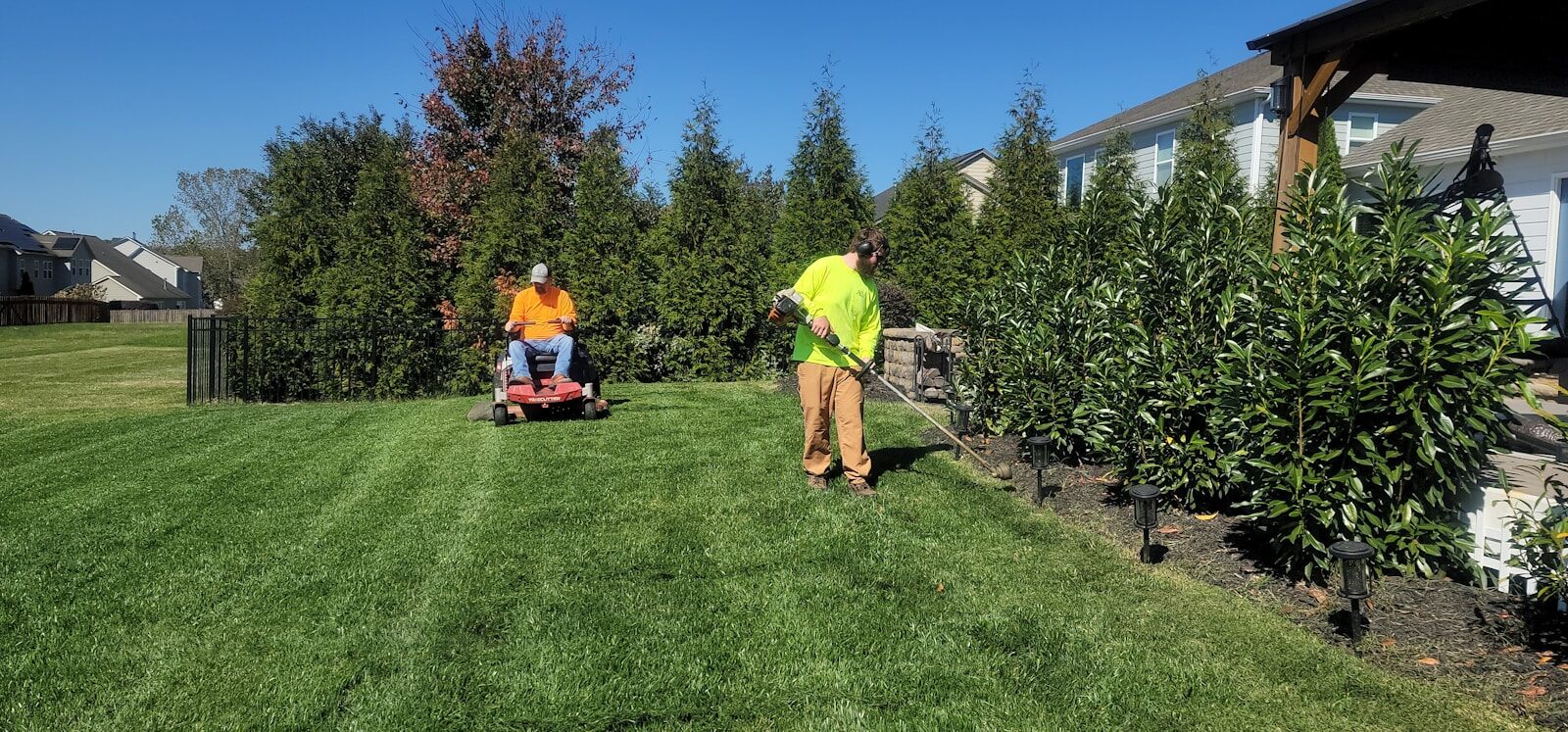
Ottawan Landscapers runs in-house landscaping crews and handles hardscaping and carpentry through long-standing partner crews under its own contract and guarantee, worth understanding when coordinating across trades. Its landscaping services span design and build, interlock, retaining walls and steps, decks, fencing, sod and hydroseeding, lawn care, garden beds and tree planting, irrigation, grading and drainage, artificial turf, seasonal cleanups and snow clearing.
If the budget will not cover everything in one season, split by phase rather than by area. Grading and hardscape this year and planting next year works. Finishing half the yard and then bringing an excavator back through it next spring does not.
What a Free Site Visit Should Produce
A site visit that produces only a verbal number and a handshake has not done its job. You should come away with a written quote listing each service separately with its own square footage and unit price, stating excavation and base depths for hardscaping, specifying topsoil depth for turf and beds, naming materials by product rather than category, and setting out what the workmanship guarantee covers.
It should also tell you something you did not know about your own property. A contractor who walks a wet backyard in Gloucester and does not mention the grade before quoting a patio is quoting the job you asked for rather than the job you need.
Frequently Asked Questions
Why do two landscaping quotes for the same backyard differ so much?
Almost always because of what is under the surface. Excavation depth, the compaction of granular base under interlock, and topsoil depth under sod and beds are the largest cost variables and the easiest to reduce without a homeowner noticing. Compare quotes on those specifications rather than the total.
Is hydroseeding as good as sod?
For large areas, yes, with a caveat about time. Hydroseeding costs roughly a third of sod at $1.00 to $2.00 per square foot against $3.75 to $4.50, and it establishes well when watered consistently through germination. Sod remains better for front yards, small areas, slopes prone to erosion, and anywhere you need a usable lawn immediately.
When is the best time of year to do landscaping in Ottawa?
Spring and early fall are the strongest windows for turf, planting and grading, since soil temperatures and rainfall favour establishment. Hardscaping can run through summer and into late fall as long as the ground is workable. Booking design over the winter usually secures a better spot in the spring schedule.
Do I need to fix drainage before installing a patio or new lawn?
If water stands in the yard more than a few hours after rain, or collects near the foundation, yes. Grading and drainage at $2 to $6 per square foot is unglamorous but protects everything installed afterward, and a patio built over an unresolved drainage problem will fail no matter how well it is constructed.
What order should I do a multi-part backyard project in?
Heavy equipment work first: grading, drainage and retaining walls. Then hardscaping, then decks and fences, then irrigation, then soil, beds and planting, and turf last. Phasing by stage across two seasons works if the budget is tight; phasing by area does not, because later equipment access will damage finished work.
About The Author