
A roof is the one part of your house you almost never look at, and the one that costs the most when it is neglected. This guide covers how to decide between repairing and replacing, why quotes for the same house differ by thousands of dollars, where leaks actually originate, and how attic ventilation and insulation control ice dams through an Ottawa winter. It gives indicative cost ranges so you can sanity-check the numbers you are given. The same decisions apply whether you own a 1950s bungalow in Alta Vista or a two-storey in Kanata approaching its second roof.
Repair or Replace
The answer depends less on the roof’s age than on what it is physically doing.
Reading the shingles
Asphalt shingles telegraph their life stage. Cupping, where the tab edges curl upward, and curling, where the shingle lifts as a whole, both indicate that the mat has aged and the shingle is no longer lying flat. Granules collecting in the eavestrough and below downspouts mean the protective surface is wearing off, exposing the asphalt beneath to ultraviolet light. A few granules after a new install is normal shedding. Consistent granule loss on a fifteen-year-old roof is not.
Widespread cupping, curling and granule loss point to replacement. Damage confined to one area, especially near a chimney, valley or vent, points to a repair.
When a repair is the right call
If the field of the roof is sound and the problem is localised, repair. Shingles missing after a windstorm, a cracked boot on a plumbing stack or a failed section of flashing are all repairs, and any roofer who quotes a full tear-off for a single-point leak should be asked to explain why. Typical roof repair work in Ottawa runs roughly $300 to $1,200 depending on access, height and the extent of the damage.
One exception: within a couple of years of the end of a roof’s service life, real money spent on repairs rarely pays. The repair buys time, and you should price the replacement in parallel.
Where Leaks Actually Come From
This surprises most homeowners: the great majority of roof leaks are not shingle failures. They are flashing failures.
Flashing is the metal that seals junctions where the roof meets something else: chimneys, valleys where two roof planes intersect, plumbing stacks, skylights, and where a roof plane meets a wall. Those are the points where water is concentrated and where materials with different expansion rates meet.
One practical consequence is that a leak stain on your ceiling is rarely directly below the entry point. Water tracks along rafters and sheathing before it drops, so chasing a stain without inspecting the flashing above it is how homeowners pay for two repairs.
The other is that when you replace a roof, the flashing should be replaced with it. Reusing old flashing under new shingles saves the contractor a few hundred dollars and puts the new roof’s most vulnerable detail at the age of the old one. Ask whether flashing replacement is included.
How to Read a Roofing Quote
Two quotes on the same house can differ enormously, and the reasons are identifiable if you know where to look. Ask each contractor to state, in writing:
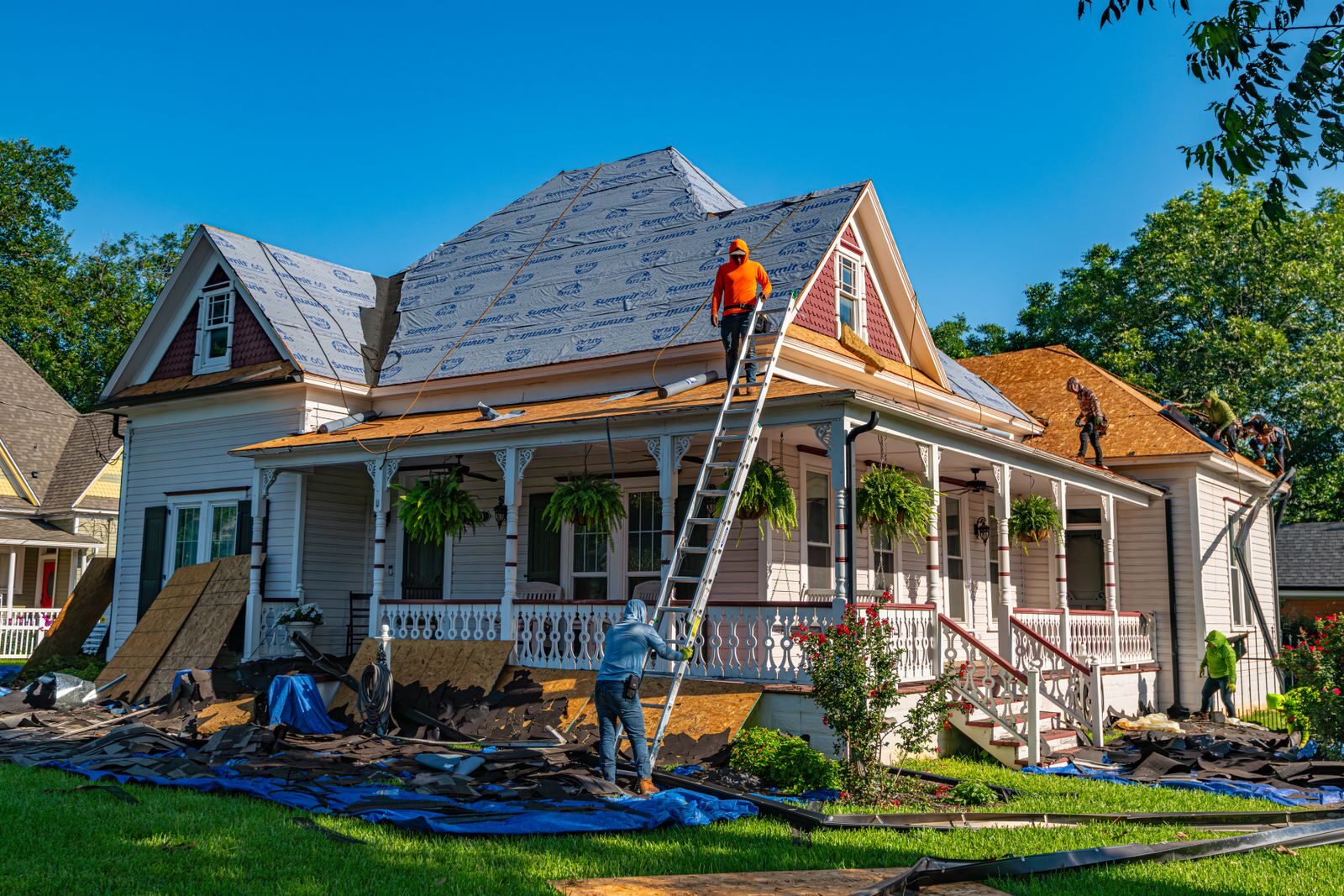
– Whether the price includes a full tear-off to the deck, or an overlay on existing shingles – The allowance for replacing damaged sheathing, and the per-sheet cost beyond it – Whether ice and water shield is included, and how far up from the eaves it runs – Whether flashing, drip edge and vent boots are new or reused – What ventilation work is included – The warranty on workmanship, separate from the manufacturer’s warranty on materials
That last point matters more than people assume. A material warranty covers a manufacturing defect; it does not cover the roof being installed badly, which is the far more common failure mode. RoofRoof Ottawa, roofing locally since 2018, provides a written workmanship warranty alongside a free inspection and written estimate.
Cold weather installations
Asphalt shingles carry a heat-activated adhesive strip that bonds only when the shingle gets warm enough in sunlight. Install in cold conditions and that strip may not seal until spring, leaving shingles vulnerable to wind lift all winter. Manufacturers specify hand-sealing in cold weather for exactly this reason, and it is a step a rushed crew can skip. On a late-autumn install, ask whether hand-sealing is in the scope.
Ventilation, Insulation and Ice Dams
Ice dams are the classic Ottawa roof problem, and they are misunderstood in a way that costs homeowners money.
The mechanism is this. Heat escaping the living space into the attic warms the underside of the roof deck. Snow on the warm part melts, the meltwater runs down to the overhang, which sits beyond the heated envelope and is therefore cold, and refreezes. The ice builds into a ridge, water pools behind it, and eventually backs up under the shingles.
The dam is the symptom; heat in the attic is the cause. That is why heat cables along the eaves are a workaround rather than a fix: they melt a channel through the ice without addressing why it forms. The real repair is attic insulation to keep heat where it belongs, and ventilation to keep the deck close to outdoor temperature, with soffit intake and ridge exhaust working as a pair. Blocked soffits, buried under insulation pushed into the eaves, are among the most common findings in an Ottawa attic inspection.
The same work protects the roof year-round: a hot, poorly vented attic shortens shingle life from below while the sun works from above.
Materials and Cost
For most Ottawa homes the choice is asphalt shingles, with metal as the premium alternative and flat systems where the geometry requires one.
Shingle roofing runs roughly $4.50 to $7.50 per square foot installed, putting a typical full replacement between $8,000 and $18,000 depending on size, pitch, complexity and the number of penetrations. Treat those as indicative ranges rather than quotes, because a steep roof with three dormers and two chimneys is a different job from a simple gable of the same area. Metal generally costs two to three times shingle, chosen for longevity, snow shedding and appearance.
Flat and low-slope sections, common on additions and modern builds in Westboro and Centretown, use EPDM, TPO or modified bitumen, a distinct trade skill from steep-slope work.
Several related items are cheaper done at the same time, including seamless eavestrough, guards, skylights, chimney caps and attic insulation, because bundling avoids paying twice for access. RoofRoof Ottawa offers those alongside its core roofing services, including storm damage and insurance work, rooftop snow removal and 24/7 emergency response, at (343) 308-5957.
Frequently Asked Questions
How long should a roof last in Ottawa?
Service life depends on product grade, quality of installation and above all on attic ventilation, so the number on the warranty is a best case rather than a forecast. Freeze-thaw cycling and summer heat both age shingles here, and a poorly vented roof can fail years earlier than an identical one on a well-vented house next door.
Can I put new shingles over the old ones?
An overlay is sometimes permitted and is cheaper, but it hides the condition of the deck, adds weight and traps heat against the new shingles. A tear-off lets the roofer see and repair the sheathing, which is the only chance anyone gets to look at it.
Does my insurance cover roof damage?
Sudden storm damage is generally treated differently from gradual wear and age-related failure, and policies vary, so read yours or ask your broker. Document damage with photographs before any temporary repair. Contractors who handle insurance work can help with documentation, but the coverage decision sits with your insurer.
Should I get my roof inspected if there is no leak?
Yes, particularly after a significant wind event and once a roof passes the ten-year mark. Most of what shortens a roof’s life, including lifted flashing, failed vent boots and blocked soffits, is invisible from the ground and produces no symptoms until water arrives.
Is rooftop snow removal necessary in Ottawa?
For most sloped residential roofs in ordinary winters, no. It is worth considering after unusually heavy accumulation, on low-slope sections where snow does not shed, and where ice damming has started. It is hazardous work and easy to do damage with, so it is a poor candidate for a ladder and a shovel.
About The Author