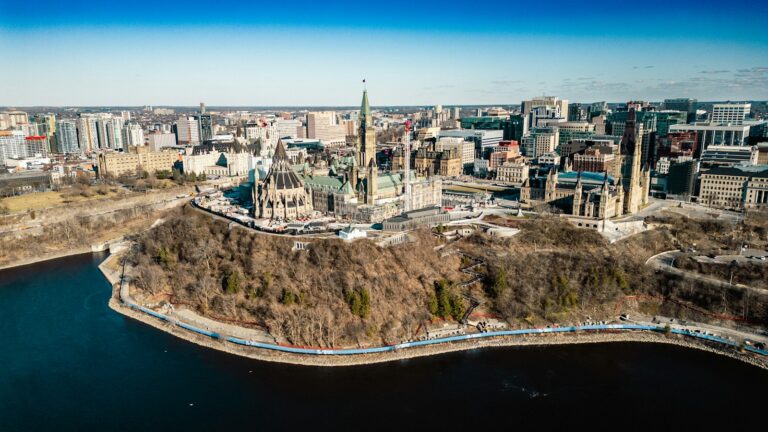

Here are five developments shaping Ottawa and the National Capital Region today, with context on why they matter.
Ottawa’s mayoral candidates agree festivals are being priced out
At a debate hosted by Arts Ottawa, Ottawa Festivals and the Ottawa Music Industry Coalition on Tuesday, mayoral candidates Neil Saravanamuttoo, Jeff Leiper, Mark Sutcliffe and Alex Lawson found rare common ground: festivals are being hit with bills for policing, permits and bylaw services that are high enough to threaten their survival. Organizers say the city’s $1-million Major Festivals Fund pilot with Ottawa Tourism doesn’t close the gap, and with families already stretched, raising ticket prices isn’t a real option. Sutcliffe pledged to work on the issue but cautioned that the city and police still need to recover their costs. With voting on October 26, the question for the next council is whether festivals are treated as a cost centre or as economic and cultural infrastructure for the capital. Source: CBC Ottawa.
West Coast oil pipeline set to become first “national interest” project
Prime Minister Mark Carney is expected to announce in Fort McMurray today, alongside Alberta Premier Danielle Smith, that a proposed oil pipeline from Alberta to the West Coast will be designated a project of national interest under the Building Canada Act. It would be the first designation since the law passed more than a year ago, giving Ottawa power to set special conditions across a dozen federal laws to speed the project along. The designation is not a construction approval, and a key question remains unanswered: Carney said taxpayers wouldn’t pay for the pipeline, yet no private company has stepped forward to fund it fully. The decision is central to Ottawa’s reset with Alberta and its push to diversify exports away from the United States. Sources: The Canadian Press via CKOM and The Globe and Mail.
Ontario’s minimum wage rises to $17.95 today
Minimum wages go up today in five provinces, including Ontario, where the rate rises to $17.95 an hour. Prince Edward Island, Nova Scotia, Manitoba and Saskatchewan are also increasing their rates, by between 25 and 40 cents. With these changes, every province and territory except Alberta will have raised its minimum wage this year; Alberta has held at $15 since 2019, now the lowest in the country, while Nunavut leads at just over $20. For Ottawa workers in retail, food service and hospitality, the increase offers modest relief, but it also highlights the widening gap between minimum wage and the cost of rent in the capital. Source: The Canadian Press via The Chronicle-Journal.
Trade minister seeks time with U.S. trade chief as G20 talks wrap up
G20 trade ministers finish two days of meetings in Wisconsin today, and International Trade Minister Maninder Sidhu is expected to speak with U.S. Trade Representative Jamieson Greer, although no time or format has been confirmed. Sidhu is also meeting Indian and European Union officials ahead of the EU summit in Montreal this month and an expected visit to Canada by Indian Prime Minister Narendra Modi in December. The meetings come just days after new U.S. import bans on Canadian goods took effect, and they reflect Ottawa’s two-track strategy: keep lines open with Washington while building trade relationships that make Canada less dependent on it. Source: The Canadian Press via The Chronicle-Journal.
Carney hints immigration cuts may be ending
Prime Minister Mark Carney has signalled that Canada’s period of immigration cuts may be winding down, telling The New York Times that with the system back under control, the question is now when to pursue a controlled increase in population. No new targets have been announced; any changes will come in the next Immigration Levels Plan to be tabled in Parliament. The shift matters for the National Capital Region on several fronts, from housing demand and labour shortages in health care and construction to enrolment at local colleges and universities that have been squeezed by caps on international students. How the government balances permanent and temporary immigration will be the detail to watch. Source: Immigration.ca, citing The Canadian Press.
About The Author