
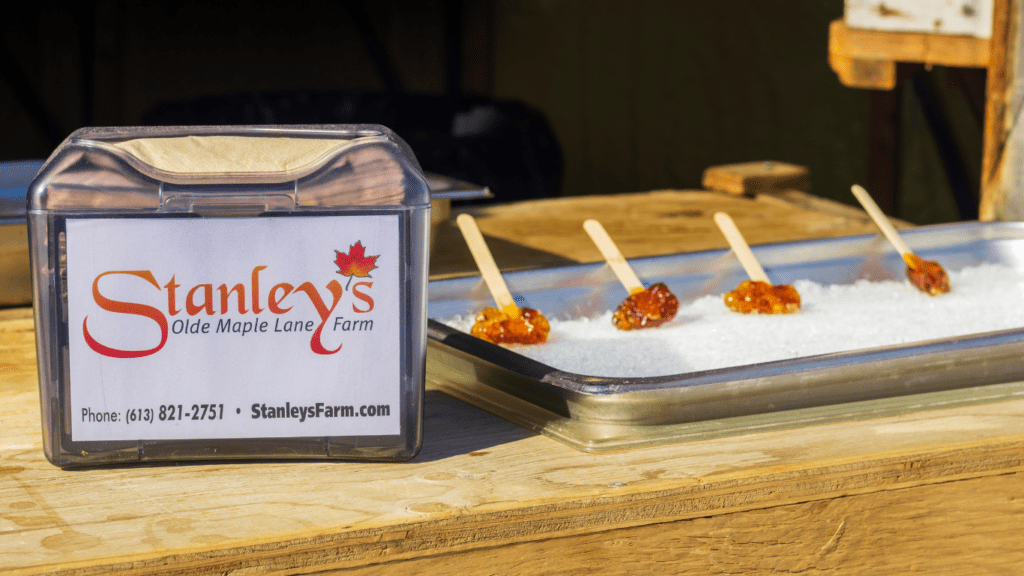
For many Canadians, maple syrup is something poured on pancakes without much thought. But behind every bottle is a season shaped by weather, patience, tradition, and a lot of hard work. Sugar bush season is more than a busy time of year. It is the foundation of a way of life that has been built, quite literally, in the woods.
In this interview, Colin Gallagher, Operations Manager at Stanley’s Olde Maple Lane Farm in Edwards, Ontario, reflects on what maple season really means. From unpredictable winters and long days in the sugar shack to managing crowds while keeping centuries-old traditions alive, Gallagher shares how sugar bush season continues to shape the farm, the family behind it, and the thousands of visitors who return year after year.
Up, close and personal with Stanley’s Olde Maple Lane Farm
- What does sugar bush season mean to you personally, beyond it being the busiest time of year at Stanley’s Olde Maple Lane Farm?
Sugar bush season is really what this farm was built on. The very first time we ever opened our doors to the public was during sugar bush season in 1993, and ever since then we’ve had the chance to welcome thousands of families from all over the world to experience it with us. It’s where everything started, and it still feels like the heart of the farm.
- How does the rhythm of the sugar bush shape the rest of the farm’s calendar?
Most farms operate on four seasons, but we really work within three: Sugar Bush (January to April), Weddings and Events (May to October), and Christmas (November and December). Even though each season has a clear focus, the work never really stops—we’re always planning, building, and thinking ahead to the next year.
- What is the most unpredictable part of maple season that visitors rarely think about?
The weather, without a doubt. Weather affects everything—from how many guests come out on a given day to how long the season lasts overall. Some days the weather makes it a great day, and other days it forces us to regroup and start planning for tomorrow.
- How do changing winters affect your planning and decision making during sugar bush season at Stanley’s Olde Maple Lane Farm?
Maple syrup production is incredibly weather-dependent, so it’s always part of our planning. While we keep our public season fairly consistent from year to year so families know what to expect, the actual timing and volume of syrup production can change constantly depending on the weather.
- What traditions tied to maple syrup production have you deliberately kept, even when modern methods might be easier?
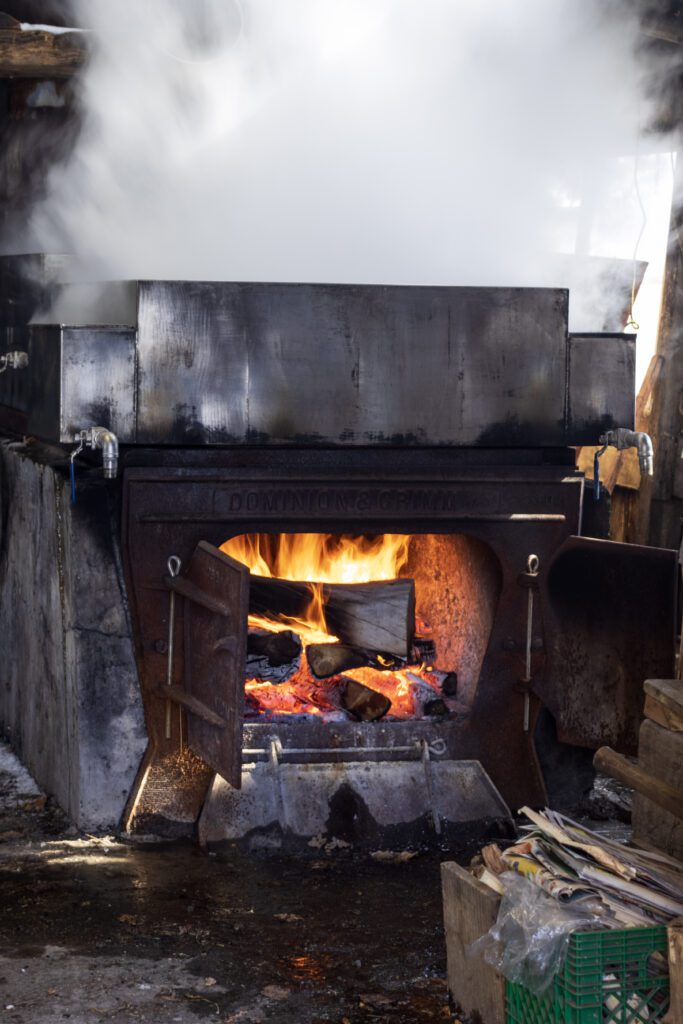
We still collect and boil sap the same way it’s been done on this farm for over 200 years. Each tree is tapped with a spile and bucket, and every day or so we collect the sap and bring it back to our 200-year-old sugar shack. From there, it’s boiled down using our heritage wood-fired evaporator. We really believe in keeping those traditions alive—the biggest change is that we use a tractor now instead of horses.
- How do you explain the slower, patient nature of maple production to visitors used to instant results?
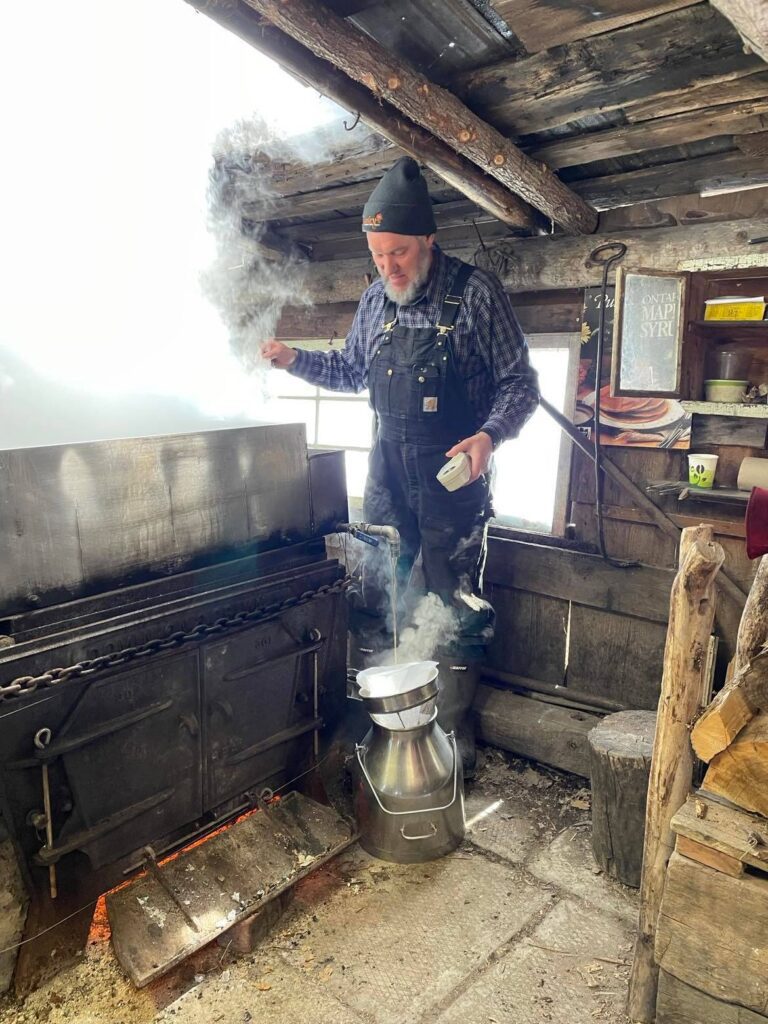
It can definitely be a challenge. That’s why we encourage visitors to step into the sugar shack and talk directly with our sugarmaker. What often surprises people is that once the sap reaches the evaporator, it still takes hours of boiling to slowly concentrate and turn it into maple syrup. Seeing that process firsthand really helps put the time, patience, and care into perspective.
- What is the hardest part of managing crowds while still respecting the work happening in the sugar bush?
We’re fortunate that our sugar bush isn’t separate from the rest of the farm, the farm is built right within it. So visitors can actually see syrup production happening the whole time they are here. We usually avoid collecting sap during peak visiting hours because navigating around guests can be tricky, but maple production also involves a lot of waiting. During that waiting time, we focus on welcoming people and teaching them about the process.
- How do you decide how much of the production process to make visible to the public?
Because the farm is in the sugar bush, guests naturally see most of the process. The only parts we keep out of view are areas that require strict health and sanitation standards, like bottling.
- What misconceptions do people have about how maple syrup is made?
That it’s quick and easy. We hear lots of stories from people who tap one maple tree at home thinking it’ll be a fun spring project. Those stories are often followed by a bit of a horror story; burned syrup, weeks of work, or finally finishing only to realize they’ve made just enough syrup for one pancake.
- How do you balance education and enjoyment during sugar bush season at Stanley’s Olde Maple Lane Farm?
For us, they go hand in hand. We always try to make education enjoyable. Anytime we add a new activity or experience, we think about how it can also teach something, whether that’s about maple syrup or farm life in general.
- What moments during maple season feel the most rewarding for you and your family?
Seeing families spend time together. Whether it’s sitting down for pancakes or hopping on a tractor ride, those shared moments mean a lot to us. We especially love seeing families who come back year after year, it feels like we get to grow alongside them. There is something special about watching kids grow up and then seeing them bring their own children back.
- What is the biggest operational stress point during sugar bush season?
The Pancake House, without question. While many outdoor activities can run with smaller teams, during sugar bush season we’re operating a fully functioning tray-service restaurant that feeds hundreds of people a day. There are a lot of moving parts overall, but the Pancake House has countless small jobs and daily adjustments that all need to line up for things to run smoothly.
- How do weather shifts change the mood or pace of a day in the sugar bush?
Weather really sets the tone. On cold, rainy days, things are quieter and slower. On warm, sunny spring days, the farm is packed and it’s all hands on deck.
- How do you prepare staff and family members for the physical and mental demands of the season at Stanley’s Olde Maple Lane Farm?
A lot of preparation comes down to communication and setting expectations. Everyone knows sugar bush season is intense, so we focus on teamwork, flexibility, and supporting one another. Many of our staff come back year after year, which helps! They understand the pace, the long days, and also how rewarding it can be.
- What does a “good” maple season look like to you, even if yields are lower than expected?
A great visitor experience. While maple syrup production is a key part of why we do this, just as important is giving people a chance to experience this way of life. Even if yields are lower, if guests leave with great memories and want to come back year after year, that’s a successful season to us.
- How do you handle disappointment when conditions are not ideal after months of preparation?
Preparation is a big part of managing expectations. When we plan, we always consider worst-case scenarios. Beyond that, it’s about focusing on the positives and leaning on each other as a family and a team.
- What responsibility do you feel to pass maple traditions on to the next generation?
That’s really what we’re doing this for. Maple syrup is a Canadian tradition that goes back hundreds of years, yet it’s still a mystery to many people. We feel a responsibility not only to pass it on to the next generation of Canadians, but also to new Canadians and visitors from around the world—to show them what a true Canadian spring looks like.
- How do you talk to visitors about the labour behind what often feels like a simple product?
It can be tough for people to grasp, especially when they see maple syrup as something simple. We’re often asked why it can feel expensive, and that’s where the 40:1 ratio really helps. Maple sap is mostly water, so it takes about 40 litres of sap being slowly boiled down to evaporate that water and concentrate the natural sugars into just one litre of maple syrup. It’s something people can easily visualize, and it really opens their eyes to the time, fuel, and labour behind every bottle.
- What have years of sugar bush seasons taught you about patience and adaptability?
That things won’t always go according to plan but that doesn’t mean you’ve done anything wrong. Weather changes, people change, and you have to be willing to pivot. Especially from 2020 onward, we’ve learned how important it is to adapt while still staying true to the core of what we do.
- When the season ends, how do you reflect on what went right and what needs to change next year?
After a few days to rest and recover, we sit down as a family and management team and talk through the season. Everyone has a different role, so it’s important to hear each perspective. From there we decide what worked, what can stay the same, and what we can improve for next year.
Conclusion
Sugar bush season may only last a few months, but its impact stretches across the entire year and across generations. As Colin Gallagher explains, success is not measured only in litres of syrup, but in shared meals, returning families, and the chance to pass on a tradition that is deeply rooted in Canadian history.
At Stanley’s Olde Maple Lane Farm, the slow, patient process of making maple syrup is also a reminder that some things are worth doing the hard way. In a world that values speed and convenience, the sugar bush offers something different: connection, continuity, and a true taste of Canadian spring.
Stanley’s Olde Maple Farm is located at 2452 York’s Corners Rd. Edwards, ON K0A 1V0. For reservations, visit https://stanleysfarm.com/
About The Author