

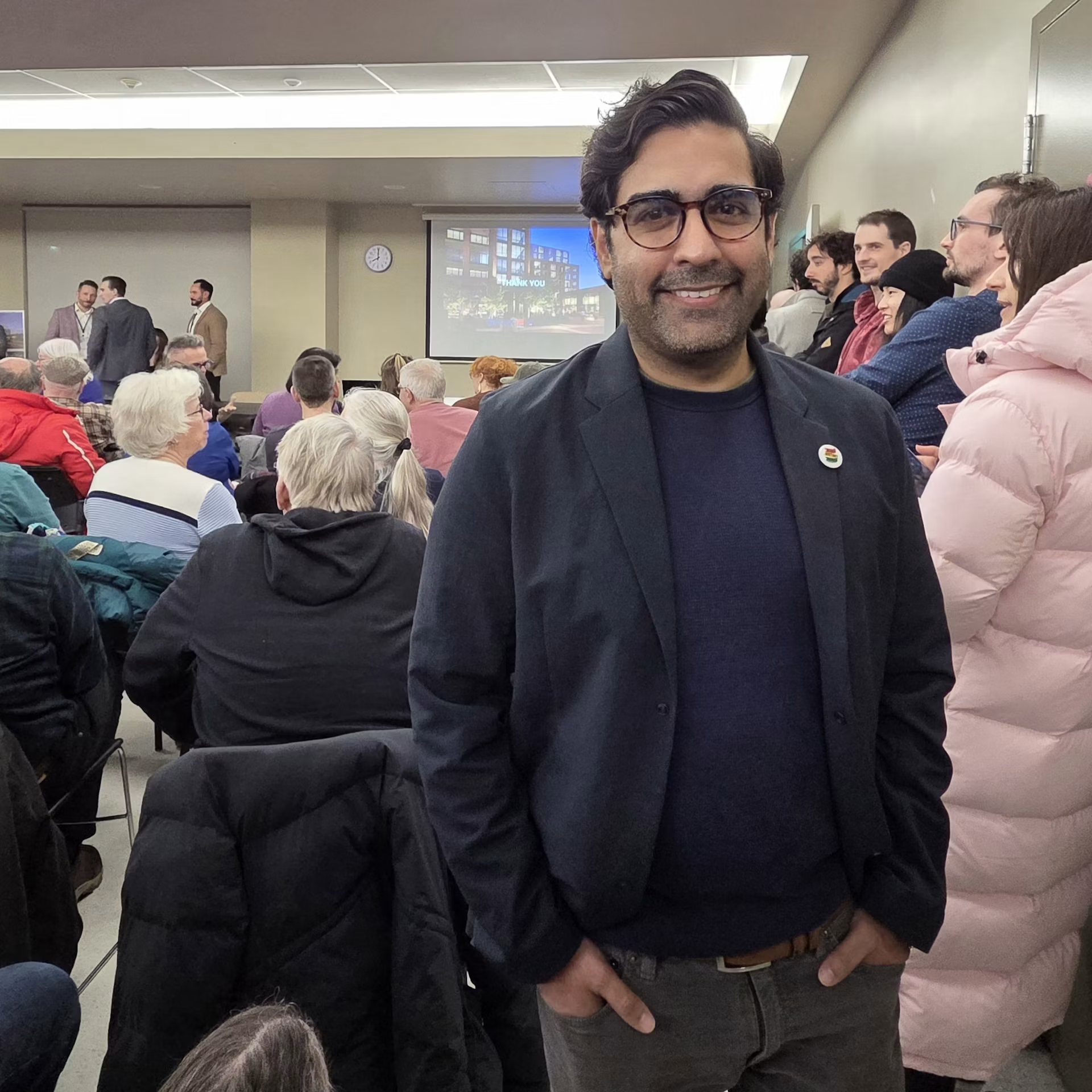
The following are 5 questions that we sent out to every Ottawa City Council candidate in hopes of getting to know them better. We publish the responses exactly as we receive them, in the order that they were sent to us. Here are the responses from Kitchissippi (Ward 15) Council candidate Subhir Uppal.
1. Who are you? Where are you from? What relevant experience do you have for the job?
Subhir Uppal is an accomplished real estate professional, technology entrepreneur, and dedicated community leader. A proud resident of Ottawa’s Kitchissippi Ward for over 15 years, Subhir has deep roots in the community, having lived in the Civic Hospital neighborhood and Hintonburg before settling in Westboro, where he currently resides with his wife and young son, Brahm.
Bringing more than two decades of industry expertise to his candidacy, Subhir is a recognized innovator. He is the founder of uppaBE, a pioneering AI-driven real estate startup that earned him the 2024 Entrepreneur of the Year award. His commitment to professional integrity is reflected in his leadership roles across the sector, including serving on the Ottawa Real Estate Board and the Real Estate Council of Ontario, as well as teaching as an ethics instructor for the Real Estate Institute of Canada.
Subhir’s civic engagement is deeply personal. Driven by profound gratitude to the community that rallied around his family following a devastating house fire, he remains steadfast in his commitment to giving back. He actively champions local well-being by serving on the board of the Ottawa Safety Council and mentors the next generation of leaders through Junior Achievement Canada.
Subhir Uppal brings a unique combination of financial acumen, technological innovation, and urban development expertise to his candidacy for City Councillor of Kitchissippi Ward. With over 20 years of private-sector leadership and deep community roots, his professional background translates directly into the skills needed to effectively manage municipal operations and advocate for residents at City Hall.
As a seasoned property manager, mortgage broker, and real estate manager, Subhir has over two decades of experience overseeing complex financials, assessing risk, and managing large-scale budgets. This financial literacy equips him to critically evaluate Ottawa’s municipal budget, identify cost-saving efficiencies, and ensure taxpayer dollars are invested responsibly without compromising essential public services.
Subhir is a proven innovator who understands how to leverage modern technology to improve service delivery. As the founder of uppaBE, an award-winning real estate startup utilizing Artificial Intelligence, he earned the 2024 Entrepreneur of the Year award. He brings a forward-thinking, tech-driven mindset to City Hall, ready to champion “smart city” initiatives, streamline municipal bureaucracy, and modernize city services to make them more accessible and cost-effective for residents.
With extensive experience as a project lead in developments and a real estate broker, Subhir intimately understands the complexities of zoning, infrastructure, and urban growth. He is uniquely positioned to navigate Ottawa’s housing challenges, balance responsible development with neighborhood character, and make informed decisions on city planning that directly impact Kitchissippi Ward.
Serving on City Council requires a commitment to transparency and strong governance. Subhir currently holds leadership positions on the boards of the Ottawa Real Estate Board and previously at the Real Estate Council of Ontario, giving him extensive experience in policymaking, regulatory oversight, and committee work. Furthermore, as an ethics instructor for the Real Estate Institute of Canada, he has a demonstrated track record of demanding accountability and integrity—principles he will bring to municipal government.
Subhir’s civic engagement directly aligns with the core responsibilities of a city councillor. His work on the board of the Ottawa Safety Council and involvement in Neighbourhood Watch gives him direct insight into local safety issues, traffic calming, and pedestrian well-being. Having lived across Kitchissippi—from the Civic Hospital neighborhood to Hintonburg to Westboro—he understands the distinct needs of its diverse communities.
2. The city spends nearly $1B/y on OC Transpo, though many constituents remain dissatisfied with the state of Ottawa’s public transportation. What would you do as a councillor to improve the city’s transportation system?
Ottawa is spending nearly $1 billion annually on OC Transpo, yet Kitchissippi residents are rightly frustrated by a system that remains unreliable. Whether you walk, bike, drive, or take transit, our streets should work well for everyone, and residents deserve a transit system they can actually count on.
My approach to fixing Ottawa’s transportation system is rooted in practical problem-solving, transparency, and leveraging modern technology:
Data-Driven Routing and “Smart Transit” Technology
As a tech entrepreneur who built an AI-driven platform (uppaBE), Subhir understands that bad data leads to bad service.
· Predictive Maintenance for the LRT: Ottawa has poured millions into fixing water infiltration and concrete issues on the Confederation Line. Subhir would advocate for implementing AI-driven predictive maintenance sensors across the LRT and bus fleet to catch mechanical failures before they cause rush-hour breakdowns.
· Real-Time Open Data for Commuters: Riders are tired of “ghost buses.” Subhir would push to overhaul OC Transpo’s GPS tracking systems, ensuring the data fed to third-party apps is 100% accurate, and introduce interactive digital signage at major transit hubs.
· Dynamic Bus Scheduling: Instead of relying on static, outdated route maps, the city should leverage anonymized mobility data to dynamically adjust local bus routes based on actual neighborhood demand, especially as hybrid work schedules have fundamentally changed peak travel times.
Transit-Oriented Development (TOD) & Revenue Generation
With a $900+ million transit budget heavily reliant on property taxes (funding roughly 67% of the system), OC Transpo needs new revenue streams that don’t constantly penalize riders with fare hikes. Subhir’s two decades in real estate make him the ideal advocate for maximizing city assets.
· Commercializing Transit Hubs: Subhir would push to lease commercial space at major O-Train stations for coffee shops, grocery pop-ups, and essential retail. This generates non-fare revenue for OC Transpo while making transit more convenient for riders.
· Building Housing on Transit Lands: The city owns significant land around Stage 2 LRT stations (like the newly opened East and upcoming West extensions). Subhir would champion leasing air rights and surplus land to developers to build affordable and market-rate housing directly on transit lines. This simultaneously addresses the housing crisis and creates a built-in ridership base.
Fixing the Bus Shortage with Transit Priority Corridors
Even as the O-Train expands, buses remain the backbone of the system. OC Transpo is struggling with bus reliability due to an aging fleet and a lack of high-capacity vehicles.
· Transit Priority Measures: Adding more buses won’t help if they are stuck in gridlock. Subhir would champion immediate, low-cost transit priority measures such as dedicated bus lanes, queue jump lanes, and transit-first traffic signal programming on high-traffic corridors like Bank Street, Carling Avenue, and Baseline Road.
· Smarter Fleet Procurement: Subhir would demand a review of Ottawa’s bus procurement strategy to ensure the city is purchasing high-capacity buses to handle growing ridership, rather than just 1:1 replacements of smaller vehicles.
Expanding Accessibility and Community Safety
Subhir’s work with the Ottawa Safety Council and youth mentorship programs aligns perfectly with initiatives to make transit safe and accessible.
· Expanding Free Youth Transit: The 2026 launch of free transit for youth (ages 11-18) during summer, evenings, and weekends was a massive success. Subhir would advocate working with local school boards and the province to fund a full expansion of this program, saving families money while building a lifelong culture of transit use.
· Environmental Design for Safety: As ridership recovers, safety is a major barrier. Subhir would support the ongoing hiring of Special Constables while advocating for “Crime Prevention Through Environmental Design” (CPTED). This means better lighting, clearer sightlines, and activated public spaces around transit stops so waiting for a bus in Kitchissippi feels safe at any hour.
Financial Accountability and P3 Oversight
As a mortgage broker and business leader, Subhir knows how to read a complex contract.
· Enforcing P3 Contracts: The city’s Public-Private Partnership (P3) contracts for the LRT have often left taxpayers on the hook for poor performance. Subhir would push for aggressive enforcement of maintenance contracts, ensuring financial penalties are strictly applied to private contractors when service delivery falls below standard.
· Zero-Based Budgeting for OC Transpo: Rather than just adding a percentage increase to OC Transpo’s budget every year, Subhir would advocate for a zero-based budget review forcing the department to justify its operational expenses from the ground up to find inefficiencies before asking for higher transit levies on property tax bills.
3. In a December 2025 poll from Abacus Data, 37% of respondents said that cost of living was the most important issue facing the city; another 19% responded ‘housing affordability.’ What would you do as a councillor to make the city of Ottawa more affordable?
Addressing Ottawa’s cost-of-living crisis requires a pragmatic strategy that tackles the city’s single largest household expense, housing, while enforcing strict fiscal discipline with taxpayer dollars at City Hall.
Unlock Attainable Housing Supply & Reform City Fees
Legalize Missing-Middle Housing: Streamline approvals for gentle density, such as duplexes, triplexes, townhomes, and low-rise apartments. Expanding this supply offers affordable options for seniors, young families, and renters without altering neighbourhood character.
Reform Municipal Development Charges: Overhaul municipal development fees that add tens of thousands of dollars to the upfront cost of a new home. High fees choke housing creation and drive up purchase and rental prices; reforming them directly reduces barriers to construction.
Balanced Rental Support: Support social housing builds while cutting administrative backlogs so small-scale housing providers can operate predictably without pushing affordable units off the market.
Enforce Fiscal Accountability at City Hall
Major Capital Oversight: Implement a Major Infrastructure Oversight Framework with real-time public dashboards and open-book financial tracking for all municipal projects over $10 million. Eliminating multi-million-dollar budget overruns protects the city’s bottom line and keeps property taxes predictable.
Prioritize Core Services: Refocus municipal spending on essential service delivery—infrastructure, road maintenance, snow removal, green space, and community safety—ensuring maximum value for tax dollars.
Reduce Daily Commuter Expenses
Fair Transit Fares: Transition OC Transpo toward a distance-based fare structure so residents making shorter, localized trips are not burdened with flat-rate overcharges.
Transit Reliability: Fix core light-rail and bus reliability issues and improve real-time tracking so families can dependably reduce their reliance on vehicle ownership.
Support Main Street Economies
Practical Local Policies: Reform paid parking systems—introducing short-term grace periods and weekend flexibility—to support local BIAs, keep small businesses thriving, and protect residential streets from overflow pressure.
4. Certain city services like OC Transpo and the OPS have run significant deficits in recent years. Is there anything that you would do as a councillor to try to balance the city’s budget?
Balancing Ottawa’s budget without overburdening taxpayers requires shifting from reactive bailouts to strict operational accountability and disciplined core spending. When major service bodies like OC Transpo and Ottawa Police Service (OPS) face multi-million dollar structural deficits, City Hall must focus on long-term efficiency, service optimization, and revenue alignment rather than defaulting to steep property tax spikes.
Institute Strict Fiscal Oversight & Capital Control
Infrastructure Oversight Framework: Implement open-book financial tracking and real-time public dashboards for all municipal projects and procurement contracts over $10 million. Preventing multi-million-dollar cost overruns on city projects stops general revenues from being constantly drained to cover budget holes.
Value-for-Money Audits: Conduct comprehensive third-party operational audits across major city departments prior to annual budget approvals to eliminate administrative redundancies before cutting frontline services.
Modernize OC Transpo’s Revenue & Operations
Distance-Based Fare Structure: Transition OC Transpo toward a distance-based fare system so short-distance riders pay fair rates, incentivizing local ridership while restoring lost farebox revenue.
Focus on Core Reliability: Prioritize budget allocation toward fixing core light-rail and main-route bus reliability. Rebuilding public trust and ridership is the most sustainable way to close the transit operating deficit.
Tech-Driven Efficiency: Leverage real-time tracking systems to optimize route scheduling and reduce operational waste.
Optimize OPS Delivery & Resource Allocation
Proactive Community Safety Model: Reallocate existing police resources toward high-visibility, localized beat officers and neighbourhood watch support, improving safety outcomes per dollar spent.
Partnered Emergency Response: Collaborate with social and mental health agencies to handle non-emergency wellness calls, freeing up specialized police resources and lowering high operational dispatch costs.
Refocus City Spending on Core Priorities
Target ratepayer dollars squarely on essential municipal duties—road and infrastructure maintenance, green space, public safety, and basic service delivery—ensuring that broader municipal spending growth remains strictly tied to real economic indicators.
5. Why are you running for Council? What do you think is the biggest issue facing your ward today?
I am running for Councillor to bring a fresh, energetic, and practical voice to City Hall.
As a local tech entrepreneur, ethics instructor, and board member with the Ottawa Safety Council, my background has given me a deep understanding of how organizations make decisions, manage budgets, and stay accountable to the people they serve. Kitchissippi needs a collaborative leader focused on fiscal discipline, improved city services, and proactive community engagement.
The Biggest Issue Facing Kitchissippi:
Smart Growth & Service Deficits
The single biggest challenge is ensuring rapid intensification comes with our fair share for the required infrastructure, transit, and community investment needed to sustain it.
Development That Fits: Intensification must strengthen neighbourhoods rather than overwhelm them. That means respecting community character, protecting our urban tree canopy, and resolving spillover parking pressure on residential side streets.
Transit Reliability: Restoring reliable LRT and bus service is essential. Commuters deserve predictable routes, accurate real-time tracking, and a fair fare structure.
Recreation Infrastructure: Our community recreation capacity is lagging far behind population growth. I am advocating for a new recreation and wellness centre in the Tunney’s Pasture/Bayview area so children, families, and seniors have room to stay active.
Community Safety & Connections: Expanding local safety through community-focused beat officers, stronger Neighbourhood Watch partnerships, and regular town halls.
About The Author







I ran your why I’m voting through three ai detectors and all came back highly likely. If you can’t take the time to answer these basic questions, you don’t deserve peoples votes.
subhir is a very good person and will do a job as it has to be he loves people and his community and is not all about money its about change which is so badly needed in the ward hes running for i have known him as a child hard worker dedicated respectful in every thing he has done and has done alot im very proud of him and his family which all they ever did since i have known them is very hard and dedication to what they put his mind to do his accomplishments are to many and his motives are real hes not your average money guy or looking for fame hes the guy you want him on your side to get things done hes the man low key few words but his actions speak louder then words god bless subhir on your journey continue to do good woks for your family and your ward.