

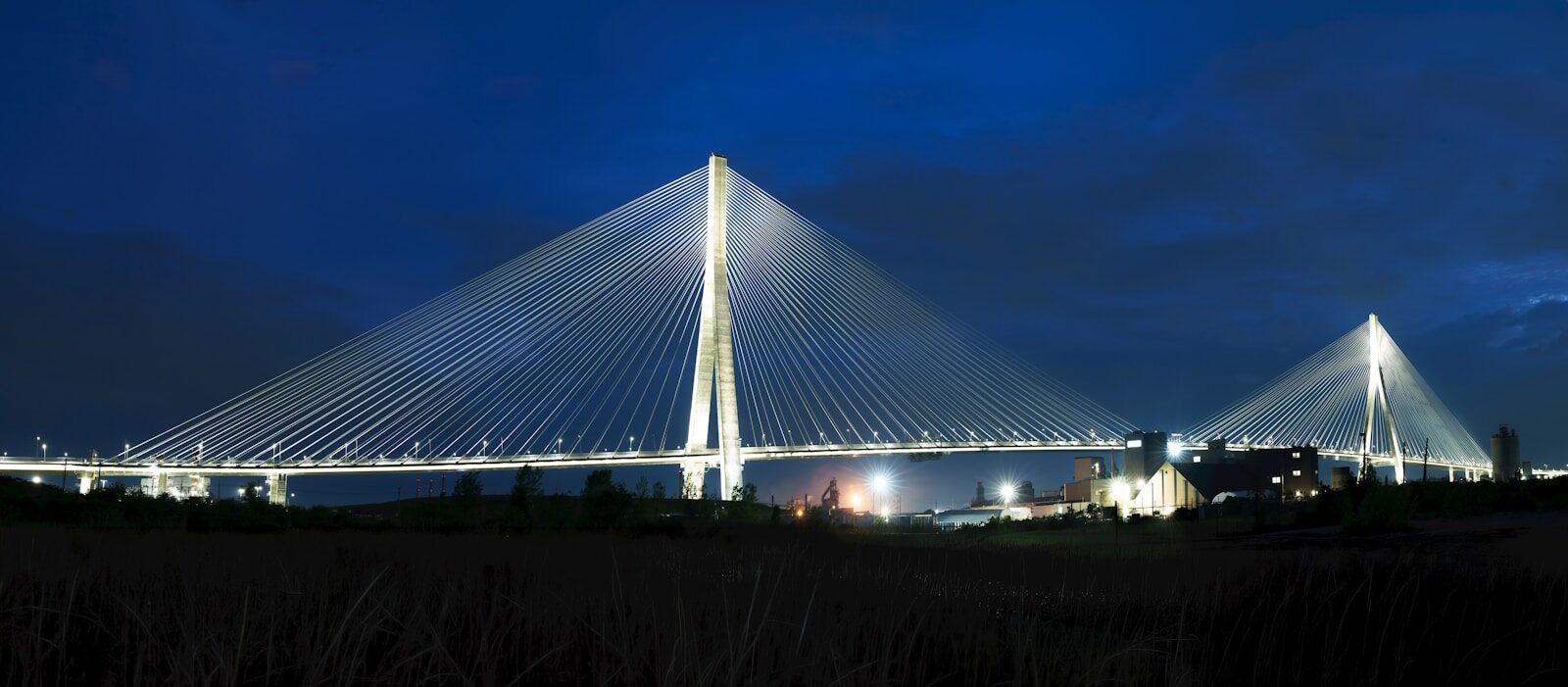
After years of planning, construction and anticipation, the Gordie Howe International Bridge is finally set to open on July 27, 2026, creating a second major border crossing between Windsor, Ontario, and Detroit, Michigan. Its opening comes several weeks later than expected after a last-minute political dispute between Canada and the United States delayed the project.
The six-lane cable-stayed bridge stretches 2.5 kilometres across the Detroit River and features an 853-metre main span—the longest of its kind in North America. Designed for passenger vehicles and commercial trucks, it will provide a long-awaited alternative to the nearly century-old Ambassador Bridge.
The second crossing is about far more than convenience. The Windsor-Detroit corridor is North America’s busiest commercial land border, carrying roughly one-quarter of all Canada-U.S. merchandise trade by value. For decades, governments and industry leaders warned that relying on a single international bridge created a major vulnerability for trade, manufacturing and national security.
The need for a second international crossing became especially evident during the 2022 Ambassador Bridge blockade, when protests temporarily disrupted billions of dollars in cross-border trade and exposed the risks of relying on a single major commercial crossing.
Named after hockey legend Gordie Howe, who became an icon during his Hall of Fame career with the Detroit Red Wings, the bridge is one of the largest infrastructure projects in Canadian history.
Construction began in 2018 under the supervision of the Windsor-Detroit Bridge Authority, a Canadian Crown corporation, with the Bridging North America consortium serving as the project’s design-build partner. The total cost is estimated at US$4.7 billion (C$6.4 billion).
Unlike most international infrastructure projects, Canada financed virtually the entire undertaking, including the Gordie Howe International Bridge, both ports of entry and the highway connections into Michigan. The U.S. government provided the land for its customs plaza but did not contribute to construction costs. Ottawa argued that paying for the project would avoid years of cost-sharing negotiations while securing one of Canada’s most important trade corridors.
Under the original agreement, Canada was to recover its investment through toll revenues before sharing future profits with Michigan. That arrangement later became the focus of negotiations with the Trump administration, which argued the United States should receive a greater share of the bridge’s future economic benefits despite Canada having financed construction.
Although construction of the Gordie Howe International Bridge was completed earlier this year, its June 12 opening was postponed at the request of the U.S. government while the two countries renegotiated the financial agreement. Prime Minister Mark Carney initially described the outstanding issues as administrative, but later reports indicated the discussions centred on governance and future toll revenues.
The revised agreement allows the bridge to open on July 27 but significantly changes the original financial arrangement. Canada will receive half of the bridge’s net toll profits during the first 15 years, while the remaining half will fund a U.S.-run regional economic development initiative, according to a source familiar with the negotiations.
The negotiations also renewed scrutiny of the Moroun family, owners of the privately owned Ambassador Bridge. The family spent years opposing the Gordie Howe International Bridge through lawsuits and lobbying because a competing crossing would likely reduce toll revenue from its bridge. While the Morouns argued the Ambassador Bridge could continue meeting future demand, supporters maintained that relying on a single privately owned crossing for such an important trade corridor posed economic and security risks.
Questions intensified after Ambassador Bridge owner Matthew Moroun donated US$1 million to a pro-Trump political action committee and later met with U.S. Commerce Secretary Howard Lutnick before President Donald Trump publicly objected to the bridge’s opening. Democratic lawmakers questioned whether the donation and meeting influenced the negotiations, while the Trump administration and U.S. Ambassador Pete Hoekstra have denied any connection.
Beyond easing traffic, the Gordie Howe International Bridge is expected to strengthen North America’s supply chain, particularly for the automotive sector, where parts routinely cross the border multiple times during production. Modern customs facilities are designed to speed inspections while maintaining security, and the bridge’s direct connection to Highway 401 through the Rt. Hon. Herb Gray Parkway will divert much of Windsor’s commercial truck traffic away from residential streets.
For Windsor and Detroit, the Gordie Howe International Bridge represents a major investment in economic growth. For Canada, it provides a more resilient gateway to its largest trading partner and ends decades of reliance on a single privately owned crossing. After more than a decade of planning, eight years of construction and weeks of political wrangling, traffic is finally set to begin flowing across one of the most significant infrastructure projects in modern Canadian history.
About The Author