
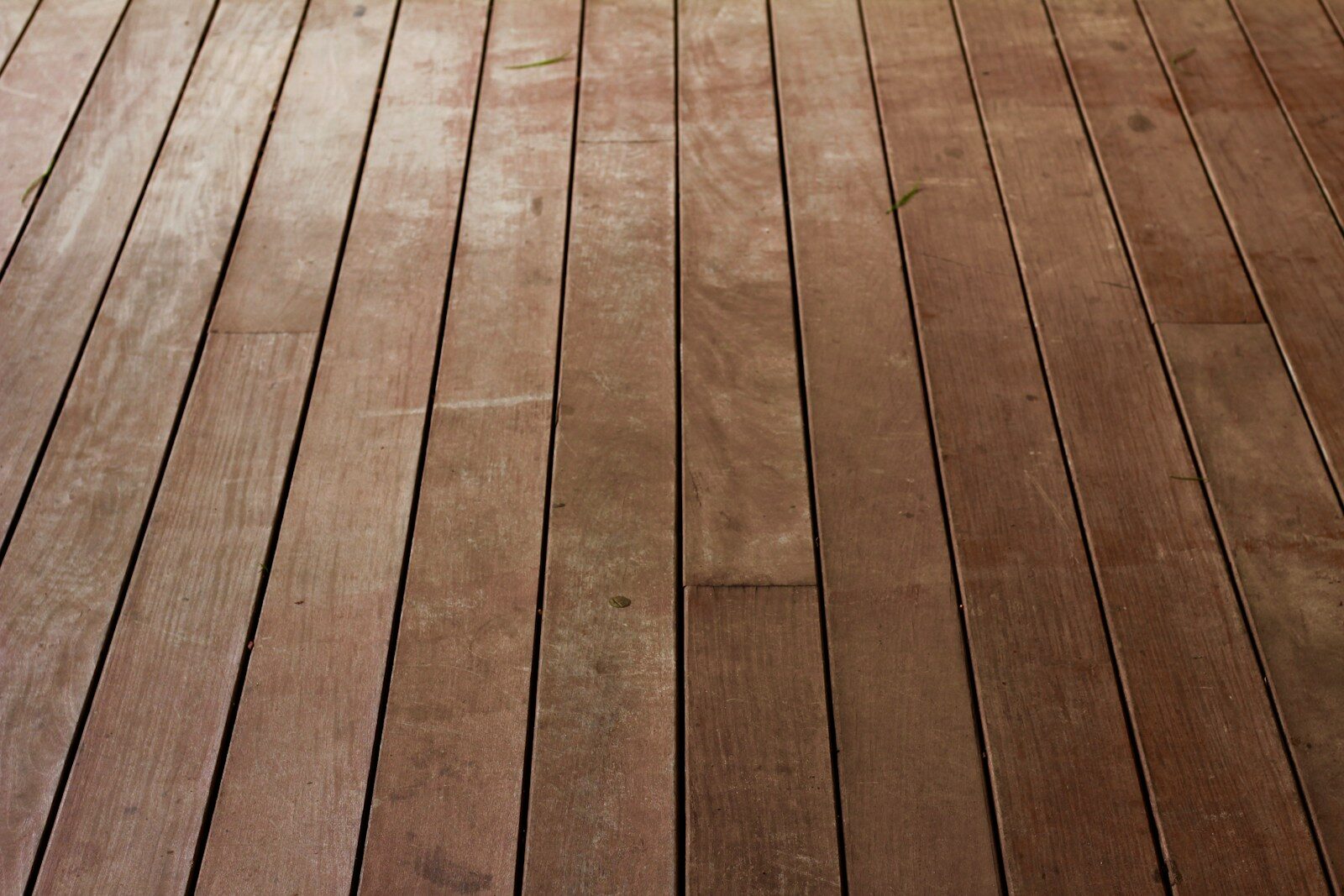
Most flooring regret comes from picking one material for the whole house. A floor that performs beautifully in a Westboro living room can be the wrong choice eight feet away in the entry, and the difference has nothing to do with taste. This guide works through the house room by room, comparing solid and engineered hardwood, vinyl plank, laminate and tile honestly, including where each fails. It also covers subfloor preparation, which quietly decides whether any of it lasts, and when a floor is worth restoring rather than replacing. It is for Ottawa homeowners doing a single room or a whole house.
Start With the Subfloor, Not the Samples
Subfloor preparation is the least interesting part of a flooring project and the part that determines the outcome. Every finished floor sits on something, and it inherits that something’s problems. Three issues come up repeatedly in Ottawa homes: uneven areas, which show up as hollow spots underfoot with laminate and vinyl and as cracked grout with tile; damaged subflooring, common where a dishwasher or toilet has leaked slowly for years; and moisture, particularly below grade.
Flatness tolerances are set by the flooring manufacturer and are tighter than most people expect. A floating floor over a wavy subfloor will click and flex within a year, and that is a preparation failure rather than a product failure. Levelling compound, sheathing repairs or an underlayment layer are what fix it, and they belong in the quote rather than on install day.
Entryways and Mudrooms
Ottawa winters put more stress on a front entry than on any other floor in the house. Wet boots, snowmelt, sand and road salt arrive together and then sit there, and salt is hard on wood finishes.
Porcelain tile is the traditional answer and still the most durable. Luxury vinyl is the practical alternative: fully waterproof, warmer underfoot than tile, and more forgiving of a dropped boot. What does not belong in a mudroom is solid hardwood, however good it looks in the adjoining hall. A transition strip at the threshold saves an expensive floor.
Kitchens
Kitchens ask for water resistance and comfort at once, since you stand in one for long stretches. Tile delivers the first and not the second: it is unforgiving on the legs and on dropped glassware, and cold in February unless there is heat under it.
Luxury vinyl plank has become the common kitchen choice for that reason. It is waterproof, softer underfoot, quieter, and it survives the dishwasher leak that eventually happens in most kitchens. Engineered hardwood is reasonable in an open-plan kitchen and living area where you want continuity, provided spills get wiped rather than left. Water-resistant laminate handles surface spills, but a leak reaching the core through a seam swells the plank edges permanently.
Bathrooms
Bathrooms are the clearest case in the house. Tile or a fully waterproof vinyl, and nothing else. Humidity is constant, water reaches the floor regularly, and anything with a wood or paper-based core will fail at the seams. For tile, the substrate matters as much as the tile, since it keeps water out of the framing under a shower or toilet flange.
Basements
A finished basement in Ottawa sits below grade against soil that holds moisture year-round. Concrete moves water vapour upward continuously, even when the slab feels dry and has never flooded. That single fact rules out some materials and changes the underlay decision for the rest. Solid hardwood does not belong on a basement slab. Engineered hardwood can work over a proper moisture barrier, but vinyl plank is the safer and more common answer, and rigid core products in particular tolerate the temperature swings a basement sees.
Underlay and Vapour Control Below Grade
Underlay below grade does a different job than upstairs, where it is about comfort and sound. Down here it also manages vapour, which means either an underlay with an integrated moisture barrier or a separate barrier beneath the floor. Skipping it is the most common reason a basement floor cups or grows mould underneath while looking fine on top. If the basement has ever taken water, solve the source first.
Bedrooms and Living Areas
Above grade, in rooms without water exposure, you finally choose on preference rather than constraint. This is where the solid versus engineered hardwood decision matters.
Solid hardwood is a single piece of wood, typically three quarters of an inch thick. It can be sanded and refinished many times, which is why century homes in The Glebe and Centretown still have their original floors. It also expands and contracts across its width with seasonal humidity, so it needs correct expansion gaps at the walls.
Engineered hardwood has a real wood wear layer bonded to a core built in cross-grain layers, which makes it far more dimensionally stable and suits concrete, in-floor heat and basements. Its limitation is that wear layer: a thin one can be refinished once or not at all, so its thickness is the number to ask about.
Laminate and vinyl compete on price and durability. Laminate has the harder wear surface, vinyl is quieter and waterproof, and neither can be refinished. Carpet still makes sense in bedrooms for warmth and quiet.
Stairs
Stairs deserve a deliberate decision rather than defaulting to whatever the adjoining floor is. They are the most heavily worn surface in a two-storey home, a safety consideration, and the fussiest part of any installation because every tread and riser is fitted individually. Hardwood treads with matching risers wear well. Vinyl and laminate stair installations depend heavily on the nosing detail, which takes the abuse and fails first if it is not properly fixed. In older Ottawa homes stairs are rarely square or evenly spaced, so this is a measure-and-fit job.
When You Do Not Need a New Floor
Existing hardwood does not always need replacing. Sanding and refinishing removes the scratched and greyed surface layer and can bring a tired floor back close to new, without the cost or disruption of a tear-out. Localised damage is repairable too: individual boards can be cut out and replaced with matched stock, and once the floor is refinished the patch effectively disappears. Have someone assess that before committing to replacement. Solomon Flooring, an Ottawa flooring company, provides installation, repair and refinishing across hardwood, vinyl, laminate, tile and carpet, and lists the full range on its flooring services page.
Planning a Multi-Room Renovation
When a project covers several rooms, sequencing becomes the difficulty. Subfloor repairs, levelling, transitions, stair work and the installation all have to happen in order, and each depends on the last being done correctly. Using one contractor for preparation and installation removes the coordination problem and the argument about whose responsibility a defect is. It also lets each room be planned against one scheme for transitions and heights, so doors still close and thresholds sit flat.
Get the quote in writing first, naming the products, the subfloor work, the transitions and the stair method, because that is what makes two competing prices comparable. Solomon Flooring handles hardwood floor installation in Ottawa in solid and engineered wood along with the subfloor preparation underneath, takes on everything from single rooms through to larger residential and commercial projects, and says it provides written quotes before work begins.
Frequently Asked Questions
Can I put hardwood in my basement?
Solid hardwood, no. A basement slab moves moisture upward year-round and solid wood will cup or gap in response. Engineered hardwood can work below grade over a proper vapour barrier, but vinyl plank remains the lower-risk choice for most Ottawa basements.
Is engineered hardwood real wood?
Yes. The wear layer is genuine hardwood bonded to a multi-layer core. The practical difference from solid is refinishing life, since you can only sand through that wear layer. Ask how thick it is: a thicker one can be refinished once or twice, a very thin one not at all.
Should I use the same flooring throughout the house?
Continuity looks good in open-plan areas, but one material rarely suits an entry, a bathroom and a bedroom equally. A common approach is a single material through the main living areas with tile or vinyl at the entry and in wet rooms, tied together with well-planned transitions.
How much does subfloor preparation add to a flooring job?
It varies with what is found, which is why it should be assessed before a quote is finalised rather than estimated blind. Minor levelling is a small line item, while replacing water-damaged sheathing across a large area is a real cost. Either way it is cheaper than paying twice.
Can worn hardwood be saved instead of replaced?
Often, yes. If the boards are sound and thick enough to sand, refinishing restores the surface completely. Damaged boards in one area can be cut out and replaced with matched material before the floor is refinished as a whole.
About The Author