
Another Conservative MP has crossed the floor.
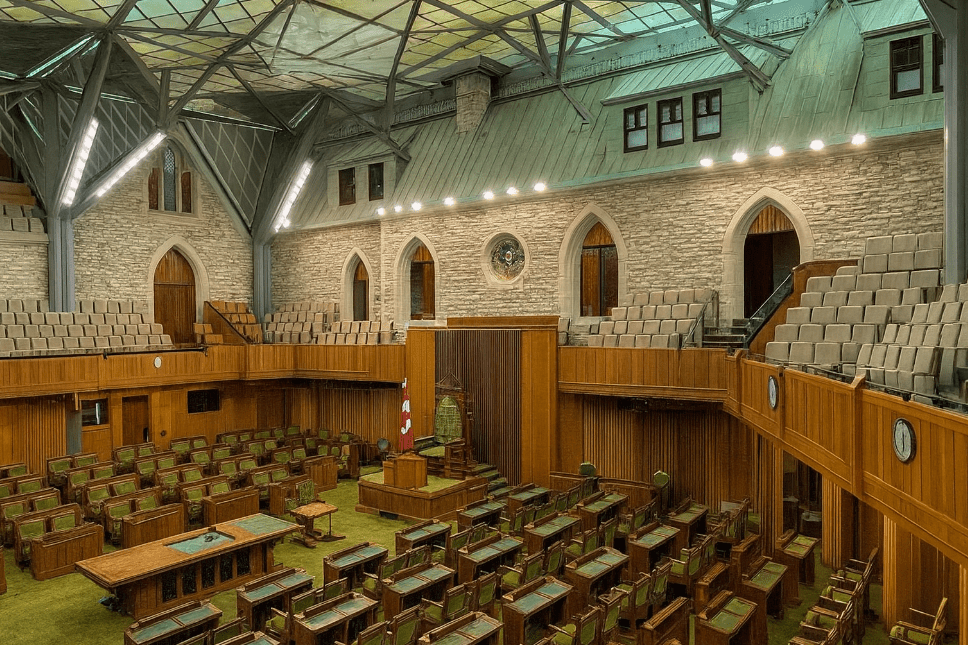
Michael Ma, the MP for Markham–Unionville, announced yesterday that he is leaving the Conservative Party to sit with the governing Liberals, a move that places Prime Minister Mark Carney’s government just one seat shy of a majority. On paper, it is a straightforward political shift. In reality, it raises deeper questions about loyalty, representation, and public trust.
Floor-crossing is not new in Canadian politics, but the context matters. What feels different this time is the pattern. The Conservative Party, once defined by a relatively broad tent and internal discipline, appears to be losing members as its tone and priorities shift. Critics have increasingly pointed to a move toward Trump-style politics: sharper grievance rhetoric, culture-war messaging, and ideological fracture, which makes traditional conservative voters and MPs uneasy. “This is a time for unity and decisive action for Canada’s future,” Ma said in a statement, which to me, implies the fracture within the conservative party is deeper than meets the eye. His willingness to cross the floor, and not just stay as an independent for example, also confirms my observations that Carney is a lot more to the right than I’m comfortable with.
That brings us to the question of loyalty. Does a member of parliament owe loyalty to the party, or to the voters? People cast ballots knowing which party a candidate represents and what that party broadly stands for. When an MP switches sides mid-term, it is fair for voters to ask whether this represents a principled evolution or a departure from the mandate they were given. But Ma’s move seems to come from listening to his constituents. “After listening carefully to the people of Markham–Unionville in recent weeks and reflecting with my family on the direction of our country, I have informed the Speaker and the Leader of the Opposition that I will be joining Prime Minister Mark Carney in the government caucus,” he said in the statement. But how can that be really measured outside of an election?
Defenders of floor-crossing argue that MPs are elected as individuals, not owned by their parties, and that conscience should matter. Critics respond that party affiliation is central to how people vote, and changing it after the fact can feel like moving the goalposts. Both perspectives carry weight, and the discomfort many voters feel sits right in that unresolved space.
There is also the question of power. Ma’s move puts the Liberals closer to a majority, and I will be honest about my own reaction: I am not particularly upset by that. While I have real concerns about aspects of this government — including Carney’s recent flip-flops on carbon emission targets — I am not losing sleep over the Liberals strengthening their position at a time when the Conservative Party appears to be leaning harder into populist, Trump-adjacent politics.
Still, none of this means that the Liberals are immune to internal discord. Earlier this fall, Steven Guilbeault, a longtime climate advocate and former environment minister, resigned from Carney’s cabinet in protest of a federal agreement with Alberta to advance oil pipeline development and roll back key climate rules. Guilbeault said he opposed the memorandum of understanding because it risked undermining Canada’s climate goals and proceeded without meaningful consultations with Indigenous nations or neighbouring provinces, a breach, in his view, of both principle and process. He continues to sit as a Liberal MP but is no longer in cabinet.
That episode underscores that political instability is not confined to one party. Carney’s government has had to juggle competing priorities — climate commitments, regional economic interests, and internal caucus expectations — and not all his ministers have been willing to go along with every shift.
Ultimately, this moment is about more than partisan math. When MPs cross the floor and shift the balance of power without an election, it affects how people perceive democracy itself. Do voters feel represented, or do they feel like spectators watching decisions made over their heads? When major political outcomes hinge on defections rather than ballots, trust becomes harder to maintain.
In an era of polarization and political realignment, loyalty cannot mean blind obedience to party leadership. But it also cannot ignore the responsibility elected officials have to the people who voted for them. As parties change and politicians reposition themselves, Canadians are left to wrestle with an uncomfortable but necessary question: what should loyalty really look like in modern politics, and who gets to decide when a change of direction is justified?
Those questions aren’t going away anytime soon.
About The Author